Understanding Zippo Lighter Markings: Date Codes, Bottom Stamps, and Authentication Guide
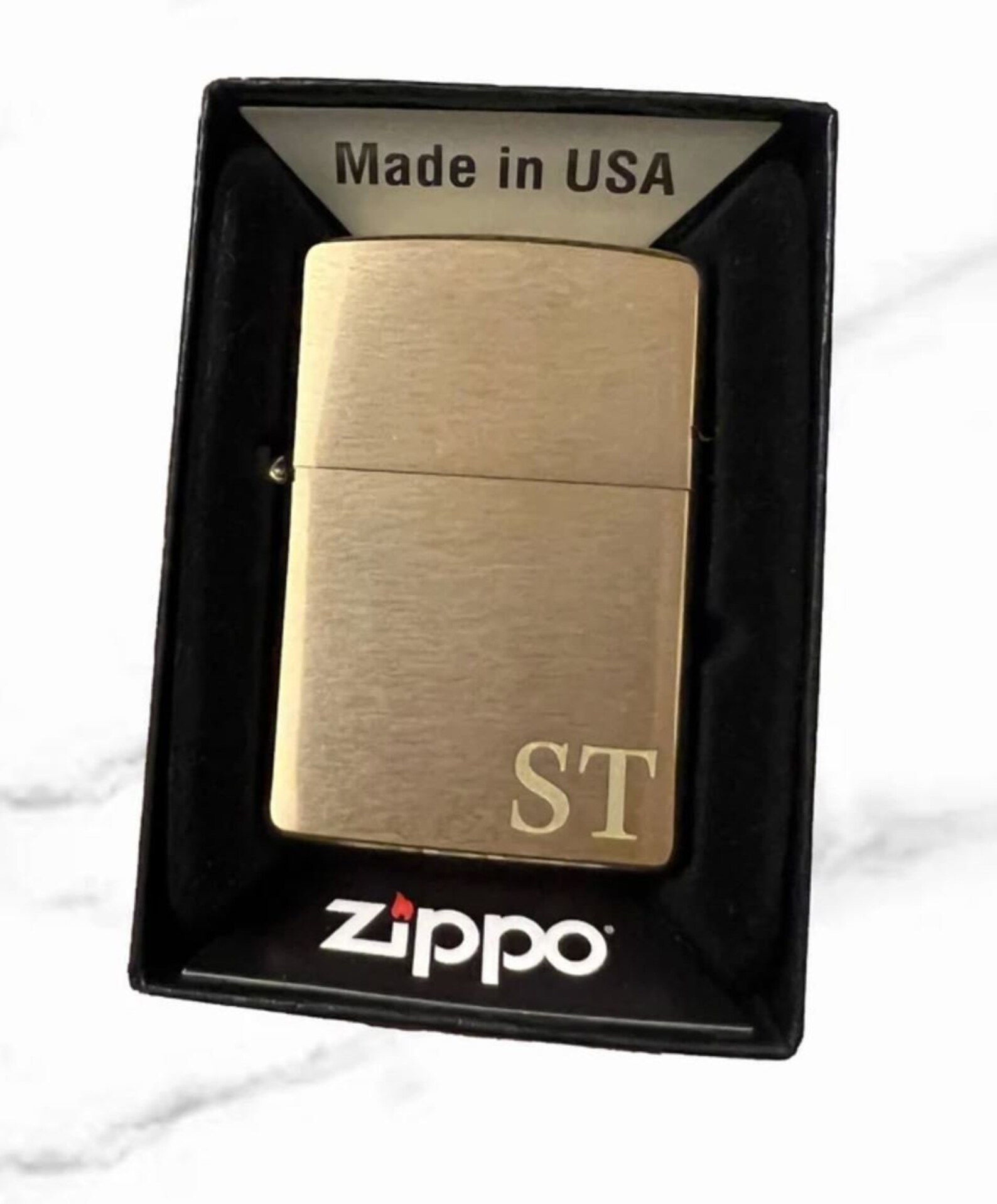
Zippo lighter markings are stamped identification codes, logos, and patent numbers stamped on the exterior bottom of the lighter case and the side of the inner insert. These markings indicate the lighter's production month, manufacturing year, metal composition, origin (such as Bradford, Pennsylvania or Niagara Falls, Ontario), and overall authenticity.
The Purpose and Evolution of Zippo Markings
Zippo Manufacturing Company originally added bottom stamps for practical quality control. In the early 1930s, George G. Blaisdell initiated stamping on the bottom of every lighter case so technicians could track returned items, identify production batches, and monitor manufacturing trends. Over nearly a century of continuous production, these utilitarian quality-control marks evolved into a precise chronological coding system cherished by collectors, appraisers, and daily users worldwide.
Understanding how to read Zippo markings allows you to date almost any genuine Zippo lighter accurately down to the exact month of manufacture for post-1986 models, or within a tight window of years for vintage models dating back to 1933. Furthermore, knowing the anatomy of these stamps serves as the primary line of defense against fake or counterfeit lighters.
Key Locations: Case Bottom Stamp vs. Inner Insert
When inspecting a Zippo lighter, you will encounter markings in two distinct areas: the outer case bottom and the sides of the removable fuel insert.
- Outer Case Bottom
- [Month Code] (A-L)
- [ZIPPO LOGO]
- [Year Code] (01-26)
- BRADFORD, PA. MADE IN U.S.A.
- Inner Insert
- "FOR BEST RESULTS USE ZIPPO FLINTS AND FLUID"
- [Month/Year Code] ZIPPO MFG. CO. BRADFORD, PA.
- MADE IN ZIPPO U.S.A.
1. The Outer Bottom Stamp
The bottom stamp is pressed directly into the sheet brass, sterling silver, solid copper, or gold case during fabrication before plating or finishing. It typically includes:
- The Zippo Trademark Logo: The style of the logo changes across major historical eras.
- Date Codes: Symbols, slashes, Roman numerals, or two-digit Arabic numerals denoting the year and month.
- Origin/Location: Text reading "BRADFORD, PA. MADE IN U.S.A." or "NIAGARA FALLS, ONTARIO" (for Canadian production).
- Material Identifiers: Words such as "STERLING," "10K GOLD FILLED," "SOLID BRASS," or "COPPER" on precious metal or specialty metal cases.
2. The Inner Insert Markings
When you pull the windproof lighter insert out of the outer shell, you will find additional stamped text on the flat metallic sides of the fuel chamber. These markings state safety instructions ("FOR BEST RESULTS USE ZIPPO FLINTS AND FLUID"), manufacturing location, and starting in late 1986, a date code matching the system used on outer cases.
Note: It is completely normal for the date code on the inner insert to differ slightly (by a month or two) from the outer case. Inner inserts and outer cases were manufactured on separate production lines and stored in bins before final assembly.
How to Read Modern Zippo Date Codes (1986–Present)
In July 1986, Zippo introduced a standardized dual-code system that remains in use today. This system uses a Letter Code on the left side of the bottom stamp to indicate the month, and a Number Code on the right side to indicate the year.
| Left Side (Month Code) | Right Side (Year Code) |
|---|---|
| A = January | II = 1986 |
| B = February | ... |
| C = March | XVI = 2000 |
| D = April | 01 = 2001 |
| E = May | 02 = 2002 |
| F = June | ... |
| G = July | 24 = 2024 |
| H = August | 25 = 2025 |
| I = September | 26 = 2026 |
| J = October | |
| K = November | |
| L = December |
The Month Code (Left Stamp)
The letters A through L designate the twelve calendar months:
- A: January
- B: February
- C: March
- D: April
- E: May
- F: June
- G: July
- H: August
- I: September
- J: October
- K: November
- L: December
Important: Zippo only uses letters A through L. If you encounter a lighter stamped with the letter M, N, or any later letter in the alphabet, the lighter is an unauthorized fake.
The Year Code (Right Stamp)
The year designation is split into two historical eras:
1986 to 2000 (Roman Numerals): Zippo used Roman numerals to indicate the manufacturing year.
II= 1986III= 1987IV= 1988V= 1989VI= 1990VII= 1991VIII= 1992IX= 1993X= 1994XI= 1995XII= 1996XIII= 1997XIV= 1998XV= 1999XVI= 2000
2001 to Present (Arabic Numerals): Starting in 2001, Zippo replaced Roman numerals with two-digit numbers matching the last two digits of the year.
01= 200105= 200510= 201020= 202024= 202425= 202526= 2026
Example: A lighter stamped H 26 on the bottom was manufactured in August 2026.
Decoding Vintage Zippo Bottom Stamps (1933–1985)
Before the standardized code system was adopted in mid-1986, Zippo used several different coding methods, including dot codes, slash mark codes, and patent numbers.
1. Early Patent Era (1933–1957)
Early Zippos do not feature month codes, and year ranges must be identified using patent numbers, logo styles, and case structural details:
- 1933–1937: Tall, blocky case design. Stamped
PAT. PENDINGorPAT. 2032695. - 1937–1950: Stamped
PAT. 2032695. The logo was written in block lettering. During WWII (1942–1945), brass shortages forced Zippo to make lighters out of steel, finished with a black crackle paint. - 1950–1957: Stamped
PAT. 2517191(or displaying both patent numbers during transition years). In late 1955, Zippo began experimenting with dot markings surrounding the logo.
2. The Dot Code Era (1955–1965)
From 1955 through 1965, Zippo placed small dots on the left and right sides of the bottom logo. As years progressed, dots were removed one by one.
- 1955:
••••(left)••••(right) (Experimental / early run) - 1958:
••••(left)••••(right) - 1959:
••••(left)•••(right) - 1960:
•••(left)•••(right) - 1961:
•••(left)••(right) - 1962:
••(left)••(right) - 1963:
••(left)•(right) - 1964:
•(left)•(right) - 1965:
•(left) (no dots on right)
3. The Vertical Slash Mark Era (1966–1973)
In 1966, Zippo replaced dots with vertical lines (|). Like the dot system, slashes were removed sequentially each year.
- 1966:
||||(left)||||(right) - 1967:
||||(left)|||(right) - 1968:
|||(left)|||(right) - 1969:
|||(left)||(right) - 1970:
||(left)||(right) - 1971:
||(left)|(right) - 1972:
|(left)|(right) - 1973:
|(left) (no line on right)
4. The Backslash Mark Era (1974–1981)
In 1974, vertical lines were replaced with backslashes (\).
- 1974:
\\\\(left)\\\\(right) - 1975:
\\\\(left)\\\(right) - 1976:
\\\(left)\\\(right) - 1977:
\\\(left)\\(right) - 1978:
\\(left)\\(right) - 1979:
\\(left)\(right) - 1980:
\(left)\(right) - 1981:
\(left) (no line on right)
5. The Forward Slash Mark Era (1982–1986)
From 1982 until mid-1986, Zippo switched to forward slashes (/).
- 1982:
////(left)////(right) - 1983:
////(left)///(right) - 1984:
///(left)///(right) - 1985:
///(left)//(right) - 1986 (Early):
//(left)//(right) (Switched to Roman numerals mid-year)
Comprehensive Zippo Bottom Code Reference Table
The following matrix provides a complete reference guide for identifying Zippo production years from 1955 to 2026 based on bottom stamp markings.
| Production Year Range | Left Side Markings | Right Side Markings | Code Format Type |
|---|---|---|---|
| 1955 – 1958 | •••• |
•••• |
Dot System |
| 1959 | •••• |
••• |
Dot System |
| 1960 | ••• |
••• |
Dot System |
| 1961 | ••• |
•• |
Dot System |
| 1962 | •• |
•• |
Dot System |
| 1963 | •• |
• |
Dot System |
| 1964 | • |
• |
Dot System |
| 1965 | • |
(Blank) | Dot System |
| 1966 | ` | ||
| 1967 | ` | ||
| 1968 | ` | ||
| 1969 | ` | ||
| 1970 | ` | ` | |
| 1971 | ` | ` | |
| 1972 | ` | ` | ` |
| 1973 | ` | ` | (Blank) |
| 1974 | \\\\ |
\\\\ |
Backslash System |
| 1975 | \\\\ |
\\\ |
Backslash System |
| 1976 | \\\ |
\\\ |
Backslash System |
| 1977 | \\\ |
\\ |
Backslash System |
| 1978 | \\ |
\\ |
Backslash System |
| 1979 | \\ |
\ |
Backslash System |
| 1980 | \ |
\ |
Backslash System |
| 1981 | \ |
(Blank) | Backslash System |
| 1982 | //// |
//// |
Forward Slash System |
| 1983 | //// |
/// |
Forward Slash System |
| 1984 | /// |
/// |
Forward Slash System |
| 1985 | /// |
// |
Forward Slash System |
| 1986 (Early) | // |
// |
Forward Slash System |
| 1986 – 2000 | Letter (A – L) | Roman Numerals (II to XVI) |
Dual Month/Year Code |
| 2001 – 2026 | Letter (A – L) | Two-digit Year (01 to 26) |
Dual Month/Year Code |
Special Material Stamps and Regional Variants
Beyond standard date codes, certain Zippo models carry unique bottom stamps indicating precious metal content, special manufacturing plants, or limited production status.
- Precious Metal Stamp Example
- STERLING [LOGO] A 05
- BRADFORD, PA. MADE IN U.S.A.
- Canadian Plant Stamp Example
- ZIPPO [LOGOTYPE]
- NIAGARA FALLS, ONTARIO
Precious Metal and Specialty Stamps
Standard chrome, brass, and painted Zippos are made from a solid brass base structure. However, models crafted from alternative metals carry dedicated stamps:
- Sterling Silver: Stamped with the word
STERLINGacross the top or bottom of the case base. - Solid Gold (14K / 18K): Stamped
14Kor18K GOLD. - Gold Filled: Vintage models often carry stamps reading
10K GOLD FILLEDor1/20 10K GOLD FILLED. - Solid Copper: Features a stamp reading
COPPERorSOLID COPPER. - Titanium: Displays
TITANIUMorSOLID TITANIUMon the bottom.
Canadian Plant Markings (Niagara Falls, Ontario)
From 1949 until August 2002, Zippo operated a second manufacturing plant in Niagara Falls, Ontario, Canada. Lighters made at this facility carry distinct bottom markings:
- Bottom text reads:
NIAGARA FALLS, ONTARIOinstead of Bradford, PA. - Canadian Zippos did not use date code markings prior to 1987.
- Between 1987 and 2002, Canadian models adopted the same letter and Roman numeral/Arabic date coding system used in the United States.
- In August 2002, the Niagara Falls plant was closed, making genuine Canadian-stamped Zippos highly sought-after collector items.
Authenticating a Zippo Using Bottom Markings
Counterfeiters frequently attempt to copy Zippo designs. However, bottom stamps are notoriously difficult to fake accurately because genuine stamps are cold-stamped with heavy industrial dies prior to metal finishing, creating deep, razor-sharp impressions.
| Genuine Bottom Stamp | Counterfeit Bottom Stamp |
|---|---|
| • Crisp, clean, uniform impression | • Shallow, blurry, or uneven lettering |
| • Perfect letter spacing | • Incorrect fonts or misspelled words |
| • Correct month letter (A - L only) | • Invalid month letters (e.g., "M", "P") |
| • Crisp flame dot over the 'i' | • Flat, indistinct flame dot |
Primary Authentication Checks
Check the Month Letter (Post-1986):
- Real: Letters must strictly fall between A (January) and L (December).
- Fake: Counterfeits often use letters like M, N, O, or R.
Inspect Font and Logo Geometry:
- Real: The trademark Zippo script logo features a crisp flame dot over the letter "i" (on models made after 1980). The lettering is centered, clear, and etched to a uniform depth.
- Fake: The text appears uneven, blurry, laser-etched rather than die-stamped, or missing the flame dot entirely.
Verify Spelling and Geographic Names:
- Real: Correct spelling of
BRADFORD, PA.andMADE IN U.S.A. - Fake: Common typos include missing commas, misspelled city names (e.g., "BRADFORD PA"), or generic phrases like "MADE IN USA" without periods.
- Real: Correct spelling of
Cross-Reference Case Age with Internal Components:
- A lighter displaying a 1960s dot bottom code should feature a vintage hinge structure (5 barrels), appropriate chimney hole count (16 holes), and a period-accurate insert layout. If a bottom stamp indicates a 1965 case date but holds a modern insert stamped
H 25, the insert was replaced during later maintenance.
- A lighter displaying a 1960s dot bottom code should feature a vintage hinge structure (5 barrels), appropriate chimney hole count (16 holes), and a period-accurate insert layout. If a bottom stamp indicates a 1965 case date but holds a modern insert stamped
Frequently Asked Questions
Why does my insert date code not match the bottom stamp date code?
It is very common for the date code on the inner insert to differ by several weeks or months from the outer case stamp. Outer shells and inner inserts are produced on independent assembly lines, stored in separate bins, and brought together during final assembly. A variation of 1 to 12 months between the insert and case is normal for genuine Zippo lighters.
What does "Armor" mean on a Zippo bottom stamp?
An Armor Zippo features a heavy-walled metal case that is approximately 1.5 times as thick as a standard Zippo shell. The bottom stamp of an Armor lighter displays a specialized shield logo containing the letter A on the left or center bottom, confirming its heavy-duty case construction.
Does every genuine Zippo have a date code?
No. Zippo lighters manufactured between 1933 and 1954 do not have formal date codes. They can only be dated to a range of years using patent numbers (PAT. 2032695 or PAT. 2517191), case materials (such as WWII Black Crackle steel), hinge configurations, and logo fonts.
Is a Zippo stamped with "PAT. PENDING" valuable?
Lighters carrying the PAT. PENDING stamp were manufactured between 1933 and 1937, making them among the earliest, rarest, and most valuable Zippos in existence. Always have early patent-pending models authenticated by a recognized vintage lighter specialist.
What does a bottom stamp with a "Reissue" date mean?
Zippo frequently produces commemorative "Replica" models, such as the 1935 Replica or 1941 Replica series. These lighters feature vintage outer shapes, but their bottom stamps include modern date codes (e.g., A 24) alongside patent numbers to maintain transparency, prevent fraud, and comply with modern manufacturing standards.
Next Steps for Owners and Collectors
If you are trying to value, catalog, or verify a Zippo lighter in your collection:
- Examine the Bottom Stamp: Use a magnifying loupe and bright light to read the bottom stamp clearly. Note the logo style, left-hand character, and right-hand character.
- Consult the Reference Chart: Cross-reference your codes against the breakdown table above to determine the exact year and month of manufacture.
- Inspect Internal Markings: Remove the inner insert to compare its date code against the outer case.
- Clean Carefully: If dirt or pocket lint obscures the bottom stamp, clean the area gently using a soft cotton swab and standard lighter fluid or isopropyl alcohol. Do not use harsh abrasive scrubbers, as they can scratch precious metal platings or obscure delicate stamp lines.
Image Gallery
Select an image to open it in a new tab.
Vivian Cho
Executive IT and Emerging Technologies Reporter
