Understanding the Ancient Rome Military Ranks: Command, Hierarchy, and Structure
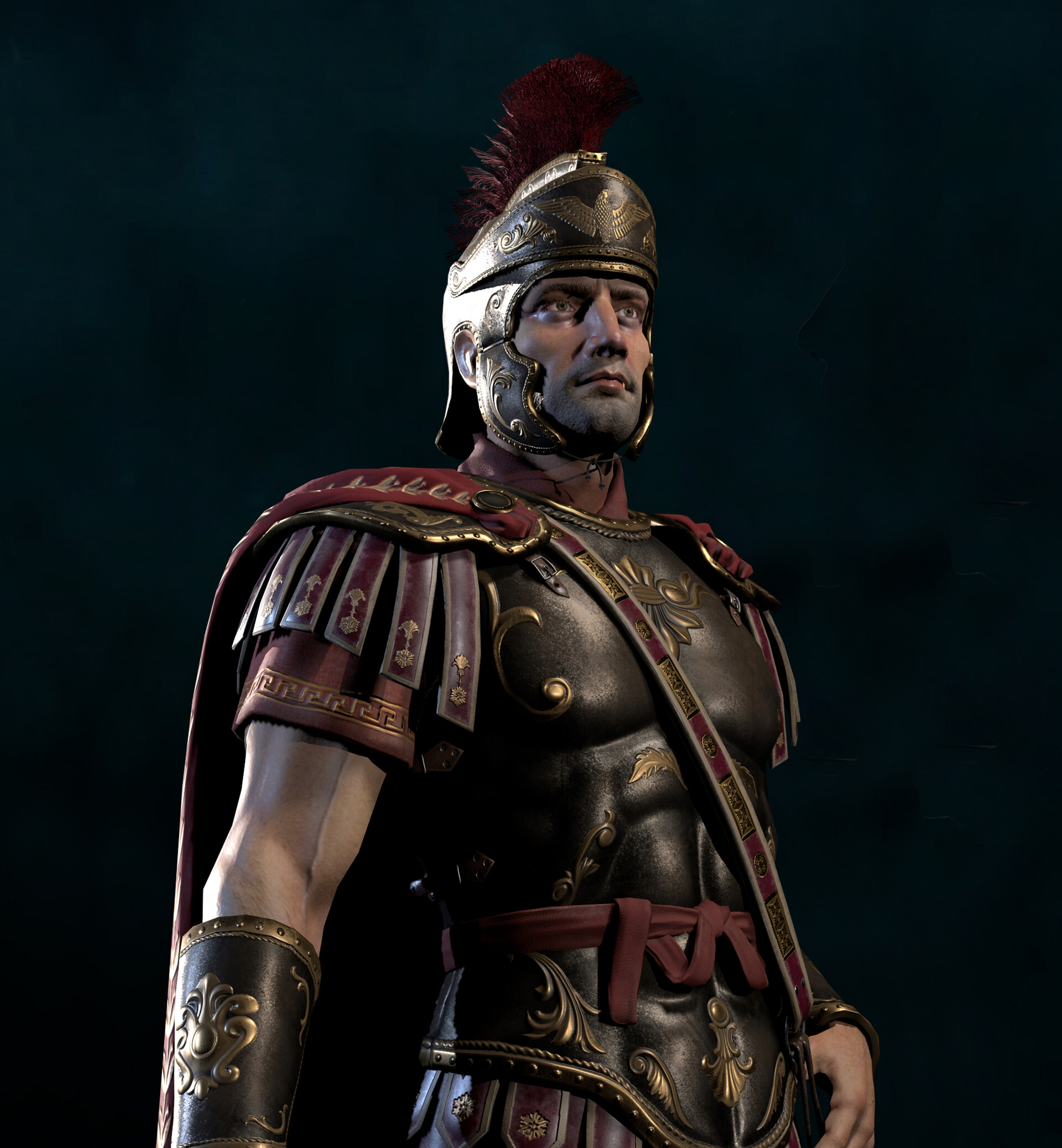
Understanding the ancient Rome military ranks requires looking at a dual-track hierarchy that combined social class with tactical experience. The Roman army relied on a rigid command chain divided into senatorial commanders, equestrian staff officers, centurion tactical leaders, non-commissioned specialists (principales), and auxiliary commanders, creating an efficient operational model across the Mediterranean.
The Dual Architecture of Roman Military Organization
The military strength of Rome was not merely a product of physical weapon superiority or sheer manpower; it was driven by an institutional structure built on discipline, administrative clarity, and social stratification. To fully comprehend how Roman legions operated from the late Republic through the High Empire, one must recognize that rank was shaped by two distinct factors: political-social standing (ordo) and tactical battlefield necessity.
The upper command tiers were reserved strictly for the Roman aristocracy—members of the Senatorial and Equestrian orders—for whom military command was a mandatory phase of a political career (cursus honorum). Below these political appointees sat the tactical backbone of the army: the centurions and professional non-commissioned officers (principales). These veteran soldiers managed day-to-day discipline, supply logistics, combat drill, and tactical execution on the field.
- Legatus Legionis (Senatorial)
- Tribunus Laticlavius (Senatorial)
- Praefectus Castrorum (Equestrian)
- Tribuni Angusticlavii (Equestrian)
- Centuriones (Incl. Primus Pilus)
- Principales (Optio, Signifer, etc.)
- Miles Legionarius (Base Soldier)
This structural separation guaranteed that strategic policy remained aligned with the Roman senate and Emperor, while technical combat leadership remained in the hands of seasoned veterans who had spent decades in armor.
High Command: Senatorial and Equestrian Officers
At the apex of a Roman legion—which comprised roughly 4,800 to 5,500 heavy infantrymen plus supporting cavalry—stood the high command staff. These positions were temporary appointments rather than lifelong military postings, bridging military command and civic administration.
Legatus Legionis (Legate of the Legion)
The Legatus Legionis served as the supreme operational commander of an individual legion. Drawn from the Senatorial class, the legate was typically a former praetor in his mid-30s to early 40s, appointed directly by the Emperor (in imperial provinces) or assigned by the Senate during the Republican era.
- Primary Function: Overall strategic command, diplomatic negotiations, civil governance within the legion's assigned region, and ultimate judicial authority over his troops.
- Staff Support: The legate was accompanied by lictors carrying the fasces, signaling his executive authority (imperium).
Tribunus Laticlavius (Broad-Stripe Tribune)
Second-in-command of the legion was the Tribunus Laticlavius, a young man of senatorial rank named for the broad purple stripe on his tunic. Usually in his early twenties, this officer served a mandatory military tour to qualify for high political office in Rome.
- Primary Function: Serving as administrative second-in-command, learning high-level logistics, and observing tactical operations under the direct supervision of the legate.
- Command Reality: Though outranking all other tribunes and centurions, the Tribunus Laticlavius possessed limited practical military experience and heavily relied on veteran officers for operational advice.
Praefectus Castrorum (Prefect of the Camp)
The Praefectus Castrorum was historically third-in-command, but functionally the most experienced professional officer in legionary headquarters. Unlike the legate and broad-stripe tribune, the camp prefect was an equestrian who had risen through the enlisted ranks, usually having served as a Primus Pilus (chief centurion).
- Primary Function: Quartermaster general and base manager. He oversaw camp construction, supply chains, artillery Maintenance, medical services (valetudinarium), and daily siege equipment readiness.
- Operational Authority: In the absence or death of the legate and broad-stripe tribune, the Praefectus Castrorum assumed full combat command of the legion.
Tribuni Angusticlavii (Narrow-Stripe Tribunes)
Each legion contained five Tribuni Angusticlavii, drawn from the Equestrian class (the Roman knight order). They wore tunics with narrow purple stripes.
- Primary Function: Administrative, legal, and logistical management. They handled soldier payroll, paperwork, military tribunals, leave approvals, and supply distributions.
- Tactical Role: During pitched battles, they often commanded infantry cohorts or attached cavalry contingents under the direction of the legate.

Tactical Command: The Centurions (Centuriones)
If the high command provided strategic direction, the Centurions were the tactical engine of the Roman war machine. A standard imperial legion contained 60 centurions, each commanding a centuria of 80 soldiers (reduced from the literal 100 soldiers of earlier times to improve tactical maneuverability).
- FIRST COHORT (Double-Sized: ~800 Men)
- 5 Centuriae (160 men each)
- Led by top 5 Centurions:
- Primus Pilus (Chief Centurion)
- Princeps Prior
- Hastatus Prior
- Princeps Posterior
- Hastatus Posterior
- COHORTS II through X (Standard: ~480 Men)
- 6 Centuriae per Cohort (80 men each)
- Led by 6 Centurions per Cohort
The Hierarchy Within the Centurionate
The centurion rank was far from uniform. It contained a strict internal ladder based on seniority, unit placement, and combat record:
- Primus Pilus (First Spear): The senior centurion of the entire legion, commanding the first century of the double-sized First Cohort. He served as the primary advisor to the Legatus Legionis and participated in war councils. After completing a one-year term, a Primus Pilus received substantial financial compensation and automatic entry into the Equestrian social class.
- Primi Ordines (First Order Centurions): The four other centurions of the elite First Cohort. They commanded double-sized units and outranked all centurions in the remaining nine cohorts.
- Centuriones Cohortis: The remaining 54 centurions spread across Cohorts II through X. Within each cohort, centurions were ranked by the traditional manipulative designations:
- Pilus Prior (Senior centurion of a cohort line)
- Pilus Posterior
- Princeps Prior
- Princeps Posterior
- Hastatus Prior
- Hastatus Posterior (Junior centurion of a cohort line)
Duties and Physical Identification
Centurions were responsible for training, drill execution, physical punishment, and tactical cohesion. On the field, they marched at the front right of their formations to lead by example, suffering disproportionately high casualty rates compared to enlisted men.
Centurions were easily identified by distinctive equipment:
- Transverse Crest (Crista Transversa): A helmet crest running side-to-side, allowing soldiers to locate their leader in battle smoke.
- Greaves (Ocreae): Metal leg armor, worn long after common legionaries ceased using them.
- Vitis: A grapevine stick used to administer corporal punishment for minor infractions.
- Sword Positioning: Worn on the left hip, unlike common legionaries who wore their gladius on the right hip for easy draw with a shield held in the left hand.
Junior Officers and Non-Commissioned Officers (Principales)
Directly supporting the centurion were the principales—non-commissioned officers who received higher pay (typically 1.5 to 2 times the base wage) and immunity from routine fatigue duties (immunes).
Key Principales Ranks
- Optio: The centurion’s second-in-command. The optio stood at the rear of the centuria holding a long wooden staff (hastile) used to push retreating soldiers back into line and keep rank spacing exact. He managed administrative paperwork, roster checks, and drill routines. If the centurion fell in battle, the optio immediately assumed command.
- Signifer: The standard-bearer of the century. The signifer carried the unit's signum (a spear adorned with metallic medallions and topped with an open hand or emblem). Beyond tactical signaling, the signifer acted as the century's financial treasurer, managing the soldiers' mandatory savings accounts and burial fund deposits.
- Tesserarius: The guard commander of the century. Named after the tessera (a small wooden tablet on which the daily watchword was written), this officer was responsible for perimeter security, guard rotations, and night patrols around the encampment.
Specialized Standard-Bearers
- Aquilifer: The single officer responsible for carrying the Aquila (the Golden or Bronze Eagle standard) of the legion. Losing the Aquila was considered the ultimate military dishonor, often resulting in the disbandment of the entire unit. The aquilifer held immense prestige, wearing a lion skin over his armor, and ranked just below the centurions.
- Vexillarius: Carried a square flag (vexillum) representing detached detachments or specialized sub-units operating away from the main legion.
- Imaginifer: Carried the imago, a sculpted portrait bust of the ruling Emperor, serving as a constant reminder of the legionary’s oath of loyalty (sacramentum).
Specialist Ranks and Support Staff (Immunes)
Not all progression in the Roman army required direct infantry command. Skilled craftsmen and administrative clerks qualified as Immunes—soldiers exempt from manual labor such as digging trenches, gathering firewood, or building roads.
- Architecti & Libratores: Engineers and surveyors responsible for designing fortifications, bridges, siege engines, and aqueducts.
- Medici: Highly trained combat surgeons and medical staff stationed at the camp hospital (valetudinarium).
- Custodes Armorum: Armorers and weapons keepers responsible for arms maintenance, inventory control, and supply distribution.
- Cornicines & Tubicines: Musicians who played curved horns (cornu) and straight trumpets (tuba) to transmit tactical sound orders across noisy battlefields.
Auxiliary and Cavalry Command Structure
While the legions consisted exclusively of Roman citizens, auxiliary units (Auxilia) were recruited from non-citizen provincial populations. Auxiliary forces provided specialized capabilities, including light infantry, archers (sagittarii), and heavy cavalry (equites).
Auxiliary Organization and Ranks
| Auxiliary Infantry Cohort (Cohors Peditata) | Auxiliary Cavalry Regiment (Ala) |
|---|---|
| Commander: Praefectus Cohortis (Equestrian) | Commander: Praefectus Alae |
| Unit Leader: Centurion | Unit Leader: Decurio |
- Praefectus Alae: Commander of an auxiliary cavalry regiment (Ala). This equestrian rank was among the most prestigious appointments available to non-senatorial officers.
- Praefectus Cohortis: Commander of an auxiliary infantry cohort (Cohors Peditata).
- Decurio (Decurion): The cavalry counterpart to the infantry centurion. A decurion commanded a turma (a cavalry troop of approximately 30 men). Each turma included junior officers such as the duplicarius (second-in-command receiving double pay) and the sesquiplicarius (third-in-command receiving 1.5 times pay).
Comparative Matrix of Roman Military Ranks
The following table synthesizes the functional chain of command within an Imperial Roman Legion (1st–2nd Century CE), showing social background, operational roles, and approximate modern equivalents:
| Rank Title | Social Status | Modern Equivalent | Primary Responsibilities | Pay Ratio (x Base) |
|---|---|---|---|---|
| Legatus Legionis | Senatorial | Major General / Division Commander | Strategic command of the legion, regional governance, and ultimate operational authority. | ~50x – 100x |
| Tribunus Laticlavius | Senatorial | Deputy Commander / Executive Officer | Second-in-command; oversees high-level staff work and administrative affairs. | ~40x |
| Praefectus Castrorum | Equestrian (Ex-Centurion) | Base Commander / Quartermaster | Logistics, fortification maintenance, camp management, artillery, and siege warfare. | ~40x |
| Tribuni Angusticlavii (x5) | Equestrian | Staff Officers / Colonels | Administrative oversight, legal trials, payroll verification, and tactical logistics. | ~10x – 20x |
| Primus Pilus | Raised to Equestrian | Chief Warrant Officer / Senior Battalion Commander | Commands the 1st Century, senior advisor to the Legate, leads tactical maneuvers. | ~60x |
| Centurion (Pilus Prior) | Plebeian / Citizen | Captain / Company Commander | Tactical command of a cohort line (up to 480 men), tactical execution, and unit discipline. | ~15x – 30x |
| Centurion (Standard) | Plebeian / Citizen | Lieutenant / Junior Company Commander | Direct tactical leadership of a 80-man century, combat drill, and equipment checks. | ~15x |
| Optio | Plebeian / Citizen | First Sergeant | Second-in-command of a century; rear file closer, administrative support, and tactical replacement. | 1.5x |
| Aquilifer | Plebeian / Citizen | Command Sergeant Major | Carries the Legionary Eagle (Aquila); symbol of unit morale, honor, and financial safety. | 2x |
| Signifer | Plebeian / Citizen | Sergeant / Paymaster | Carries the century standard (signum), manages century banking and burial funds. | 2x |
| Tesserarius | Plebeian / Citizen | Corporal / Guard Sergeant | Manages security rosters, guard detail duty, night perimeter watches, and daily passwords. | 1.5x |
| Miles Legionarius | Roman Citizen | Private First Class | Base heavy infantry soldier; battle duty, trench digging, road construction, and camp guard. | 1x (Base) |
Evolution of Ranks: From Militia Levy to Late Antiquity
The Roman military rank structure was not static; it transformed over seven centuries to adapt to changing socio-political conditions and military threats.
- EARLY/MIDDLE REPUBLIC (Property Class Levy System)
- Consuls (Supreme Command)
- Military Tribunes
- Hastati / Principes / Triarii (Age/Wealth Tier)
- LATE REPUBLIC & IMPERIAL (Professional Standing Army)
- Legatus Legionis
- Centurions (Professional)
- Principales (NCO Structure)
- Auxiliary Units
- LATE ANTIQUITY (Mobile vs Border Forces)
- Magister Militum
- Dux / Comes
- Comitatenses (Field)
- Limitanei (Border Guard)
1. The Early and Middle Republic (509 BCE – 107 BCE)
In the early Republic, Rome relied on a citizen militia organized by property ownership. Command was tied directly to political office; Consuls commanded consular armies, and elected Military Tribunes rotated command of legions daily.
Soldiers were divided into age and property classes:
- Velites: Light skirmishers (poorest citizens).
- Hastati: Youngest heavy infantry forming the first line.
- Principes: Prime-condition veterans forming the second line.
- Triarii: Wealthy, oldest veterans forming the final reserve spear-line.
2. The Marian Reforms and the Principate (107 BCE – 284 CE)
Consul Gaius Marius removed the property qualification for military service, opening the ranks to the landless poor (capite censi). This transformed the army from a seasonal militia into a permanent, professional force paid by the state.
Under Emperor Augustus, this structure was standardized into the imperial system detailed above, introducing fixed service terms (20–25 years), regular pay, pension guarantees, and a structured promotion path within the centurion ranks.
3. Late Antiquity: Reforms of Diocletian and Constantine (284 CE – 476 CE)
Faced with constant barbarian incursions and internal civil wars during the Crisis of the Third Century, Emperor Diocletian and later Constantine the Great reshaped the rank structure:
- Command was split away from civil provincial governors.
- High aristocratic titles were replaced by purely military commanders: Magister Militum (Master of Soldiers), Comes (Count), and Dux (Duke commanding regional frontier troops).
- The army was divided into mobile field armies (Comitatenses) and border garrison forces (Limitanei).
- Traditional legionary ranks like centurions gave way to late Roman titles such as Ducenarius, Centenarius, and Biarchus.
Career Progression: How a Soldier Ascended the Ranks
Promotion within the Roman army followed distinct paths depending on social origin:
Plebeian Enlisted Path:
- Miles Legionarius
- Immunis
- Tesserarius
- Optio
- Centurion
- Primus Pilus
- Praefectus Castrorum
Equestrian Officer Path:
- Praefectus Cohortis
- Tribunus Angusticlavius
- Praefectus Alae
- High Procurator / Civil Administrative Roles
Senatorial Political Path:
- Tribunus Laticlavius
- Quaestor
- Praetor
- Legatus Legionis
- Consul / Provincial Governor
The Citizen Enlisted Path
A common plebeian citizen joining as a Miles (private soldier) could follow a clear promotion path through merit, literacy, and bravery:
- Recruit (Tiro): Underwent six months of basic training, drill, and physical conditioning.
- Specialist (Immunis): Demonstrated technical skills (e.g., armor repair, record-keeping, medicine) to gain exemption from manual labor.
- NCO Ranks (Principales): Promoted to Tesserarius, then Signifer, and ultimately Optio through leadership capacity and administrative literacy.
- Centurion: An optio who performed exceptionally in combat or displayed leadership could be promoted to centurion, usually after 15 to 20 years of service.
- Primus Pilus: The top centurions who reached the 1st Cohort could be appointed chief centurion, granting them automatic entry into the Equestrian order upon retirement along with a large lump-sum pension.
The Equestrian and Senatorial Paths
Aristocrats bypassed lower ranks entirely. An Equestrian began his military career through the Tres Militiae (Three Posts): commanding an auxiliary cohort, serving as a narrow-stripe tribune, and finally commanding an auxiliary cavalry unit.
Senators entered directly as a Tribunus Laticlavius in their early 20s, returned to Rome for political offices (such as Quaestor and Praetor), and then returned to the army in their mid-30s as a Legatus Legionis.
Frequently Asked Questions
What was the highest rank a non-noble Roman citizen could achieve in the legion?
A common citizen who enlisted as a regular soldier could rise to Praefectus Castrorum (Camp Prefect), the third-in-command of an entire legion. To reach this level, the soldier had to advance through the non-commissioned ranks, enter the centurion corps, and eventually attain the position of Primus Pilus (Chief Centurion). Achieving the Primus Pilus rank automatically granted entry into the Equestrian social class, opening up elite administrative appointments.
How did someone become a Centurion in the Roman military?
There were three primary paths to becoming a centurion:
- Promotion from the ranks: The most common path, where an enlisted soldier served 15–20 years, progressing through NCO roles (Tesserarius, Signifer, Optio) before being elevated for leadership and bravery.
- Direct commission: Wealthy civilians or Equestrian citizens could receive direct appointments as centurions if they had strong political connections or prior administrative credentials.
- Transfer from municipal service: Members of local town councils or civil guards in provincial cities were occasionally commissioned directly into the centurion corps.
What was the main difference between a Tribunus Laticlavius and a Tribunus Angusticlavius?
The difference came down to social class, tunic markings, and authority:
- Tribunus Laticlavius: Wore a broad purple stripe (laticlave), belonged to the Senatorial class, and served as second-in-command of the entire legion. There was only one Tribunus Laticlavius per legion.
- Tribunae Angusticlavii: Wore narrow purple stripes (angusticlave), belonged to the Equestrian class, and served primarily as senior administrative and logistical staff officers. There were five Tribuni Angusticlavii per legion.
Did the Roman military use rank insignia like modern armed forces?
The Roman army did not use modern shoulder patches or rank stripes. Instead, rank was distinguished through armor styles, tunic patterns, equipment details, and parade items:
- Centurions wore transverse helmet crests (crista transversa), metal leg greaves, their sword on the left hip, and carried a vine staff (vitis).
- Principales and Standard-Bearers wore animal skins (lion, bear, or wolf pelts) over their helmets and carried specific flags, eagles, or medallion standards.
- Senatorial and Equestrian officers wore distinct broad or narrow purple stripes on their tunics, high-quality muscle cuirasses, and specialized officer cloaks (paludamentum).
How did Roman military ranks compare to modern army structures?
While modern militaries separate strategic command, operational staff, and tactical leadership into distinct, professionalized tracks, Rome combined social status with functional roles. A Roman Legatus acted like a modern Major General, but his appointment was political rather than based on lifetime military service. Conversely, centurions covered roles handled today by Captains, Lieutenants, and Senior Sergeants, providing tactical stability across changing political commands.
Practical Next Steps for Researchers and Historians
To build a deeper understanding of Roman military organization, ranks, and operational tactics, consider these steps:
- Examine Primary Literary Sources: Read contemporary ancient texts that detail military organization and command decisions, such as Julius Caesar’s De Bello Gallico (Commentaries on the Gallic War), Vegetius’s De Re Militari, and Polybius’s Histories (Book 6).
- Analyze Epigraphic Evidence: Research the Epigraphik-Datenbank Clauss - Slaby (EDCS) or the Roman Inscriptions of Britain (RIB) to read military tombstones and official inscriptions, which reveal career paths (cursus honorum) and promotion records of actual centurions and officers.
- Study Archaeological Records: Examine detailed legionary fortress plans—such as those at Vindolanda, Caerleon, or Carnuntum—to see how headquarters (principia), officers' quarters, and barracks reflected the physical separation of military ranks.
Image Gallery
Select an image to open it in a new tab.
Akira Tanaka
International Academic Trends Correspondent
