The Enduring Legacy of Lucille Ball and Desi Arnaz: A Comprehensive History of Hollywood’s Most Influential Power Couple

Lucille Ball and Desi Arnaz were the architects of modern television, transforming the medium through their groundbreaking sitcom I Love Lucy and their production powerhouse, Desilu Productions. As a real-life couple, they navigated a complex 20-year marriage while pioneering technical innovations like the multi-camera film setup and the lucrative business model of television syndication.
The Convergence of Two Stars: How Lucy and Desi Met
The story of Lucille Ball and Desi Arnaz began not on a television screen, but on a film set in 1940. At the time, Lucille Ball was a respected, hard-working actress at RKO Radio Pictures, often referred to as the "Queen of the B-Movies." She had a reputation for professionalism and a knack for physical comedy, though her full potential had yet to be tapped by the studio system. Desi Arnaz, conversely, was a Cuban exile and a rising musical star. After fleeing the 1933 Cuban Revolution, he established himself as a charismatic bandleader credited with introducing the "conga line" to mainstream American audiences.
The two met during the filming of the musical comedy Too Many Girls. Their chemistry was immediate and undeniable. Despite coming from vastly different backgrounds—Ball was a small-town girl from Jamestown, New York, and Arnaz was the son of a wealthy Cuban politician—they married just six months later, on November 30, 1940. This union set the stage for a partnership that would eventually redefine the American household.
The early years of their marriage were marked by long separations. Ball continued her film career in Hollywood, while Arnaz toured the country with his orchestra. This distance created significant strain, leading Ball to seek a way to keep her husband closer to home. The solution arrived in the early 1950s when CBS approached Ball about moving her popular radio show, My Favorite Husband, to the burgeoning medium of television.
The Birth of I Love Lucy and Desilu Productions
When CBS expressed interest in a television version of Ball’s radio program, she famously insisted that Desi Arnaz play her on-screen husband. The network was initially resistant. Executives doubted that American audiences would accept a "mixed" marriage between an "all-American" woman and a Cuban man with a thick accent. To prove the viability of their act, Ball and Arnaz formed Desilu Productions and created a successful vaudeville-style routine that they took on the road. The audience's enthusiastic response forced the network to concede.
I Love Lucy premiered on October 15, 1951, and was an instantaneous phenomenon. However, the show's success was not just due to the comedic genius of Ball or the charm of Arnaz. It was the result of their savvy business decisions. Because they wanted to remain in Los Angeles while the television industry was centered in New York, they insisted the show be filmed on high-quality 35mm film rather than broadcast live and recorded via low-quality kinescopes.
This requirement led to the creation of the multi-camera system. Working with legendary cinematographer Karl Freund, Desilu developed a way to film a sitcom before a live audience using three simultaneous cameras. This allowed for better lighting, diverse angles, and a high-quality finished product. Most importantly, it meant that the filmed episodes could be re-broadcast. By retaining ownership of these films, Ball and Arnaz essentially invented the concept of television syndication, a move that made them multimillionaires and changed the economics of the industry forever.
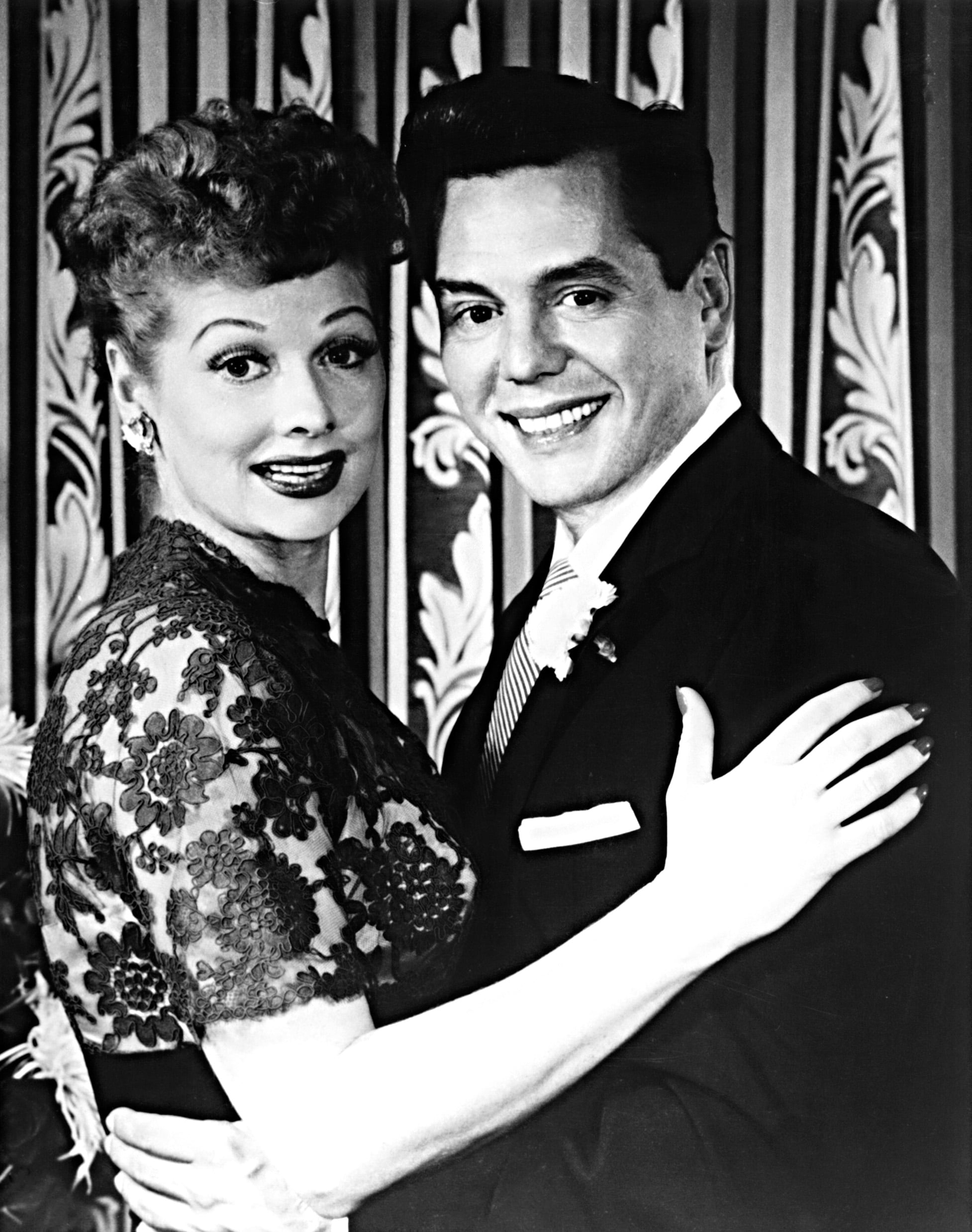
Technical and Social Innovations of the Desilu Era
The impact of Lucille Ball and Desi Arnaz extended far beyond the laughter they provided. They were trailblazers in several social and technical arenas that remain relevant in 2026.
Breaking the "Interracial" Barrier
In the 1950s, the depiction of an Anglo-Latino couple was a radical departure from the norm. Arnaz’s character, Ricky Ricardo, was not a caricature; he was a successful, hardworking professional who was the "straight man" to Lucy’s chaotic schemes. This representation provided a degree of visibility for Latino performers that was previously non-existent in mainstream American media.
The Multi-Camera Setup and Live Audience
Before Desilu, sitcoms were often filmed like movies (one camera at a time, no audience) or performed live like theater. The three-camera system allowed the actors to perform an entire scene without stopping, capturing the genuine energy of a live audience. This format became the standard for sitcoms for the next seven decades, used in everything from The Mary Tyler Moore Show to Friends.
Handling Pregnancy on Television
When Lucille Ball became pregnant with her second child, Desi Arnaz Jr., in 1952, the couple and their producers faced a crisis. At the time, showing a pregnant woman on television was considered taboo—the word "pregnant" was even banned by the network. Desilu fought to incorporate the pregnancy into the show’s storyline. The episode "Lucy Goes to the Hospital" aired on January 19, 1953, the same day Ball gave birth in real life. It drew 44 million viewers, a staggering 72% of all U.S. homes with televisions at the time, outperforming the inauguration of President Dwight D. Eisenhower the following day.
Desilu’s Expansion and the Acquisition of RKO
By the mid-1950s, Desilu was no longer just the home of I Love Lucy. It had evolved into a major production hub. In 1957, in one of the most audacious moves in Hollywood history, Desilu Productions purchased RKO Radio Pictures, the very studio where Ball and Arnaz had first met. This acquisition gave them massive soundstages and production facilities, turning Desilu into the first major independent television studio.
Under the leadership of Ball and Arnaz, Desilu produced or provided facilities for some of the most iconic shows in television history, including:
- The Untouchables
- The Dick Van Dyke Show
- Star Trek
- Mission: Impossible
Arnaz served as the visionary executive and producer, handling the complex negotiations and technical logistics. Ball was the creative force and the face of the studio, though she increasingly took on executive responsibilities as the years progressed.
The Breakdown of a Partnership: Marriage and Divorce
Despite their professional triumphs, the personal relationship between Lucille Ball and Desi Arnaz was frequently tumultuous. The same passion that fueled their onscreen chemistry often led to off-screen conflict. Arnaz struggled with the pressures of running a massive studio, battling alcoholism and frequent infidelity. Ball, a perfectionist who craved a stable domestic life, found the situation increasingly untenable.
The couple filmed their final episode together for The Lucille Ball-Desi Arnaz Show (a series of hour-long specials) in 1960. The following day, Ball filed for divorce. The end of their marriage marked the end of an era, but it did not end their professional or personal connection. Ball eventually bought out Arnaz’s share of Desilu in 1962, becoming the first woman to head a major television studio. Under her solo leadership, the studio continued to thrive until she sold it to Gulf+Western in 1967 for $17 million.
Comparative Overview: Individual Contributions to Television
To understand the full scope of their partnership, it is helpful to look at how their roles complemented one another within their shared ventures.
| Feature/Role | Lucille Ball | Desi Arnaz |
|---|---|---|
| Primary On-Screen Persona | Physical Comedienne / "Lucy Ricardo" | Bandleader / "Ricky Ricardo" |
| Production Specialty | Creative Direction & Performance | Technical Innovation & Business Strategy |
| Key Innovation | Character-driven situational comedy | Multi-camera film setup (35mm) |
| Studio Leadership | President of Desilu (1962–1967) | President of Desilu (1950–1962) |
| Long-term Legacy | Pioneer for women in Hollywood | Pioneer for Latino representation and syndication |
| Major Awards | 5 Emmy Awards, Kennedy Center Honors | Golden Globe winner, 2 Hollywood Walk of Fame Stars |
The Legacy of Desilu in 2026
As of 2026, the influence of Lucille Ball and Desi Arnaz remains a cornerstone of the entertainment industry. Their work is preserved and celebrated through various institutions and modern media.
- The Lucille Ball Desi Arnaz Museum: Located in Ball’s hometown of Jamestown, New York, the museum serves as a primary repository for their archives, costumes, and personal effects. It continues to attract thousands of fans annually, serving as an educational resource for the history of television.
- Streaming and Digital Preservation: I Love Lucy remains one of the most-watched classic television series globally. In 2026, it is available across multiple high-definition streaming platforms, including Paramount+, where a new generation of viewers can appreciate the timeless nature of their comedy.
- Modern Biographical Portrayals: Recent years have seen a resurgence of interest in their private lives through projects like the film Being the Ricardos and the documentary Lucy and Desi. These works have added nuance to the public's understanding of their relationship, highlighting the labor and intellect behind their public personas.
- Desilu's Successors: The physical infrastructure of Desilu (the former RKO lots) is now part of the Paramount Global ecosystem, continuing to function as a vital part of the Hollywood production landscape.
Frequently Asked Questions
Why did Lucille Ball and Desi Arnaz get divorced?
The primary reasons for their 1960 divorce were Desi Arnaz’s struggles with alcoholism, his frequent infidelity, and the immense stress of managing Desilu Productions. While they remained deeply in love for the rest of their lives, the day-to-day reality of their marriage became unsustainable due to these personal issues and the pressures of their public lives.
Who owns the rights to I Love Lucy in 2026?
The rights to I Love Lucy and the majority of the Desilu library are owned by Paramount Global (formerly ViacomCBS). This ownership stems from the 1967 sale of Desilu to Gulf+Western, which also owned Paramount Pictures. Today, the show is a flagship title for Paramount's television distribution and streaming wings.
Did Desi Arnaz really invent the rerun?
While he didn't "invent" the concept of a repeat broadcast, Desi Arnaz is credited with creating the economic model for reruns. By insisting on filming I Love Lucy on 35mm film instead of live broadcast, he created a high-quality asset that could be sold to networks for years to come. This birthed the syndication market, which became the most profitable aspect of the television business.
How did Lucille Ball influence women in business?
Lucille Ball was a massive trailblazer for women in the corporate side of entertainment. When she became the President of Desilu Productions in 1962, she was the first woman to run a major studio. She was known for her "greenlight" authority, famously being the person who approved the production of the original Star Trek series, despite the studio's financial concerns at the time.
Were Lucille Ball and Desi Arnaz friends after their divorce?
Yes, they remained incredibly close friends until Desi Arnaz’s death in 1986. They frequently spoke on the phone, attended family events together, and supported each other's later careers. Their children, Lucie Arnaz and Desi Arnaz Jr., have often spoken about the "deep, profound love" their parents maintained despite no longer being married.
What is the three-camera system?
The three-camera system, developed at Desilu by cinematographer Karl Freund, involves using three separate cameras to record a performance simultaneously from different angles: a wide shot and two "over-the-shoulder" or medium shots. This allows editors to cut between angles without the actors needing to repeat the scene multiple times, maintaining the comedic timing and the reaction of the live audience.
Final Recommendations for Enthusiasts and Researchers
To truly appreciate the depth of the partnership between Lucille Ball and Desi Arnaz, one should look beyond the slapstick comedy of I Love Lucy. Their story is one of immigrant success, female empowerment in the workplace, and technical brilliance.
For those interested in their history, a visit to the Lucille Ball Desi Arnaz Museum in Jamestown is highly recommended. Additionally, researching the business history of Desilu Productions provides essential context for how the modern entertainment industry was built. Whether you are a fan of classic comedy or a student of television history, the legacy of Lucy and Desi offers a masterclass in how to combine creative vision with practical innovation. Their work serves as a reminder that the most enduring "magic" in Hollywood is often the result of hard work, strategic risk-taking, and a refusal to accept the status quo.
Image Gallery
Select an image to open it in a new tab.



Vivian Cho
Executive IT and Emerging Technologies Reporter
