Converting a Group Plan to Permanent Life Insurance: A Comprehensive Guide to the Process
Converting a group life insurance plan into an individual permanent policy is a vital contractual right that allows individuals to maintain life insurance coverage after leaving an employer without undergoing a new medical examination. This transition requires navigating strict 31-day timelines, understanding significant premium increases, and choosing between specific permanent policy structures to ensure long-term financial security.
Understanding the Fundamentals of Group Life Conversion
Group life insurance is a staple of employee benefit packages, typically offered as group term life insurance. While these plans provide affordable coverage during your tenure at a company, they are generally "temporary" because they are tied to your employment status. When you resign, retire, or are terminated, that coverage usually ends. However, most group policies include a conversion privilege.
The conversion privilege is a contractual provision—and in many jurisdictions, a legal requirement—that permits a certificate holder to switch their group coverage to an individual permanent life insurance policy. The defining characteristic of this process is the waiver of evidence of insurability. In simpler terms, the insurance company cannot ask you medical questions or require a physical exam. They must issue the policy regardless of your current health status, provided you meet the application deadlines and pay the required premiums.
As of 2026, the landscape of group benefits continues to emphasize these portability and conversion rights as essential components of workforce mobility. For individuals who have developed chronic health conditions, such as diabetes or heart disease, during their employment, the conversion process is often the only viable way to secure lifelong insurance coverage that would otherwise be denied in the open market.
The Critical Distinction: Portability vs. Conversion
Before initiating the process, it is essential to distinguish between "porting" a policy and "converting" a policy. These two options are often confused but serve different purposes and have different long-term implications.
Portability allows an employee to take their existing group term coverage with them. The policy remains a term policy, meaning it does not build cash value and usually expires at a certain age (often 65 or 70). Portability often requires a health statement or "simplified underwriting," meaning you might still be denied if your health is poor.
Conversion, by contrast, transforms the coverage into a permanent policy, such as Whole Life or Universal Life. Because it is a permanent product, it builds cash value over time and is guaranteed to remain in force as long as premiums are paid. Crucially, conversion is "guaranteed issue," meaning health status is not a factor. If you are leaving your job due to a disability or serious illness, conversion is almost always the superior, albeit more expensive, choice.
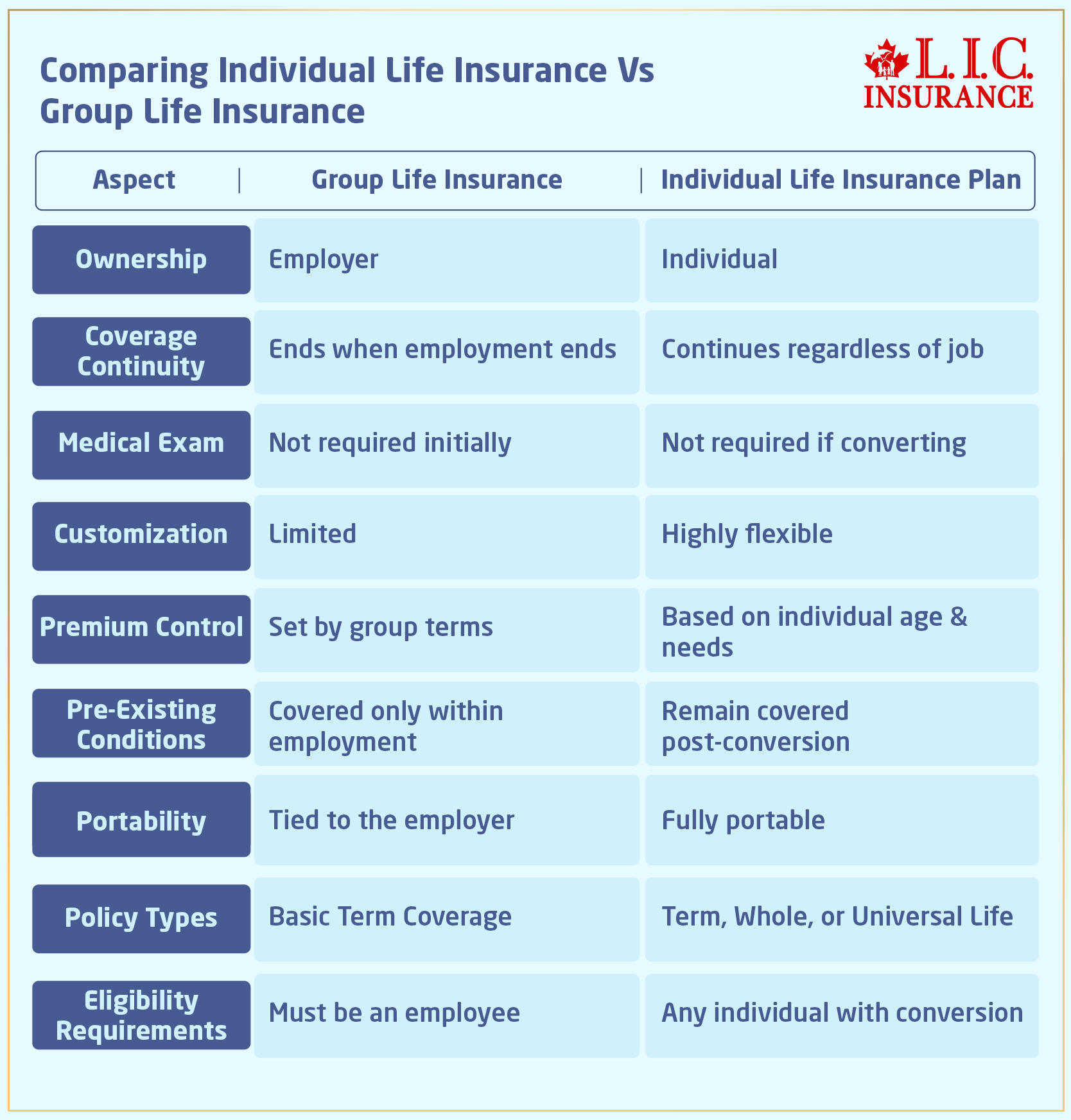
The Step-by-Step Conversion Process in 2026
Navigating the transition from a group plan to a permanent individual policy requires precision. The process is governed by both the insurance carrier's specific master policy and state insurance regulations.
1. Identify the Triggering Event
The right to convert is triggered by a "qualifying event." Most commonly, this is the termination of employment. However, other triggers include a reduction in work hours that renders you ineligible for benefits, or the employer terminating the group life plan entirely for all employees. If the employer terminates the plan, you may only be eligible to convert if you have been covered under the plan for a minimum period, typically five years.
2. Obtain the Conversion Notice
Upon your departure, your employer’s Human Resources department is generally required to provide you with a Notice of Conversion Right. This document outlines your eligibility, the maximum amount you can convert (usually the amount of your current group death benefit), and the deadline for submission. In 2026, many companies provide this digitally through benefits portals, but the legal responsibility to notify the employee remains paramount.
3. Observe the 31-Day Window
The most critical technical hurdle is the timeline. Standard group life contracts provide a 31-day grace period following the termination of group coverage. During these 31 days, you remain covered under the group plan's death benefit. To maintain coverage beyond this period, the conversion application and the first premium payment must be received by the insurance carrier within this window. Failing to meet this deadline usually results in the permanent loss of the conversion right.
4. Select the Permanent Policy Type
When converting, you typically cannot choose another term policy. The insurer will offer a selection of permanent products.
- Whole Life Insurance: Offers a guaranteed death benefit, fixed premiums, and a guaranteed rate of return on cash value.
- Universal Life Insurance: Provides more flexibility in premium payments and death benefits, though it may carry more risk depending on interest rate fluctuations. The insurer’s conversion department will provide "illustrations" showing the projected costs and cash value accumulation for these options.
5. Calculate the New Premium
Expect a significant jump in costs. Group life rates are "blended" across a large population and often subsidized by the employer. Individual permanent rates are based on your attained age (your age at the time of conversion) and are not subsidized. Because the insurer cannot use medical underwriting to mitigate risk, they often charge "standard" or "rated" manual premiums, which are higher than what a healthy individual might find on the open market.
| Feature | Group Term Life Insurance | Converted Permanent Life Insurance |
|---|---|---|
| Medical Exam | Not required (usually) | Never required for conversion |
| Policy Type | Term (Temporary) | Whole or Universal (Permanent) |
| Premium Cost | Low (Group rates) | High (Individual attained-age rates) |
| Cash Value | None | Accumulates over time |
| Ownership | Employer-owned certificate | Individually owned policy |
| Duration | Ends with employment | Lifelong (if premiums are paid) |
| Deadline to Act | N/A | Typically 31 days from loss of coverage |
Financial Implications: Why the Cost Increases
Understanding the pricing of a converted policy is vital for household budgeting. In a group setting, an employee might pay $10 to $20 per month for $100,000 of coverage because the risk is spread across hundreds or thousands of workers. When you convert that $100,000 to a permanent policy at age 55, your new premium could easily exceed $200 or $300 per month.
This increase occurs for three reasons:
- Shift to Permanent Insurance: Permanent insurance is fundamentally more expensive than term because a payout is guaranteed eventually (as long as the policy is active), whereas most term policies expire without a claim.
- Attained Age Pricing: You are buying a policy as an older individual than when you first joined the group plan.
- Adverse Selection Risk: Insurance companies know that people who choose to convert are often those who cannot get insurance elsewhere due to health issues. To compensate for this higher risk, the "conversion rates" are set at a higher baseline.
When Does Conversion Make Sense?
Because of the high cost, conversion is not the right choice for everyone. It is a strategic financial tool that should be used under specific circumstances.
For Those with "Uninsurable" Health Conditions
If you have been diagnosed with a serious illness, you may find it impossible to purchase a new life insurance policy on the open market. In this scenario, the conversion privilege is an invaluable asset. It allows you to maintain a death benefit for your beneficiaries that would otherwise be unavailable at any price.
For Estate Planning Purposes
Permanent life insurance is often used to provide liquidity to pay estate taxes or to provide an inheritance for heirs. If you are retiring and your group coverage was your primary insurance vehicle, converting a portion of it ensures that a death benefit remains in place regardless of how long you live.
As a Bridge During Employment Gaps
If you are moving between jobs and have a pre-existing condition, converting your old group plan ensures there is no gap in coverage. While you might eventually get new group coverage at your next employer, that coverage may have "waiting periods" or different terms.
Common Pitfalls and Troubleshooting
The conversion process is rigid, and minor errors can lead to a lapse in coverage.
- Missing the Deadline: If you receive your conversion notice late, some states require the insurer to extend the conversion period, but this is not universal. Always contact the insurer immediately if you haven't received paperwork within a week of leaving your job.
- Partial Conversions: You do not have to convert the entire amount of your group coverage. If the full $500,000 policy is too expensive, you can choose to convert $50,000 or $100,000 to keep costs manageable while still retaining some permanent protection.
- Incomplete Paperwork: Ensure that the "Employer Portion" of the conversion application is signed. If your former employer is slow to sign off, the insurer may reject the application.
- Premium Shocks: Many people start the process but abandon it when they see the first bill. It is helpful to request a "quote" or "illustration" from the insurance company's conversion desk before the 31-day window closes so you can make an informed decision.
The Role of Beneficiary Designations
When you convert a policy, you are essentially starting a new individual contract. While some insurers may carry over your beneficiary designations from the group plan, it is a best practice to explicitly name your beneficiaries on the new conversion application. This ensures that the death benefit is paid out according to your current wishes and avoids the complexities of probate.
In 2026, the integration of digital estate planning tools has made this easier, but the legal document—the life insurance application—remains the primary authority for distribution. If you are converting a policy due to a terminal illness, ensuring your beneficiary information is accurate and up-to-date is the most critical final step of the process.
Frequently Asked Questions
Can I convert my spouse’s or child’s group coverage?
Yes, if your group plan included "Dependent Life" coverage, those individuals usually have their own independent conversion rights. If your employment ends, your spouse and children can typically convert their respective coverage amounts into individual permanent policies following the same 31-day rule. Each person will have their own policy and premium based on their age.
What happens if I die during the 31-day conversion window?
If a former employee dies during the 31-day period following the termination of their group coverage, the insurance company is generally required to pay the death benefit as if the person had converted the policy. This is a standard protection built into most group life contracts to ensure that people are not left unprotected during the transition period between jobs.
Do I have to pay the first premium with the application?
In almost all cases, yes. An insurance contract is not considered "in force" until the first premium is paid. Sending the application without the initial payment can lead to delays that might push you past the 31-day deadline. Most carriers in 2026 accept electronic fund transfers (EFT) or online payments to expedite this process.
Is a "Portability" option better than "Conversion"?
It depends on your health. If you are healthy and just want cheap coverage until you find a new job, portability is often better because it remains term insurance and is cheaper. If you have health issues or want a policy that lasts your entire life and builds cash value, conversion is the better option.
Can I convert to a different insurance company?
No. The conversion privilege only applies to the insurance carrier that provided the group coverage. You are converting the group certificate into an individual policy issued by that same company. If you wish to use a different company, you must apply for a new policy, which will involve medical underwriting and a new health assessment.
Practical Recommendation
If you are facing the loss of group life insurance in 2026, your first step should be to request a conversion illustration immediately. Do not wait for the formal HR exit package if you know your departure date. Contact the insurance carrier's "Group Life Conversion" department directly.
Evaluate the cost of the permanent policy against your actual needs. If the premium is too high, consider a "partial conversion" to maintain a baseline level of protection without a medical exam. For those with significant health concerns, the conversion right is one of the most important financial safety nets available—treat the 31-day deadline as an absolute and immovable boundary.
Image Gallery
Select an image to open it in a new tab.
Celine Dubois
Contemporary Living and Global Arts Columnist
