Managed IT security services provide a structured, professional framework for defending business infrastructure, but their effectiveness depends entirely on the alignment between the service provider’s capabilities and the specific security requirements of the client. These services offer continuous monitoring and incident response that internal teams often lack the capacity to maintain, yet they are not a guaranteed shield against all forms of cyber threats or operational failures.
Defining Managed Security Services in 2026
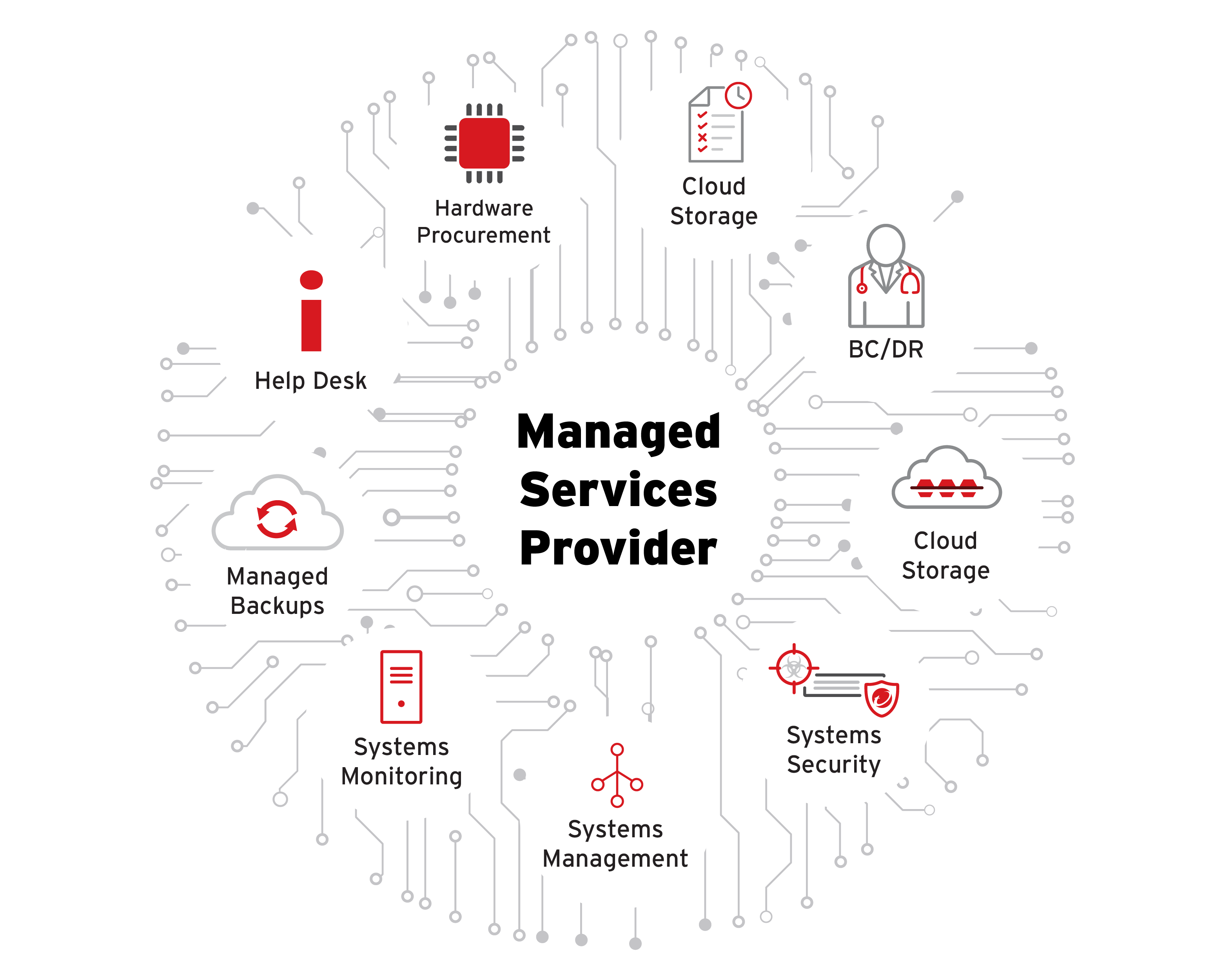
Managed Security Service Providers (MSSPs) have evolved significantly since the early 2020s. Today, an MSSP is not merely a vendor that installs antivirus software or manages firewalls. Instead, they function as an extension of a business's operational team, providing Security Operations Center (SOC) capabilities, threat hunting, and compliance oversight.
At its core, a managed service model shifts the burden of security management—patching, logging, anomaly detection, and policy enforcement—from the business owner to a third-party organization that specializes in these tasks. By outsourcing these functions, businesses aim to achieve a higher level of security maturity without the prohibitive costs of hiring, training, and retaining a full team of in-house security engineers.
The Mechanisms of Protection: What MSSPs Actually Provide
To understand if these services protect a business, one must first understand what "protection" looks like in the current threat landscape. Effective managed security is built on four distinct pillars:
- Continuous Monitoring and Visibility: Security threats are rarely static. MSSPs utilize Security Information and Event Management (SIEM) tools to ingest data from endpoints, cloud environments, and network traffic. This provides 24/7 visibility into events that might indicate a breach, such as unauthorized access attempts or suspicious data exfiltration.
- Proactive Threat Hunting: While automated tools catch known signatures of malicious software, human-led threat hunting is necessary to identify sophisticated actors who remain dormant or use "living-off-the-land" techniques—using legitimate administrative tools to conduct attacks.
- Vulnerability Management: Security is as much about maintenance as it is about defense. Managed providers identify and patch vulnerabilities within a client's software and hardware stack. This reduces the "attack surface" that hackers can exploit to gain an initial foothold.
- Incident Response Orchestration: When a breach is detected, time is the most critical variable. An MSSP provides a predefined incident response plan, which outlines exactly how a company should contain the threat, preserve evidence, and restore services.
The Gap Between Subscription and Security
A common misconception is that "managed" equates to "bulletproof." It is vital for business owners to distinguish between managed services and managed outcomes.
A contract with an MSSP ensures that specific tasks will be performed—such as reviewing logs or updating software—but it does not automatically indemnify a business against cyberattacks. The effectiveness of the protection is bounded by the Service Level Agreement (SLA). For example, if an MSSP is tasked only with monitoring firewalls but the business suffers an attack through a compromised employee credential in an email application, the service provider may argue the incident falls outside their scope of responsibility.
Moreover, the quality of protection is directly tied to the communication between the MSSP and the client. If a business changes its infrastructure—such as migrating to a new cloud provider or adopting a new SaaS platform—without informing the MSSP, the security team may be monitoring an outdated or incomplete network map, creating significant blind spots.
Strategic Comparison: Managed Services vs. In-House Security
Deciding whether to rely on managed security requires a realistic assessment of a company's internal resources.
| Feature | In-House Security Team | Managed IT Security Services |
|---|---|---|
| Cost Predictability | Variable (Salaries, training, high turnover) | Predictable (Fixed monthly/annual subscription) |
| Expertise Depth | Deep knowledge of internal workflows | Deep knowledge of threat intelligence/tools |
| Availability | Limited by headcount/budget | Generally 24/7/365 coverage |
| Compliance | High internal accountability | Contractual compliance oversight |
| Response Speed | Instant but potentially inexperienced | Standardized but requires coordination |
For many small to mid-sized enterprises (SMEs), building an in-house SOC is financially impossible. Even for larger organizations, the difficulty of recruiting top-tier cybersecurity talent often makes outsourcing the most viable path to maintaining a professional security posture.
Limitations and Operational Risks
Despite their benefits, there are clear limitations to managed services. One primary concern is the "Single Point of Failure" risk. If an MSSP is compromised, their access to the client’s systems could be used to facilitate a supply chain attack. This makes the vendor's own security practices an essential part of the due diligence process.
Another limitation is the "One Size Fits All" approach. Standardized security packages often ignore the nuanced, industry-specific risks a business faces. A retail chain faces different threats—such as Point-of-Sale (POS) system compromise—than a manufacturing firm, which might be more concerned with the security of Industrial Control Systems (ICS). If an MSSP does not adapt their service to the specific business context, they offer "check-the-box" compliance rather than true risk reduction.
Practical Steps for Verifying Protection
To determine if you are actually receiving the protection you are paying for, you must go beyond trust and move toward verification.
- Request Quarterly Security Reviews: Do not accept automated reports at face value. Demand a meeting with the lead analyst to discuss the most significant risks identified in the previous quarter and how they were mitigated.
- Conduct Independent Penetration Tests: Hiring a third-party auditor to attempt to breach your system is the only way to objectively measure the effectiveness of your security provider. If the MSSP cannot detect a controlled penetration test, they will likely fail to detect a real attack.
- Review the Scope of Coverage: Ensure your contract explicitly covers your critical assets. Clarify whether the service includes identity management, endpoint protection, and cloud monitoring, or if it is restricted to specific hardware segments.
- Evaluate Incident Reporting: During a security event, does the MSSP simply send an alert, or do they provide a remediation plan? Effective protection requires an active, not passive, partner.
Frequently Asked Questions
Does a managed security service prevent all cyberattacks? No. No security measure can guarantee 100% protection. The objective of an MSSP is to reduce the "mean time to detect" (MTTD) and "mean time to respond" (MTTR), thereby minimizing the impact of an attack rather than promising total immunity.
How do I know if my MSSP is actually monitoring my network? You should have access to a dashboard or receive regular reports detailing the security events monitored. Furthermore, performing an unauthorized simulation—such as a controlled red-team exercise—will demonstrate if the provider notices and reacts to anomalous activity.
Is it cheaper to manage security in-house? Typically, no. For most organizations, the cost of hiring a team of experts with round-the-clock availability far exceeds the cost of a managed service subscription. In-house teams also face higher hidden costs, such as continuous training, expensive tool licensing, and employee attrition.
What happens if the MSSP makes a mistake that leads to a data breach? Liability is determined by the Master Service Agreement (MSA). You must review the indemnification and liability limitation clauses in your contract. Do not assume the MSSP covers the financial costs of a breach unless it is clearly stated in the legal documentation.
Should I use an MSSP if I already have an internal IT department? Yes. Managed services often complement internal IT teams. The internal team focuses on daily operations and business logic, while the MSSP provides the specialized, high-intensity security focus that requires dedicated, around-the-clock attention.
Making the Decision
Managed IT security services are an essential tool for modern business, but they are not a "set-it-and-forget-it" solution. They function as a force multiplier for your security strategy. If you choose to engage an MSSP, prioritize providers that demonstrate transparency in their processes and flexibility in their service delivery.
The next action you should take is to audit your existing service contract against your current business infrastructure. If your business has moved significant assets to the cloud or expanded remote workforces, verify that these areas are explicitly covered in your scope of service. If your current provider cannot demonstrate how they would respond to a modern, multi-vector threat, it is time to initiate a formal review of your security partnership.
Image Gallery
Select an image to open it in a new tab.
Ingrid Bjornson
Global Cyber Policy and Regulation Analyst
