The Debate Over Amy Cuddy Power Poses and Her 2012 TED Presentation

The debate over Amy Cuddy’s power poses and her 2012 TED presentation centers on whether adopting "expansive" postures can cause significant hormonal changes and behavioral shifts. While the original 2010 study claimed increases in testosterone and decreases in cortisol, subsequent replication attempts failed to confirm these biological effects, though psychological benefits regarding self-perception often persist.
The Origin: The 2012 TED Talk and the Power Posing Promise
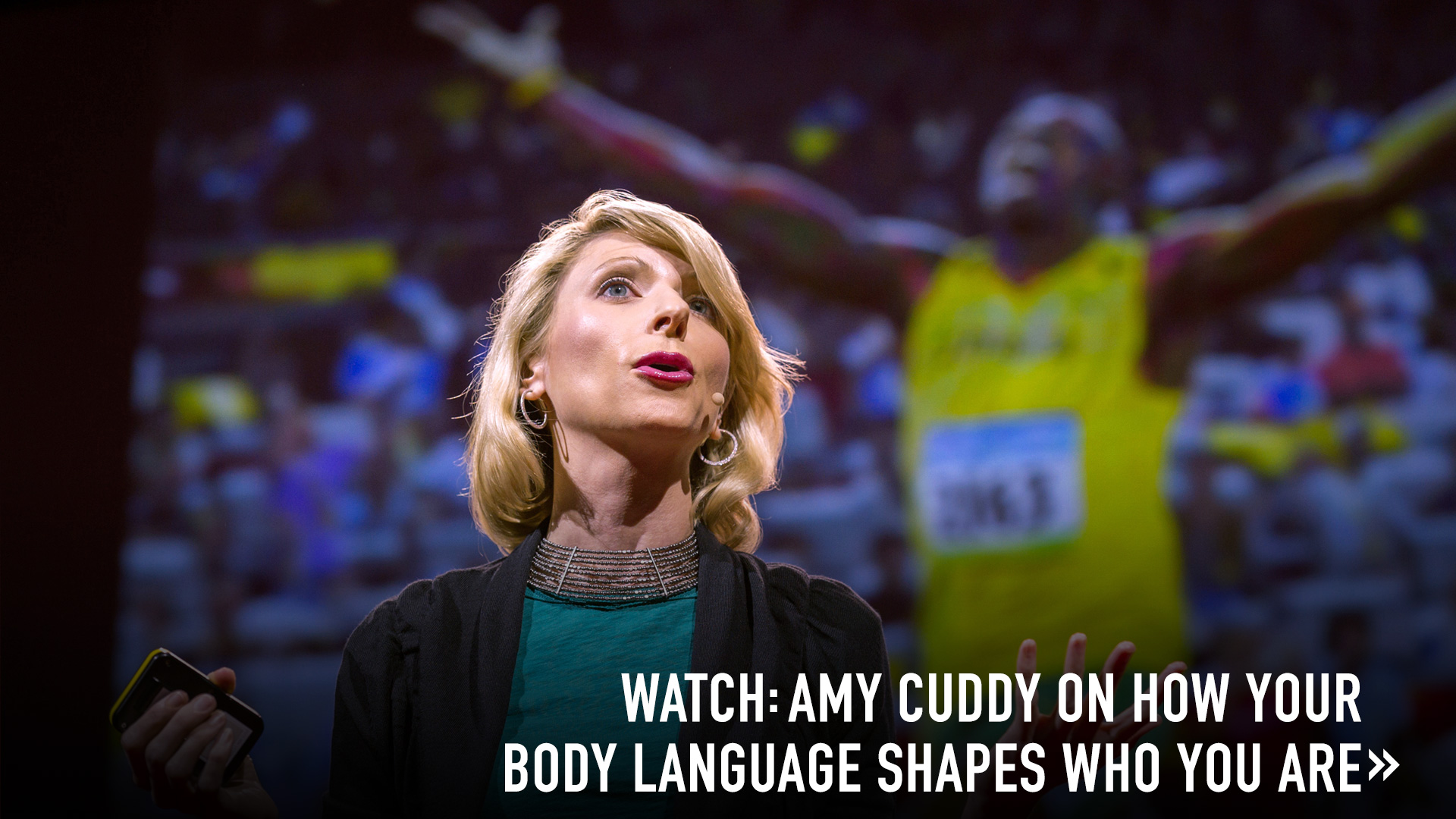
In June 2012, Harvard psychologist Amy Cuddy delivered a TED Global talk titled "Your body language may shape who you are." The presentation quickly became one of the most-watched TED talks of all time, amassing tens of millions of views and catapulting Cuddy to international fame. The core premise was simple yet revolutionary: by standing in a posture of confidence—even when we do not feel confident—we can actually change our biology and our outcomes in high-stress situations.
The talk was based on a 2010 paper published in Psychological Science by Dana Carney, Amy Cuddy, and Andy Yap. The researchers conducted an experiment where participants were asked to hold either "high-power" poses (expansive, open positions like the "Wonder Woman" or "Victory" pose) or "low-power" poses (contractive, closed positions) for two minutes.
The original study reported three major findings:
- Hormonal Changes: High-power posers showed an increase in testosterone (the "dominance" hormone) and a decrease in cortisol (the "stress" hormone).
- Risk Tolerance: High-power posers were more likely to take risks in a gambling task.
- Self-Reported Power: High-power posers felt more powerful and in control.
Cuddy’s presentation focused on the idea of "faking it until you become it," suggesting that these two-minute interventions could help people perform better in job interviews, public speaking, and other evaluative social settings. However, the scientific community soon began to scrutinize the robustness of these claims, leading to one of the most famous controversies in modern social psychology.
The Replication Crisis and the Shift in Scientific Consensus
As the popularity of power posing grew, so did the "Replication Crisis" within the social sciences. This period, which gained momentum in the mid-2010s, involved researchers attempting to reproduce the results of landmark studies, only to find that many of the original findings could not be replicated. The debate over Amy Cuddy's power poses became the "poster child" for this movement.
In 2015, a team of researchers led by Eva Ranehill at the University of Zurich published a study in Psychological Science that attempted to replicate the original Carney, Cuddy, and Yap findings using a much larger sample size (200 participants compared to the original 42). While the Ranehill study found that participants felt more powerful (the psychological effect), it found absolutely no evidence of changes in testosterone, cortisol, or risk-taking behavior (the physiological and behavioral effects).
This failure to replicate the hormonal data struck at the heart of the "power posing" theory. If the biological mechanism—the shift in hormones—wasn't real, then the claim that posture could "shape who you are" at a fundamental biological level was significantly weakened.
The Technical Breakdown: P-Hacking and Small Sample Sizes
The debate deepened as statisticians and methodologists analyzed the original 2010 data. Two prominent critics, Joseph Simmons and Uri Simonsohn (creators of the Data Colada blog), performed a "p-curve" analysis on the power posing research. Their analysis suggested that the evidence for power posing was statistically thin and likely the result of "p-hacking."
P-hacking refers to the practice of trying different ways of analyzing data until a statistically significant result (p < .05) is found. In the case of the original power posing study, critics pointed out several methodological issues:
- Small Sample Size: With only 42 participants, the study was "underpowered," meaning it was highly susceptible to "false positives" or random noise being interpreted as a significant trend.
- Flexibility in Data Analysis: The researchers had many choices in how to measure and report their data (e.g., which hormones to report, how to exclude outliers), which can inadvertently lead to significant results that don't hold up in larger groups.
- The "File Drawer" Effect: Critics argued that many other studies may have tried to find similar results and failed, but those results were never published, leaving only the "successful" (but perhaps coincidental) studies in the public eye.
The Co-Author’s Departure: Dana Carney’s Public Statement
Perhaps the most dramatic moment in the debate occurred in 2016. Dana Carney, the lead author of the original 2010 paper and Cuddy’s former collaborator, posted a public statement on her University of California, Berkeley faculty website. In a move rarely seen in academia, Carney explicitly disavowed the findings.
Carney stated: "I do not believe that 'power pose' effects are real." She detailed the specific methodological flaws of the original study and concluded that she no longer encouraged people to spend time on the research or the practice. This created a significant rift in the debate, as the primary investigator of the original work had effectively sided with the critics.
Cuddy, however, did not back down. While she acknowledged the lack of evidence for hormonal changes, she continued to defend the psychological benefits of expansive posture. In a 2018 academic review, Cuddy and her colleagues analyzed hundreds of studies on "postural feedback," arguing that while the hormone claims might have been premature, the effect of posture on "felt power" was robust and consistently replicable.
Scientific Nuance: Physiological vs. Psychological Effects
By 2026, the scientific community has reached a more nuanced consensus. The debate is no longer about whether power posing is "true" or "false" in a binary sense, but rather what specific claims hold weight under rigorous testing.
The following table summarizes the current understanding of the various claims made during the peak of the power posing debate:
| Claim Category | Original 2010 Claim | 2026 Scientific Consensus | Verification Status |
|---|---|---|---|
| Hormonal (Testosterone) | Significant increase after 2 minutes | No consistent evidence of change | Disproven |
| Hormonal (Cortisol) | Significant decrease after 2 minutes | No consistent evidence of change | Disproven |
| Risk-Taking Behavior | Increased propensity for risk | Mixed/Weak evidence; highly context-dependent | Inconclusive |
| Self-Reported Power | Significant increase in "feeling" powerful | Robustly supported across multiple replications | Validated |
| Performance in Evaluative Tasks | Improved performance (e.g., job interviews) | Likely mediated by confidence, not biology | Partially Validated |
This distinction is crucial. If someone uses a "power pose" before an interview and feels more confident, that confidence may lead to better performance. However, that performance boost is likely the result of a psychological shift in mindset rather than a sudden surge of testosterone or a drop in cortisol.
The Impact on Psychological Research Methodology
The debate over Amy Cuddy's power poses was a catalyst for fundamental changes in how social science is conducted. Because of this controversy, the "Open Science" movement gained massive traction. Today, in 2026, many of the safeguards that were absent in 2010 are now standard practice:
- Pre-registration: Researchers must now often "pre-register" their study designs and hypotheses before collecting data. This prevents p-hacking by ensuring researchers cannot change their analysis methods after seeing the results.
- Open Data: There is a much stronger push for researchers to share their raw data and code, allowing independent scientists to verify their calculations.
- Larger Samples: Journals now frequently require much larger sample sizes to ensure that findings are not just statistical flukes.
- Replication Projects: Academic journals have become more open to publishing "null results"—studies that show an effect does not exist—which helps combat the file-drawer effect.
Practical Takeaways: Should You Still Use Power Poses?
Given the intensity of the debate, a common question remains: Is there any value in practicing power poses? The answer depends entirely on what you expect the outcome to be.
If you are looking for a biological "hack" that will fundamentally alter your endocrine system in 120 seconds, the science suggests you will be disappointed. There is no evidence that standing like Wonder Woman will change your testosterone levels in a way that impacts your long-term health or immediate capabilities.
However, if you are looking for a psychological "prime" to help manage anxiety or boost self-esteem before a stressful event, power posing—or more accurately, "expansive posture"—still has merit. The "postural feedback" effect is real; our brains do take cues from our bodies. Just as smiling can sometimes make us feel slightly happier (the facial feedback hypothesis), standing tall can make us feel more capable.
The current expert advice in 2026 suggests the following:
- Focus on Posture, Not Poses: Instead of two minutes of "Wonder Woman" in a bathroom stall, focus on maintaining an open, upright posture during your actual interactions.
- Mind-Body Connection: Use expansive posture as one tool among many, such as deep breathing or cognitive reframing, rather than a "magic bullet."
- Be Aware of Context: In some cultures or social settings, overly dominant body language can be perceived as aggressive rather than confident, which may backfire.
Frequently Asked Questions
Did Amy Cuddy lose her job at Harvard because of the power pose debate?
No, Amy Cuddy was not fired from Harvard. She left her tenure-track position at Harvard Business School in 2017 to focus on her work as a speaker and author. She has maintained that her departure was motivated by personal reasons and the desire to reach a broader audience, though the intense professional criticism she faced during the replication crisis was a significant backdrop to that period.
Is power posing considered "pseudoscience" now?
It is not classified as pseudoscience in its entirety, but the specific hormonal claims are generally regarded as unsupported by evidence. The psychological aspect—that posture influences mood and self-perception—remains a valid area of study within social psychology known as "embodied cognition."
What does "embodied cognition" mean?
Embodied cognition is the theory that many features of cognition, whether human or otherwise, are shaped by aspects of the entire body of the organism. In the context of power posing, it suggests that our thoughts are not just in our heads but are influenced by our physical states and movements.
Does the "Power Pose" TED talk still have the same disclaimer?
TED added a "Footnote from TED" or a "Curator's Note" to the talk's page on their website. This note informs viewers that the hormonal findings of the original study have been contested and that subsequent research has failed to replicate those specific biological effects, though the psychological effects on feeling powerful have generally held up.
Are there other "self-help" findings that were caught in the replication crisis?
Yes, several other popular psychological concepts faced similar scrutiny, including "ego depletion" (the idea that willpower is a finite resource that can be exhausted) and "social priming" (the idea that subtle cues, like words related to aging, can subconsciously change behavior). Like power posing, these concepts have been refined rather than entirely discarded.
Moving Forward with Confident Body Language
While the debate over Amy Cuddy’s power poses has significantly narrowed the original claims, the underlying message of her 2012 TED presentation—that we have the agency to influence our own feelings of presence—remains a powerful tool for many. The shift from "biological hack" to "psychological tool" doesn't make the practice useless; it simply makes it more grounded in reality.
The best course of action is to view expansive posture as a supplementary technique. When preparing for a high-stakes moment, use posture to help ground yourself and signal confidence to your own brain. However, pair this with substantive preparation and an awareness that there are no "hacks" that substitute for competence and experience.
Image Gallery
Select an image to open it in a new tab.



Declan O'Connor
Higher Education and Campus Culture Reporter
