
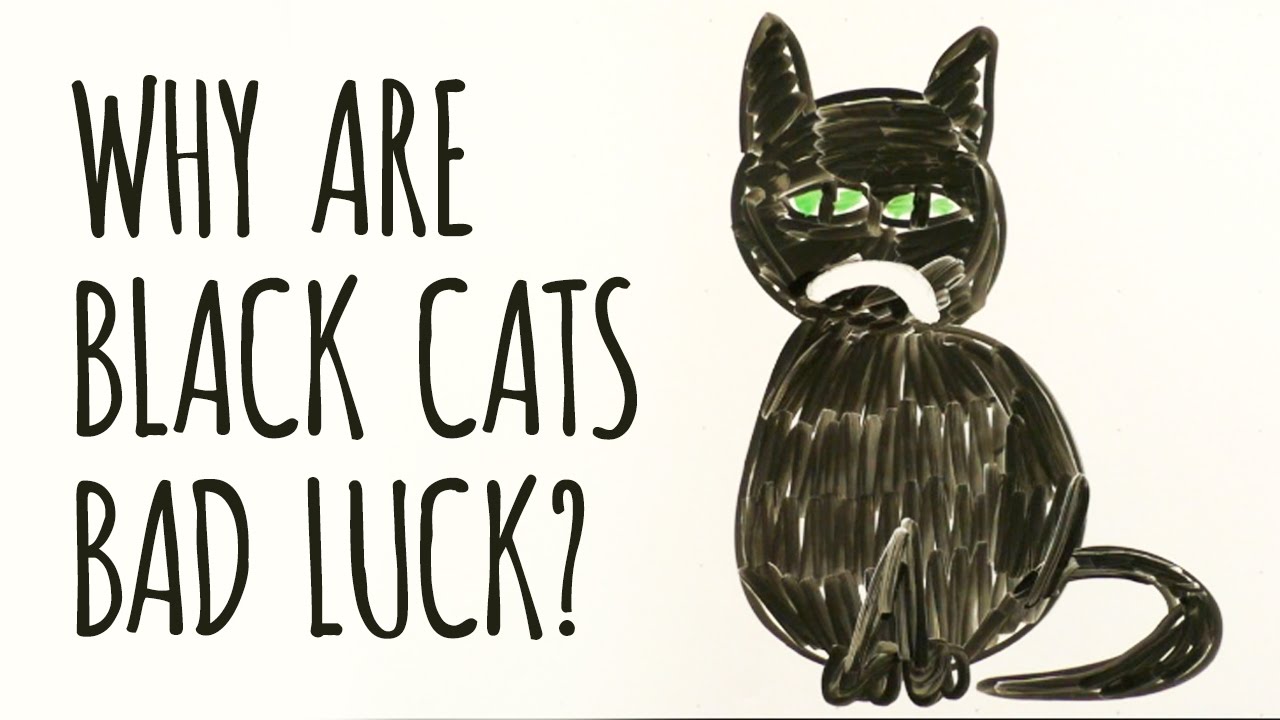
The belief that black cats bring bad luck is a superstition primarily rooted in Western European folklore from the Middle Ages. It stems from historical associations with witchcraft, demonic entities, and the "Great Plague." While many modern cultures view black cats as symbols of prosperity and protection, these ancient fears persist in contemporary urban legends and pop culture.
For centuries, the sight of a black cat crossing one's path has triggered a sense of unease in many parts of the world. However, to understand why these sleek felines became the poster children for misfortune, one must look past the animal itself and into the sociopolitical and religious shifts of medieval Europe. The transformation of the black cat from a revered protector in the ancient world to a pariah of the dark ages is a complex narrative involving religious decrees, mass hysteria, and unintended biological consequences.
The Ancient World: When Black Cats Were Deities
Before the black cat was ever considered a harbinger of doom, it was a symbol of divine protection. In Ancient Egypt, all cats—regardless of color—were held in the highest esteem. The goddess Bastet, often depicted as a woman with the head of a lioness or a domestic cat, was the guardian of the home, protector of women’s secrets, and a ward against evil spirits and disease.
Because black cats resembled the sleek, dark silhouettes of Bastet’s divine form, they were frequently sheltered in temples and treated as earthly manifestations of the goddess. Killing a cat, even accidentally, was a capital offense. This reverence was rooted in the cat's practical utility: they protected grain stores from rodents and killed venomous snakes. During this era, having a black cat in your home was considered a sign of immense good fortune and celestial favor.
The shift toward negativity began slowly as Egyptian influence waned and European folklore began to evolve. While the Greeks and Romans respected cats for their hunting prowess, they did not elevate them to the level of divinity. As Christianity began to spread across Europe, many symbols of "pagan" religions were reclassified as demonic or heretical to encourage the conversion of local populations.
The Medieval Pivot: Pope Gregory IX and "Vox in Rama"
The most significant turning point in the history of black cat superstitions occurred in the 13th century. In 1233, Pope Gregory IX issued a papal bull titled Vox in Rama. This document was intended to address the rise of alleged Satanic cults in Germany, but it had a devastating side effect for felines.
Within the text, the Pope described secret ceremonies where a "black cat as large as a dog" would descend from a statue to be kissed by the initiates. This official church document explicitly linked black cats to Satanic worship and the devil himself. Once the feline was codified as a vessel for the demonic, the public’s perception shifted from wary respect to outright hostility.
Throughout the Middle Ages, cats—especially black ones—were rounded up and killed in mass culling events. This was particularly prevalent during the midsummer festivals, where cats were sometimes burned alive in barrels or thrown from church towers to symbolize the driving out of evil. These actions were not merely cruel acts of superstition; they were seen as necessary religious duties to protect the soul of the community.

Witchcraft and the "Familiar"
As the obsession with witchcraft grew in the 16th and 17th centuries, the black cat’s reputation worsened. During the infamous witch trials in both Europe and the American colonies, the concept of the "familiar" became a central piece of evidence. A familiar was believed to be a low-ranking demon or a spirit that took the form of an animal to assist a witch in her dark magic.
Black cats were the most common animals accused of being familiars for several reasons:
- Nocturnal Nature: Their ability to move silently and remain invisible in the dark made them appear supernatural.
- Reflective Eyes: The "glow" of a cat’s eyes at night was often interpreted as the fire of hell burning within.
- Independence: Unlike dogs, cats did not always obey humans, which was seen as a sign of a rebellious, unholy spirit.
The myth of shape-shifting also took hold during this time. A popular folklore tale from the era described a father and son who encountered a black cat at night and threw rocks at it. The cat fled into the home of a woman suspected of witchcraft. The next day, the woman appeared bruised and limping, leading the townspeople to conclude that she and the cat were the same entity. This connection between black cats and "witches in disguise" cemented the idea that encountering a black cat was a direct brush with the occult.
The Irony of the Black Death
One of the most tragic chapters in the history of the black cat is its connection to the Black Death (Bubonic Plague). Because cats were seen as agents of the devil, populations across Europe decimated their feline neighbors. However, the plague was not spread by cats; it was carried by fleas living on rats.
By systematically killing the primary predator of the rat population, medieval Europeans inadvertently allowed the plague to spread much faster. The explosion of the rodent population led to a higher concentration of infected fleas, which in turn accelerated the death toll among humans. Instead of realizing that the absence of cats was the problem, many people interpreted the plague as a punishment from God, which led to even more fervent hunting of cats and "witches."
Cultural Divergence: Where Black Cats Are Good Luck
It is a common misconception that the black cat is a universal symbol of bad luck. In reality, large portions of the world view the animal quite differently. Understanding these variations helps highlight that the "bad luck" aspect is a localized cultural construct rather than a universal truth.
The British Isles and Maritime Lore
In parts of England and Scotland, a black cat arriving at your home is a sign of impending prosperity. In Scottish folklore, the Cat Sìth is a large black fairy cat. While it could be dangerous if disrespected, it was generally believed that leaving a saucer of milk for the Cat Sìth on Samhain would bring blessings to the household.
British sailors were also famously superstitious about black cats. They believed that having a black cat on board a ship would ensure a safe voyage and a return home. These "ship's cats" were so highly valued that their presence was often considered more important than the quality of the vessel itself. Furthermore, the wives of sailors would keep black cats in their homes, believing the cats' "luck" would act as a protective charm for their husbands at sea.
Japan and the Maneki-neko
In Japan, the black cat is a symbol of good fortune and is often thought to ward off evil spirits. The Maneki-neko, or "beckoning cat" figurine, is frequently produced in black. While the white version is for general luck and the gold for wealth, the black Maneki-neko is specifically used to protect the owner from illness and stalkers. Additionally, in Japanese culture, a single woman owning a black cat is believed to attract more high-quality suitors.
Comparison of Global Superstitions
| Region | Perception | Specific Belief |
|---|---|---|
| USA & Western Europe | Bad Luck | Associated with witches, bad luck if it crosses your path. |
| Japan | Good Luck | Wards off evil, protects against illness, attracts suitors. |
| Scotland | Good Luck | A black cat on the porch signifies a wealthy future. |
| Ancient Egypt | Divine | Manifestation of the goddess Bastet; brings protection. |
| Germany | Mixed | Bad luck if it crosses from left to right; good luck if right to left. |
| France | Good Luck | Specifically the "Matagot" or "Magician Cat" brings wealth if fed well. |
The "Black Cat Syndrome" in Modern Animal Shelters
Even as we head into 2026, the remnants of these medieval superstitions have real-world consequences for animal welfare. Veterinarians and shelter workers often refer to "Black Cat Syndrome," a phenomenon where black cats are the last to be adopted and the most likely to be euthanized.
While the "bad luck" myth is less consciously believed today, it manifests in more subtle ways. For instance, some potential adopters feel that black cats are less "expressive" because their facial features are harder to see in low light. In the age of social media, some people avoid adopting black cats because they are perceived as being more difficult to photograph for platforms like Instagram or TikTok.
Furthermore, many animal shelters still enforce a policy of pausing black cat adoptions during the month of October. This is done to protect the animals from people who might want them as "living props" for Halloween parties or, more tragically, from individuals who might still harbor harmful superstitious beliefs and intend to harm the animals in ritualistic ways.
Scientific Reality: The Genetics of Melanism
From a biological perspective, a black cat is simply a feline with melanism. This is a genetic mutation that causes an excess of dark pigment. Interestingly, research into feline genetics has suggested that the mutation responsible for black fur may offer some evolutionary advantages.
Studies have shown that the genetic mutations causing melanism are in the same family of genes as those involved in human diseases like HIV. Some scientists believe that black cats may have a naturally stronger immune system or a higher resistance to certain viral infections compared to cats with different coat colors. In this light, the black cat is not a harbinger of death, but rather a marvel of genetic resilience.
FAQs About Black Cat Superstitions
Why is it bad luck if a black cat crosses your path?
The idea that a black cat crossing your path is bad luck originates from the medieval belief that the devil could take the form of a black cat. If the cat crossed your path, it was interpreted as the devil cutting off your connection to God or blocking your way to heaven. In some variations, the direction matters—in Germany, a cat crossing from right to left is seen as a bad omen, while left to right is considered auspicious.
Are black cats actually more aggressive?
No. There is no scientific evidence linking coat color to temperament in domestic cats. A cat's personality is determined by its genetics (unrelated to fur color), its early socialization with humans, and its environment. Many owners of black cats report that they are exceptionally affectionate and "vocal" companions.
Is the "witch’s familiar" myth still believed today?
While not believed as a literal demonic truth by the general public, the imagery remains a staple of modern Wicca and Neopaganism. In these contexts, however, the "familiar" is viewed positively—as an animal companion that is sensitive to energy and provides spiritual comfort, rather than an agent of evil.
What should I do if a black cat crosses my path?
In 2026, the most practical response to a black cat crossing your path is to check if the cat has a collar or appears to be a stray in need of help. From a superstitious standpoint, many people who still follow old customs suggest "canceling" the luck by making a wish or simply acknowledging the cat with a friendly greeting.
Practical Advice: Overcoming the Stigma
If you are considering adding a feline companion to your home, do not let centuries-old myths influence your decision. Black cats are among the most loyal and striking animals available for adoption. To help combat the negative stigma, consider the following actions:
- Adopt from Shelters: Specifically ask to see the "long-term residents," who are often black cats overlooked due to their color.
- Educate Others: When friends or family mention "bad luck" superstitions, briefly share the history of how these myths were manufactured in the Middle Ages.
- Support "Black Cat Appreciation Day": Observed annually on August 17th, this day is dedicated to dispelling myths and celebrating the beauty of melanistic cats.
- Photography Tips: If you have a black cat, use natural side-lighting and focus on their eyes to capture their features properly, helping to prove that they are just as "photogenic" as any other pet.
By understanding that the "bad luck" associated with black cats is a byproduct of historical propaganda and religious shifts, we can appreciate these animals for what they truly are: elegant, resilient, and affectionate companions that have survived centuries of human misunderstanding.
Image Gallery
Select an image to open it in a new tab.




Lars Thomsen
Global Labor Markets and Economic Strategy Editor
