Diane Keaton’s Role in The Godfather: A Defining Cinematic Transformation

Diane Keaton’s performance as Kay Adams in Francis Ford Coppola’s The Godfather (1972) serves as the primary audience proxy, representing the outsider’s perspective as they navigate the moral corruption and brutal evolution of the Corleone crime family. Her portrayal captures the transition from an innocent civilian to a disillusioned witness of her husband Michael Corleone’s descent into cold-blooded criminality.
The Casting and Artistic Vision
When casting The Godfather, Francis Ford Coppola and the production team sought an actress who could convincingly portray an “all-American” woman—someone who existed outside the insular, Italian-American immigrant experience of the Corleone family. Diane Keaton, having recently gained attention for her work on Broadway, was not the most obvious choice for a traditional romantic lead, but her idiosyncratic screen presence provided the perfect contrast to the heavy, operatic intensity of Al Pacino’s Michael Corleone.
Coppola intentionally cast Keaton to provide an emotional anchor for the film. Kay Adams is not merely a love interest; she is a character intended to represent the normalcy and legitimacy that Michael Corleone initially attempts to pursue. Her presence in the film is a constant barometer for Michael’s humanity. As long as Kay remains a central part of his life, there is the lingering, albeit dwindling, possibility that Michael might escape his father’s shadow and enter the world of legitimate business.
Kay Adams as a Narrative Catalyst
In the narrative structure of the first Godfather film, Kay serves as the witness to the family’s shifting dynamics. During the wedding sequence of Connie Corleone, Kay is introduced as the outsider at a table of insiders. This sets the tone for her character’s trajectory: she is forever observing, questioning, and attempting to reconcile her love for Michael with the sinister reality of his family’s influence.
Kay’s arc is defined by her gradual awakening. In the early scenes, she is naive, willing to overlook the obvious signs of organized crime in favor of her affection for Michael. However, the tragedy of her role is that her increased understanding of the Corleone business only serves to distance her further from the man she married. By the time Michael takes his place as the new Don at the conclusion of the film, Kay is literally and figuratively shut out, standing on the other side of a closing door while the capos pay homage to her husband. This final visual metaphor summarizes her role in the trilogy: she is the moral weight left behind as Michael ascends to power.
Evolution Across the Trilogy
While the first film establishes the baseline for her character, Keaton’s development in The Godfather Part II (1974) and The Godfather Part III (1990) is crucial to the overall saga. In the second film, she becomes a far more active participant in the moral conflict. Her decision to terminate her pregnancy is perhaps the most defining moment for Kay. It is a desperate, violent act of defiance against the Corleone legacy, representing her desire to prevent another generation from being born into the cycle of corruption that has consumed her husband.
By The Godfather Part III, the passage of time has transformed Kay from a confused, loyal wife into a hardened, estranged ex-wife who has made peace with her separation from the family's shadow. Her role in the later film acts as a sobering reminder to Michael of his past sins. Her character’s journey is the longest arc in the series that isn’t directly involved in the criminal hierarchy, and this separation gives her the clarity to speak truths to Michael that no one else in his inner circle dares to voice.
Comparative Analysis of Key Character Arcs
To understand the significance of Kay Adams, it is helpful to compare her character against other women in the Corleone world. The following table highlights the distinct roles played by key female figures in the narrative.
| Character | Relationship to Don | Primary Narrative Function | Evolution |
|---|---|---|---|
| Kay Adams | Wife (Michael) | The Moral Outsider | Transitions from innocent observer to disillusioned survivor. |
| Mama Corleone | Matriarch | The Foundation | Remains the unchanging, traditional pillar of family values. |
| Connie Corleone | Daughter | The Victim/Enabler | Evolves from an abused wife to a powerful family operator. |
| Apollonia | Wife (Michael) | The Lost Innocence | Represents a past Michael had to kill to move forward. |
The Technical Execution of the Role
Diane Keaton’s performance is marked by a specific physical stillness that contrasts sharply with the volatility of the male characters. While the male members of the Corleone family operate through intimidation, outbursts, or calculated silence, Keaton uses a nervous, inquisitive energy that grounds the scenes in a recognizable human reality.
Director of Photography Gordon Willis utilized lighting to emphasize Kay’s isolation. In many of her scenes with Michael, she is framed in softer, more naturalistic light, which subtly clashes with the dark, heavy, "Renaissance-painting" chiaroscuro lighting applied to the Corleone elders. This technical choice visually reinforces her status as a person separate from the darkness of the family business. Keaton’s ability to convey complex emotions—doubt, betrayal, and lingering love—often with minimal dialogue, allowed the film to maintain its pacing while deepening the character’s emotional complexity.
Common Misconceptions About the Character
There is a frequent, albeit flawed, critical tendency to view Kay Adams as a "weak" character because she remains married to Michael for so long or because she fails to stop him. However, this interpretation ignores the historical and social context of the film. Set in the post-WWII era, the options for a woman like Kay were limited, and her struggle to maintain a life outside the Corleone orbit was constrained by both the social conventions of the time and the all-encompassing nature of Michael’s power.
Kay is not weak; she is persistent. Her persistence is what makes the final exclusion of her character so tragic. She represents the "life" that Michael claims he wants to be part of, but ultimately proves incapable of sustaining. Her endurance through the series provides the necessary conflict that prevents the films from becoming simple glorifications of criminal power. Without Kay’s consistent presence and evolving judgment, the audience would have no baseline against which to measure the depths of Michael’s corruption.
Impact on Film History
Diane Keaton’s work in the Godfather series elevated the role of the supporting female lead in the genre of crime dramas. Before this, female characters in gangster films were often relegated to "the moll" or the long-suffering mother figure. Kay Adams exists in a more nuanced middle ground. She is a woman who loves a man who becomes a monster, and her decision to navigate that reality redefined how audiences relate to the victims of the "Mob" lifestyle.
The role was a significant stepping stone for Keaton, establishing her as a versatile actress capable of handling the heavy, dramatic requirements of New Hollywood cinema. Her collaboration with Coppola provided a blueprint for the "outsider looking in" archetype that would be explored in many subsequent films dealing with family, power, and the corruption of the American Dream.
Frequently Asked Questions
Did Diane Keaton regret taking the role of Kay Adams? No, Keaton has frequently spoken of the role as a transformative experience in her career. She has noted that working with such a high-caliber cast and director like Francis Ford Coppola was an intimidating but essential challenge that helped define her acting style.
Why does Kay Adams leave Michael Corleone? Kay leaves Michael because she realizes that he will never truly leave the criminal life. Despite his promises that the family business would eventually become entirely legitimate, she observes the violent reality of his choices, which makes their life together and the raising of their children untenable for her.
What is the significance of the door closing at the end of The Godfather? The closing door is widely considered one of the most famous final shots in cinema history. It symbolizes the final, absolute separation between Kay and the dark, insular world of the Corleone crime family. It marks the moment when Michael is fully installed as the Godfather and Kay is excluded from that inner circle forever.
Is Kay Adams’ role in The Godfather Part III different from the first two films? Yes. In the third film, she is a detached, older woman who has moved on. She is no longer trying to influence Michael or save him; rather, she acts as a truth-teller who holds him accountable for his past, reflecting the long-term emotional damage caused by their shared history.
What did critics think of Keaton's performance at the time? At the time of the film's 1972 release, critics generally praised Keaton for bringing a sense of grounded realism to the film. Her performance was seen as a necessary foil to the more theatrical and intense performances of the male leads, helping to balance the film’s heavy thematic weight.
Recommendation for Viewers
To fully appreciate the scope of Diane Keaton’s performance, viewers should watch the Godfather trilogy in chronological order as a single continuous narrative. Observe specifically how the camera lingers on her reactions during scenes of violence or high-stakes business negotiations; these moments of non-verbal acting are the keys to understanding the character’s internal moral collapse. By focusing on her arc, you will gain a deeper understanding of how the film manages to balance its portrayal of brutal power with the intimate, heartbreaking destruction of a family.
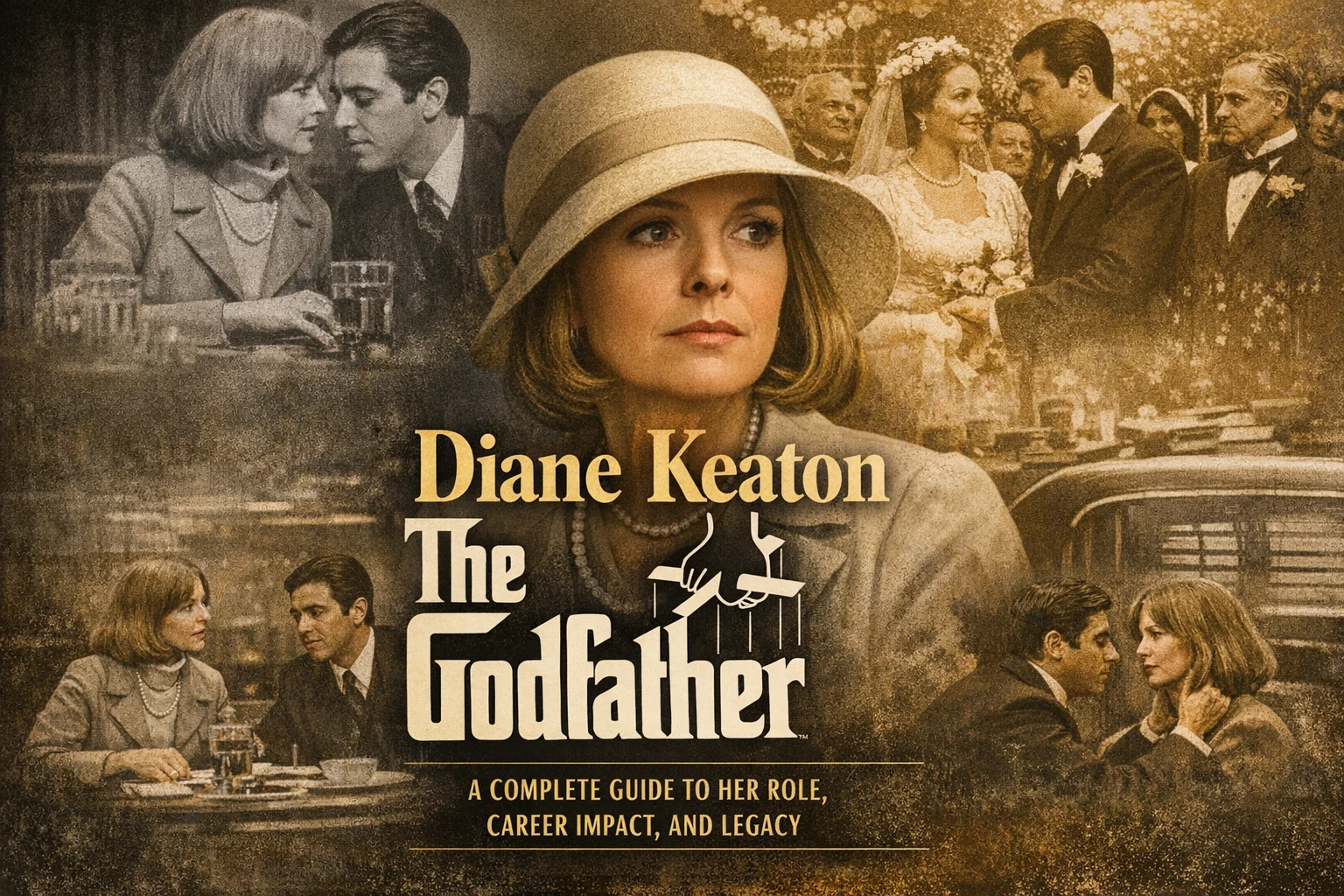
Image Gallery
Select an image to open it in a new tab.



Akira Tanaka
International Academic Trends Correspondent
