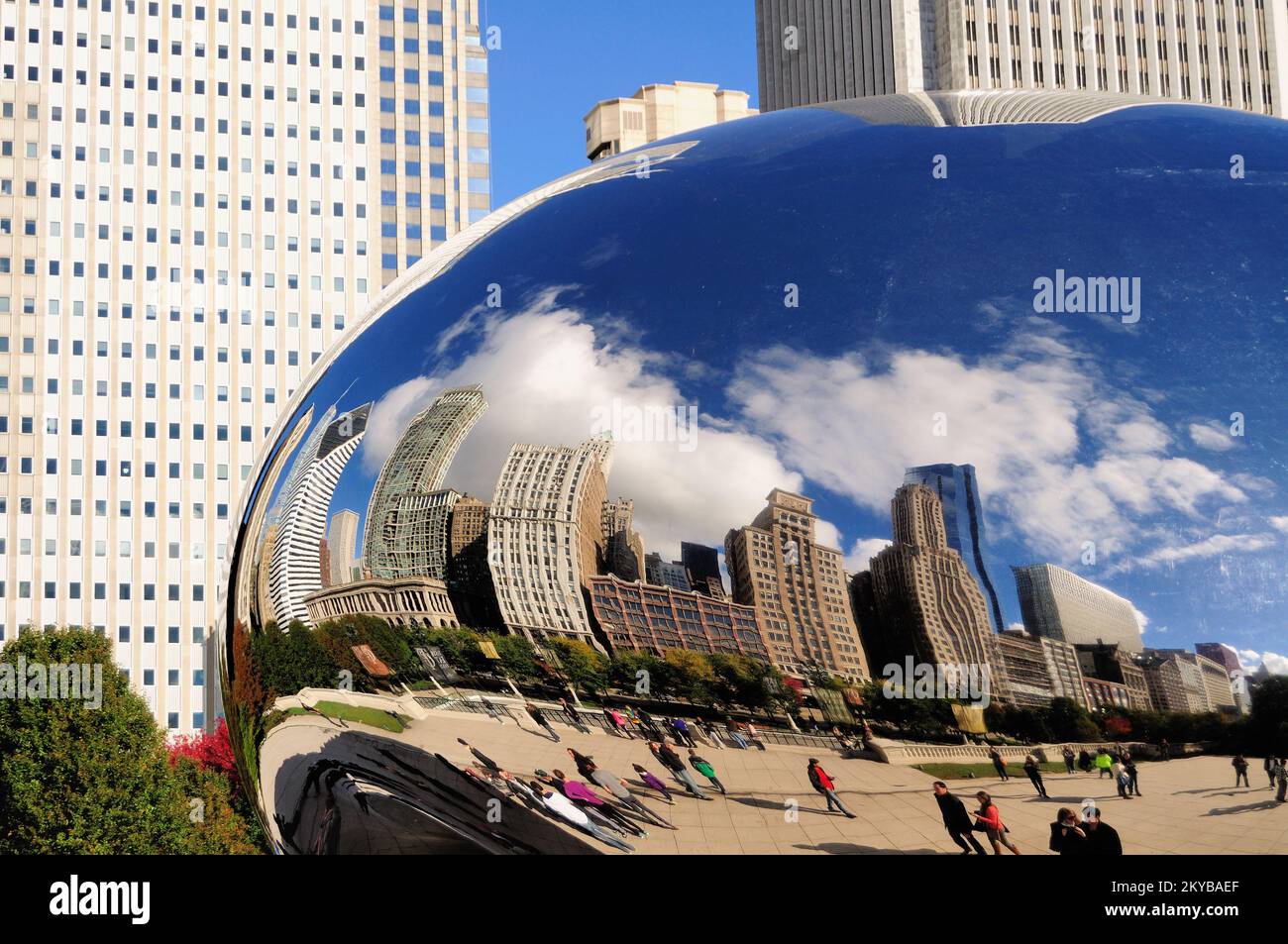
Officially titled Cloud Gate, the Chicago Bean sculpture has fundamentally transformed Millennium Park, boosting local tourism, redefining the city’s contemporary architecture profile, and serving as a masterclass in interactive public art that shapes modern urban design.
Introduction to Cloud Gate: Origins and Identity
Located in the heart of downtown Chicago within Millennium Park, Cloud Gate—universally known as "The Bean"—has transcended its status as a mere piece of public art to become a defining icon of the American Midwest. Designed by British-Indian artist Sir Anish Kapoor, the sculpture was unveiled in July 2004. Since its debut, it has captured the global imagination, drawing millions of visitors annually and fundamentally shifting how people interact with urban public spaces.
Understanding the urban impact of The Bean requires looking beyond its glossy, mirror-like exterior. The sculpture occupies a critical junction in Chicago’s urban planning history, bridging the historic Loop business district with the revitalized lakefront of Grant Park. By turning a former Illinois Central railroad yard and industrial parking lot into a world-class cultural destination, city planners and designers utilized public art as a catalyst for urban renewal. This article examines the architectural genesis of the Chicago Bean, its engineering marvels, its profound economic and social impact on the city, and the lessons it offers for modern urban development.
Artistic Conception and Architectural Engineering
The creation of Cloud Gate was the result of a design competition launched in the late 1990s to select a centerpiece for the newly planned Millennium Park. Anish Kapoor’s winning proposal drew inspiration from liquid mercury, a material that naturally forms fluid, cohesive shapes that reflect and distort their surroundings.
Material Specifications and Fabrication
Constructing a seamless, 110-ton structure out of stainless steel required unprecedented engineering feats. Key physical characteristics of the sculpture include:
- Dimensions: Approximately 33 feet high, 66 feet long, and 42 feet wide.
- Weight: 110 tons (100 metric tonnes).
- Material: Seamlessly welded 3/8-inch-thick stainless steel plates.
- Foundation: Supported by two interior stainless steel rings, resting on a concrete foundation tied to the park's underground parking garage.
The fabrication process presented immense technical challenges. The plates had to be precisely milled using advanced computer-aided design (CAD) software to ensure absolute smoothness. Once welded together on-site, the exterior seams were ground down and polished to a mirror finish, eliminating any visible lines. This seamless illusion is central to the sculpture's artistic impact, as it creates a continuous canvas that mirrors the sprawling Chicago skyline and the faces of onlookers.
Economic and Tourism Impact on Chicago
Public art is rarely neutral; when executed at a monumental scale, it can alter the economic trajectory of a neighborhood or an entire city. Cloud Gate has served as a powerful economic engine for Chicago’s tourism and hospitality sectors.
Boosting Tourism and Foot Traffic
Millennium Park, anchored by Cloud Gate, routinely draws millions of visitors every year. Before the park's construction, this stretch of Michigan Avenue was underutilized space. Today, the influx of domestic and international tourists generates hundreds of millions of dollars in economic activity annually. Visitors exploring the Loop frequently patronize nearby hotels, restaurants, retail shops, and cultural institutions like the Art Institute of Chicago and the Chicago Cultural Center.
Real Estate and Downtown Revitalization
The presence of a world-renowned cultural landmark immediately adjacent to the Loop sparked a real estate boom along Michigan Avenue and Randolph Street. Developers rushed to convert old commercial office buildings into luxury residential high-rises and boutique hotels to capitalize on park views and pedestrian foot traffic. This private investment validated the city's heavy public expenditure on Millennium Park, demonstrating that high-design public infrastructure yields long-term municipal dividends.
| Metric / Dimension | Pre-Millennium Park Era (Pre-2004) | Post-Cloud Gate Era (Present) |
|---|---|---|
| Land Use | Active rail yards, surface parking, railyard remnants | Integrated multi-use cultural park and civic plaza |
| Annual Park Visitors | Minimal (restricted industrial access) | Estimated 20+ million visitors annually |
| Surrounding Investment | Low commercial turnover, stagnant retail | High-density residential conversions, luxury hospitality |
| Civic Identity | Traditional industrial and architectural hub | Modern, globally recognized design capital |
Social Dynamics and Interactive Public Space
Beyond economics, The Bean altered the psychological relationship between citizens and public art. Traditional civic monuments—such as equestrian statues or classical marble pillars—are designed to be viewed from a distance with quiet reverence. In contrast, Cloud Gate demands physical participation.
The Mirror Effect and Collective Experience
The sculpture’s convex and concave surfaces bend the Chicago skyline, the clouds, and the viewer in unexpected ways. The central arch, known as the "omphalos" (Greek for "navel"), creates a concave chamber that focuses and multiplies sound while reflecting a fragmented, kaleidoscopic view of everyone standing beneath it.
This design transforms passive observers into active participants. Visitors touch the cold steel, check their reflections, take photographs, and share the space with strangers from around the world. By democratizing the viewing experience, Cloud Gate fosters a sense of collective public ownership. It functions simultaneously as a town square, an art gallery, and a social media focal point, bridging social divides through shared visual wonder.
Operational Challenges and Maintenance Realities
Managing a world-class public art installation of this scale involves ongoing logistical and financial commitments. The city of Chicago and private conservancy partners face distinct challenges in preserving the integrity of Cloud Gate.
Maintenance and Cleaning Protocols
Because the sculpture is touched by thousands of people daily, its mirror-finish stainless steel surface is prone to fingerprints, smudges, and environmental grime.
- Daily Maintenance: Maintenance crews wash the lower six feet of the sculpture twice a day using mild soap and water.
- Deep Cleaning: Twice a year, specialized technicians perform a rigorous deep clean using high-grade solvents and industrial polishers to restore the mirror sheen across the entire 110-ton surface.
Security and Crowd Management
The vast crowds drawn to The Bean necessitate robust crowd management and security infrastructure. Millennium Park enforces specific rules regarding public gatherings, commercial filming, and permitted events to balance public access with structural preservation. Despite these measures, the open-air environment means the sculpture is continually exposed to weather extremes, pollution, and high-volume human interaction, requiring constant oversight by the City of Chicago Department of Cultural Affairs and Special Events.
Comparative Overview of Iconic Urban Public Sculptures
To understand the unique impact of the Chicago Bean, it is helpful to place it within the context of other monumental urban art installations globally.
| Sculpture Name | City & Location | Primary Material | Urban Impact & Function |
|---|---|---|---|
| Cloud Gate | Chicago, USA | Stainless Steel | Regenerated a neglected railyard into a vibrant civic plaza and global tourist hub. |
| The Eiffel Tower | Paris, France | Puddled Iron | Originally built as a temporary exhibition fair centerpiece; became the permanent architectural symbol of the nation. |
| The Charging Bull | New York City, USA | Bronze | Placed near Wall Street to symbolize financial resilience; became a major tourist focal point for Lower Manhattan. |
| Atomium | Brussels, Belgium | Stainless Steel & Aluminum | Represented scientific progress and atomic energy for the 1958 World's Fair; anchors a major municipal park. |
Frequently Asked Questions
Who designed the Chicago Bean statue, and what is its official name?
The sculpture was designed by British-Indian artist Sir Anish Kapoor. Its official title is Cloud Gate, though it is universally referred to as "The Bean" due to its distinctive legume-like shape.
When was Cloud Gate opened to the public?
Cloud Gate was partially unveiled in July 2004 for the opening of Millennium Park, though the entire construction and polishing process was not fully completed until January 2006.
Why is the surface of The Bean so reflective?
The sculpture is constructed from seamless, highly polished 3/8-inch-thick stainless steel plates. The welding seams were ground down and polished extensively to create a continuous, mirror-like surface that reflects the Chicago skyline and surrounding park.
Can visitors walk underneath the sculpture?
Yes. Visitors can walk underneath the 33-foot-high central arch (known as the omphalos), where the concave underside distorts reflections and creates unique acoustic echoes.
How is Cloud Gate maintained and cleaned?
The lower portion of the sculpture is washed twice a day with warm water and mild detergent to remove fingerprints and surface dirt. Twice a year, specialized crews use liquid detergent and high-powered polishers to clean the entire exterior.
Conclusion and Next Actions
The Chicago Bean statue stands as a testament to the power of visionary public art in urban planning. By turning industrial steel into an interactive, reflective mirror, Anish Kapoor and city leaders created a space that revitalized downtown Chicago, stimulated local commerce, and redefined modern civic engagement.
For urban planners, architects, and visitors alike, Cloud Gate offers enduring lessons in the value of accessible, high-design public spaces. When planning a visit to Millennium Park, verify current park hours and event schedules through the official City of Chicago Department of Cultural Affairs and Special Events portal to ensure optimal viewing and photography conditions.
Image Gallery
Select an image to open it in a new tab.
Declan O'Connor
Higher Education and Campus Culture Reporter
