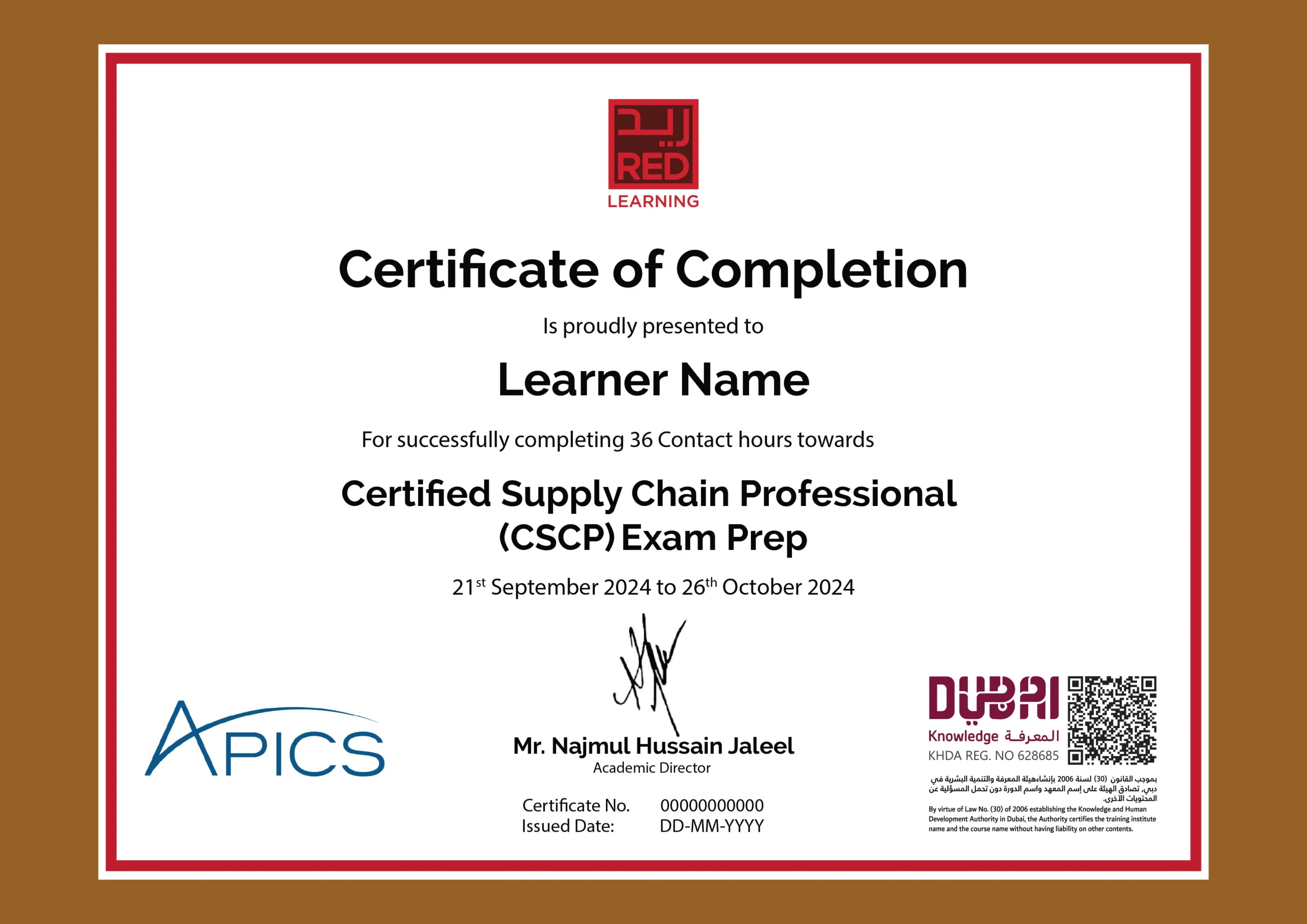
Securing a professional certification in supply chain management provides a structured framework to validate technical expertise, signal commitment to industry standards, and enhance employability in a competitive global market. These credentials typically require a combination of relevant professional experience and successful completion of standardized examinations covering core competencies like logistics, procurement, operations, and strategic supply chain planning.
The Value Proposition of Professional Certification
In the modern supply chain landscape, the complexity of global logistics and the integration of digital transformation tools have made standardized knowledge more critical than ever. Supply chain management is no longer merely about moving goods from point A to point B; it involves intricate risk management, sustainable sourcing, data-driven forecasting, and cross-functional leadership.
Professional certifications serve as a quality assurance mechanism for employers. When an organization hires a certified professional, they are verifying that the individual possesses a baseline of knowledge that aligns with globally recognized best practices. For the practitioner, these credentials often serve as a catalyst for salary negotiations, promotion opportunities, and access to a robust professional network.
Primary Certification Bodies and Credentials
The global supply chain industry is primarily served by a few authoritative professional organizations. Understanding the focus of each is essential for choosing the credential that aligns with your specific career goals.
Association for Supply Chain Management (ASCM/APICS)
The ASCM, formerly known as APICS, remains the most widely recognized organization for supply chain education. Their certifications are considered the industry standard for operations and inventory management.
- Certified in Planning and Inventory Management (CPIM): This certification focuses on the internal operations of a business. It covers the essential terminology, concepts, and strategies for managing inventories, production planning, and scheduling. It is highly valued for professionals working in manufacturing and production planning roles.
- Certified Supply Chain Professional (CSCP): Unlike the CPIM, the CSCP takes a broad, end-to-end view of the supply chain. It covers the entire value chain from suppliers to the end consumer. It is ideal for professionals who need to understand how various parts of the supply chain—such as procurement, logistics, and distribution—integrate to drive organizational value.
- Certified in Logistics, Transportation and Distribution (CLTD): This credential is dedicated specifically to the logistics side of the profession. It provides comprehensive coverage of transportation management, warehouse operations, and global trade logistics.
Institute for Supply Management (ISM)
ISM focuses heavily on the procurement and sourcing aspects of supply chain management. Their certifications are often preferred by professionals in strategic sourcing or direct buying roles.
- Certified Professional in Supply Management (CPSM): The CPSM is a flagship credential for those in procurement. It emphasizes strategic sourcing, supplier relationship management, and legal compliance. It is globally recognized and demonstrates a high level of proficiency in the buying and supply management lifecycle.
Comparison of Core Certification Pathways
Choosing the right certification requires a clear assessment of your current role and where you aim to be in five years. The following table provides a high-level comparison of the most prominent credentials in the industry.
| Certification | Issuing Body | Primary Focus | Best For |
|---|---|---|---|
| CSCP | ASCM | End-to-End Strategy | Strategic planners & managers |
| CPIM | ASCM | Internal Operations | Production & inventory control |
| CPSM | ISM | Procurement/Sourcing | Procurement & purchasing agents |
| CLTD | ASCM | Logistics & Transport | Distribution & logistics analysts |
| CSCP | ASCM | Supply Chain Integration | General supply chain leaders |
Prerequisites and Eligibility Criteria
Eligibility requirements vary significantly by organization. Most certifications require a combination of educational attainment and years of professional experience.
For the CSCP, for instance, ASCM typically requires candidates to have a bachelor’s degree (or international equivalent) plus two years of related business experience, or alternatively, a high school diploma with five years of relevant experience.
The CPSM from ISM has a similar structure, requiring a degree plus three years of full-time professional supply management experience, or a high school diploma with five years of experience. Always verify the specific requirements on the issuing organization's official portal, as these may be subject to periodic policy updates based on industry demand.
Investment and Preparation Strategy
Obtaining a certification is a significant investment of both capital and time. In 2026, costs typically range from $1,500 to $3,500 per certification, which often includes study materials, membership fees, and the examination fee itself.
Study and Preparation
- Structured Courses: Many professionals opt for instructor-led courses. These provide the benefit of peer interaction and direct access to subject matter experts, which is particularly helpful for grasping complex concepts like Theory of Constraints or Total Cost of Ownership.
- Self-Study: For those with more flexible schedules, self-study modules are available. This method requires a high degree of self-discipline and often involves using official review books and digital practice quizzes provided by the certifying body.
- Practice Exams: Utilize the official practice exams to simulate the testing environment. These are invaluable for identifying knowledge gaps before the actual testing date.
Maintenance and Recertification
Certifications are rarely a "one-and-done" achievement. To maintain their status, most organizations require members to earn Continuing Education Units (CEUs) or maintenance points. This is typically achieved through attending industry conferences, publishing articles, or pursuing additional professional development coursework. Failure to maintain these points can result in the lapse of the credential.
Common Challenges and How to Overcome Them
The transition from academic theory to the professional examination can be jarring. One of the most common mistakes candidates make is relying solely on their "on-the-job" experience. Real-world supply chains are often influenced by idiosyncratic company processes that may deviate from global standards. When taking the exam, you must answer from the perspective of the "best practice" methodology defined by the certifying body, not how your current employer handles a specific process.
Another hurdle is the breadth of the material. Many candidates underestimate the time required to master topics outside their immediate daily scope. For example, a procurement specialist preparing for the CSCP might find the inventory management sections challenging, while a production manager might struggle with the global trade and legal modules. Create a study schedule that allocates more time to the domains you are least familiar with, rather than focusing on your strengths.
Industry Recognition and Career Trajectory
Why do organizations value these certifications? Primarily, they offer a common language. When a firm is integrating a new ERP system or optimizing its global network, it requires a team that understands fundamental concepts like lean principles, Six Sigma, or demand sensing. Professionals with these certifications are better equipped to implement these systems, leading to lower operating costs and improved service levels.
As your career progresses, stacking these certifications can be a strategic move. A professional who holds both a CPIM (for operational detail) and a CSCP (for strategic oversight) is often considered for senior-level leadership roles, such as Director of Supply Chain or Chief Operating Officer. These credentials provide the theoretical foundation to back up your practical success, creating a robust profile that resonates with executive recruiters.
Frequently Asked Questions
Which certification should I prioritize if I am just starting my career? If you are early in your career, the ASCM’s CSCP is often recommended due to its end-to-end scope. It provides a comprehensive overview of the entire supply chain, which helps you understand how your role fits into the larger corporate ecosystem and which specialization you might want to pursue later.
Do these certifications expire? While the credentials themselves do not usually expire in the sense of becoming invalid, they do require periodic maintenance. You must earn enough maintenance points (CEUs) within a specific period (usually every three to five years) to keep your certification in "active" status.
Can I take the exams online? Yes, as of 2026, most major certifying bodies, including ASCM and ISM, offer remote proctoring options for their examinations. This allows you to test from home or a designated private office, provided you meet the hardware and security requirements established by the exam board.
How long does it take to prepare for a typical certification? Most candidates spend between three to six months preparing for a single certification. This varies depending on your prior knowledge and the amount of time you can dedicate to study each week. A standard recommendation is 100 to 150 hours of study time per exam.
Are there any government-regulated supply chain certifications? Most professional supply chain certifications are industry-led and voluntary. They are not government-regulated. However, some specific niches, such as hazardous materials handling or trade compliance, may require government-mandated licenses or certifications. Professional credentials should be viewed as voluntary markers of excellence rather than legal requirements for practice.
Next Steps for Your Professional Development
If you are ready to pursue a certification, start by conducting a gap analysis of your current knowledge. Review the course outlines for the CSCP, CPIM, and CPSM on the respective websites of the ASCM and ISM. Once you have identified the best fit for your career trajectory, set a concrete date for your examination. Securing the test date acts as a powerful motivator, transforming a vague desire for improvement into a structured project plan.
Evaluate your budget and discuss potential support with your employer. Many organizations offer financial assistance or reimbursement for professional certifications because they recognize the value a certified employee brings to the team. By clearly communicating how the certification will improve your performance in your current role, you can often secure both funding and dedicated study time.
Image Gallery
Select an image to open it in a new tab.

Omar Farooq
EdTech Innovation and Virtual Pedagogy Journalist
