Who Was Catherine the Great? The Life, Reign, and Legacy of Russia’s Longest-Ruling Empress

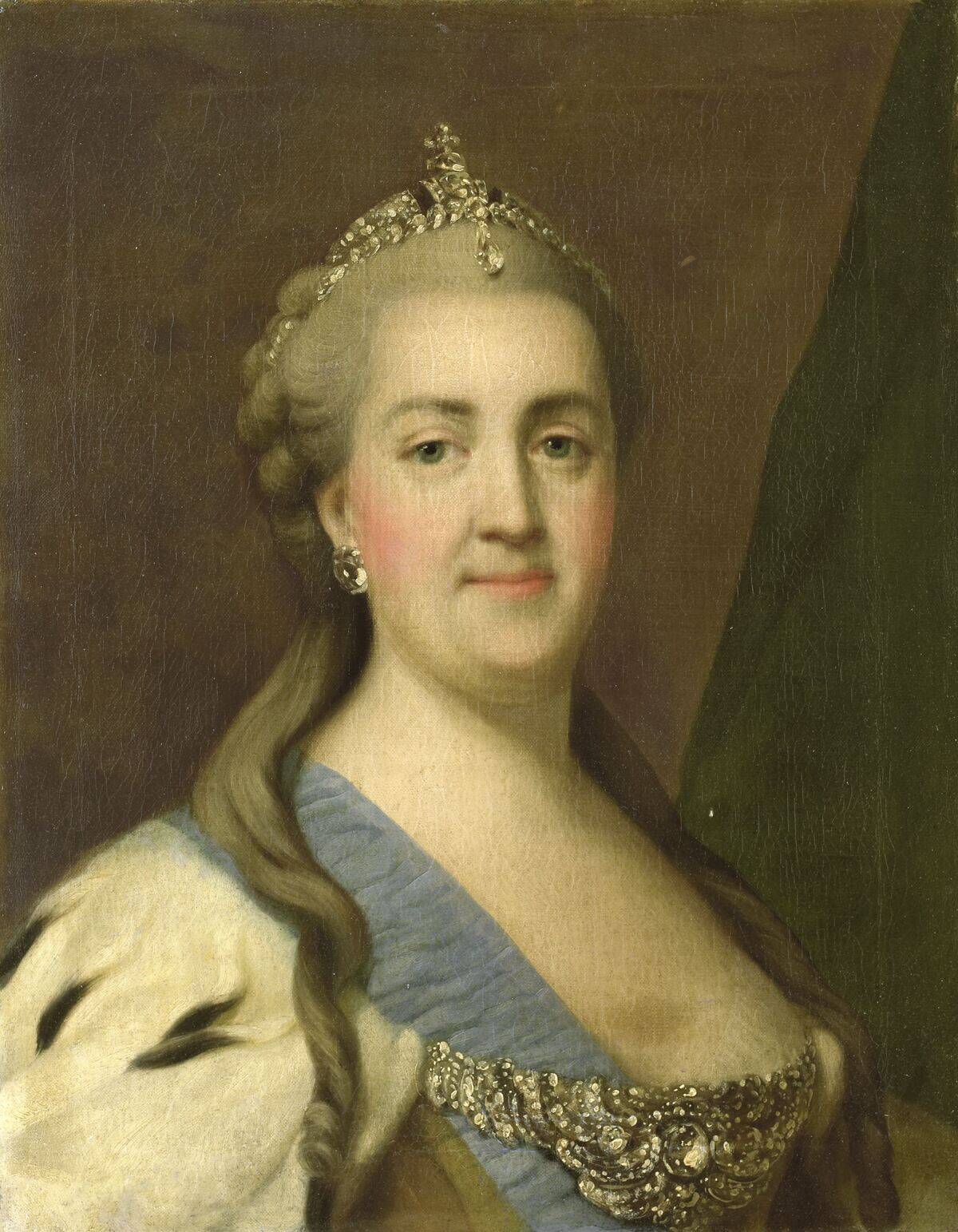
Catherine the Great, born Princess Sophie of Anhalt-Zerbst, was Empress of Russia from 1762 until her death in 1796. As the empire’s longest-ruling female leader, she modernized Russian administration, expanded national borders through military conquest, championed Enlightenment philosophy, and transformed Russia into one of Europe's premier great powers.
From German Princess to Russian Autocrat: Early Life and Rise to Power
To understand who Catherine the Great was, one must look outside Russia. Born on May 2, 1729, in Stettin, Pomerania (then part of the Kingdom of Prussia and modern-day Szczecin, Poland), her original name was Sophie Friederike Auguste von Anhalt-Zerbst-Dornburg. She belonged to a minor German princely family with modest financial resources but extensive aristocratic connections across Northern Europe.
Marriage to Grand Duke Peter and Cultural Assimilation
In 1744, Empress Elizabeth of Russia selected fifteen-year-old Sophie to marry her nephew and designated heir, Grand Duke Peter of Holstein-Gottorp (later Tsar Peter III). Upon converting from Lutheranism to Russian Orthodoxy, Sophie assumed the name Catherine (Ekaterina Alexeievna).
Unlike her husband, who remained intensely devoted to his native Prussia and showed little regard for Russian culture, Catherine committed herself entirely to her adopted homeland. She mastered the Russian language, studied Russian customs, and meticulously built political alliances among the imperial court, clergy, and the military elite—particularly the influential Imperial Guard.
The Coup d'État of July 1762
Peter III ascended the Russian throne in January 1762 upon the death of Empress Elizabeth. His reign proved brief and deeply unpopular. He alienated the Russian military by ending Russia’s participation in the Seven Years’ War, surrendering strategic gains made against Prussia, and attempting to impose Prussian military uniforms and practices.
Recognizing Peter's political vulnerability, Catherine orchestrated a swift coup d'état on July 9, 1762 (June 28 Old Style). Backed by the Imperial Guard—led by her lover Grigory Orlov and his brothers—Catherine had Peter arrested. He abdicated the throne and died shortly thereafter under suspicious circumstances while in custody at Ropsha. Catherine was crowned Empress of Russia at the Dormition Cathedral in Moscow on October 22, 1762, ruling in her own right as Catherine II.
Domestic Policy and Enlightened Reforms
Catherine II embraced the principles of the 18th-century European Enlightenment, seeking to apply rational governance, legal reform, and administrative modernization to the Russian Empire—a philosophy historically referred to as "enlightened absolutism."
The Legislative Commission and the Nakaz
Early in her reign, Catherine set out to overhaul Russia's antiquated legal code, which had not been systematically updated since 1649. In 1767, she convened the Legislative Commission, a representative assembly comprising delegates from various social classes, including nobility, townspeople, and free peasants (though excluding serfs).
To guide the commission, Catherine authored the Nakaz (Instruction), a radical political treatise heavily influenced by Montesquieu’s The Spirit of the Laws and Cesare Beccaria’s On Crimes and Punishments. The Nakaz advocated for legal equality, condemned judicial torture, and proposed a rational legal structure. Although the Legislative Commission disbanded without drafting a new code due to the outbreak of the Russo-Turkish War in 1768, the Nakaz established Catherine's reputation across Western Europe as an intellectual ruler.
Public Health Innovations: The Smallpox Pioneer
Catherine demonstrated a progressive approach to public health, most notably during the smallpox epidemics that plagued 18th-century Europe. In 1768, she invited the British physician Thomas Dimsdale to Saint Petersburg to perform smallpox inoculations using variolation—an early form of immunization.
To overcome public suspicion and set an example for her subjects, Catherine became the first person in Russia to be inoculated against smallpox, followed by her son and heir, Grand Duke Paul. This act of personal leadership led to widespread adoption of inoculation across the Russian Empire, saving hundreds of thousands of lives and establishing Russia's early leadership in preventive medicine.
The Paradox of Serfdom and Pugachev’s Rebellion
Despite her Enlightenment ideals, Catherine’s domestic governance faced severe moral and political contradictions, particularly regarding the institution of serfdom. Russia’s economic stability and Catherine's political backing depended almost entirely on the landowning nobility.
As a result, Catherine extended the powers of nobles over their unfree peasants. She granted noble estates wider disciplinary authority, permitted the exile of rebellious serfs to Siberia, and transferred vast swaths of state-owned lands—along with their resident peasants—to her political favorites.
This deepening subjugation ignited one of the largest peasant uprisings in Russian history: Pugachev’s Rebellion (1773–1775). Led by Yemelyan Pugachev, a Don Cossack who claimed to be the deposed Tsar Peter III, the rebellion swept across the Ural region and the Volga basin. Pugachev promised the abolition of serfdom, the end of taxation, and the return of land to the peasantry.
The Russian imperial army ultimately crushed the rebellion, and Pugachev was captured and executed in Moscow in 1775. The revolt deeply rattled Catherine, prompting her to abandon broad social reforms in favor of tighter central control and administrative centralization, formalized in the Statute for the Administration of the Provinces of the Russian Empire (1775) and the Charter to the Nobility (1785).

Territorial Expansion and Foreign Diplomacy
Under Catherine the Great, the Russian Empire added over 200,000 square miles of territory to its domain, expanding south toward the Black Sea and west into Central Europe.
- Territorial Expansion Under Catherine II (1762–1796)
- Southern Expansion (Russo-Turkish Wars)
- Treaty of Küçük Kaynarca (1774)
- Annexation of Crimea (1783)
- Founding of Sevastopol & Odessa
- Western Expansion (Partitions of Poland)
- First Partition (1772)
- Second Partition (1793)
- Third Partition (1795)
- Southern Expansion (Russo-Turkish Wars)
Reaching the Black Sea and the Annexation of Crimea
Securing access to warm-water ports on the Black Sea had been a geopolitical objective for Russia for centuries. Catherine achieved this through two decisive wars against the Ottoman Empire:
- The First Russo-Turkish War (1768–1774): Concluded with the Treaty of Küçük Kaynarca, granting Russia territorial footholds on the Black Sea coast, commercial navigation rights in Ottoman waters, and official status as protector of Orthodox Christians within Ottoman lands.
- Annexation of Crimea (1783): Russia formally annexed the Crimean Khanate, securing naval supremacy in the region and establishing major strategic ports, including Sevastopol and Kherson.
- The Second Russo-Turkish War (1787–1792): Solidified Russian control over Southern Ukraine and Crimea, recognized officially by the Treaty of Jassy (1792), which set the Dniester River as the new southern boundary of the empire.
The Partitions of Poland
In Western Europe, Catherine engineered the dismantling of the Polish-Lithuanian Commonwealth in collusion with the Kingdom of Prussia and the Habsburg Monarchy. Through three successive partitions, Poland was erased from the map of Europe until 1918:
- First Partition (1772): Following domestic instability in Poland, Russia took control of eastern territories, including parts of modern Belarus.
- Second Partition (1793): Prompted by the adoption of the progressive Polish Constitution of May 3, 1791, Russia and Prussia annexed additional vast territories.
- Third Partition (1795): Following the failed Kościuszko Uprising, Russia, Prussia, and Austria annexed the remaining Polish lands. Russia acquired Belarus, Lithuania, Courland, and Western Ukraine.
Key Partnerships: Grigory Potemkin and Military Leadership
Catherine’s expansionist foreign policy succeeded largely because of her ability to select and trust exceptional statesmen and military commanders. Outstanding among them was Prince Grigory Potemkin, who was Catherine's political partner, field marshal, and longtime confidant.
Potemkin led the integration and governance of Russia's newly conquered southern territories—termed Novorossiya (New Russia). He constructed the Russian Black Sea Fleet, founded cities such as Sevastopol, Kherson, Nikolayev, and Yekaterinoslav (now Dnipro), and oversaw economic development in the region. Other legendary commanders, such as Field Marshal Alexander Suvorov, delivered victories against Ottoman and Polish forces, establishing Russia’s military dominance during this era.
Patronage of the Arts, Education, and the Enlightenment
Catherine transformed Saint Petersburg into one of Europe's premier intellectual and cultural capitals through massive investment in education, architecture, and art collection.
Corresponding with Enlightenment Philosophers
Catherine maintained extensive, high-profile correspondence with leading figures of the French Enlightenment, most notably Voltaire and Denis Diderot. She financed Voltaire’s endeavors, bought Diderot’s personal library when he faced financial ruin (while retaining him as her salaried librarian), and discussed political theory, philosophy, and education with them.
These intellectual relationships served a dual purpose: they informed Catherine's administrative ideas and functioned as international public relations, polishing her reputation among Western scholars as a philosopher-empress.
Cultural Achievements and the Imperial Hermitage Museum
Catherine was one of history’s most prolific art collectors. In 1764, she purchased a collection of 225 paintings from the Berlin merchant Johann Ernst Gotzkowsky, laying the foundation for what is now the State Hermitage Museum in Saint Petersburg. By her death, her private collection included thousands of master paintings, drawings, gems, and rare manuscripts.
She also left a lasting mark on Russian education and architecture:
- The Smolny Institute (1764): Founded as Europe's first state-financed higher education institution for women, offering nobility-born girls a modern, Enlightenment-based education.
- Educational Reforms: Established a network of primary and secondary public schools across Russian provinces, utilizing standardized textbooks and modern teaching methods.
- Neoclassical Architecture: Replaced Baroque architectural styles with Neoclassical structures across Saint Petersburg, commissioning landmark buildings like the Academy of Arts, the Great Hermitage, and the Marble Palace.
Major Milestones of Catherine the Great’s Life and Reign
The table below outlines the key events, policies, and achievements of Catherine II’s 34-year reign:
| Year | Event / Milestone | Historical Significance |
|---|---|---|
| 1729 | Born Princess Sophie of Anhalt-Zerbst | Born in Stettin, Prussia (now Szczecin, Poland). |
| 1745 | Marries Grand Duke Peter of Russia | Converts to Russian Orthodoxy, taking the name Catherine. |
| 1762 | Coup d'État & Accession | Deposes Peter III; crowned Empress Catherine II in Moscow. |
| 1764 | Founding of the Hermitage Museum | Acquires initial art collection; establishes Smolny Institute for women. |
| 1767 | Issuance of the Nakaz | Publishes Enlightenment guidelines for legal reform to the Legislative Commission. |
| 1768 | Smallpox Inoculation Leader | Inoculates herself and her heir to promote public health measures across Russia. |
| 1772 | First Partition of Poland | Expands imperial territories westward into Polish-Lithuanian lands. |
| 1773–1775 | Pugachev’s Rebellion | Crushes major peasant uprising; shifts focus toward central control. |
| 1774 | Treaty of Küçük Kaynarca | Ends First Russo-Turkish War, gaining Black Sea access. |
| 1783 | Annexation of Crimea | Formally incorporates Crimea; establishes Black Sea Fleet and Sevastopol. |
| 1785 | Charter to the Nobility | Formalizes legal privileges and estate rights of the Russian aristocracy. |
| 1793 / 1795 | Second & Third Partitions of Poland | Complete dissolution of Poland; expands border to Central Europe. |
| 1796 | Death of Catherine II | Dies of a stroke on November 17; succeeded by her son, Tsar Paul I. |
Dispelling Myths: Misconceptions vs. Historical Facts
Because Catherine was a powerful female ruler in an era dominated by men, her biography has frequently been targeted by political propaganda, sensationalized rumors, and historical inaccuracies.
Myth 1: Misconceptions About Her Death
- The Myth: Sensationalist stories claimed that Catherine died while engaging in unnatural acts with animals or under embarrassing circumstances involving furniture.
- The Fact: These rumors were malicious fabrications spread by foreign political rivals, particularly in France and Britain, to undermine her legacy. Catherine suffered a cerebral stroke in her private apartments at the Winter Palace on November 16, 1796, and passed away peacefully in her bed the following day, November 17, 1796, at age 67.
Myth 2: "Potemkin Villages"
- The Myth: During Catherine’s famous tour of Crimea in 1787, Prince Grigory Potemkin allegedly constructed fake, painted wooden village facades along the riverbanks to deceive the Empress about the economic prosperity of the newly conquered territories.
- The Fact: Modern historians, including Isabel de Madariaga and Simon Sebag Montefiore, have largely debunked the extreme claims of fake villages. While Potemkin staged elaborate celebrations, triumphal arches, and festive displays for the imperial entourage, the newly constructed towns, fortresses, and naval fleets were real, tangible developments.
Myth 3: Catherine Was a Foreign Usurper with No Interest in Russia
- The Myth: Critics often dismissed Catherine as a German princess who illegitimately seized power and ruled purely out of ambition.
- The Fact: Although born in Prussia, Catherine integrated into Russian culture far more thoroughly than her husband Peter III. She spoke fluent Russian, patronized national arts and literature, protected the Russian Orthodox Church, and consistently prioritized Russian geopolitical and economic interests.
Frequently Asked Questions About Catherine the Great
How long did Catherine the Great rule Russia?
Catherine II ruled Russia for 34 years, from July 9, 1762, until her death on November 17, 1796. Her reign was the longest of any female monarch in Russian history, second overall among 18th-century tsars only to Peter the Great.
Was Catherine the Great actually Russian?
No, by birth Catherine was not Russian. She was born a German princess named Sophie Friederike Auguste von Anhalt-Zerbst-Dornburg in Stettin, Prussia. However, she learned fluent Russian, converted to Russian Orthodoxy, adopted the name Catherine (Ekaterina), and governed explicitly in defense of Russian national interests.
Why was Catherine called "the Great"?
She earned the title "the Great" (Velikaya) during her lifetime due to her accomplishments: expanding Russia's territory by over 200,000 square miles, establishing Russia as an undisputed European great power, modernizing civil administration, championing public health, and founding major educational and cultural institutions like the Hermitage Museum.
Who succeeded Catherine the Great on the Russian throne?
Catherine was succeeded by her son, Grand Duke Paul, who reigned as Tsar Paul I from 1796 until his assassination in 1801. Catherine had a troubled relationship with Paul and originally drafted a will designating her grandson, Alexander (later Tsar Alexander I), as her direct successor, but Paul destroyed or suppressed the document upon her death.
How did Catherine the Great impact serfdom in Russia?
While Catherine expressed theoretical objections to serfdom in her early writings, such as the Nakaz, her practical policies significantly tightened noble control over serfs. Dependent on the nobility to maintain her crown, she expanded serfdom into newly acquired Ukrainian territories and granted nobles greater authority over their serfs' lives, lands, and judicial rights.
Exploring Catherine the Great’s Legacy: Recommended Next Steps
For readers, students, and history enthusiasts seeking to deepen their understanding of Catherine II and 18th-century European history, the following actions offer solid entry points:
- Read Primary Historical Texts: Examine translation editions of Catherine’s Nakaz (Instruction) or her personal memoirs (Memoirs of Catherine the Great) to read her thoughts on governance, Enlightenment philosophy, and imperial court life in her own words.
- Consult Standard Academic Biographies: Read definitive modern scholarly works on Catherine’s life, such as Catherine the Great: Imperial Partner by Isabel de Madariaga or Catherine the Great: Portrait of a Woman by Robert K. Massie.
- Explore Digital Collections: Visit the online archives of the State Hermitage Museum to view the thousands of artworks, classical sculptures, and gems originally acquired by Catherine during her 34-year patronage.
Image Gallery
Select an image to open it in a new tab.




Declan O'Connor
Higher Education and Campus Culture Reporter
