To retire comfortably, a general benchmark is to have 10 to 12 times your final annual salary saved in your 401k and other retirement accounts by age 67. Alternatively, many experts recommend the "25x Rule," where you save 25 times your projected annual expenses to support a sustainable 4% withdrawal rate throughout retirement.
Determining the exact amount you need in your 401k is one of the most critical financial calculations you will ever perform. As of 2026, the landscape of retirement planning has evolved with updated IRS contribution limits, the full implementation of SECURE Act 2.0 provisions, and shifting economic expectations. While "one million dollars" was once the gold standard, modern retirement planning requires a more nuanced approach based on your specific lifestyle goals, longevity, and the impact of inflation on purchasing power.
The Foundation of Retirement Math: The 4% Rule and 25x Rule
To understand how much you need in your 401k, you must first understand how that capital generates income. Two foundational concepts—the 4% Rule and the 25x Rule—serve as the primary frameworks for these calculations.
The 4% Rule, originally developed by William Bengen, suggests that you can withdraw 4% of your total retirement portfolio in the first year of retirement and adjust that amount for inflation every year thereafter for 30 years without running out of money. For example, if you have $1,000,000 in your 401k, you would withdraw $40,000 in year one. In year two, if inflation was 3%, you would withdraw $41,200.
The 25x Rule is the inverse of the 4% Rule. It helps you determine your "target number" by multiplying your expected annual expenses by 25. If you anticipate needing $80,000 per year in retirement income (beyond what Social Security provides), you would need a total portfolio of $2,000,000 ($80,000 x 25).
However, in 2026, these rules are often treated as starting points rather than guarantees. With increased life expectancy and the potential for lower market returns in a post-inflationary era, some financial planners now suggest a more conservative withdrawal rate of 3.3% to 3.5%, which would require a savings multiplier of 28x to 30x your annual expenses.
Age-Based 401k Benchmarks: Are You on Track?
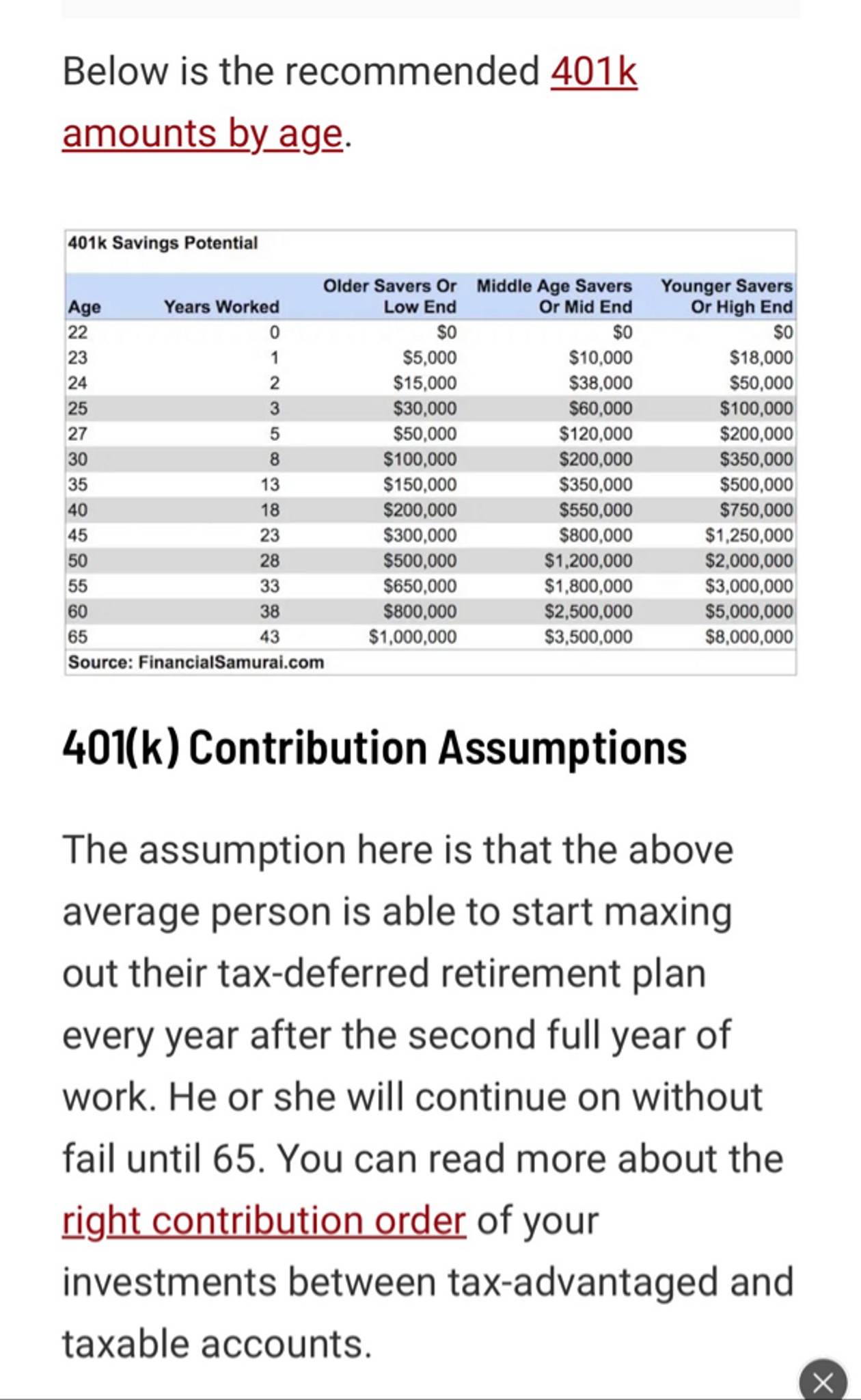
While your final goal is the most important number, age-based milestones help you gauge whether your current savings rate is sufficient. Fidelity Investments provides widely recognized benchmarks that compare your 401k balance to your current annual salary.
By Age 30: 1x Your Annual Salary
By the time you reach 30, you should ideally have the equivalent of one year's salary saved. This stage is less about the total dollar amount and more about the power of compounding. If you earn $60,000, having $60,000 in your 401k by age 30 sets a strong foundation. This assumes you started contributing roughly 15% of your income (including employer match) starting in your early 20s.
By Age 40: 3x Your Annual Salary
As you enter your 40s, your earning potential often increases, but so do your expenses (mortgages, children, etc.). Reaching three times your salary by age 40 is a vital "check-in" point. If your salary has grown to $100,000, your 401k goal would be $300,000.
By Age 50: 6x Your Annual Salary
The 50s are often the peak earning years. SECURE Act 2.0 has introduced more robust catch-up contribution limits for those in this age bracket, which is crucial if you are behind on this milestone. Having six times your salary saved allows you to benefit from significant market gains on a larger principal balance.
By Age 60: 8x Your Annual Salary
As you approach the "red zone" of retirement (the five years before and after your retirement date), your focus begins to shift from aggressive growth to capital preservation. Having eight times your salary by age 60 provides the flexibility to consider early retirement or to dial back your working hours.
By Age 67: 10x to 12x Your Annual Salary
By the current full retirement age for most workers (67), reaching 10x to 12x your salary is the standard recommendation to replace approximately 75% to 85% of your pre-retirement income.
Factors That Determine Your Personal "Number"
The age-based milestones above are averages, but several variables can significantly increase or decrease how much you personally need in your 401k.
The Replacement Ratio
Most retirees do not need to replace 100% of their pre-retirement income. You no longer need to save for retirement once you are retired, and your payroll taxes (FICA) stop. Usually, a replacement ratio of 70% to 85% is sufficient. However, if you plan to travel extensively or pursue expensive hobbies, you might need a 100% replacement ratio.
Geographic Arbitrage
Where you live in 2026 greatly impacts how far your 401k will go. A $1.5 million 401k provides a luxurious lifestyle in parts of the Midwest or the Sun Belt but may only cover basic necessities in high-cost-of-living (HCOL) areas like New York City, San Francisco, or Seattle. Many retirees use "geographic arbitrage" by selling a home in a high-cost area and moving to a state with no income tax and lower property taxes to stretch their 401k further.
Healthcare and Longevity
According to data from the Employee Benefit Research Institute (EBRI), a 65-year-old couple retiring in 2026 may need roughly $320,000 to $350,000 just to cover out-of-pocket medical expenses and Medicare premiums throughout retirement. This does not include long-term care (LTC). If you have a family history of longevity or specific health concerns, your 401k target should be higher to account for these costs.
Social Security Integration
Your 401k does not work in a vacuum. In 2026, Social Security remains a cornerstone of retirement income for most Americans. You can find your projected benefits by creating a "my Social Security" account at SSA.gov. If Social Security covers $30,000 of your $80,000 annual budget, your 401k only needs to provide the remaining $50,000. Using the 25x rule, this reduces your 401k target from $2,000,000 to $1,250,000.
401k Retirement Targets by Annual Income Level (2026 Estimates)
The following table illustrates the 401k targets required to support different lifestyle tiers, assuming a 4% withdrawal rate and supplemental Social Security income.
| Current Annual Income | Desired Lifestyle | Estimated Annual Expenses (Retirement) | 401k Target (25x Rule) | Est. Monthly 401k Income |
|---|---|---|---|---|
| $60,000 | Lean (70% Replacement) | $42,000 | $650,000* | $2,166 |
| $100,000 | Moderate (80% Replacement) | $80,000 | $1,400,000* | $4,666 |
| $150,000 | Comfort (85% Replacement) | $127,500 | $2,400,000* | $8,000 |
| $250,000 | Luxury (100% Replacement) | $250,000 | $5,000,000* | $16,666 |
*Note: These targets are adjusted downward slightly to account for an estimated $15,000–$30,000 in annual Social Security benefits depending on income history.
Navigating 401k Rules and Limits in 2026
To reach these targets, you must maximize the tools provided by the Internal Revenue Service (IRS). As of 2026, several key regulations impact your ability to save.
Contribution Limits
The 2026 401k contribution limit for employees is projected to be approximately $24,000 (subject to final IRS inflation adjustments). For those aged 50 and older, the standard catch-up contribution remains significant. Furthermore, under the SECURE Act 2.0, workers aged 60, 61, 62, and 63 now have an increased catch-up limit, which is the greater of $10,000 or 150% of the standard catch-up amount. This "super catch-up" is a powerful tool for those who are behind on their age-based milestones.
Traditional vs. Roth 401k
When calculating how much you need, you must distinguish between "gross" and "net" dollars.
- Traditional 401k: Contributions are pre-tax, meaning your withdrawals in retirement will be taxed as ordinary income. If you have $1,000,000 in a Traditional 401k, you may only have $750,000 in spendable income after taxes.
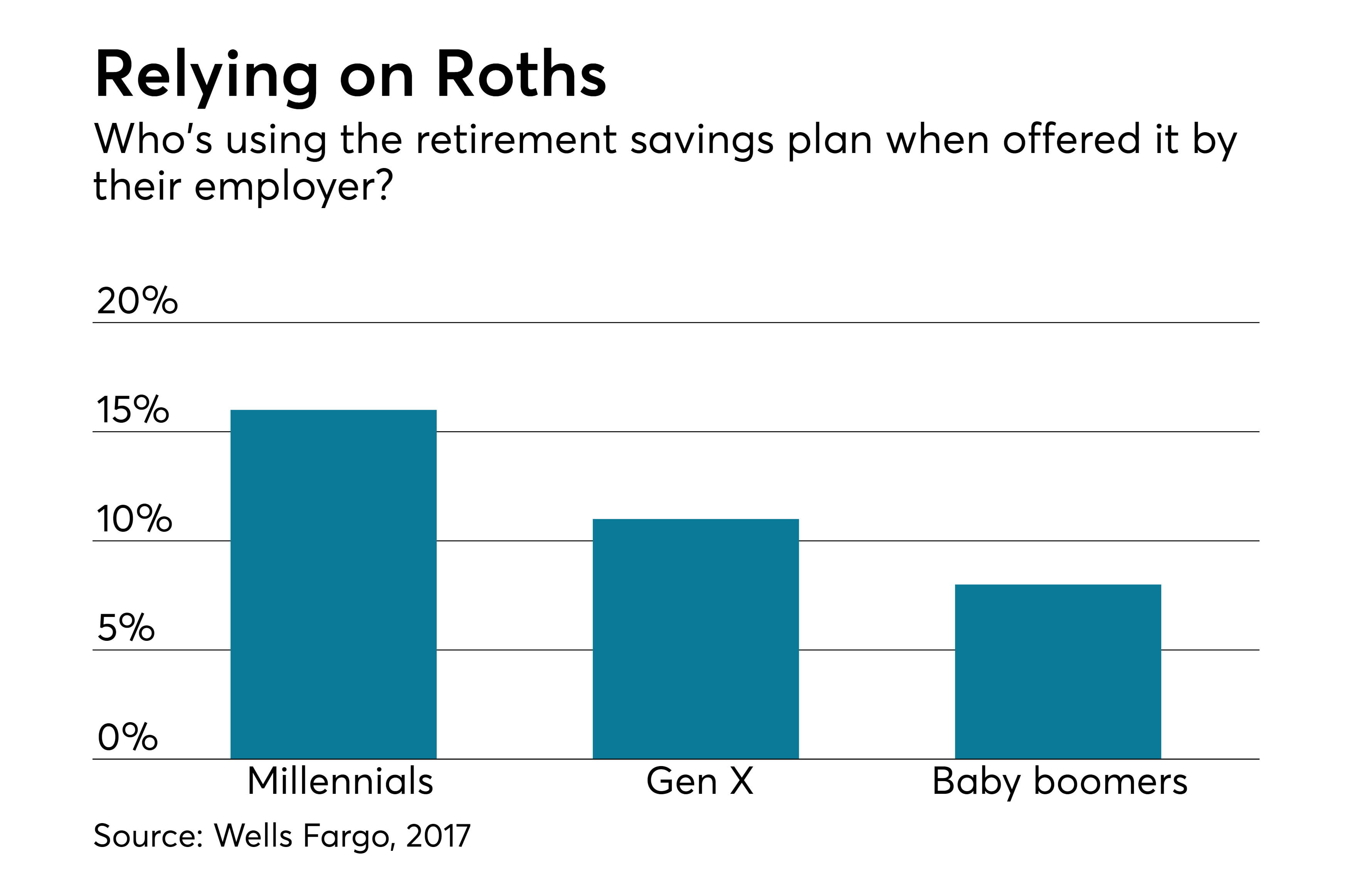
- Roth 401k: Contributions are made with after-tax dollars, but withdrawals are tax-free. A $1,000,000 Roth 401k balance is worth significantly more than a Traditional balance because every dollar is spendable.
Required Minimum Distributions (RMDs)
You cannot keep money in a Traditional 401k forever. For those reaching age 73 or 75 (depending on birth year under the SECURE Act 2.0), the IRS requires you to begin taking RMDs. In 2026, the RMD age for those born in 1960 or later is 75. Failure to take these distributions results in a 25% excise tax on the amount not withdrawn (which can be reduced to 10% if corrected timely).
Common 401k Pitfalls to Avoid
Even with a high balance, certain mistakes can jeopardize your retirement security.
- Sequence of Returns Risk: This occurs when the market drops significantly in the first few years of your retirement. If you are forced to withdraw 4% of your portfolio when it is down 20%, you are selling shares at a loss, which can permanently deplete your 401k. To mitigate this, many retirees keep 1-2 years of cash in a "bucket" to avoid selling stocks during a market downturn.
- High Investment Fees: Even a 1% difference in expense ratios or management fees can cost you hundreds of thousands of dollars over a 30-year career. In 2026, focus on low-cost index funds or Target Date Funds (TDFs) within your 401k.
- The "Lump Sum" Trap: Some retirees see a $1 million balance and feel wealthy, leading to excessive spending in the first year. Stick to your withdrawal percentage to ensure the money lasts for 30+ years.
- 401k Loans: While you can borrow from your 401k, doing so removes that money from the market, costing you compound interest. If you leave your job, the loan may become due immediately or be treated as a taxable distribution.
Frequently Asked Questions
Can I retire with $500,000 in my 401k?
Yes, it is possible to retire with $500,000, but it requires a frugal lifestyle or significant supplemental income. Using the 4% rule, $500,000 generates $20,000 per year. Combined with an average Social Security benefit of $22,000, your total income would be $42,000. This is viable in low-cost-of-living areas but leaves very little margin for healthcare emergencies or inflation.
What is the average 401k balance for a 65-year-old in 2026?
While "average" balances vary, the median 401k balance for those approaching retirement age is significantly lower than the recommended 10x salary milestone. In 2026, the median balance for those aged 65+ is estimated to be between $85,000 and $100,000. This underscores the importance of not relying solely on the average, as many workers are under-saved.
Should I prioritize my 401k over paying off my mortgage?
Generally, if your 401k offers an employer match, you should prioritize that first—it is a 100% return on your investment. Beyond the match, if your mortgage interest rate is lower than your expected market return (e.g., a 3.5% mortgage vs. a 7% market return), the math favors the 401k. However, entering retirement with a paid-off home significantly reduces your required annual income, which lowers your 401k "target number."
How does inflation affect my 401k target?
Inflation reduces the purchasing power of your money. If inflation averages 3%, the cost of living doubles every 24 years. This means that $80,000 in today's dollars will feel like $40,000 in 24 years. To combat this, your 401k must remain invested in growth assets (like stocks) even after you retire to ensure your income keeps pace with rising costs.
What if I am 50 and have nothing in my 401k?
While a late start is challenging, it is not impossible. Between age 50 and 67, you have 17 years of compounding. By maximizing the 2026 contribution limits ($24,000 + $7,500 catch-up = $31,500 annually) and receiving a company match, you could potentially amass over $1 million by age 67, assuming a 7% annual return.
Next Actions for 2026 Retirement Planning
To ensure you reach your target 401k balance, take the following steps immediately:
- Calculate Your Current Multiplier: Divide your current 401k balance by your annual salary. Compare this to the age-based milestones (1x at 30, 3x at 40, etc.).
- Audit Your Expenses: Use a retirement calculator to project your annual spending. Don't forget to include a buffer for healthcare and long-term care.
- Optimize Your Contributions: Ensure you are contributing enough to receive the full employer match. If you are over 50, utilize the 2026 catch-up limits.
- Review Your Asset Allocation: As you get closer to your "number," ensure your portfolio isn't too aggressive. A major market correction right before retirement can shift your timeline by years.
- Consult a Fiduciary: A fee-only financial advisor can help you create a personalized "decumulation" strategy to ensure your 401k lasts as long as you do.
Financial Advice Disclaimer: This article is for informational purposes only and does not constitute professional financial, tax, or legal advice. Retirement planning involves market risk, and past performance is not indicative of future results. Consult with a qualified financial advisor regarding your specific situation.
Image Gallery
Select an image to open it in a new tab.

Zara El-Hashem
Sociocultural Dynamics and Academics Writer
