
The hidden costs of free trade refer to the localized economic disruptions, environmental externalities, and social inequities that often remain uncompensated despite the aggregate growth generated by globalized markets. While free trade increases total efficiency and lowers consumer prices, these benefits are frequently accompanied by significant costs borne by displaced workers, vulnerable domestic industries, and fragile environmental systems.
The Theoretical Promise versus Empirical Reality
Free trade operates on the principle of comparative advantage, where countries specialize in the production of goods and services they can create most efficiently. By removing tariffs, quotas, and non-tariff barriers, nations theoretically maximize global output. Since the mid-20th century, multilateral organizations like the World Trade Organization (WTO) have promoted this framework, arguing that increased trade integration leads to lower prices for consumers and access to a wider variety of goods.
However, the "hidden" aspects of this model become apparent when one moves from aggregate national data to specific sub-sectors of the economy. While an entire country might experience a net gain in GDP, the internal distribution of that gain is rarely equitable. Economic sectors that were previously protected by government policy often face sudden, brutal competition from foreign entities that benefit from lower labor costs or weaker environmental regulations. When these domestic sectors collapse, the resulting losses—job displacement, erosion of tax bases, and localized economic decay—are often externalized rather than accounted for in trade balance sheets.
Labor Market Disruption and Structural Unemployment
One of the most significant hidden costs of free trade is the phenomenon of structural unemployment. Unlike cyclical unemployment, which fluctuates with the general health of the economy, structural unemployment occurs when the skills of the domestic workforce no longer match the requirements of an economy that has pivoted toward different industries.
When a manufacturing sector moves offshore to a lower-cost jurisdiction, the immediate impact is a job loss for specialized workers. These individuals often find that their accumulated skills are not easily transferable to the emerging service or high-tech sectors that benefit from trade. The cost to the individual is not merely the loss of a paycheck; it is the loss of career-long investments in human capital. Furthermore, the loss of these jobs frequently triggers a multiplier effect in local communities, leading to reduced spending, falling property values, and strained municipal services. These social costs are rarely factored into the cost-benefit analysis of trade agreements.
Environmental Externalities and Regulatory Arbitrage
Environmental degradation is perhaps the most persistent "invisible" cost of globalized trade. When industries migrate to jurisdictions with less stringent environmental protections to cut production costs, the global environmental footprint does not disappear; it simply relocates. This is often referred to as "pollution haven" hypothesis.
Companies may seek out countries where regulations regarding carbon emissions, waste management, and chemical disposal are weak or poorly enforced. By doing so, they achieve a competitive advantage over firms operating in countries with high environmental standards. The hidden cost manifests as global climate change, polluted waterways, and degraded biodiversity—negative outcomes that are shared by the entire planet, even though the economic profit of the relocation remains concentrated with the firm. These externalities act as an implicit, unpriced subsidy that makes imported goods appear cheaper than they truly are.
The Cost of Supply Chain Fragility
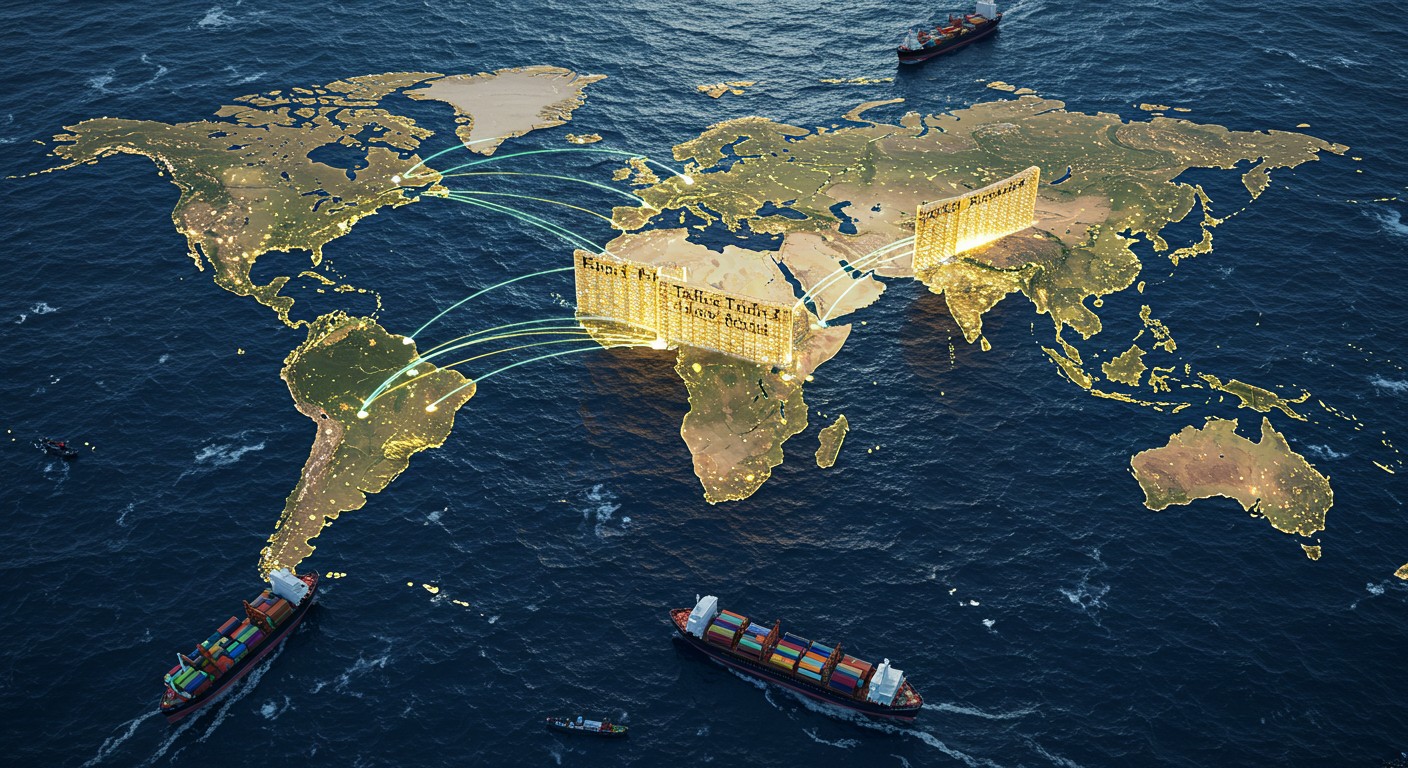
As of 2026, the global economy has become hyper-reliant on complex, just-in-time supply chains. While these systems are highly efficient during periods of stability, they harbor significant hidden costs related to systemic vulnerability. The drive to minimize costs by sourcing from the cheapest possible global suppliers has led to extreme concentration risks.
When a single event—be it a geopolitical conflict, a natural disaster, or a localized public health crisis—disrupts a specific node in the global supply chain, the consequences ripple outward with unprecedented speed. The cost of these disruptions, characterized by stockouts, severe price volatility, and the emergency expenditure required to diversify sourcing, is rarely pre-calculated. Businesses and governments often view the "efficiency" of lean supply chains as an asset, ignoring the latent cost of fragility until it is too late to mitigate the fallout.
Comparative Impacts of Trade Models
| Aspect | Protectionism | Free Trade | Potential Hidden Costs |
|---|---|---|---|
| Consumer Prices | Higher | Lower | Volatility and supply disruption |
| Domestic Employment | High Stability | High Turbulence | Structural unemployment and wage stagnation |
| Innovation | Slower | Rapid | Loss of critical domestic industry knowledge |
| Environmental Impact | Localized | Globalized | Regulatory arbitrage and pollution export |
Addressing the Policy Gap: Redistribution and Retraining
The primary failure in the current free trade paradigm is the lack of robust, systemic mechanisms to compensate those who bear the hidden costs. In theory, the gains from trade are supposed to be sufficient to "compensate the losers," but in practice, these redistribution mechanisms are often underfunded or ineffective.
Effective policy intervention requires three key components:
- Targeted Retraining Programs: Education initiatives that align with current technological and industrial needs, rather than generic workforce development.
- Infrastructure Investment: Directing tax revenues from trade gains into the specific regions and communities hit hardest by industrial migration.
- Environmental Harmonization: Implementing carbon border adjustment mechanisms to ensure that foreign producers are held to similar environmental standards, effectively "internalizing" the environmental costs that currently remain hidden.
Frequently Asked Questions
1. Does free trade always lead to lower prices for consumers?
While free trade generally exerts downward pressure on prices, it is not a guarantee. Hidden costs, such as the expense of securing supply chains and the environmental "debt" accrued through production in loosely regulated areas, can lead to sudden price spikes during periods of global instability. Consumers may save on daily items but pay more in the form of social instability and public spending on social services.
2. How do "hidden costs" impact national security?
Excessive reliance on foreign production for essential goods—such as advanced semiconductors, medicine, or energy-related technology—creates a strategic vulnerability. The hidden cost here is the potential loss of national sovereignty or the inability to respond effectively to crises when supply chains are controlled by foreign entities with competing interests.
3. What is the role of regulatory arbitrage in trade?
Regulatory arbitrage occurs when firms move operations to regions with lower standards (labor or environmental) to gain a cost advantage. This process forces a "race to the bottom," where countries may be incentivized to weaken their own protections to retain or attract business, effectively subsidizing trade through the erosion of local standards.
4. Are these hidden costs inevitable?
They are not inherent to the concept of trade itself, but rather to the way modern trade agreements are structured. If trade policies integrated "full-cost accounting"—which factors in environmental impact, workforce transition costs, and strategic security risks—the cost structure would change. While trade would remain a net positive, the distribution of costs would be significantly more transparent.
Recommendation for Stakeholders
For businesses and policymakers, the path forward involves shifting from a focus on "lowest cost" to "resilient efficiency." Organizations should conduct comprehensive impact audits that include environmental and social cost disclosures. Governments must prioritize the modernization of social safety nets, ensuring that those displaced by global market shifts are provided with not only financial support but also clear pathways to high-value, locally-rooted employment. True economic sustainability in the late 2020s demands acknowledging that a bargain for the consumer that results in long-term structural decay is, ultimately, an expensive transaction for the nation.
Image Gallery
Select an image to open it in a new tab.






Simon Caldwell
Enterprise Technology and Systems Editor
