
Queen Elizabeth’s mother was Elizabeth Bowes-Lyon, who served as Queen Consort of the United Kingdom from 1936 until 1952 as the wife of King George VI. Following her husband's death, she became known as Queen Elizabeth The Queen Mother to avoid confusion with her daughter, Queen Elizabeth II, serving as a central, stabilizing figure in the British monarchy for over five decades.
Early Life and Aristocratic Roots
Born on August 4, 1900, Elizabeth Angela Marguerite Bowes-Lyon was the ninth of ten children born to Claude Bowes-Lyon, 14th Earl of Strathmore and Kinghorne, and his wife, Cecilia Cavendish-Bentinck. Her upbringing was rooted in the Scottish aristocracy, split primarily between Glamis Castle in Angus and St Paul's Walden Bury in Hertfordshire.
The early years of the 20th century provided a traditional, albeit privileged, education for a girl of her station. She was tutored by governesses, studied music, and enjoyed the outdoors. However, the outbreak of the First World War in 1914 fundamentally altered the landscape of her youth. Glamis Castle was converted into a convalescent home for wounded soldiers, and the young Elizabeth took on responsibilities in supporting the recovery of injured servicemen. This period of service left a lasting impression on her, fostering the sense of duty that would define her later public life.
The Courtship and Marriage to the Duke of York
The entry of Elizabeth Bowes-Lyon into the inner circle of the Royal Family was not an immediate inevitability. She first met Prince Albert, Duke of York—the second son of King George V—when they were children, but it was not until the early 1920s that their paths crossed in a way that led to courtship.
Prince Albert, often known as "Bertie," proposed to her in 1921. Elizabeth initially declined, reportedly hesitant to take on the rigid constraints and public scrutiny inherent in royal life. It was only after a second proposal, followed by a third, that she finally accepted. Their marriage took place on April 26, 1923, at Westminster Abbey. This union was notable for its shift toward modernity within the monarchy; it was the first time a commoner—albeit a daughter of an Earl—had married a prince of the blood royal in centuries.
The couple initially sought a relatively quiet life, residing at 145 Piccadilly in London and later at the Royal Lodge in Windsor. It was during these years that their two daughters were born: Elizabeth in 1926 and Margaret in 1930.

The Abdication Crisis and Ascension to the Throne
The trajectory of Elizabeth’s life changed abruptly in 1936. Following the death of King George V, his eldest son, King Edward VIII, ascended the throne. However, Edward’s desire to marry Wallis Simpson, an American divorcee, created a constitutional crisis. When Edward chose to abdicate in December 1936 rather than give up his relationship, the Duke of York became King George VI.
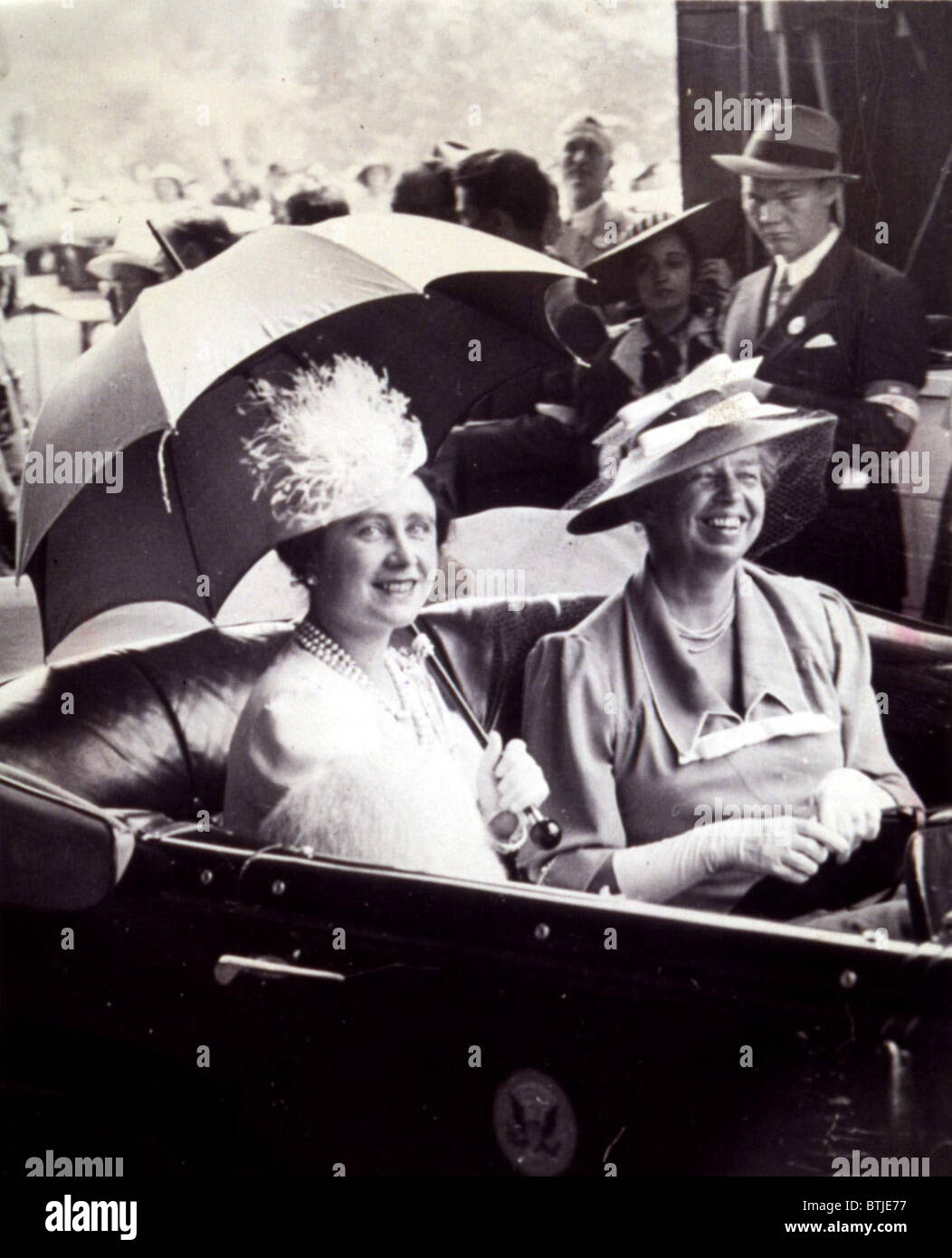
Elizabeth, now Queen Consort, was thrust into a position of immense pressure. She supported her husband, who suffered from a significant stammer and had not been raised with the expectation of kingship. Her role during this time was instrumental in restoring the prestige of the monarchy following the instability of the abdication. Together, they navigated the onset of the Second World War, acting as symbols of resilience for the British public.
Role During the Second World War
The Second World War solidified Elizabeth’s popularity and her reputation as a steadfast leader. When the Blitz—the heavy German bombing of British cities—began, there were calls for the Royal Family to evacuate to Canada for safety. Elizabeth famously refused, declaring, "The children won't go without me. I won't leave the King. And the King will never leave."
She frequently visited damaged areas of London, meeting with families who had lost their homes and encouraging civil defense workers. Her presence in the war-torn capital made her a symbol of defiance. Adolf Hitler reportedly described her as "the most dangerous woman in Europe" due to the influence she wielded in maintaining British morale. This wartime experience forged a deep, enduring bond between her and the British public.
Transition to The Queen Mother
The death of King George VI in February 1952 marked the beginning of a new chapter for Elizabeth. At age 51, she became the dowager queen. To prevent confusion with her daughter, who ascended as Queen Elizabeth II, she assumed the title of Queen Elizabeth The Queen Mother.
For the next 50 years, she remained one of the most active members of the Royal Family. She held the position of Patron or President of hundreds of organizations, ranging from charitable foundations to military regiments. Her schedule was rigorous, often requiring long periods of public engagement well into her later years. She became a beloved grandmother, often seen as the matriarchal anchor of the House of Windsor.
Key Roles and Titles Held
| Title | Dates | Significance |
|---|---|---|
| Duchess of York | 1923–1936 | Her entry into the Royal Family following her marriage. |
| Queen Consort | 1936–1952 | Shared the throne during the reign of King George VI. |
| Queen Elizabeth The Queen Mother | 1952–2002 | Transitioned to a prominent, independent public figure. |
| Lord Warden of the Cinque Ports | 1978–2002 | A ceremonial and historical military honor. |
Personal Interests and Public Image
Beyond her public duties, Elizabeth was known for her love of horse racing, a passion she shared with her husband and later passed on to the wider family. She was also a dedicated patron of the arts and maintained a keen interest in interior design, having overseen the renovations of several royal residences, most notably the Castle of Mey in Scotland, which she rescued from ruin and restored as a private sanctuary.
Her image was carefully curated but widely perceived as genuine. She was known for her sense of humor, her love of gin and Dubonnet, and her sharp wit. Despite her genteel appearance, she was widely recognized within royal circles as having a resilient, steel-like resolve, which allowed her to navigate the complexities of the monarchy throughout the 20th century.
Longevity and Final Years
Queen Elizabeth The Queen Mother became a record-breaker in terms of royal longevity. By the time of her death on March 30, 2002, she was 101 years old. Her public life spanned the entire century, witnessing the transition from the British Empire to the modern Commonwealth.
She passed away peacefully at the Royal Lodge in Windsor, with her daughter, Queen Elizabeth II, at her bedside. Her funeral at Westminster Abbey drew massive crowds, reflecting the high regard in which she was held by generations of British citizens who had grown up seeing her as a constant, reassuring presence in their national life.
Frequently Asked Questions
Did Queen Elizabeth’s mother ever serve as a regent?
No, she never served as a regent. Although she was a key advisor to her husband and later a member of the Council of State during her daughter’s reign, she did not hold the constitutional authority of a regent.
Why was she called the Queen Mother?
The title was adopted after 1952 to distinguish her from her daughter, Queen Elizabeth II. It is a traditional title for the mother of a reigning monarch.
How did the Second World War affect her public perception?
The war transformed her from a traditional consort into a national icon of resilience. Her refusal to leave London during the Blitz and her commitment to visiting bombed-out civilians earned her immense respect that persisted for the rest of her life.
What was her connection to Scotland?
She was born into the Scottish nobility, and her ancestral home was Glamis Castle in Angus. She maintained a lifelong love for Scotland and spent significant portions of her life at the Castle of Mey in Caithness, which she purchased after the death of her husband.
Was she involved in the education of her grandchildren?
Yes, she was a significant influence in the lives of her grandchildren, including King Charles III. She provided a sanctuary for them away from the formalities of court life and was often cited by the family as a source of warmth and wisdom.
Legacy and Influence
The influence of Elizabeth Bowes-Lyon on the modern British monarchy cannot be overstated. She bridged the gap between the rigid, aristocratic traditions of the early 1900s and the more accessible, media-conscious institution that evolved in the latter half of the century. She taught the Royal Family the importance of visibility and engagement, establishing the template for the modern "working royal."
For those seeking to understand the history of the 20th-century monarchy, examining her life provides the necessary context for the stability and survival of the institution through two World Wars and the rapid social shifts of the postwar era. Her ability to balance the demands of her public role with the needs of her family ensured that the monarchy remained relevant and respected.
Image Gallery
Select an image to open it in a new tab.




Mateo Castillo
Decentralized Finance and E-Payments Strategist
