Cloud specific security threats are vulnerabilities and attack vectors unique to cloud computing architectures, such as API insecurities, shared technology vulnerabilities, and identity-based misconfigurations. Unlike traditional on-premises risks, these threats exploit the shared responsibility model, multi-tenancy, and the rapid, automated nature of software-defined infrastructure to compromise data and services.
The transition from localized hardware to distributed cloud environments has fundamentally altered the cyber-threat landscape. In 2026, as organizations increasingly rely on multi-cloud and hybrid-cloud strategies, the perimeter has dissolved. Security is no longer a matter of guarding a physical gateway; it is about securing a complex web of interconnected services, ephemeral containers, and programmatic interfaces. Understanding these threats requires a departure from traditional "firewall-and-forget" mentalities toward a data-centric and identity-centric security posture.
The Shared Responsibility Model: The Primary Source of Confusion
To understand cloud-specific security threats, one must first master the Shared Responsibility Model. This framework, utilized by major Cloud Service Providers (CSPs) like Amazon Web Services (AWS), Microsoft Azure, and Google Cloud Platform (GCP), dictates that the provider is responsible for the security of the cloud (hardware, physical data centers, and the virtualization layer), while the customer is responsible for security in the cloud (data, applications, and configuration).
The most significant threat in 2026 remains the "responsibility gap." Many organizations assume that by moving to a premium CSP, their data is automatically protected. This misconception leads to the neglect of essential security controls, such as encryption of data at rest, the management of administrative credentials, and the configuration of network security groups. When a breach occurs, it is rarely due to a failure of the CSP’s infrastructure; rather, it is almost always a result of the customer failing to uphold their end of the responsibility bargain.
1. Identity and Access Management (IAM) Exploitation
In a cloud-native world, identity is the new perimeter. Because cloud resources are accessible over the public internet via APIs, the credentials used to manage those resources are the most valuable targets for attackers.
Excessive Permissions and Over-Privileged Accounts
One of the most pervasive cloud-specific threats is the "Identity Debt" accumulated by organizations. To ensure developers can work without friction, administrators often grant overly broad permissions (e.g., AdministratorAccess in AWS or Global Admin in Azure) to users and service accounts. In 2026, automated "Privilege Escalation" attacks are the norm. If an attacker compromises a single low-level service account that has excessive permissions, they can traverse the cloud environment, create new administrative users, and eventually take full control of the organization's cloud tenancy.
Machine Identity Risks
While human identity security (MFA, SSO) has improved, the explosion of Machine Identities—service principals, secrets, and API keys—has created a massive, unmanaged attack surface. These identities are often hardcoded into application source code, stored in unencrypted environment variables, or left in public GitHub repositories. Attackers use automated scanners to find these "leaked secrets," allowing them to impersonate cloud services and execute unauthorized commands.
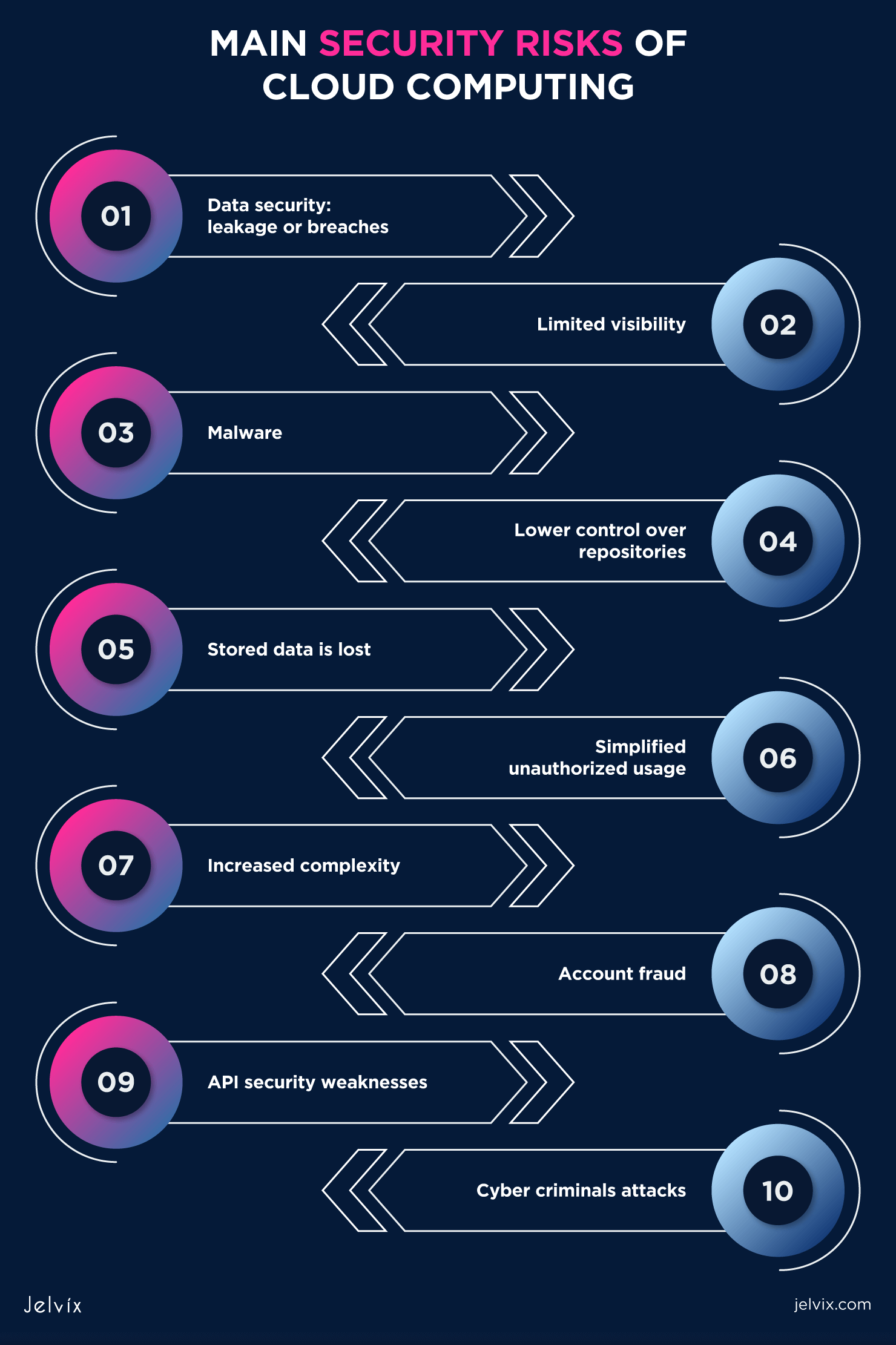
2. Insecure APIs and Control Plane Vulnerabilities
The "Control Plane" is the management layer of the cloud. It is where users create, modify, and delete resources. This layer is accessed through APIs (Application Programming Interfaces). Insecure APIs are not just a software bug; they are a direct threat to the entire cloud infrastructure.
Broken Object Level Authorization (BOLA)
Cloud services often rely on unique identifiers (IDs) to access resources. If an API does not properly verify that the user requesting a specific ID actually has permission to see it, an attacker can simply guess other IDs to access sensitive data belonging to other users or departments. This is a common flaw in SaaS (Software as a Service) platforms where multi-tenancy is managed at the application level.
API Injection and Manipulation
As we move through 2026, APIs have become the primary target for sophisticated injection attacks. Because cloud APIs often trigger automated workflows (such as spinning up new virtual machines or modifying database schemas), a single malicious API call can result in massive resource exhaustion or the unauthorized exfiltration of entire databases. The threat is magnified when APIs are integrated with third-party services, creating a chain of trust that is only as strong as its weakest link.
3. Infrastructure Misconfigurations
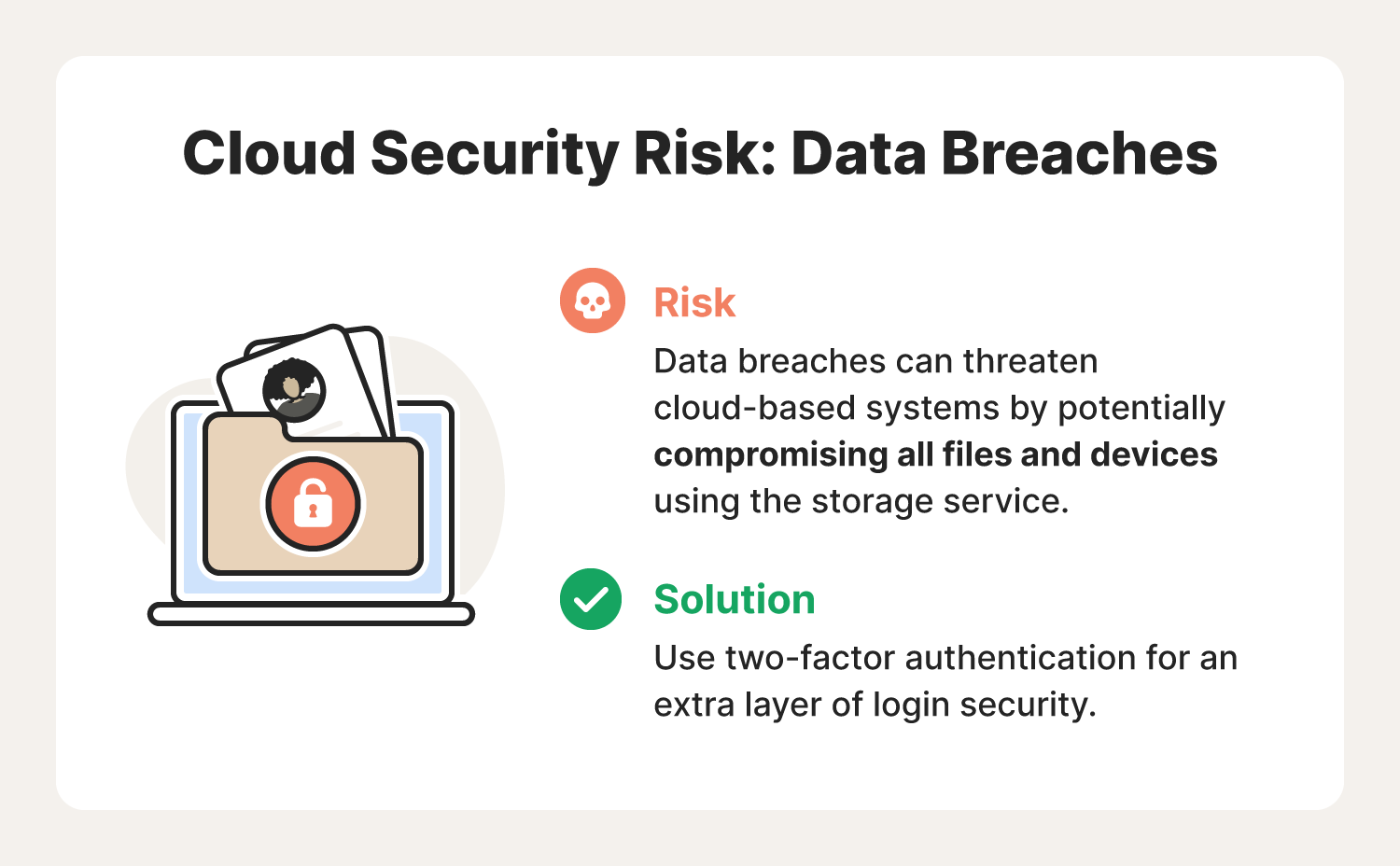
Misconfiguration is the leading cause of cloud data breaches. The complexity of cloud consoles and the speed of DevOps deployments create a high probability of human error.
Exposed Storage Buckets
Despite years of warnings, unsecured storage containers (like AWS S3 buckets or Azure Blobs) remain a critical threat. These "leaks" are often caused by developers making a bucket public to test a feature and forgetting to revert the setting. In a cloud-specific context, these are not "hacks" in the traditional sense; they are policy failures where sensitive data is essentially left on a public sidewalk.
Shadow IT and Ghost Resources
The ease of spinning up cloud resources leads to "Cloud Sprawl." Departments may create cloud accounts outside the purview of the central IT security team. These "Shadow IT" environments lack standard security controls, logging, and monitoring, making them perfect entry points for attackers. Furthermore, "Ghost Resources"—abandoned virtual machines or databases that are no longer in use but still active—often go unpatched, providing a persistent foothold for threats within the network.
4. Supply Chain Attacks in Cloud-Native Ecosystems
Cloud environments are built using a vast array of third-party components, including container images (Docker), orchestration templates (Kubernetes), and Infrastructure as Code (IaC) scripts (Terraform).
Poisoned Container Images
Attackers frequently upload malicious images to public registries like Docker Hub, disguised as popular utilities or base OS images. If a developer pulls one of these "poisoned" images into their cloud environment, the malware is deployed directly into the production cluster. These attacks can include cryptominers that steal compute power or backdoors that allow remote access to the internal network.
Dependency Confusion
In 2026, "Dependency Confusion" remains a potent threat. This occurs when an attacker publishes a malicious package to a public repository with the same name as an internal private package used by a company. Cloud build systems often prioritize the public repository or the higher version number, leading the system to automatically download and execute the malicious code during the next software build cycle.
5. Shared Technology and Multi-Tenancy Risks
The fundamental premise of the cloud is resource sharing. Multiple customers (tenants) share the same physical hardware, separated by a virtualization layer (the hypervisor).
Hypervisor Escapes
A "Hypervisor Escape" is a rare but catastrophic cloud-specific threat where an attacker manages to break out of their virtual machine (VM) and gain access to the underlying physical host or the VMs of other customers. While CSPs invest billions in securing this layer, the theoretical risk of a "Side-Channel Attack" (similar to the evolution of Spectre and Meltdown) remains a concern for organizations handling highly sensitive or regulated data.
Resource Exhaustion (DDoS on the Wallet)
In a shared environment, an attack on one tenant can sometimes impact another, though CSPs have largely mitigated "noisy neighbor" syndrome. However, a cloud-specific version of a Distributed Denial of Service (DDoS) attack involves forcing a victim’s environment to scale infinitely. Since cloud resources are billed based on usage, an attacker can trigger automated scaling policies to create thousands of unnecessary instances, resulting in a "Denial of Wallet" attack that can bankrupt a small organization in hours.
Comparison of Cloud-Specific Threats and Mitigations
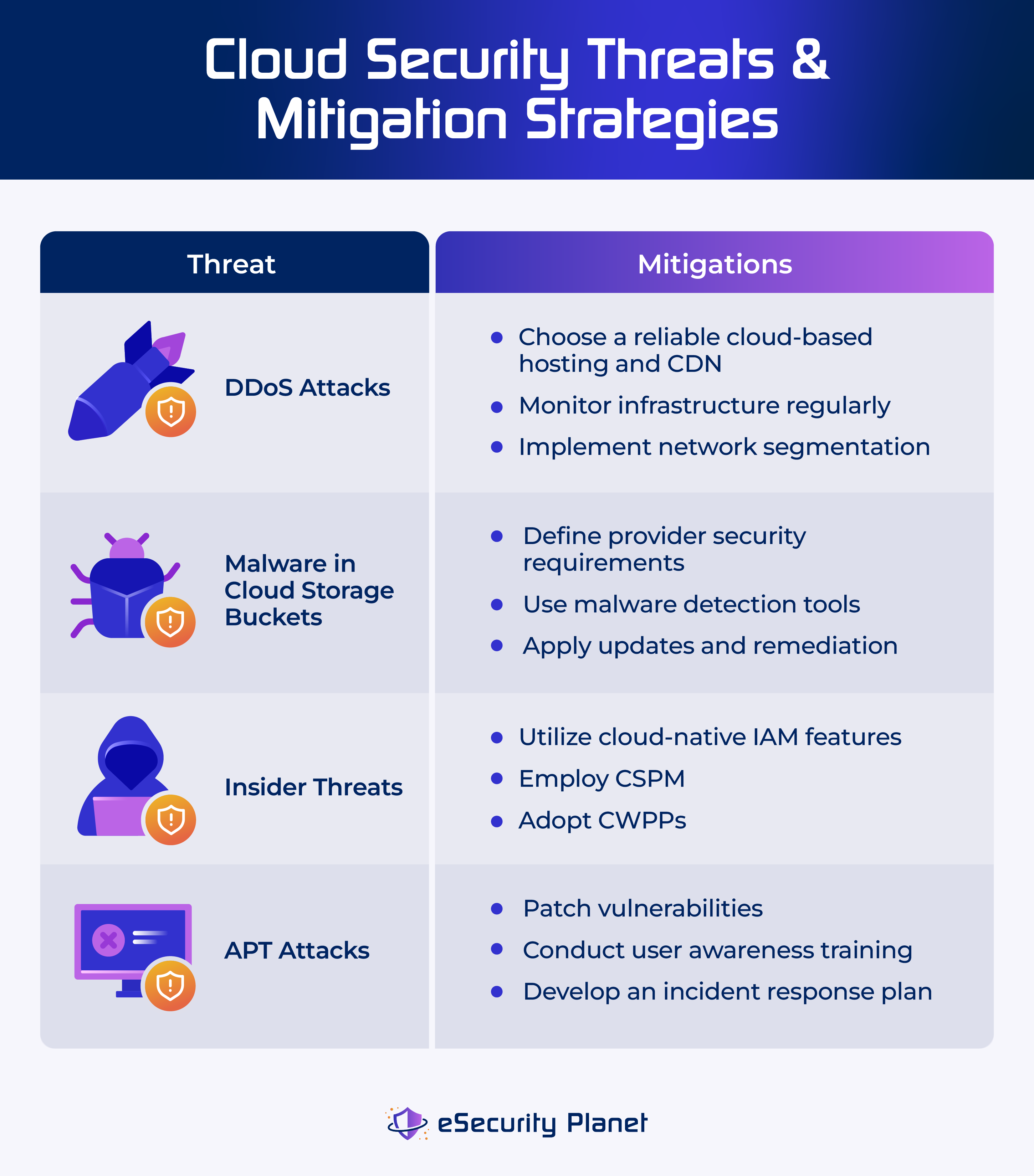
| Threat Category | Primary Impact | Recommended Mitigation (2026 Standard) |
|---|---|---|
| IAM Misconfiguration | Unauthorized access, account takeover | Implement Zero Trust Architecture and Just-In-Time (JIT) access. |
| Insecure APIs | Data exfiltration, service disruption | Use API Gateways with strict schema validation and mTLS. |
| Storage Leaks | Public exposure of sensitive data | Enable automated CSPM (Cloud Security Posture Management) alerts. |
| Supply Chain Poisoning | Malicious code execution in production | Implement Software Bill of Materials (SBOM) and image signing. |
| Denial of Wallet | Massive financial loss due to autoscaling | Set strict billing alarms and hard quotas on resource scaling. |
6. Emerging Threats: AI and Serverless Vulnerabilities
As we navigate 2026, the adoption of Artificial Intelligence (AI) and Serverless computing has introduced new specialized threats.
AI Prompt Injection and Data Poisoning
Many cloud platforms now offer integrated Large Language Models (LLMs) that interact with customer data. "Prompt Injection" involves crafting inputs that trick the AI into bypassing security filters or leaking the underlying system prompts and data. Furthermore, "Data Poisoning" occurs when an attacker manages to insert malicious data into the training set used by a cloud-resident AI, subtly altering its behavior to favor the attacker in the future.
Serverless Function Exploitation
Serverless architectures (like AWS Lambda or Google Cloud Functions) shift the management of the OS to the provider, but the code remains the customer's responsibility. Because serverless functions are event-driven, attackers can use "Event Injection" to trigger functions with malicious payloads. Since these functions are ephemeral and scale rapidly, traditional perimeter security tools (like WAFs) often struggle to inspect the high volume of short-lived traffic, allowing attacks to go unnoticed until data has already been exfiltrated.
Best Practices for Defending Against Cloud-Specific Threats
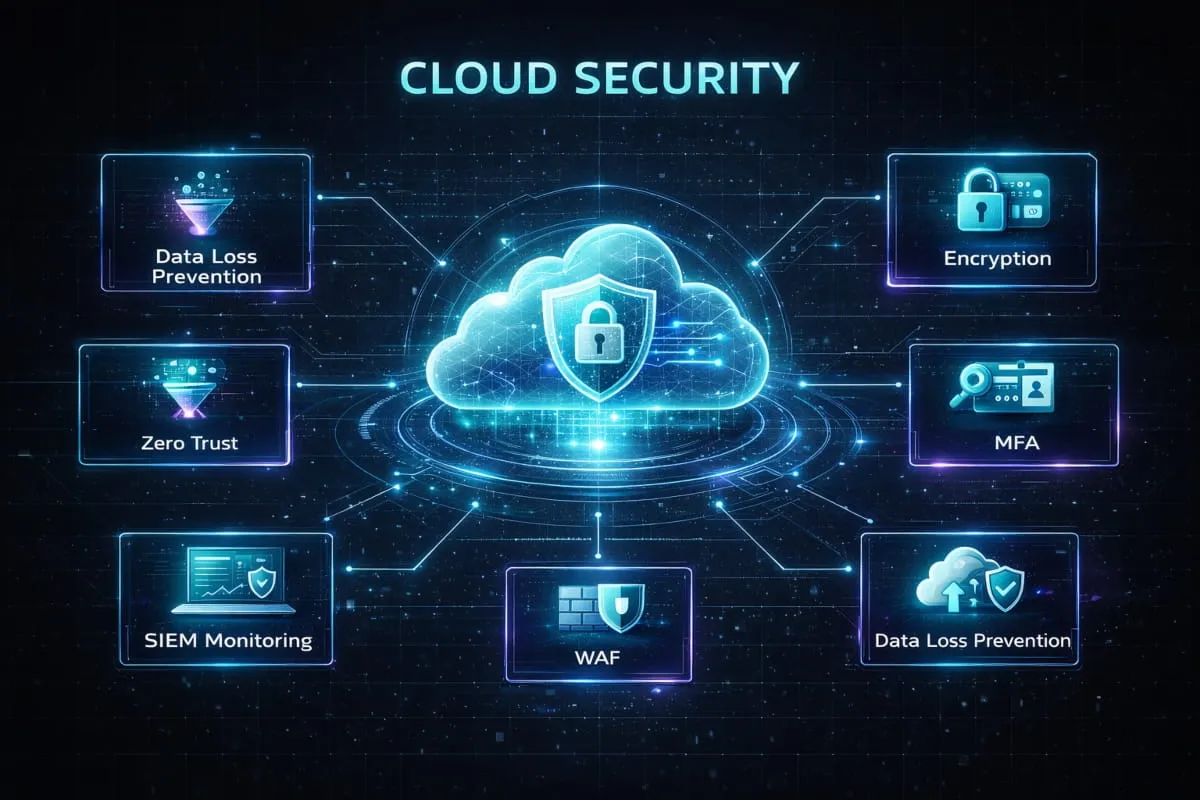
To combat these threats, organizations must move beyond traditional security tools and adopt cloud-native security platforms (CNAPP).
- Adopt a Zero Trust Model: Never trust a request based on its origin within the cloud network. Every request must be authenticated, authorized, and encrypted.
- Infrastructure as Code (IaC) Scanning: Shift security "left" by scanning Terraform or CloudFormation templates for misconfigurations before they are deployed to production.
- Continuous Monitoring with CSPM: Utilize Cloud Security Posture Management tools to provide real-time visibility into the configuration state of all cloud assets across multi-cloud environments.
- Secrets Management: Use dedicated services like HashiCorp Vault, AWS Secrets Manager, or Azure Key Vault to manage API keys and credentials, ensuring they are never stored in plain text.
- Runtime Protection: Implement Cloud Workload Protection Platforms (CWPP) to monitor the behavior of containers and virtual machines in real-time, detecting anomalies that indicate a breach or unauthorized process execution.
FAQ: Understanding Cloud-Specific Vulnerabilities
What makes a security threat "cloud-specific"?
A threat is cloud-specific if it targets the unique characteristics of cloud computing, such as the virtualization layer, the shared responsibility model, the programmatic management of infrastructure (APIs), or the multi-tenant nature of the platform. Traditional malware that affects an on-premise server is a general threat, whereas a "Metadata Service Attack" that steals IAM roles from a cloud instance is cloud-specific.
Is the cloud less secure than on-premises servers?
Not necessarily. Leading CSPs generally have better physical security and infrastructure patching than most private organizations. However, the cloud is differently secure. It introduces new complexities in configuration and identity management that, if misunderstood, create vulnerabilities that do not exist in a traditional locked-down data center.
How does the "Shared Responsibility Model" affect legal liability?
In the event of a data breach, the legal and financial liability almost always falls on the customer if the breach was caused by a misconfiguration or a failure to secure the application layer. CSPs are only liable if the breach occurred due to a failure in their underlying physical or virtualization infrastructure, which is statistically rare. Organizations should consult the CISA Cloud Security Technical Reference Architecture for guidance on these boundaries.
What is "Cloud Sprawl," and why is it a security risk?
Cloud sprawl occurs when an organization loses track of the various cloud services and instances it has deployed. This leads to "Shadow IT," where unmonitored resources exist without proper security patches or access controls. These forgotten assets are easy targets for attackers seeking a quiet way into a corporate network.
Can encryption protect against all cloud-specific threats?
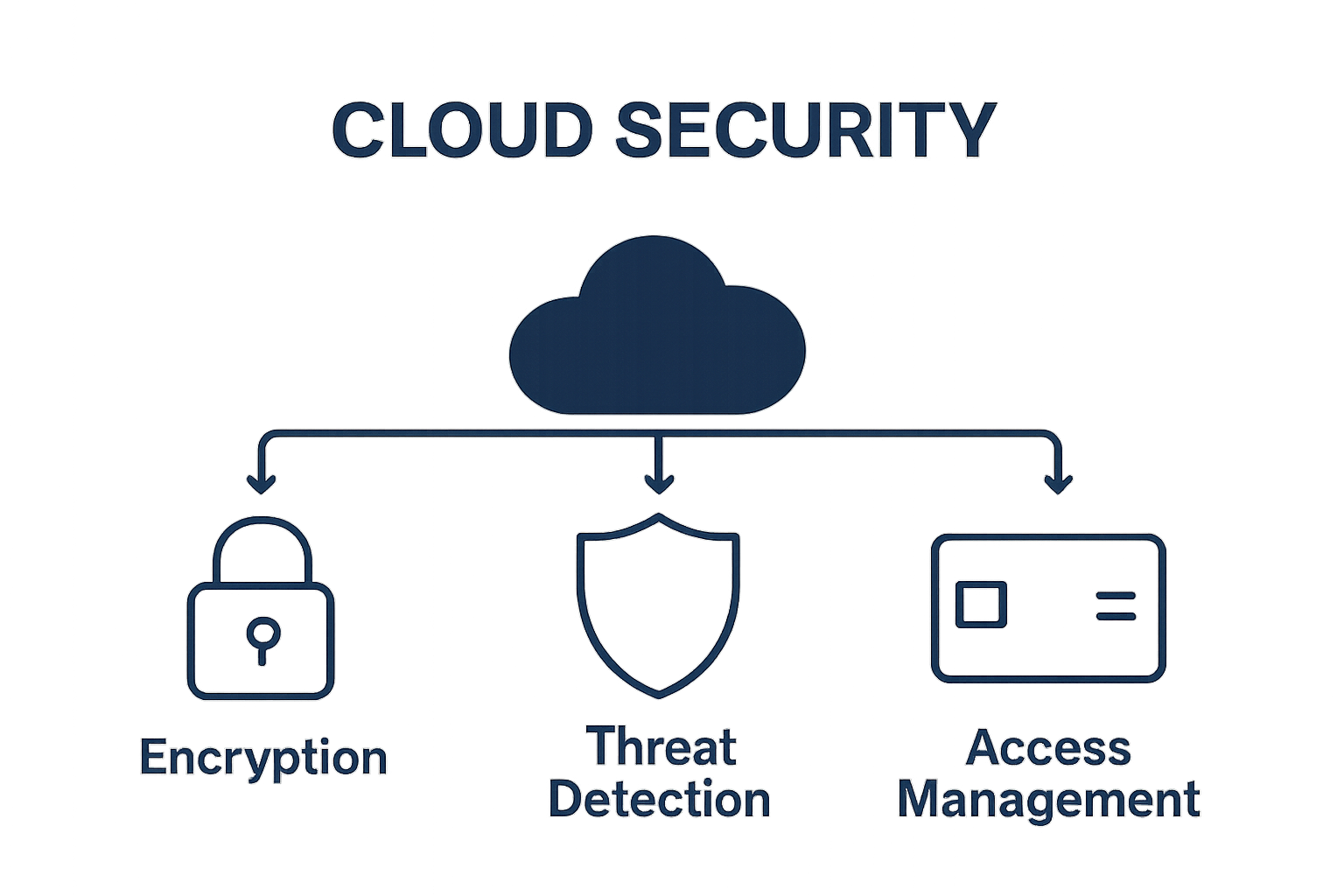
Encryption is a vital tool for protecting data at rest and in transit, but it is not a silver bullet. If an attacker steals an IAM key with "Decrypt" permissions, the encryption becomes moot. Security must be a layered approach involving identity, network controls, and monitoring, in addition to encryption.
Next Steps for Organizations
For organizations operating in 2026, the immediate priority is to conduct a Cloud Security Gap Analysis. This involves auditing current deployments against the CIS (Center for Internet Security) Benchmarks for your specific cloud provider. Prioritize the implementation of Multi-Factor Authentication (MFA) for all users and the transition to "Least Privilege" IAM policies. Finally, consider consolidating security tooling into a unified Cloud-Native Application Protection Platform (CNAPP) to reduce the complexity of managing disparate security signals across your cloud estate.
Image Gallery
Select an image to open it in a new tab.



Lars Thomsen
Global Labor Markets and Economic Strategy Editor
