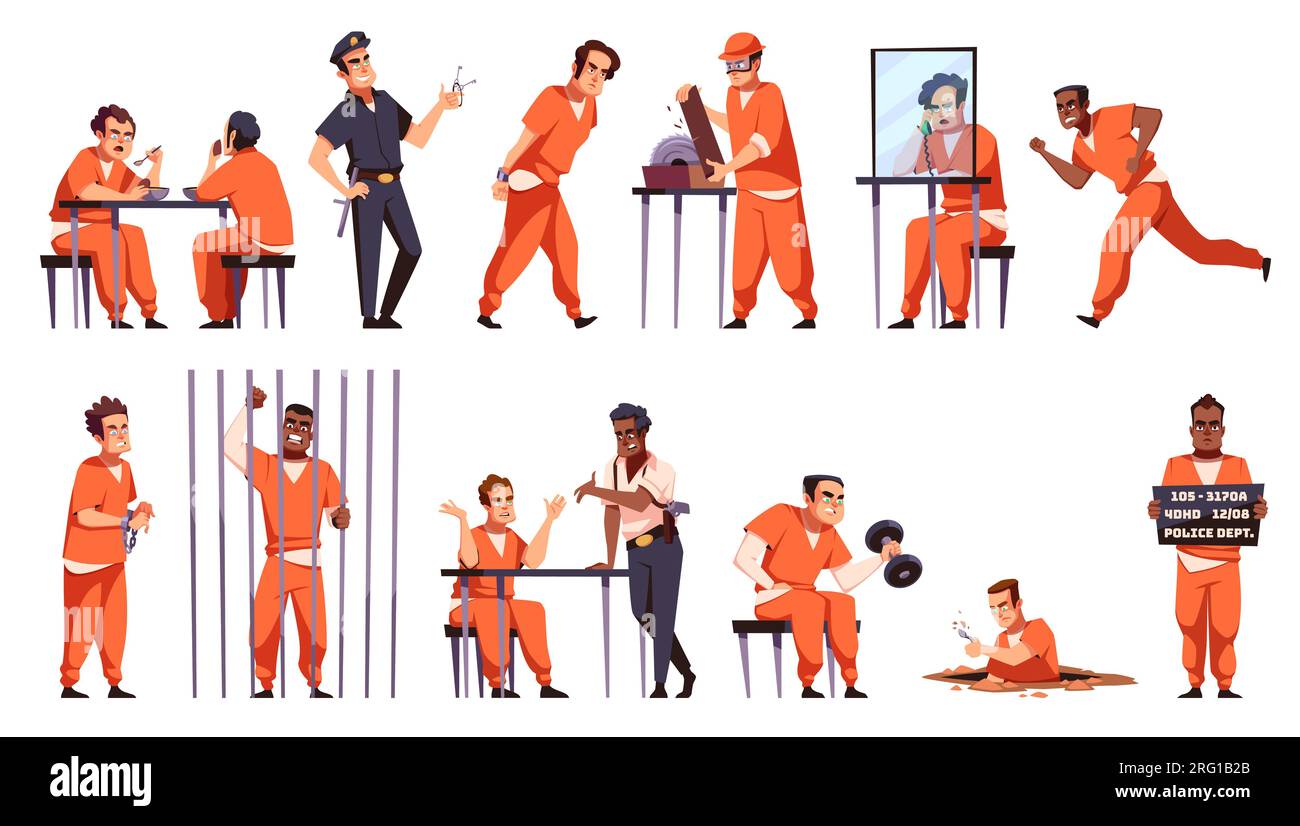
The Comprehensive Guide to Why Prisoners Wear Orange: Security, History, and Classification

Prisoners wear orange primarily for high visibility and immediate identification, which are critical for maintaining security and preventing escapes. The bright "safety orange" hue provides a sharp contrast against most natural and urban backgrounds, making an inmate easily recognizable to guards, law enforcement, and the public. Additionally, orange is often used to designate specific security classifications or temporary housing status, such as during the intake process or transport.
The use of orange in correctional facilities is not a universal rule but rather a strategic choice governed by institutional policy, safety protocols, and psychological considerations. While the image of the orange jumpsuit is iconic in modern media, its application in the American justice system and abroad is nuanced, involving a complex history of penal philosophy and operational necessity.
The Evolution of Prison Attire: From Stripes to Solid Colors
To understand why orange became a staple of modern corrections, it is necessary to examine the history of prison uniforms. In the 19th century, the "Auburn System" in New York introduced the infamous black-and-white striped uniforms. These stripes were designed to be a "badge of shame," intended to humiliate the prisoner and make them instantly recognizable if they fled into the community.
However, by the mid-20th century, penal philosophy began to shift. Critics argued that stripes were overly dehumanizing and hindered rehabilitation. Consequently, many jurisdictions moved toward solid colors like gray, green, or khaki. The transition to orange gained significant momentum in the 1970s and 1980s as correctional facilities grew larger and the need for high-visibility "safety" clothing became more apparent for high-risk situations.
The Rise of the Orange Jumpsuit
The orange jumpsuit—specifically the one-piece coverall—became a standard for "short-term" situations. This includes:
- Initial Intake: New arrivals at a county jail or state prison are often placed in orange until they are fully processed and classified.
- High-Security Transport: When inmates are moved between facilities or to a courthouse, the high visibility of orange is a security requirement.
- Special Housing Units (SHU): In some jurisdictions, orange is reserved for those in administrative segregation or "solitary confinement" to distinguish them from the general population.
The Science of Visibility: Why Orange Works
The primary reason for the color orange is its status as a "safety color." In the spectrum of visible light, orange (specifically Safety Orange or International Orange) is highly conspicuous.
Contrast with the Environment
Most prison interiors consist of neutral tones: gray concrete, white walls, and steel bars. In the event of a riot or an escape attempt, an inmate wearing orange stands out starkly against these backgrounds. Externally, orange is rare in nature, providing a contrast against green foliage, brown dirt, or gray asphalt. This makes it significantly easier for perimeter guards or search helicopters to track a moving individual.
Distinction from Staff and Public
In any secure environment, "friend or foe" identification must be instantaneous. Corrections officers typically wear uniforms in shades of navy blue, forest green, tan, or black. By assigning inmates a color like bright orange—which is rarely worn by civilians in a professional or casual context—the facility ensures that there is no confusion between staff, visitors, and the incarcerated population.

Classification and the Color-Coding System
Modern correctional facilities in 2026 use sophisticated color-coding systems to manage inmate populations. While orange is the most famous, it is rarely the only color present in a facility. Color-coding allows staff to identify an inmate’s security level, medical status, or work assignment from a distance.
| Uniform Color | Common Meaning/Classification | Risk Level |
|---|---|---|
| Orange | General Population (Intake), High-Risk, or Transport | Moderate to High |
| Red | High Security, Violent Offenders, or Escape Risks | Very High |
| Yellow | Low Security, Protective Custody, or Medical Staff | Low |
| Blue/Green | General Population (Long-term) or Low-Risk Work Crews | Low to Moderate |
| White | Often used for Inmates on Death Row (state-dependent) | Maximum |
| Khaki/Tan | Minimum Security or Federal Bureau of Prisons Standard | Low |
Regional Variations in the United States
The use of orange varies by jurisdiction. The Federal Bureau of Prisons (BOP) typically favors khaki or olive-drab clothing for its permanent population, reserving orange for specific high-security movements. Conversely, many county jails use orange as their primary uniform color because their population is transient; inmates are often there for short durations awaiting trial or sentencing, making the "intake orange" more practical.
The "Orange is the New Black" Effect: The Shift Away from Orange
Interestingly, the popularity of orange has led to an unexpected security challenge. Following the rise of prison-themed media and the adoption of "industrial" fashion trends, orange jumpsuits became a popular item in pop culture and even as Halloween costumes.
In 2014, Sheriff William Federspiel of Saginaw County, Michigan, famously made national headlines by switching his inmates' uniforms from orange back to black-and-white stripes. The reason? Orange had become "cool." Because civilians were frequently seen wearing orange clothing that looked remarkably like prison scrubs, the Sheriff felt the color no longer served as a clear identifier for a criminal.
In 2026, this trend continues in several jurisdictions. Some administrators argue that returning to stripes or using less "fashionable" colors like neon pink or high-visibility lime green prevents the "glamorization" of prison life and ensures the uniform remains a distinct marker of incarceration.
Psychological and Legal Considerations
The attire of a prisoner is not just a matter of logistics; it has significant psychological and legal implications.
The "Attire of Guilt" and Fair Trials
One of the most critical legal protections regarding prison clothing involves the courtroom. The U.S. Supreme Court case Estelle v. Williams (1976) established that a defendant cannot be compelled to stand trial before a jury while wearing identifiable prison clothing, such as an orange jumpsuit. The Court recognized that wearing such attire could prejudice the jury and undermine the "presumption of innocence."
Consequently, even if an inmate wears orange 24/7 within the facility, they are generally provided with "civilian" clothing (a suit or professional attire) for jury trials to ensure a fair legal process.
Impact on Inmate Behavior
Psychologically, the color orange is often associated with high energy and agitation. Some criminologists suggest that dressing inmates in bright, aggressive colors can contribute to a tense atmosphere within a facility. Conversely, some facilities have experimented with "Baker-Miller Pink" or soft blues, which are thought to have a calming effect on heart rate and aggression. Despite these studies, the security benefits of high-visibility orange usually outweigh the perceived psychological benefits of more muted tones in high-security environments.
Technical Specifications: The Construction of Prison Orange
The "orange" used in prisons isn't just a color; it’s a specific type of garment designed for the rigors of a correctional environment.
- Material Composition: Most uniforms are made from a heavy-duty polyester-cotton blend (typically 65/35). This fabric is chosen for its durability, resistance to shrinking, and ability to withstand high-temperature industrial laundering.
- Safety Features: To prevent the concealment of contraband or the creation of weapons, these garments are designed with minimal features. They often lack pockets, or have "patch" pockets that cannot be easily hidden. Zippers and metal buttons are frequently replaced with Velcro or heavy-duty plastic snaps to prevent inmates from sharpening metal components into "shanks."
- Standardization: Using a single color like orange allows facilities to purchase in massive bulk, reducing the cost per unit. For a department of corrections managing tens of thousands of inmates, the cost-effectiveness of a standardized orange scrub set is a major budgetary factor.
International Comparisons: Is Orange Global?
While the orange jumpsuit is a hallmark of the American "tough on crime" image, other countries take vastly different approaches to prisoner attire:
- United Kingdom: Inmates in the UK often wear their own clothes or standardized "civilian-style" clothing (jeans and sweatshirts) to promote a sense of normalcy and aid in rehabilitation.
- Norway: Known for its progressive "restorative justice" model, Norwegian prisoners typically wear their own clothes, as the loss of liberty is considered the only punishment, not the loss of identity or personal appearance.
- Japan: Uniforms are strictly mandated and often consist of drab greens or grays, reflecting a cultural emphasis on conformity and order rather than high-visibility "safety" colors.
The prevalence of orange in the United States remains an outlier, driven by a unique combination of high incarceration rates, a focus on perimeter security, and a decentralized system of county and state jails.
Frequently Asked Questions
Why do some prisoners wear orange and others wear blue?
The difference is usually based on security classification. Orange is often reserved for new arrivals (intake), high-security inmates, or those being transported. Blue or green is frequently assigned to the "general population"—inmates who have been classified as low-to-medium risk and are serving longer-term sentences.
Do inmates have to pay for their orange uniforms?
In most state and federal facilities, the initial set of uniforms is provided at no cost. However, if an inmate destroys their clothing or requires replacements beyond the standard issue, the cost may be deducted from their "commissary" or inmate trust account.
Is the color orange used for female prisoners too?
Yes. The security requirements for visibility and identification apply regardless of gender. While some female facilities may use different color palettes (such as teal or maroon) to distinguish between units, orange remains a standard choice for high-security or transport situations across all genders.
What happens to the uniforms when a prisoner is released?
Prison-issued clothing, including orange jumpsuits, must be returned upon release. Inmates are typically given back the civilian clothes they were wearing when they were arrested, or they are provided with "gate money" and basic civilian attire (often donated) to ensure they do not re-enter society in identifiable prison garb.
Can a prisoner choose a different color if they have a sensory issue?
Generally, no. Uniformity is a core component of correctional security. While medical accommodations can be made for specific fabrics (if an inmate has a documented severe allergy to polyester, for example), the color remains non-negotiable to ensure the integrity of the facility's identification system.
Summary of Findings
The use of orange in prisons is a calculated operational decision rather than a stylistic one. It serves four primary functions:
- Escape Prevention: The high contrast makes it nearly impossible to hide in natural or urban settings.
- Safety and Sorting: It allows guards to instantly identify the "status" of an individual within the prison hierarchy.
- Staff Protection: It prevents inmates from blending in with staff or visitors.
- Logistical Efficiency: It provides a durable, low-cost solution for clothing large populations.
As we move through 2026, the debate continues between the need for high-visibility security and the move toward more rehabilitative, less stigmatizing environments. While some jurisdictions are moving back to traditional stripes or more neutral tones to counter pop-culture trends, the "prison orange" remains the most recognizable symbol of the modern justice system.
Next Action for Researchers: To see how these policies apply in your specific region, consult the "Inmate Handbook" or "Operations Manual" provided on the official website of your State Department of Corrections or the Federal Bureau of Prisons.
Image Gallery
Select an image to open it in a new tab.