Comprehensive Guide to UCC Forms in Georgia: Filing, Requirements, and Procedures
Navigating Uniform Commercial Code (UCC) filings in Georgia is an essential operational requirement for creditors, lenders, and businesses seeking to secure personal property and fixture collateral. Under Article 9 of the Uniform Commercial Code, which has been adopted across all U.S. states with localized statutory variations, filing a UCC financing statement establishes a public notice of a security interest. In the state of Georgia, these administrative filings are managed centrally through the Georgia Superior Court Clerks' Cooperative Authority (GSCCCA). Whether you are a commercial lender securing a term loan, an equipment vendor structuring a lease, or a business owner verifying active liens against a prospective partner, understanding the mechanics of Georgia UCC forms, their submission procedures, and associated statutory requirements is critical for mitigating financial risk and maintaining perfection of security interests.
Understanding UCC Article 9 Framework in Georgia
The Uniform Commercial Code governs commercial transactions and security interests across United States jurisdictions. In Georgia, these provisions are codified under Title 11 of the Official Code of Georgia Annotated (O.C.G.A.). Article 9 specifically regulates secured transactions, detailing how creditors attach security interests to collateral and how those interests achieve priority over competing claims through public filing.
When a debtor pledges personal property or fixtures as collateral for a loan or credit extension, the security agreement creates an enforceable interest between the debtor and the secured party. However, to protect that interest against third parties—such as subsequent lenders, lien creditors, or a bankruptcy trustee—the secured party must "perfect" the interest. For most types of collateral, perfection is achieved by filing a UCC financing statement with the proper state repository.
The primary purpose of a UCC filing is notice. It does not prove the validity of the underlying debt or detail every provision of the security agreement; rather, it alerts the public and prospective creditors that a specific secured party claims an interest in the debtor’s current or future assets. Failure to file correctly, or maintaining an expired filing, can result in the loss of priority status, dropping a secured creditor down to unsecured standing in the event of a debtor default or insolvency proceeding.
The Role of the Georgia Superior Court Clerks' Cooperative Authority (GSCCCA)
Unlike some states where UCC filings are processed through the Secretary of State's office, Georgia centralizes its UCC filing and search operations through the Georgia Superior Court Clerks' Cooperative Authority (GSCCCA). Established by the Georgia General Assembly, the GSCCCA serves as the central administrative agency providing statewide uniformity for real estate records, notary public applications, and UCC filings.
The GSCCCA operates an electronic filing and search portal that allows secured parties, legal professionals, and commercial entities to submit forms online, pay statutory fees, and conduct comprehensive lien searches. Centralizing filings through the GSCCCA ensures a standardized statewide database, minimizing regional discrepancies that previously existed when filings were handled exclusively at individual county superior court clerk offices.
While the vast majority of financing statements are filed centrally with the GSCCCA, certain specialized filings—such as those involving timber to be cut, as-extracted collateral, or fixtures attached to real property—may require localized indexing or cross-referencing in the county where the real estate is located, in accordance with O.C.G.A. § 11-9-501.
Standard Georgia UCC Forms and Their Specific Purposes
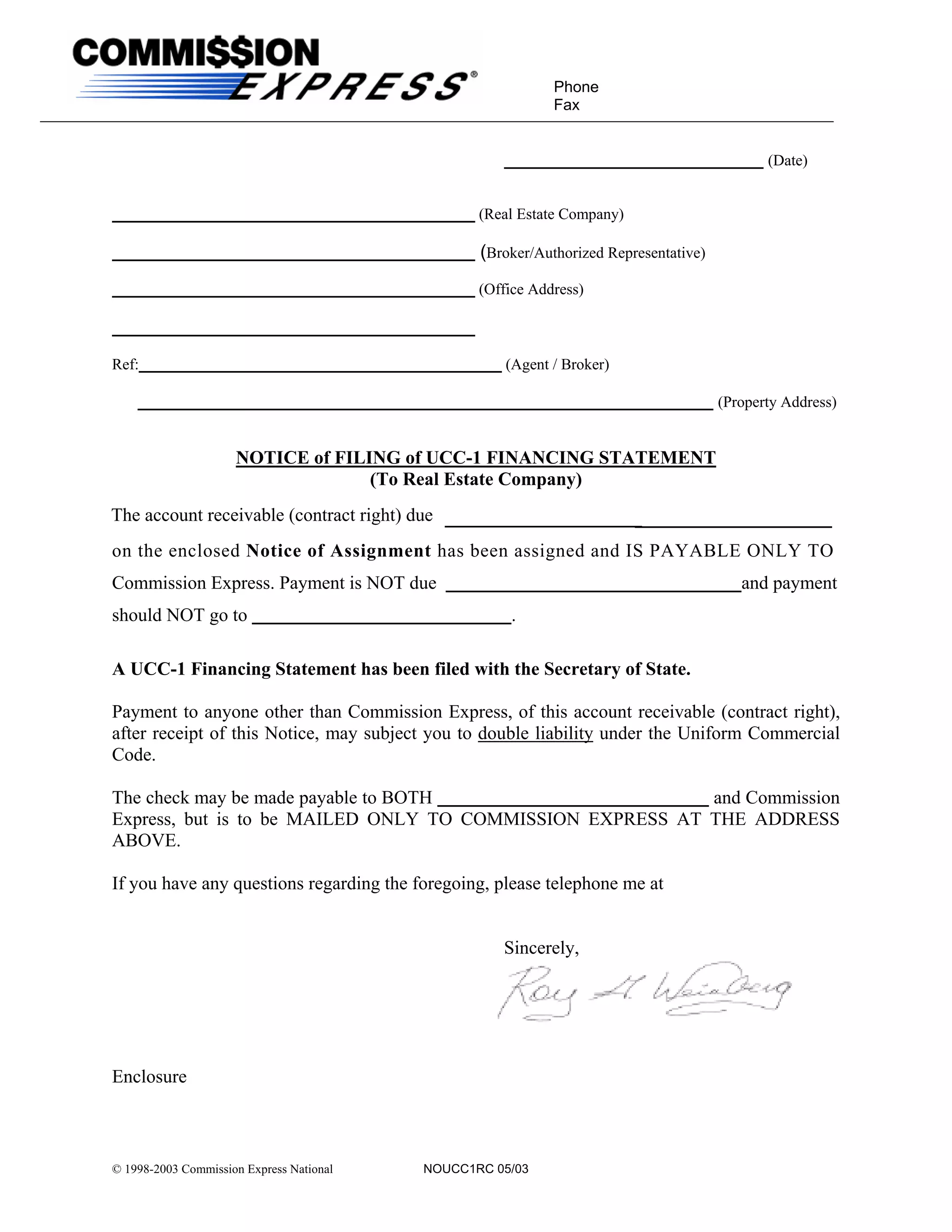
The International Association of Commercial Administrators (IACA) promulgates standardized forms that are accepted across jurisdictions, with specific state-level adaptations. In Georgia, filers must use the approved forms to ensure automated indexing and legal sufficiency. Below are the primary forms utilized in commercial practice:
- UCC1 (Uniform Commercial Code Financing Statement): The foundational form used to initiate a public record of a security interest. It identifies the debtor, the secured party, and provides a description of the collateral.
- UCC1Ad (UCC Financing Statement Addendum): An auxiliary form attached to the UCC1 when additional debtors, additional secured parties, or collateral descriptions exceed the space provided on the primary form, or when the collateral involves fixtures, timber, or as-extracted minerals.
- UCC1AP (UCC Financing Statement Additional Party): Used when multiple additional debtors or secured parties must be disclosed beyond what is accommodated on the UCC1 and UCC1Ad.
- UCC3 (Uniform Commercial Code Financing Statement Amendment): A versatile multi-purpose form used to modify an existing financing statement. It handles continuations, terminations, assignments, amendments to debtor or secured party names, and partial or total collateral amendments.
- UCC3Ad (UCC Financing Statement Amendment Addendum): Attached to a UCC3 when expanding upon amendments, adding parties, or modifying collateral details related to an existing record.
- UCC3AP (UCC Financing Statement Amendment Additional Party): Utilized alongside a UCC3 to list multiple additional parties affected by the amendment.
- UCC5 (Information Statement): A specialized form used by a debtor (or a person named as a debtor) to note that an inaccurate or wrongfully filed record has been submitted against them. Crucially, a UCC5 does not amend, terminate, or remove the underlying UCC1; it merely attaches an administrative statement of dispute to the public record.
Step-by-Step Filing Procedures and Requirements
Executing a valid UCC filing in Georgia requires meticulous attention to statutory guidelines. Errors in identifying the debtor or describing the collateral can render a filing "seriously misleading," destroying perfection.
1. Preparing the Information
Before drafting the form, verify the legal status and exact name of the debtor. For registered organizations (such as corporations, limited liability companies, and limited partnerships), the debtor's name must match the public organic record filed with the Georgia Secretary of State (or the jurisdiction of organization). Using a trade name or a DBA (doing business as) alone without the legal entity name is insufficient and invalid for perfection purposes.
2. Drafting the Collateral Description
Under O.C.G.A. § 11-9-504, a financing statement sufficiently indicates the collateral if it provides a description of the collateral or indicates that the financing statement covers "all assets" or "all personal property" of the debtor. While super-generic descriptions like "all assets" are permitted in financing statements (unlike security agreements, which require greater specificity), precise descriptions are often utilized to target specific equipment, inventory, accounts receivable, or intellectual property.
3. Submission Method
Filings can be submitted via two primary methods:
- Electronic Filing (E-Filing): Processed through the GSCCCA online portal. E-filing is the fastest method, reducing turnaround times, eliminating postal delays, and providing immediate electronic confirmation and indexing.
- Paper Filing: Submitted via mail or hand delivery using physical paper forms accompanied by the required statutory fee. Paper submissions are manually keyed by GSCCCA staff, introducing potential processing delays.
4. Fee Structure and Payment
Statutory fees apply to all UCC filings in Georgia. Fees vary depending on the type of form, the number of pages, and whether the submission is electronic or manual. Filers should consult the current fee schedule on the official GSCCCA website prior to submission, as fees are subject to legislative adjustments. Payment methods include major credit cards and ACH for electronic accounts, or checks/money orders for mail-in paper submissions.
Comparison of UCC Forms
| Form Name | Primary Function | Key Requirements | Common Usage Scenario |
|---|---|---|---|
| UCC1 | Establish initial public notice of a security interest. | Exact legal debtor name, secured party info, collateral description. | Securing a business loan with equipment or inventory as collateral. |
| UCC3 (Continuation) | Extend the effective life of a financing statement. | Must be filed within the 6-month window prior to the 5-year expiration date. | Maintaining the priority of a long-term commercial credit facility. |
| UCC3 (Amendment) | Modify debtor/secured party details or alter collateral. | Reference original file number; specify nature of change. | Updating a debtor's legal name or releasing a portion of collateral. |
| UCC3 (Assignment) | Transfer all or part of a secured party's rights. | Include name and address of the assignee. | Selling a loan portfolio or transferring a security interest to a new lender. |
| UCC3 (Termination) | Complete cessation of the security interest. | Authorized by the secured party; removes active status. | Full repayment and satisfaction of the underlying commercial loan. |
| UCC5 | Debtor-filed statement disputing a record. | Must reference original file number; state grounds for inaccuracy. | Debtor contesting an unauthorized or fraudulent financing statement. |
Maintaining, Amending, and Terminating Filings
A standard UCC1 financing statement in Georgia remains effective for a statutory period of five years from the date of filing, unless it lapses earlier. To maintain perfection and priority past the five-year mark, the secured party must file a UCC3 Continuation Statement during the specific six-month window preceding the expiration date (beginning four bits and six months out, up until the exact five-year anniversary). Failing to file a continuation within this precise window results in the lapse of the financing statement, rendering the security interest unperfected and vulnerable to competing claims that arose while the filing was lapsed.
When circumstances change during the life of a loan, the secured party must utilize the UCC3 Amendment to keep the record accurate:
- Name Changes: If the debtor legally changes its name, and the name change makes the existing financing statement "seriously misleading," the secured party has a four-month grace period under O.C.G.A. § 11-9-507 to file an amendment reflecting the new name. Collateral acquired after the four-month window without an amendment may lose perfection.
- Collateral Reductions: If a portion of the collateral is released, a partial collateral amendment clarifies the remaining encumbered assets.
- Terminations: Once the underlying debt is fully satisfied and the secured party has no obligation to make future advances, O.C.G.A. § 11-9-513 requires the secured party to file a UCC3 Termination Statement (or provide it to the debtor for filing) within statutory timeframes—typically within 20 days of receiving an authenticated demand from the debtor, or within one month when no commitment remains.
Conducting Comprehensive UCC Searches in Georgia
Before extending credit or entering into a major asset acquisition, conducting a thorough lien search is a mandatory due diligence step. Searching the Georgia UCC database allows prospective creditors to identify existing encumbrances, determine priority rankings, and evaluate a debtor's financial leverage.
Searches conducted through the GSCCCA portal query the central state registry. However, due diligence must account for specific search logic and potential pitfalls:
- Debtor Name Exactness: UCC indexing systems rely heavily on exact string matching for registered organizations. A minor typographical error or omission of a corporate suffix (such as "Inc." or "LLC") can cause a search to miss an active, properly filed lien.
- Historical Searches: Because financing statements remain active for five years (and potentially longer if continued), searches should encompass historical filings and any active amendments (UCC3s) associated with the file number.
- Local Records: While central GSCCCA filings cover the vast majority of personal property, practitioners must verify whether localized fixture filings exist in specific county real estate records if the collateral involves real estate attachments or timber.
Common Filing Mistakes and Troubleshooting
Failing to adhere strictly to statutory guidelines can jeopardize a secured creditor's priority standing. Below are the most frequent pitfalls encountered during the Georgia UCC filing process and strategies for avoiding them:
- Incorrect Debtor Name: Using a trade name, individual nickname, or unverified corporate title is the single most common cause of invalidation. Always verify the exact legal name against the Georgia Secretary of State corporations division database.
- Missing the Continuation Window: Forgetting to file a UCC3 continuation within the final six months of the five-year term causes an automatic lapse. Once a filing lapses, it cannot be revived retroactively; a new filing must be made, which establishes priority only from the new filing date forward, losing out to any intervening liens.
- Unauthorized Filings: Filing a UCC statement without proper legal authorization from the debtor violates state and federal commercial statutes. Debtors can utilize UCC5 information statements or seek judicial relief under O.C.G.A. § 11-9-518 and related civil statutes to remove fraudulent or unauthorized filings.
- Improper Collateral Descriptions on Amendments: When filing a UCC3 amendment, failure to properly reference the original file number or misidentifying the specific change category can result in rejection by the filing office or an ineffective public record.
Disclaimer: This article is provided for informational and educational purposes only and does not constitute legal or financial advice. Commercial lending and UCC Article 9 compliance involve complex legal requirements subject to statutory interpretation and jurisdictional nuances. Parties should consult with qualified legal counsel licensed in Georgia before executing or filing commercial security documents.
Frequently Asked Questions
How long is a UCC filing effective in Georgia?
A standard UCC1 financing statement filed in Georgia remains effective for a period of five years from the exact date of filing. To maintain perfection and priority status beyond this five-year term, the secured party must file a UCC3 continuation statement during the specific six-month window prior to the expiration date.
Where are UCC forms filed in the state of Georgia?
The vast majority of UCC financing statements and amendments in Georgia are filed centrally online through the Georgia Superior Court Clerks' Cooperative Authority (GSCCCA) portal. However, specialized filings involving fixtures attached to real property, timber to be cut, or as-extracted collateral may require local recording in the county superior court clerk's office where the real property is located.
Can a debtor terminate a UCC filing if the lender refuses?
Under Georgia law (O.C.G.A. § 11-9-509 and § 11-9-513), a debtor generally cannot unilaterally terminate an active UCC filing unless specific statutory conditions are met—such as the full satisfaction of the underlying obligation coupled with the secured party's failure to file a termination statement after an authenticated demand. If a secured party fails to comply with a proper termination demand, statutory penalties and administrative remedies through the GSCCCA may become available to the debtor.
What happens if a debtor legally changes its name after a UCC1 is filed?
If a debtor undergoes a legal name change that renders the existing UCC1 financing statement "seriously misleading," the secured party has a four-month grace period under O.C.G.A. § 11-9-507 to file a UCC3 amendment reflecting the new name. While the original filing remains effective for collateral owned prior to the name change and within the four-month window, failing to amend the record in time can cause the security interest to lose priority regarding new collateral acquired after the grace period.
Are super-generic collateral descriptions permitted in Georgia UCC filings?
Yes. Unlike security agreements, which require a specific description of collateral, UCC financing statements in Georgia permit super-generic indications such as "all assets" or "all personal property" of the debtor under O.C.G.A. § 11-9-504. Nevertheless, lenders often include specific asset categories (such as accounts receivable, equipment, or inventory) to align the public notice with internal loan documentation and due diligence standards.
Image Gallery
Select an image to open it in a new tab.




Simon Caldwell
Enterprise Technology and Systems Editor
