Understanding Net Worth Estimator Basics: A Comprehensive Guide to Personal Financial Health
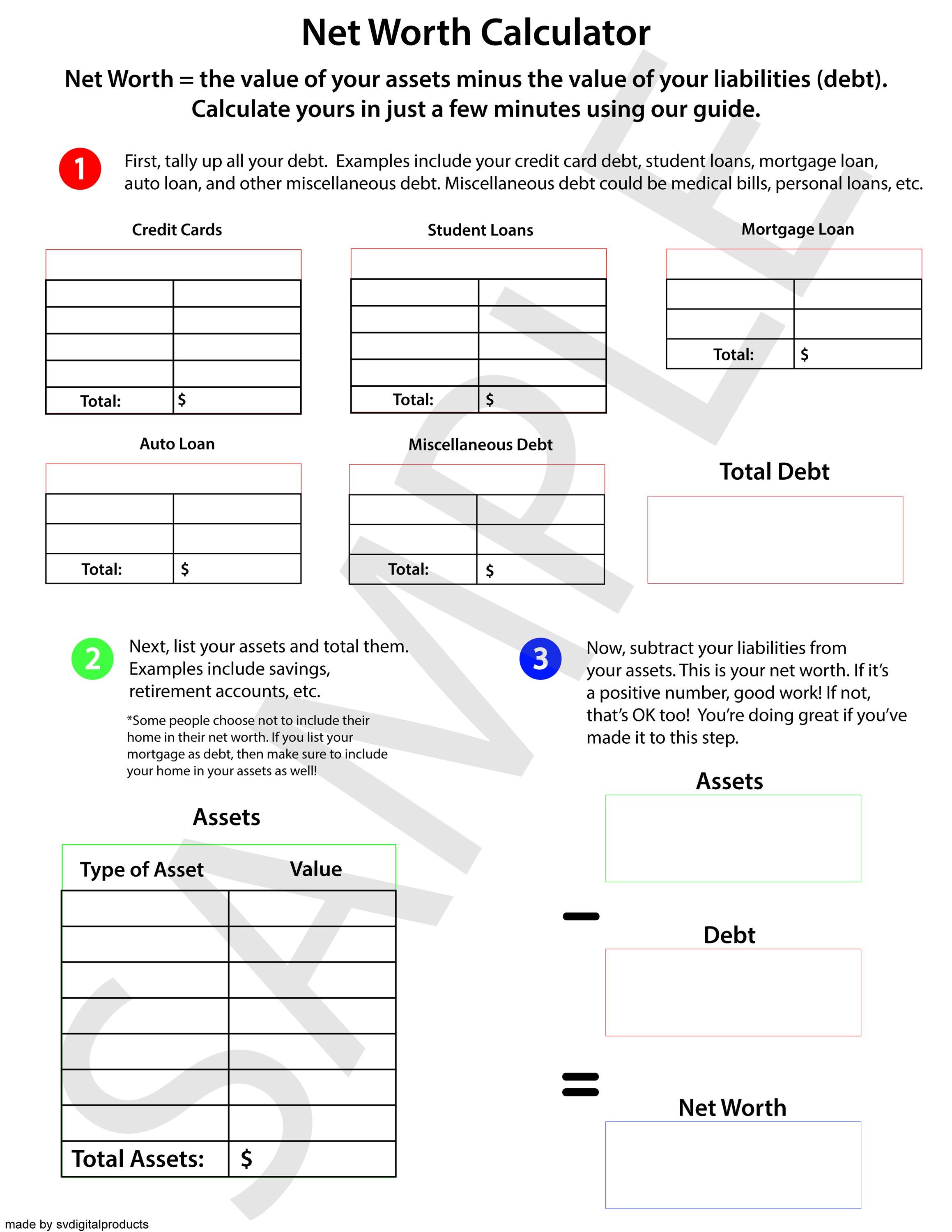
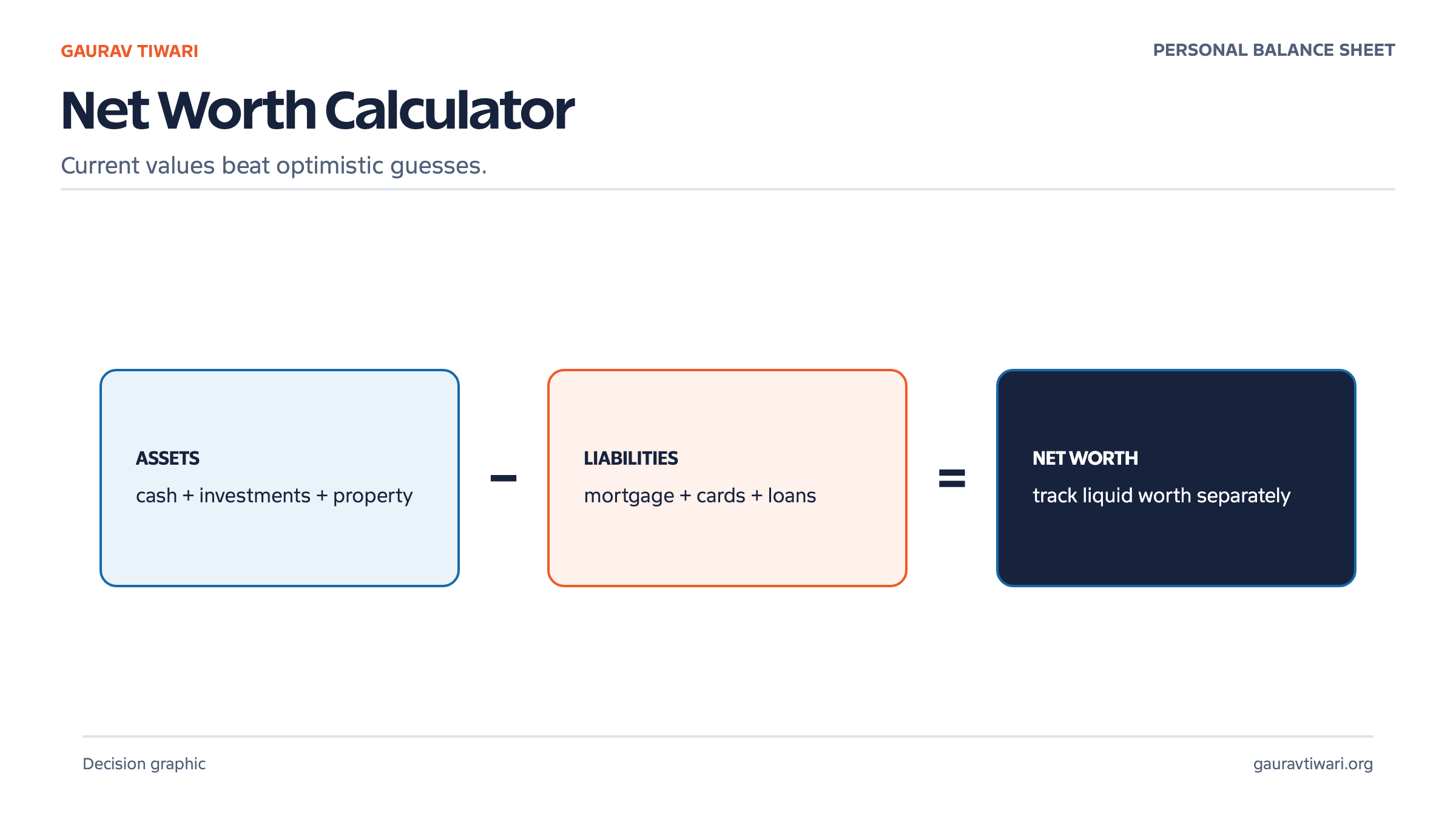
A net worth estimator is a financial tool that calculates your total wealth by subtracting all liabilities—such as debts, loans, and credit balances—from your total assets, including cash, investments, and property. By consistently monitoring this figure, individuals can track long-term financial progress, identify areas of debt exposure, and make data-driven decisions regarding retirement planning, savings goals, and investment strategies.
What is Net Worth and Why Does It Matter?
At its core, your net worth is the primary snapshot of your financial health. It is not merely a measure of how much money you earn in a year, but a statement of your total economic position at a single point in time. Think of it as a balance sheet for your household.
Many people confuse cash flow (income vs. expenses) with net worth. While monitoring your monthly budget is essential for short-term liquidity, calculating your net worth provides the "big picture." A high income does not necessarily equate to high net worth if that income is eclipsed by significant, high-interest debt or lack of appreciating assets. Conversely, individuals with modest incomes who diligently save and invest may have a surprisingly high net worth over time.
Monitoring this metric in 2026 allows you to see the compounding effect of your financial habits. It reveals whether you are truly building wealth or simply maintaining a lifestyle that relies on debt.
Identifying Your Assets: The "Plus" Side of the Equation
Assets represent everything you own that has monetary value. When using a net worth estimator, it is critical to be both comprehensive and realistic. Assets generally fall into two categories: liquid and non-liquid.
Liquid Assets
These are resources that can be converted into cash relatively quickly without a significant loss in value.
- Cash and Cash Equivalents: Checking accounts, savings accounts, money market funds, and certificates of deposit (CDs).
- Brokerage Accounts: Stocks, bonds, mutual funds, and exchange-traded funds (ETFs) that can be sold during market hours.
Non-Liquid Assets
These assets are harder to sell immediately or take longer to convert to cash.
- Real Estate: The current market value of your primary residence, vacation homes, or investment properties.
- Retirement Accounts: Balances in 401(k) plans, Individual Retirement Accounts (IRAs), and pension projections.
- Personal Property: Vehicles, jewelry, art, or collectibles. Note: These should be valued at their current resale price, not the price you originally paid.
Crucial Note on Valuation: When estimating the value of non-liquid assets, use conservative numbers. For real estate, look at recent comparable sales in your neighborhood rather than the original purchase price or a highly optimistic "dream price."

Identifying Your Liabilities: The "Minus" Side of the Equation
Liabilities are the financial obligations you owe to others. A common mistake in net worth estimation is underestimating or forgetting certain liabilities, which leads to an artificially inflated net worth figure.
- Secured Debt: These are loans backed by collateral, most notably your mortgage or vehicle loans.
- Unsecured Debt: These include credit card balances, personal loans, and medical debt.
- Educational Debt: Student loans represent a significant liability for many households and must be included in full.
- Tax Liabilities: If you owe the IRS or state authorities back taxes, these are immediate liabilities that reduce your net worth.
When calculating liabilities, always use the current payoff amount rather than the original loan amount. The payoff amount reflects the actual economic impact if you were to settle the debt today.
Step-by-Step Execution of a Net Worth Calculation
To perform an accurate calculation, follow a structured process to ensure no accounts are overlooked.
- Gather Documentation: Collect your most recent bank statements, investment account logins, credit card bills, and mortgage statements.
- Create a Spreadsheet or Use an App: You can use a simple spreadsheet or a dedicated financial tracking platform. The tool is less important than the consistency of the data.
- Calculate Total Assets: Sum the current market values of all your accounts and properties.
- Calculate Total Liabilities: Sum the current outstanding balances of all your debts.
- Subtract Liabilities from Assets: The resulting figure is your current net worth.
Example Comparison Table
| Category | Item Description | Estimated Value/Balance |
|---|---|---|
| Assets | Cash & Savings | $15,000 |
| Assets | Investment Accounts | $120,000 |
| Assets | Primary Residence | $450,000 |
| Liabilities | Mortgage Balance | ($320,000) |
| Liabilities | Auto Loan | ($12,000) |
| Liabilities | Credit Card Debt | ($2,500) |
| Net Worth | Total | $250,500 |
Common Mistakes and How to Avoid Them
Even with a basic estimator, errors can skew your results and lead to poor financial planning.
- Overvaluing Personal Items: Many people include the value of used clothing, furniture, or older electronics. Unless these items have a verifiable secondary market value (like a rare collection), they should be excluded.
- Ignoring Depreciation: A car loses value every year. If you list your car at the price you paid five years ago, your assets are vastly overstated. Use resources like the Kelley Blue Book or similar valuation guides for a realistic estimate.
- Forgetting "Hidden" Debt: Always check your latest credit report to ensure no old debts or accounts have been missed.
- Inconsistency in Timing: If you calculate your assets on the first of the month but wait until the 15th to calculate your credit card debt, your snapshot will be inaccurate. Pick a specific "Net Worth Day" (such as the last day of each quarter) to perform your update.
Interpreting Your Results: What Now?
If your net worth is negative, do not be discouraged. A negative net worth—often referred to as being "underwater"—is common for young professionals, recent graduates, or those early in their career who have taken on student loans. The value of your education is an intangible asset that will hopefully increase your future income potential, even if it does not appear on a balance sheet today.
If your net worth is positive, your goal should be growth. This is achieved by either increasing your assets (saving and investing more) or decreasing your liabilities (paying down debt). If your net worth is stagnant, it is a signal to review your budget and evaluate if your current savings rate is sufficient to meet your long-term goals.
Frequently Asked Questions
How often should I update my net worth?
Most experts recommend a quarterly or semi-annual review. Updating it too frequently (e.g., daily) can be counterproductive, as normal market volatility in your investment accounts may cause unnecessary stress.
Should I include my home's equity or the full value?
Include the full current market value as an asset and the remaining mortgage balance as a liability. This is the most accurate way to see your total equity position.
Does net worth include future income?
No. Net worth is a statement of what you own right now. Future earnings are potential cash flow, not current assets. Including expected future inheritance or salary increases will invalidate the purpose of the calculation.
Why is my net worth different from my liquid cash?
Your liquid cash is only one part of your assets. Net worth accounts for all resources, including non-liquid assets like property and retirement accounts, minus all debts.
Can a net worth estimator help with tax planning?
While it doesn't calculate taxes directly, a thorough net worth assessment helps you see the scale of your taxable assets versus tax-advantaged accounts, which can inform your long-term strategy for tax-efficient investing.
Professional Advice Disclaimer
This guide is for informational purposes only and does not constitute financial, legal, or tax advice. Personal financial situations are unique, and specific strategies should be discussed with a certified financial planner, accountant, or legal professional. Laws regarding taxes and debt discharge change frequently; ensure you are referencing current regulations applicable to your specific jurisdiction.
Next Actions
Start your journey to financial clarity by creating a simple spreadsheet today. List every bank account, investment account, and loan balance you currently have. Once you have your baseline, schedule a recurring appointment on your calendar for three months from now to re-evaluate these numbers. By turning this into a routine, you transition from simply "hoping" your finances are in order to actively managing your long-term wealth.
Image Gallery
Select an image to open it in a new tab.



Simon Caldwell
Enterprise Technology and Systems Editor
