The Scientific Timeline: When Antimatter Was Discovered
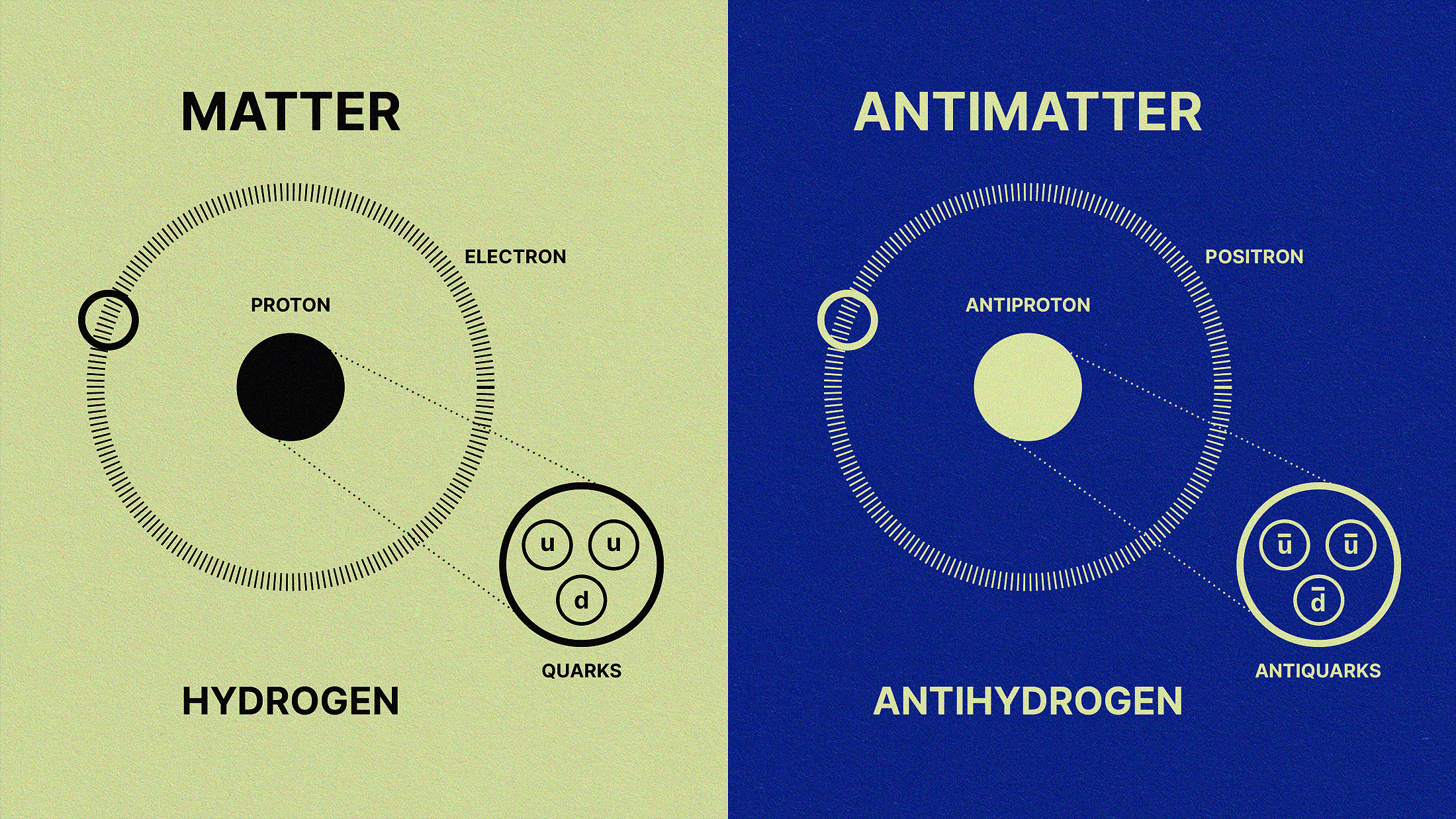
Antimatter was first predicted theoretically by Paul Dirac in 1928 and subsequently confirmed experimentally by Carl Anderson in 1932. The discovery of the positron, the antiparticle counterpart to the electron, transformed modern physics, shifting the understanding of the universe from a system based solely on ordinary matter to one where symmetry between matter and antimatter is a fundamental, albeit complex, physical law.
The Theoretical Foundations: Dirac’s Vision
Before the physical manifestation of antimatter was ever observed in a laboratory, it existed as a mathematical necessity. In the late 1920s, British physicist Paul Dirac was working to reconcile quantum mechanics with special relativity. His resulting equation, known as the Dirac Equation, sought to describe the behavior of electrons moving at speeds close to the speed of light.
While the equation was immensely successful in explaining the fine structure of the hydrogen spectrum, it presented a mathematical anomaly. The equation allowed for solutions that yielded negative energy states. In classical physics, these were discarded as physically impossible. However, Dirac hypothesized that these negative energy states corresponded to a particle with the same mass as an electron but with an opposite electrical charge.
Initially, Dirac speculated that this might be the proton, but colleagues, including Hermann Weyl and Robert Oppenheimer, pointed out that this would lead to the rapid annihilation of matter. By 1931, Dirac refined his hypothesis, suggesting the existence of a new particle—the "anti-electron"—that would mirror the properties of the electron exactly, save for the sign of its charge. This theoretical framework provided the roadmap for experimentalists to begin their search.
Carl Anderson and the Cloud Chamber
The validation of Dirac’s theory occurred in 1932 at the California Institute of Technology (Caltech). Carl Anderson, a young physicist working under the guidance of Robert Millikan, was studying cosmic rays—high-energy particles originating from outer space—using a cloud chamber.
A cloud chamber is a particle detector that creates a supersaturated vapor. When a charged particle passes through the chamber, it ionizes the gas, leaving a track of tiny droplets that can be photographed. To track the curvature and momentum of these particles, Anderson placed the cloud chamber inside a strong magnetic field.
In August 1932, Anderson observed a particle track that was identical to an electron in its curvature and ionization density, but it curved in the opposite direction. This specific curvature within the magnetic field provided irrefutable proof that the particle possessed a positive charge. Anderson spent several months verifying that the particle could not be a proton, concluding that it was indeed the "positron," the first identified piece of antimatter. This discovery earned Anderson the Nobel Prize in Physics in 1936.

Expanding the Spectrum: Beyond the Positron
Following the discovery of the positron, the scientific community faced a new question: if there is an anti-electron, are there antiparticles for every constituent of matter? The hunt for the antiproton and antineutron became the next logical frontier.
This search required significantly higher energy levels than those found in naturally occurring cosmic rays. It necessitated the development of particle accelerators. It was not until 1955, at the Bevatron particle accelerator at the University of California, Berkeley, that Emilio Segrè and Owen Chamberlain successfully produced and identified the antiproton. Shortly thereafter, the antineutron was discovered by the same group.
The discovery of these particles cemented the concept of antimatter as a core component of the Standard Model of particle physics. It confirmed that for every fermion—the particles that make up matter—there exists an corresponding antiparticle.
Comparative Properties of Matter and Antimatter
Understanding the nature of antimatter requires a direct comparison with ordinary matter. While antimatter shares the same mass and spin as its corresponding matter particle, its charge and other quantum numbers are inverted.
| Property | Ordinary Matter (Electron) | Antimatter (Positron) |
|---|---|---|
| Mass | 9.109 × 10⁻³¹ kg | 9.109 × 10⁻³¹ kg |
| Electric Charge | -1 | +1 |
| Spin | 1/2 | 1/2 |
| Magnetic Moment | Negative | Positive |
| Interaction | Interacts with Electromagnetism | Interacts with Electromagnetism |
The Mechanics of Annihilation
One of the most defining characteristics of antimatter is its behavior upon contact with ordinary matter. When a particle of matter meets its corresponding antiparticle, they undergo a process called annihilation.
In this process, the particles destroy one another, and their combined mass is converted entirely into energy, typically in the form of high-energy gamma rays or other subatomic particles. This reaction follows Einstein’s mass-energy equivalence principle, $E=mc^2$. The efficiency of this energy conversion is the primary reason antimatter remains a subject of intense interest in both theoretical physics and speculative energy research. However, in practical terms, it makes the storage of antimatter exceptionally difficult, as it must be kept in a vacuum and manipulated via magnetic fields to prevent any contact with the walls of the containment vessel.
Challenges in Modern Research
In 2026, the study of antimatter is no longer focused on discovery, but rather on precision measurements and understanding the "baryon asymmetry" of the universe. According to the Big Bang theory, equal amounts of matter and antimatter should have been created at the beginning of the universe. If this were true, they should have annihilated each other completely, leaving behind only light.
However, the universe we observe is dominated by matter. Physicists at institutions like CERN are currently utilizing the Antiproton Decelerator to test whether antimatter obeys the same gravitational and spectral laws as ordinary matter. Any deviation from these expectations could provide a clue as to why matter came to dominate the observable universe.
Common Misconceptions
- Antimatter as a Fuel Source: While technically the most efficient energy source known, producing antimatter is incredibly energy-intensive. It requires far more energy to create than is recovered during annihilation.
- Antimatter as a Weapon: Due to the extreme difficulty of containment and the scarcity of production, the concept of "antimatter bombs" remains firmly in the realm of science fiction.
- Presence in Everyday Life: Some people are surprised to learn that antimatter occurs naturally in trace amounts, such as in the beta-plus decay of certain radioactive isotopes found in bananas or the human body, though it vanishes almost instantly.
Frequently Asked Questions
Why did it take until 1932 to discover antimatter? The technology required to visualize subatomic particle tracks, such as the cloud chamber, was not sufficiently advanced until the early 20th century. Furthermore, antimatter is essentially absent in our local environment because it annihilates upon contact with ordinary matter, making it impossible to "find" in a traditional, static sense.
Is antimatter real or just a theoretical concept? Antimatter is a well-verified reality of physics. It is produced regularly in high-energy particle accelerators, such as those at CERN, and is even used in medical diagnostics, specifically in Positron Emission Tomography (PET) scans.
What happens if I touch antimatter? Given that antimatter annihilates upon contact with matter, touching a significant amount would result in an immediate and violent release of energy. However, the amount of antimatter currently produced in labs is microscopic—far too small to cause a macroscopic explosion.
Does gravity affect antimatter differently? Recent experiments have aimed to determine if antimatter falls upward or downward in a gravitational field. As of 2026, evidence suggests that antimatter behaves the same as matter under gravity, falling downward, which aligns with general relativity.
Next Steps for Enthusiasts
If you are interested in the ongoing developments in particle physics, the most reliable source for information remains the official publications of CERN (The European Organization for Nuclear Research). Their public documentation provides clear summaries of ongoing experiments involving the ALPHA collaboration, which is currently the lead group in trapping and studying neutral antihydrogen atoms. For those seeking a deeper mathematical understanding, searching for the original 1928 paper "The Quantum Theory of the Electron" by Paul Dirac will offer insight into the elegant derivation that started the entire field.
Image Gallery
Select an image to open it in a new tab.
Ingrid Bjornson
Global Cyber Policy and Regulation Analyst
