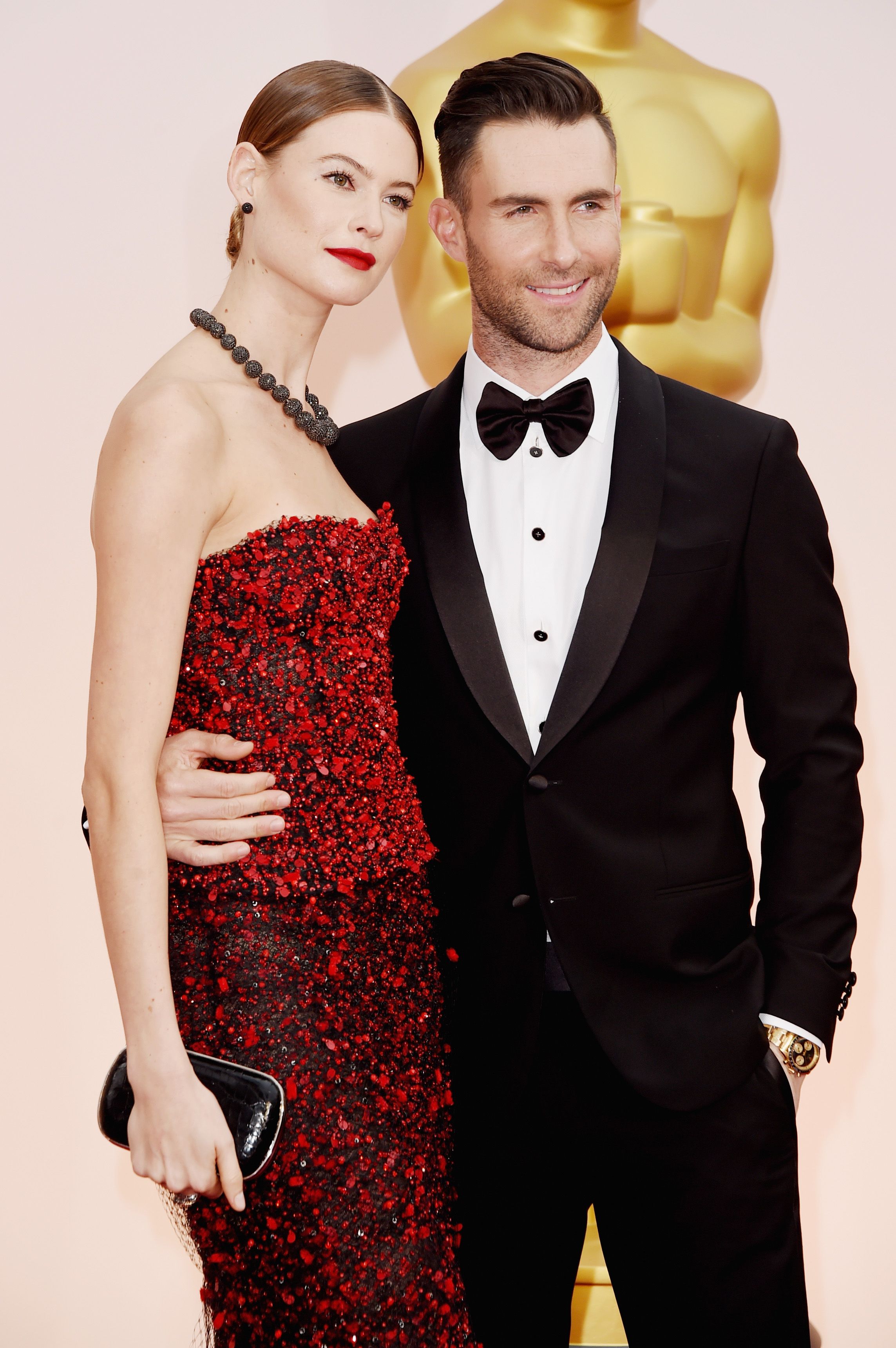
The evolution of Maroon 5, the group fronted by Adam Levine, is a remarkable study in musical adaptation and commercial endurance. Since their 1994 origins as the garage-rock quartet Kara’s Flowers, the band has transformed from a failed alternative act into a multi-platinum pop powerhouse, consistently reshaping their sound to dominate the Billboard charts across three different decades.
The Garage Rock Origins: Kara’s Flowers (1994–2001)
Before they were a household name, the core members of Maroon 5—Adam Levine, Jesse Carmichael, Mickey Madden, and Ryan Dusick—formed a band while attending Brentwood School in Los Angeles. Known as Kara’s Flowers, the group played a style of music heavily influenced by 1990s alternative rock and Britpop. In 1997, they released their debut album, The Fourth World, under Reprise Records.
The album was a commercial disappointment. Despite a guest appearance on Beverly Hills, 90210, the lead single "Soap Disco" failed to gain traction on the radio. The failure of The Fourth World led to the band being dropped by their label, a moment that could have ended their career before it truly began. However, this period was critical for their evolution. While the band members attended college, they were exposed to new musical influences, particularly the R&B and hip-hop scenes in New York and Los Angeles. These sounds would eventually become the DNA of their reinvention.
The Birth of Maroon 5 and the Breakthrough Era (2001–2006)
In 2001, the band reconvened with a new vision and a new member. James Valentine joined as the lead guitarist, allowing Adam Levine to focus more on his role as a frontman and primary vocalist. With Valentine’s arrival, the group officially rebranded as Maroon 5.
The transformation was finalized with the 2002 release of Songs About Jane. This album moved away from the crunchy garage rock of Kara’s Flowers in favor of a polished, soulful pop-rock sound.
- Lyrical Focus: The album was famously inspired by Levine’s relationship with his ex-girlfriend, Jane Herman, giving the songs an emotional resonance that connected with a massive audience.
- Commercial Slow-Burn: Songs About Jane was not an immediate hit. It took nearly two years of constant touring and the slow ascent of singles like "Harder to Breathe," "This Love," and "She Will Be Loved" for the album to reach the top of the charts.
- Critical Recognition: In 2005, the band won the Grammy Award for Best New Artist, solidifying their status as a major force in the music industry.
During this era, the band faced its first major lineup change. Original drummer Ryan Dusick suffered from chronic nerve damage in his arms and back, exacerbated by the band's relentless touring schedule. In 2006, he was officially replaced by Matt Flynn, who remains the band's drummer in 2026.

Expanding the Sound: It Won't Be Soon Before Long and Hands All Over
By the mid-2000s, Maroon 5 was under pressure to prove they weren't a one-hit-wonder band. Their sophomore effort, It Won't Be Soon Before Long (2007), signaled a shift toward a more electronic and funk-inspired sound. Influenced by artists like Prince and Michael Jackson, the album featured "Makes Me Wonder," a track that showcased a tighter, more danceable production style.
This period was characterized by:
- Increased Polishing: The raw instrumental feel of Songs About Jane was replaced by slicker production and synthesizers.
- Chart Dominance: "Makes Me Wonder" became the band's first number-one single on the Billboard Hot 100.
- Experimental Stumbles: Their third album, Hands All Over (2010), initially struggled to match previous successes. Despite featuring high-quality production from Robert John "Mutt" Lange, the album's sales were underwhelming until a specific cultural moment revitalized the band’s trajectory.
The "Moves Like Jagger" Turning Point
In 2011, Adam Levine joined the coaching panel of the reality competition show The Voice. This move was a calculated risk that paid off immensely for the band's visibility. To capitalize on Levine's newfound solo fame, the band released "Moves Like Jagger" featuring Christina Aguilera.
This single was a pivotal evolutionary step. It marked the band’s full transition into pure pop. The track was ubiquitous, becoming one of the best-selling singles of all time. More importantly, it established a template for the band's future: high-energy, infectious hooks, and strategic collaborations.
The Pop Juggernaut Phase (2012–2019)
Following "Moves Like Jagger," Maroon 5 leaned heavily into the contemporary pop landscape. The albums Overexposed (2012) and V (2014) moved further away from the "band" dynamic of five guys playing instruments in a room and closer to a modern pop collective working with top-tier hitmakers like Max Martin and Benny Blanco.
Key Musical Shifts
- Synthesizers over Guitars: While James Valentine remained a vital part of the band, his guitar work became more rhythmic and atmospheric, yielding the spotlight to electronic textures.
- Collaborations: This era saw the band collaborating with hip-hop and R&B artists such as Wiz Khalifa ("Payphone"), Gwen Stefani ("My Heart Is Open"), and Kendrick Lamar ("Don't Wanna Know").
- Adam Levine as the Focal Point: Public perception shifted the band's identity increasingly toward Levine. While the other members remained active, Levine’s persona as a celebrity, actor, and TV personality became the band's primary marketing engine.
Lineup Evolution and Stability
During this time, keyboardist Jesse Carmichael took a brief hiatus (2012–2014) to focus on his studies and personal life. In his absence, PJ Morton joined the band as a touring member and eventually became a full-time permanent member, adding a soul and R&B depth to their live performances. Additionally, Sam Farrar, a long-time collaborator, officially joined the lineup in 2016 as a multi-instrumentalist.
Adapting to the Streaming Era: Red Pill Blues and Beyond
In 2017, the release of Red Pill Blues demonstrated the band's ability to navigate the streaming-dominated market. The album’s lead single, "Girls Like You" (featuring Cardi B), became a massive viral hit, boosted by a music video featuring dozens of female celebrities. By this point, Maroon 5 had mastered the art of the "earworm," creating songs designed for maximum replayability on digital platforms.
The year 2020 brought significant changes. Long-time bassist Mickey Madden departed the band following a personal legal matter. Despite this loss of a founding member, the band continued forward, releasing Jordi in 2021. The album was named in memory of their late manager, Jordan Feldstein, who had been instrumental in their rise to fame and passed away in 2017.
Current Status and Legacy in 2026
As of 2026, Maroon 5 has transitioned into a "legacy act" that still maintains contemporary relevance. They have successfully navigated the shift from physical CDs to digital downloads and finally to the streaming and TikTok-driven era. Their 2023–2024 Las Vegas residency at Dolby Live at Park MGM was a testament to their deep catalog of hits, proving that they remain a top-tier live draw.
The band’s evolution is defined by a lack of ego regarding their "rock" credentials. While many of their 90s peers faded away by refusing to change, Adam Levine and his bandmates embraced the evolution of the industry, moving from alternative rock to soul-pop, and finally to electronic-pop.
Summary of Album Evolution
| Album Title | Year | Primary Genre | Notable Evolution Point |
|---|---|---|---|
| The Fourth World | 1997 | Alternative Rock | Early garage-band sound (as Kara's Flowers). |
| Songs About Jane | 2002 | Pop-Rock / Soul | Rebranding to Maroon 5; breakout success. |
| It Won't Be Soon... | 2007 | Funk-Pop | Introduction of synths and 80s funk influences. |
| Hands All Over | 2010 | Pop-Rock | Pivot to "Moves Like Jagger" and pure pop. |
| Overexposed | 2012 | Electropop | Heavily produced; radio-focused hooks. |
| V | 2014 | Pop / R&B | Expansion of the band's lineup with PJ Morton. |
| Red Pill Blues | 2017 | Tropical House / Pop | Focus on streaming and hip-hop collaborations. |
| Jordi | 2021 | Pop | Reflective, tribute-based songwriting. |
Frequently Asked Questions
Why did the band change their name from Kara’s Flowers?
The change to Maroon 5 coincided with a shift in their musical direction and the addition of guitarist James Valentine. Following the commercial failure of their debut album under the name Kara's Flowers, the band wanted a fresh start and a name that reflected their new, more soulful sound. Adam Levine has famously kept the exact origin of the name "Maroon 5" a secret, though he has admitted the story is "depressing."
How many original members are still in Maroon 5?
As of 2026, there are three original founding members of Kara’s Flowers still in Maroon 5: Adam Levine (lead vocals), Jesse Carmichael (keyboards/rhythm guitar), and James Valentine (though he joined in 2001, he is considered a core member of the "Maroon 5" iteration). Original drummer Ryan Dusick and bassist Mickey Madden are no longer with the group.
Has Adam Levine released any solo albums?
Despite his massive individual fame, Adam Levine has never released a full-length solo studio album. He has consistently maintained that he prefers the dynamic of being in a band. However, he has contributed to several soundtracks and appeared as a featured artist on numerous tracks for other musicians, such as Kanye West, Gym Class Heroes, and R. City.
What caused the shift from rock to pop?
The shift was both a result of personal musical growth and a strategic response to the music industry. After the initial moderate reception of Hands All Over, the band realized that to stay relevant on the radio, they needed to collaborate with contemporary pop producers. The success of "Moves Like Jagger" confirmed that their audience embraced this more danceable, electronic direction.
What happened to the band's original drummer?
Ryan Dusick, the original drummer for Kara's Flowers and the Songs About Jane era, had to leave the band in 2006 due to severe physical injuries. The repetitive motion of drumming caused significant nerve damage and chronic pain in his arms and shoulders, making it impossible for him to perform live. He eventually transitioned into a career as a therapist and author, detailing his journey in his memoir Harder to Breathe.
Practical Recommendation for Fans and Researchers
For those looking to understand the band's evolution through their music, the best approach is to listen to their discography chronologically. Start with The Fourth World to hear their raw rock roots, then move to Songs About Jane for their foundational soul-pop sound. Compare these to Red Pill Blues to see how the band integrated modern electronic production and hip-hop influences. This journey illustrates not just the history of a single band, but the shifting trends of the entire music industry over the last thirty years.
Image Gallery
Select an image to open it in a new tab.
Akira Tanaka
International Academic Trends Correspondent
