
Famous historical swords are iconic weapons that have transcended their original purpose as tools of warfare to become symbols of national identity, divine right, and advanced craftsmanship. Notable examples include Charlemagne’s Joyeuse, the miraculously preserved Sword of Goujian, and the legendary lost Honjo Masamune. These blades represent significant milestones in metallurgical history and global cultural mythology.
The Cultural and Political Significance of the Historical Sword
Throughout human history, the sword has occupied a unique position in the hierarchy of weaponry. Unlike the spear or the bow, which were often tools for hunting as much as for combat, the sword was designed specifically for human-to-human conflict. This specialization elevated the object to a symbol of power, justice, and nobility. By the medieval period in both Europe and Japan, the sword was no longer just a weapon; it was a legal and spiritual instrument.
In European tradition, the concept of the "Sword of State" became a central part of coronation ceremonies. These blades, often encrusted with gems and featuring hilts of precious metals, symbolized the monarch's duty to defend the faith and uphold the law. Similarly, in the East, the sword was often viewed as a "soul" of the warrior. The Japanese Katana, for example, was governed by a strict code of etiquette, where drawing the blade unnecessarily was considered a grave offense.
As of 2026, many of these artifacts serve as the centerpieces of major museum collections, providing historians with tangible evidence of past technological capabilities. The study of these swords—known as hoplology—allows researchers to trace the movement of trade routes, the development of chemistry, and the evolution of social hierarchies through the centuries.
Masterpieces of Eastern Craftsmanship
The development of sword-making in the East, particularly in China and Japan, reached technical heights that often outpaced Western developments by centuries. The focus on metallurgy and differential hardening created blades that were both flexible and incredibly hard.
The Sword of Goujian: A 2,000-Year-Old Marvel
Discovered in 1965 in a waterlogged tomb in Hubei Province, China, the Sword of Goujian is one of the most significant archaeological finds of the 20th century. Attributed to King Goujian of Yue (reigned 496–465 BC), the blade was found inside a near-airtight lacquer wooden scabbard. When it was unsheathed, it was found to be completely untarnished and sharp enough to cut through twenty layers of paper simultaneously.
The longevity of the sword is attributed to its composition. Analysis by the Hubei Provincial Museum revealed that the blade is made primarily of copper with high concentrations of tin, lead, and iron. However, the most striking feature is the presence of sulfur and arsenic, which acted as an anti-corrosive coating. The blade also features a distinct "rhombic" pattern, created through a complex casting process that allowed the edges to remain hard while the spine stayed resilient.
The Honjo Masamune: Japan’s Lost Treasure
If the Sword of Goujian represents archaeological preservation, the Honjo Masamune represents the tragedy of loss. Created by Goro Nyudo Masamune, widely considered Japan’s greatest swordsmith, this blade was the symbol of the Tokugawa Shogunate during the Edo period. Masamune’s swords were legendary for their purity of steel and their distinct hamon (temper line), which resembled clouds or rolling waves.
The Honjo Masamune was passed down through the Tokugawa family for generations. However, following the Japanese surrender at the end of World War II in 1945, the sword was surrendered to a representative of the American occupation forces, a "Sgt. Coldy Bimore." Since then, the sword has disappeared. As of 2026, it remains one of the most sought-after cultural artifacts in the world, with historians still scouring private collections and military records for any trace of its whereabouts.
European Relics: Power and Myth
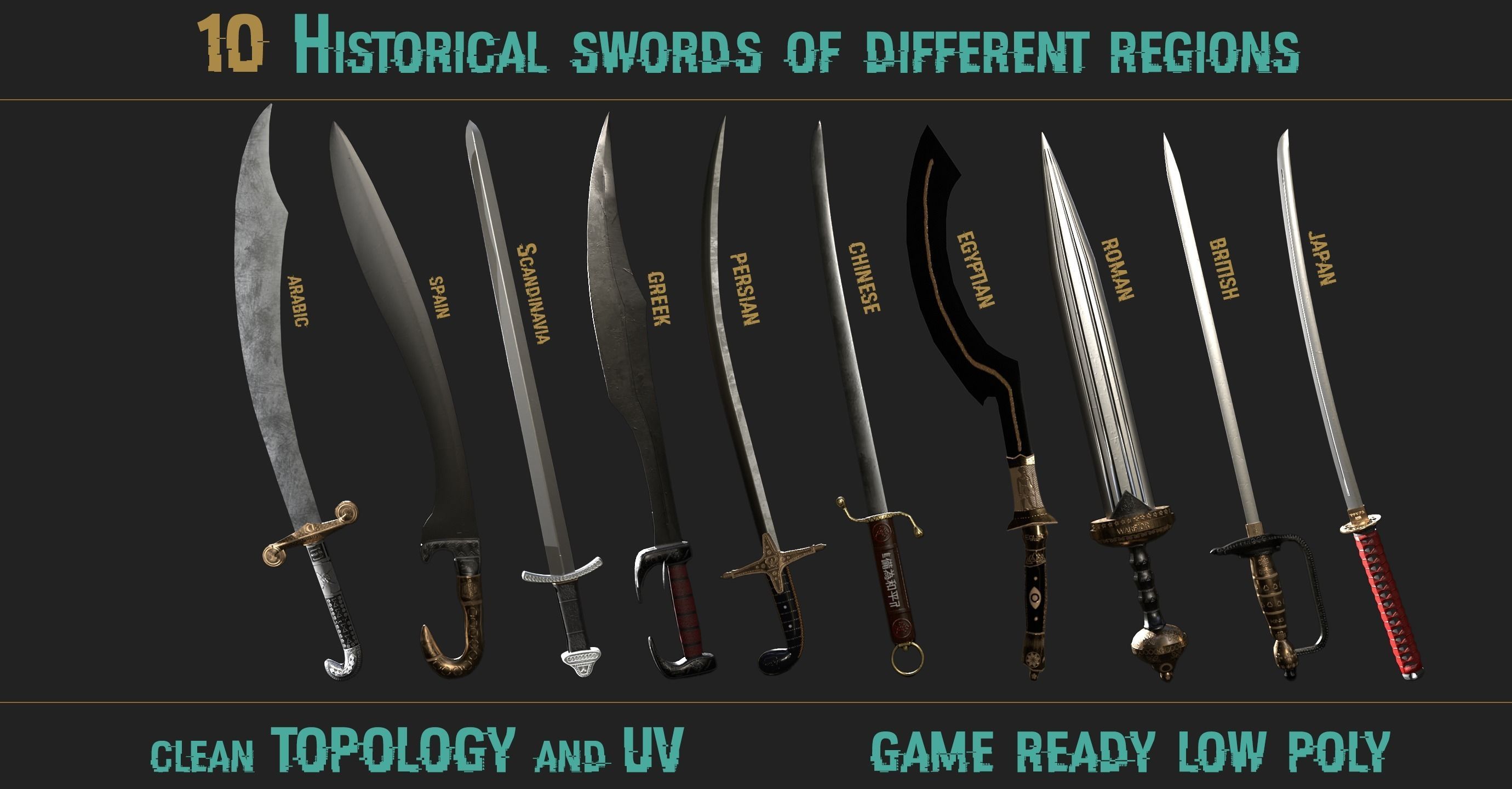
European swords often carry a heavy weight of religious and romanticized history. While many famous European blades are associated with myths, several extant examples provide insight into the transition from the Viking Age to the High Middle Ages.
Joyeuse: The Sword of Charlemagne
Housed in the Louvre Museum, Joyeuse is perhaps the most famous sword in French history. Tradition states it was the personal blade of Charlemagne, the first Holy Roman Emperor. While the current sword features components from various eras—the pommel dates to the 10th century, the crossguard to the 12th, and the grip to the 13th—it has been used in French coronation ceremonies since at least the late 13th century.
The technical significance of Joyeuse lies in its role as a "composite" relic. It represents the continuity of the French monarchy, with each king adding or refurbishing the blade to reflect the prestige of the era. The blade itself is a long, double-edged broadsword, a classic example of the transition from the Carolingian spatha to the medieval arming sword.
The Ulfberht Swords: High-Tech Viking Steel
The Ulfberht swords are a group of roughly 170 blades found across Europe, dating from the 9th to 11th centuries. These swords are famous for the inscription "+VLFBERHT+" on the blade, which served as a proto-brand name. What makes them remarkable is their material: crucible steel.
While most European swords of the time were made from low-carbon iron using pattern-welding techniques, Ulfberht swords were made from steel with a high carbon content and very few impurities. This required heating the iron to temperatures of nearly 3,000 degrees Fahrenheit to remove slag—a feat of engineering that many historians believed was not possible in Europe until the Industrial Revolution. It is theorized that the steel (or the knowledge to make it) was imported via the Volga trade route from Central Asia or the Middle East.
Comparative Analysis of Famous Historical Swords
The following table compares the technical and historical attributes of some of the most significant blades currently known to historians and archaeologists.
| Sword Name | Origin | Estimated Age | Current Location | Key Feature |
|---|---|---|---|---|
| Sword of Goujian | China | ~2,500 Years | Hubei Provincial Museum | Anti-corrosive tin-lead alloy; remains sharp today. |
| Joyeuse | France | ~1,200 Years | Louvre Museum, Paris | Used in French coronations; composite construction. |
| Honjo Masamune | Japan | ~700 Years | Missing since 1945 | Masterpiece of Masamune; symbol of the Shogunate. |
| Wallace Sword | Scotland | ~700 Years | National Wallace Monument | Massive claymore; linked to William Wallace. |
| Ulfberht (Type) | Scandinavia | ~1,100 Years | Various (Europe) | Made of high-carbon crucible steel; proto-branding. |
| Kusanagi | Japan | Legendary | Atsuta Shrine (Restricted) | One of the three Imperial Regalia of Japan. |
The Science of Metallurgy: Why These Swords Lasted
The survival of a historical sword is rarely an accident; it is the result of advanced metallurgical choices made by the smith. To understand why a blade like the Sword of Goujian did not rust away, or why a Masamune blade did not shatter, one must look at the crystalline structure of the metal.
Differential Hardening
In Japanese sword-making, smiths used a technique called differential hardening. By coating the spine of the blade with a thick layer of clay and the edge with a thin layer before quenching, they controlled the cooling rate. The edge cooled quickly, forming martensite, a very hard but brittle crystal structure. The spine cooled slowly, forming pearlite, which is softer and more flexible. This combination allowed the sword to hold a razor-sharp edge without breaking upon impact.
Carbon Content and Wootz Steel
In the Middle East and India, the production of Wootz steel (often associated with Damascus blades) involved a different process. By adding specific plant matter to iron inside a closed crucible, smiths could induce a high carbon content (up to 1.5%). This created a blade with carbon nanotubes and carbide banding, giving the steel its famous "watered" pattern and incredible cutting power. Research published by the Royal Society has shown that these historical smiths were unintentionally practicing a form of nanotechnology.
Authentication and Preservation Challenges
As we move further into the 21st century, the task of authenticating and preserving these artifacts becomes more complex. Many "historical" swords are actually high-quality forgeries or later recreations intended to replace lost originals.
- Carbon Dating Limitations: Carbon dating is generally ineffective for metal itself. However, organic components like the wooden core of a hilt, leather wrappings, or charcoal trapped in the steel can be dated.
- Metallographic Analysis: By taking microscopic samples, researchers can identify the "fingerprint" of the forge. This includes identifying specific trace elements like manganese or phosphorus that were unique to certain ore deposits.
- Conservation Environments: Swords made of iron are highly susceptible to "bronze disease" or red rust. Modern museums use humidity-controlled cases (often kept at 35-40% RH) and anoxic environments (nitrogen-filled cases) to prevent further oxidation.
Frequently Asked Questions
Which is the sharpest historical sword ever found?
The Sword of Goujian is widely cited as the sharpest extant historical sword. Upon its discovery in 1965, it was still capable of cutting through a stack of 20 sheets of paper. This is due to its high tin content and the specific anti-corrosive chemical treatment applied during the Spring and Autumn period in China.
Does Excalibur actually exist?
Excalibur is a mythological sword from Arthurian legend. While no sword has ever been definitively linked to a historical King Arthur, there are many "swords in the stone" across Europe, most notably the sword of San Galgano in Italy. This 12th-century sword is embedded in solid rock in the Montesiepi Chapel and has been scientifically dated to the correct era, though it is a medieval relic rather than the Excalibur of myth.
Why are some swords, like the Honjo Masamune, still missing?
Many swords were lost during periods of war or social upheaval. The Honjo Masamune was lost due to the bureaucratic chaos of the post-WWII disarmament of Japan. Many artifacts were melted down, while others were taken home as "souvenirs" by soldiers who did not realize their historical value. Private collectors occasionally discover such items in estate sales, but many remain hidden in private residences.
What is the difference between a real Damascus sword and modern Damascus?
Historical Damascus steel (Wootz) was made using a specific crucible process that is currently considered a "lost art," though modern smiths have come close to replicating it. "Modern Damascus" usually refers to pattern-welded steel, where two different types of steel are folded and forged together to create a visible pattern. While aesthetically similar, the chemical structure and performance of the two are different.
Where can I see the most famous historical swords today?
The most significant collections are found in the Tokyo National Museum for Japanese blades, the Metropolitan Museum of Art in New York for a global overview, and the Wallace Collection in London for European arms and armor.
Final Recommendation for History Enthusiasts
For those interested in the study of historical swords, the best next step is to focus on provenance. If you are looking to view these blades, prioritize institutions that provide full metallurgical reports or archaeological context for their displays. For aspiring collectors, it is vital to distinguish between "decorative" replicas and "battle-ready" reconstructions. Always consult with a certified appraiser or a member of a hoplological society before investing in any item claiming to have historical lineage, as the market for high-end reproductions is sophisticated and often targets the unwary.
Image Gallery
Select an image to open it in a new tab.

Lars Thomsen
Global Labor Markets and Economic Strategy Editor
