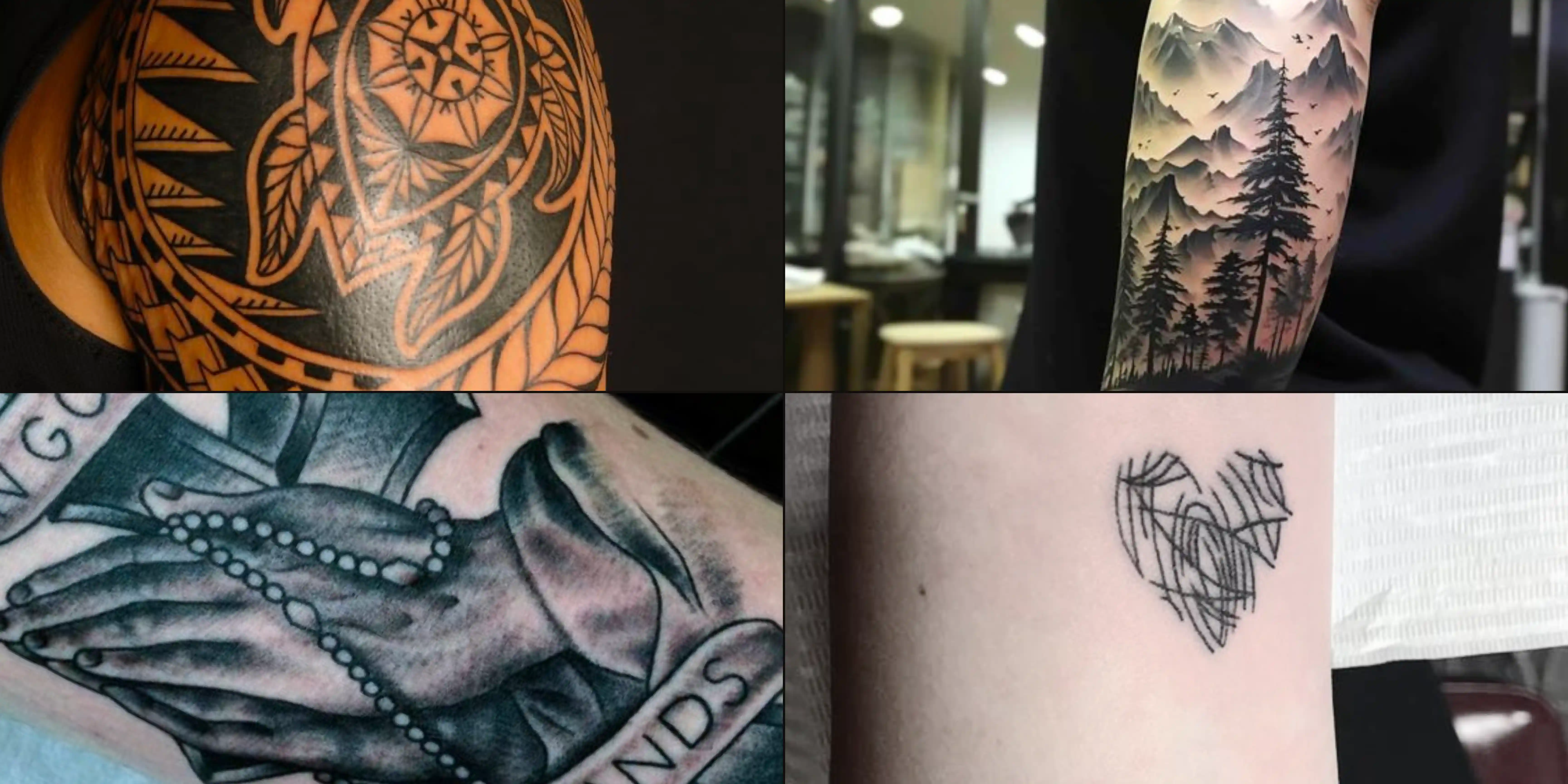
Choosing a tattoo meant to last only a few years requires evaluating semi-permanent tattoo technologies, cosmetic micropigmentation, and temporary body art options. While specialized biodegradable inks and cosmetic pigments are engineered to break down over one to three years, fading rates vary significantly based on body placement, skin metabolism, ink composition, and sun exposure.
Understanding Semi-Permanent Tattoos: How 1-to-3-Year Tattoos Work
Traditional permanent tattoos remain visible indefinitely because standard tattoo ink contains insoluble pigment particles—often made from mineral salts, metal oxides, or organic compounds—suspended in a liquid carrier matrix. When inserted into the dermis (the skin layer situated beneath the shedding epidermis), these particles are too large for the body's immune system to break down. Macrophages, the specialized immune cells responsible for cleaning debris, engulf the pigment but cannot digest it, trapping the color in place permanently.
In contrast, body art designed to last a few years relies on alternative ink formulations or shallower depth placement to allow the body to gradually clear the pigment over time.
Skin Cross-Section
| Dermal Layer | Technology / Outcome |
|---|---|
| Epidermis (Sheds every 28-40 days) | Temporary Stains (1-3 wks) |
| Upper Dermis ( shallow depth ) | PMU / Micropigmentation |
| Middle Dermis ( standard depth ) | Biodegradable Inks / Permanent Tattoo Ink |
Biodegradable Dermal Inks
Advanced semi-permanent ink formulations (such as those developed for made-to-fade dermal tattoos) utilize medical-grade, bio-absorbable polymers and dye particles. The ink is injected into the dermis using standard tattooing equipment, ensuring real tattoo crispness initially. However, unlike traditional pigments, these bio-compatible materials are engineered to slowly degrade when exposed to water and enzymatic processes in the skin. As the polymer matrix breaks down into smaller, bio-compatible micro-particles, macrophages swallow and carry them away through the lymphatic system, causing the design to fade progressively over 9 to 36 months.
Cosmetic Micropigmentation and PMU Pigments
Permanent makeup (PMU) and cosmetic micropigmentation techniques use iron oxides, organic lake pigments, or mineral pigments with smaller particle sizes than traditional tattoo inks. Artists deposit these pigments at a shallower depth—near the dermal-epidermal junction. Because the pigment particles are smaller and placed nearer to active cell turnover, the body naturally degrades and sheds them over one to three years, requiring periodic touch-ups if the look is to be maintained.
The Main Options for a Multi-Year Tattoo
When seeking a tattoo intended to last a few years rather than a lifetime, several distinct approaches exist, each carrying unique performance characteristics, costs, and fading behaviors.
1. Specialized Made-to-Fade Dermal Tattoos
Made-to-fade dermal tattoos use specialized biodegradable ink applied by trained tattoo artists using conventional needle machines.
- Expected Lifespan: Typically 9 to 15 months, though real-world biological variations mean pigment can persist anywhere from 1 to 3 years.
- Appearance: Looks identical to a traditional fine-line permanent tattoo upon application.
- Mechanism: The ink particles shrink as the bio-polymer base dissolves, allowing white blood cells to clear the remaining dye.
- Considerations: Real-world testing and client reports indicate that fading is not always uniform. Some individuals retain faint "ghost lines" or partial pigment past the initial target window due to variations in skin depth and individual immune response.
2. Cosmetic Micropigmentation and Body Accents
Originally developed for eyebrows, lip blushing, and scalp hair-density replication, cosmetic micropigmentation techniques are increasingly adapted for small decorative accents such as subtle dots, minimal line art, or faux freckles.
- Expected Lifespan: 1 to 3 years.
- Appearance: Soft, natural finish; generally less crisp than deep dermal line work.
- Mechanism: Shallow placement using mineral-based pigments that degrade under routine dermal metabolism and UV exposure.
- Considerations: PMU pigments fade to lighter tones (often shifting hue slightly, such as cool grays or warm tans) before disappearing. They are best suited for soft, organic designs rather than dense, dark graphic pieces.
3. Long-Term Surface Skin Stains (1 to 4 Weeks)
While not lasting multi-year timeframes, surface-level skin stains are frequently considered by individuals seeking medium-term commitments without dermal penetration.
- Expected Lifespan: 1 to 3 weeks (not years).
- Technologies: Organic Henna (Lawsonia inermis), Jagua fruit juice (Genipa americana), and semi-permanent plant-based adhesive formulas (such as Inkbox).
- Mechanism: Reacts chemically with the proteins in the stratum corneum (the outermost layer of the epidermis).
- Considerations: These stains fade completely as skin cells naturally desquamate (shed), leaving zero residual pigment or scarring. They serve as an ideal low-risk trial step before committing to a multi-year dermal ink application.

Evaluating the Realities of Fading: Risks, Ghosting, and Longevity Variations
Choosing a tattoo for a few years requires accepting that biological systems do not operate on fixed calendars. Unlike temporary press-on tattoos, any pigment introduced into the dermal layer involves biological interaction.
The Phenomenon of "Ghosting"
Ghosting occurs when the primary color density of a fading ink breaks down, leaving behind a subtle, shadow-like outline or faint discoloration under the skin. This occurs because tiny trace amounts of pigment remain encapsulated by fibrous dermal tissue. While the ink may be 90% gone, the remaining 10% can linger as a faint mark for an extended period.
- Initial Application (Month 0): Full Saturation & Crisp Lines
- Mid-Life Stage (Months 6-12): Uniform Softening & Color Lightening
- Late Stage (Months 18-36): Partial Fading / Ghosting / Complete Disappearance
Factors Influencing How Long the Tattoo Lasts
- Individual Immune and Metabolic Rate: Macrophage activity varies from person to person. Active lymphatic circulation accelerates the removal of degraded ink particles.
- Anatomical Placement: Areas with high cellular turnover, constant movement, or high friction (hands, fingers, feet, inner wrists) fade faster than stable, lower-friction regions (inner upper arm, ribcage, outer thigh).
- Sun and UV Exposure: Ultraviolet radiation breaks down chemical bonds in pigments. Tattoos frequently exposed to sunlight break down and fade significantly faster than protected areas.
- Line Weight and Shading: Fine-line work containing sparse pigment particles clears much faster than heavy, saturated black shading or dense fill work.
Step-by-Step Guide: How to Choose a Tattoo for a Few-Year Commitment
- Step 1: Define Timeline & Goal
- Step 2: Evaluate Ink Technology
- Step 3: Choose Low-Risk Placement & Design
- Step 4: Verify Studio & Artist Credentials
- Step 5: Perform Patch Test & Review Aftercare
Step 1: Clarify Your Intentions and Timeline
Determine why you prefer a short-term timeline. Are you testing a design before committing to permanent ink, seeking a temporary style statement for a specific phase of life, or restricted by workplace policies? If complete 100% removal by a strict calendar date is mandatory, surface stains (1–3 weeks) or high-grade temporary transfers remain the only completely guaranteed zero-trace options.
Step 2: Select the Right Technique and Ink System
If you desire genuine dermal body art lasting 1 to 3 years, seek out studios certified in specialized biodegradable inks or licensed cosmetic micropigmentation practitioners. Verify that the studio uses single-use needle cartridges and medical-grade pigments formulated specifically for bio-resorption.
Step 3: Choose Minimalist Designs and Strategic Placement
To ensure even and aesthetic fading:
- Opt for Fine-Line Designs: Minimalist line art, small typography, or simple geometric shapes break down far more gracefully than filled black work.
- Avoid Complex Color Blends: Stick to black or dark charcoal tones. Multi-color semi-permanent pigments (blues, reds, greens) degrade at uneven rates, which can leave imbalanced color casts during the fading phase.
- Select Stable Body Placement: The inner arm, upper thigh, outer bicep, or shoulder blade provide consistent skin thickness and moderate UV control, promoting predictable fading.
Step 4: Verify Artist Experience and Studio Hygiene
Semi-permanent inks require precise depth control. If an artist deposits biodegradable ink too shallowly (epidermis), it will shed within weeks. If deposited too deeply (lower dermis), macrophages cannot reach the particles effectively, causing the ink to linger indefinitely like a traditional tattoo. Work exclusively with artists explicitly trained in short-duration dermal ink techniques.
Step 5: Follow Strict Healing and Aftercare Protocols
The initial healing window (first 7 to 14 days) dictates how evenly the pigment sets in the dermis.
- Keep the area clean using mild, fragrance-free cleanser.
- Avoid picking, scratching, or premature exfoliation.
- Apply broad-spectrum SPF 50 sunscreen daily once the skin surface has fully healed to prevent premature or uneven UV breakdown.
Comparative Analysis: Short-Term vs. Multi-Year vs. Permanent Options
| Feature / Criteria | Surface Skin Stains (e.g., Inkbox, Jagua) | Cosmetic Micropigmentation / PMU | Made-to-Fade Dermal Ink | Traditional Permanent Tattoo |
|---|---|---|---|---|
| Typical Lifespan | 1 to 3 weeks | 1 to 3 years | 9 to 36 months | Permanent (Lifetime) |
| Application Depth | Outer Epidermis (Stratum Corneum) | Upper Dermis / Epidermal Junction | Mid Dermis (~1.5 mm) | Mid-to-Deep Dermis (~1.5–2.0 mm) |
| Application Tool | Applicator bottle / Sticker matrix | PMU digital pen / Microblade | Standard rotary tattoo machine | Standard rotary/coil tattoo machine |
| Fading Profile | Uniform shedding with skin turnover | Soft lightening; occasional color shift | Gradual breakdown; potential ghosting | Slow degradation; blurs over decades |
| Complete Disappearance Rate | 100% guaranteed | ~95%–100% (may leave faint shade) | ~90%–100% (varies by person) | 0% (without laser intervention) |
| Typical Cost Range | $15 – $45 per design | $250 – $800 per session | $200 – $600 per tattoo | $100 – $2,000+ (varies by size/artist) |
Cost Considerations and Value Analysis
When comparing the financial aspect of choosing a tattoo for a few years versus a permanent piece, consider both initial application fees and potential removal or maintenance costs.
Long-Term Cost Comparison
| Option | Upfront Cost | Long-Term Costs / Removals |
|---|---|---|
| Temporary Surface Stains | $15 - $45 | Re-application costs |
| Semi-Permanent Ink | $200 - $600 | Low (naturally degrades) |
| Permanent Tattoo | $100 - $2,000+ | High ($1,000+ for Laser) |
- Initial Upfront Costs: Made-to-fade dermal tattoos and PMU services often carry higher upfront costs per square inch than basic permanent tattoos. The specialized formulation of bio-absorbable inks and the niche training required for technicians drive session prices between $200 and $600 for small-to-medium designs.
- Maintenance vs. Replacement: If you fall in love with a semi-permanent design and wish to keep it, you will need touch-up sessions every 12 to 24 months, accumulating ongoing costs over time.
- Comparison with Laser Removal: Attempting to get a standard permanent tattoo with the plan to remove it via picosecond laser after a few years is financially inefficient. Complete picosecond laser tattoo removal routinely requires 6 to 12 sessions spanning 1 to 2 years, with total costs frequently exceeding $1,000 to $3,000, accompanied by physical discomfort and potential scarring risks.
For authoritative guidelines on tattoo ink safety, color additives, and cosmetic regulation, consult the U.S. Food and Drug Administration (FDA) Tattoo Ink Overview.
Common Mistakes to Avoid
- Expecting Pixel-Perfect Fading Timelines: Skin is a dynamic living organ. Assuming a 15-month semi-permanent tattoo will completely vanish on day 450 leads to disappointment. Prepare for a gradual transition phase.
- Choosing Dense or Solid Heavy Black Designs: Heavy block lettering, solid black fill, or thick tribal work contain high pigment density. High saturation takes substantially longer for cellular macrophages to clear, increasing the risk of extended ghosting.
- Using Unverified "Semi-Permanent" Inks at Home: Purchasing unapproved inks online that claim to be "temporary for 2 years" poses significant safety risks. Unregulated inks can cause severe allergic reactions, permanent dermal scarring, or contain permanent industrial pigments disguised as temporary dyes. Always work with licensed professional studios.
- Exposing Healing Tattoos to Tanning Beds or Open Water: During the initial two-week healing phase, soaking in water (pools, hot tubs, ocean) or exposing the unhealed wound to direct UV light risks bacterial infection and uneven pigment rejection.
Frequently Asked Questions
Do tattoos designed to last a few years fade completely without leaving a mark?
In most cases, semi-permanent dermal inks and cosmetic pigments break down until they are invisible to the naked eye. However, complete disappearance cannot be guaranteed at 100% for every individual. Biological factors, skin scar response, and ink depth mean some individuals may retain a subtle, faint line (ghosting) or minor skin texture variation where the needle penetrated.
Can any standard tattoo artist apply a semi-permanent tattoo using my own ink?
No. Standard tattoo artists are trained to deposit permanent pigments deep into the dermis. Biodegradable ink systems require specialized technique, equipment calibration, and precise depth management. Moreover, reputable studios will never allow clients to bring outside, unverified inks into a sterile environment due to health, sanitation, and safety regulations.
How does sun exposure affect a semi-permanent tattoo's lifespan?
Ultraviolet (UV) radiation breaks down chemical bonds within ink pigments, accelerating their degradation. While UV light causes standard tattoos to fade undesirably over decades, it actually speeds up the breakdown process of semi-permanent bio-polymer inks. Applying daily SPF 50 sunscreen helps maintain clean, even lines during the initial lifecycle, while unshielded sun exposure will shorten the overall visible life of the tattoo.
Is microblading or cosmetic micropigmentation safe for body tattoos?
Cosmetic micropigmentation pigments are non-toxic and approved for skin application, but they are formulated primarily for facial skin and specific textures (brows, scalp, lips). When applied to general body areas like the forearms or ankles, cosmetic pigments tend to spread slightly or fade faster due to structural differences in skin thickness and subdermal fat tissue.
What happens if a temporary multi-year tattoo does not fade after three years?
If residual pigment persists beyond three years and shows no further signs of fading, it indicates that a portion of the ink was placed too deep in the dermis or contained non-degradable pigment clusters. At that point, options include accepting the subtle residual line, having a professional touch it up into a permanent design, or undergoing one to two gentle picosecond laser treatment sessions to clear the remaining shadow quickly.
Final Recommendation: Next Actions for Getting a Few-Year Tattoo
If you decide that a tattoo lasting a few years fits your lifestyle and aesthetic goals:
- Test the Concept First: Apply a high-quality 2-week plant-based surface stain (such as Inkbox or Jagua art) in your desired location to evaluate placement, sizing, and your comfort level with visible body art.
- Consult Certified Specialists: Locate professional studios that specifically advertise and display verified portfolios of bio-absorbable dermal ink or advanced cosmetic micropigmentation.
- Choose Minimalist Line Art: Select fine-line, low-density black designs to guarantee the smooth breakdown of pigment particles over time.
- Follow Strict Aftercare: Protect the area during the initial healing process and apply broad-spectrum sunscreen daily once healed to ensure even, predictable fading across its multi-year lifespan.
Image Gallery
Select an image to open it in a new tab.

Celine Dubois
Contemporary Living and Global Arts Columnist
