
The image of a smiling, rotund figure often identified as the "Buddha with a belly" is not a representation of Siddhartha Gautama, the historical Buddha. Instead, this figure, known as Budai or Pu-tai, represents a semi-legendary Chinese monk from the 10th century. While frequently conflated with the historical Buddha in Western popular culture, the two are distinct figures with separate theological and historical origins.
Understanding the Historical Buddha vs. the Laughing Buddha
To resolve the confusion surrounding the "Buddha with a belly," one must first distinguish between the historical Gautama Buddha and the folk figure commonly found in temples, restaurants, and homes. The historical Siddhartha Gautama was an ascetic who achieved enlightenment through meditation and a disciplined lifestyle. Buddhist scriptures and the earliest artistic representations—dating back to the Gandhara school of the 1st century CE—consistently depict him as a slender, poised, and physically balanced figure, often seated in lotus position.
Conversely, the "Buddha with a belly" is based on a figure known in Chinese folklore as Budai (Cloth Sack). According to Chan Buddhist tradition, Budai was a monk named Qieci who lived during the Later Liang dynasty (907–923 CE). He was characterized by his large, exposed belly, his constant smile, and the sack he carried, which was said to be filled with candy, food, and toys for children. Over time, he became a symbol of prosperity, contentment, and abundance in East Asian culture.
The conflation of these two figures is largely a phenomenon of Western cultural diffusion. In China, Japan, and other parts of East Asia, Budai is rarely mistaken for the historical Buddha; he is viewed more akin to a patron saint of happiness or a representation of Maitreya, the future Buddha, rather than the historical Shakyamuni.
The Role of Budai in East Asian Theology
The integration of Budai into the Buddhist pantheon is unique. In many traditions, he is considered an incarnation or an emanation of Maitreya, the bodhisattva who is prophesied to appear on Earth to achieve complete enlightenment and teach the dharma. By associating the jovial, heavy-set monk with the future Buddha, traditions have emphasized themes of generosity and unbridled joy.
The physical appearance of the "Laughing Buddha" serves a specific pedagogical purpose in East Asian Buddhism. Unlike the serene, disciplined gaze of the historical Buddha, which invites the practitioner toward introspective meditation, the belly of Budai represents "fullness"—not just of the body, but of the heart. The sack he carries signifies the burdens he removes from others and the infinite blessings he provides. It is a visual shorthand for a life of non-attachment and emotional freedom, where one is at peace with the world despite its inherent suffering.
Historical Evolution of the Iconography
The artistic shift from the ascetic Gautama to the rotund Budai highlights how religious iconography adapts to cultural contexts. During the Tang and Song dynasties in China, the influence of Taoist thought—which values naturalness and internal harmony—began to permeate Buddhist art. Figures began to reflect a more humanistic, earthy sensibility.
By the time Budai’s legend solidified in the Ming Dynasty, the image of the laughing, pot-bellied monk became a staple of popular religious art. Because Buddhism in China was often syncretic—blending with local folk beliefs—the figure was adopted by laypeople as a symbol of good luck and wealth. This is the primary reason why, in the 21st century, one sees this specific image in commercial establishments across the globe, functioning more as a talisman for prosperity than as a strictly liturgical object for devotion.
Comparative Analysis: Historical Buddha vs. Budai
To clarify the differences for those seeking to verify their statues or art, the following table outlines the distinct markers of each figure.
| Feature | Siddhartha Gautama (Historical Buddha) | Budai (Laughing Buddha) |
|---|---|---|
| Physical Build | Slender, athletic, balanced | Large belly, stout, portly |
| Common Attire | Plain robes, usually covering one or both shoulders | Open robe, exposed chest and belly |
| Primary Symbols | Mudras (hand gestures), lotus, tree | Large sack, beads, gold ingots |
| Emotional Tone | Serene, detached, meditative | Joyful, smiling, communal |
| Historical Origin | 6th–5th century BCE, India | 10th century CE, China |
| Primary Meaning | Wisdom, enlightenment, cessation of suffering | Prosperity, joy, contentment, good fortune |
Common Misconceptions and Troubleshooting Identification
A frequent mistake is the assumption that any statue with a round belly found in an Asian context is "the Buddha." In many cases, if you are visiting a temple or browsing historical catalogs, you may be looking at a Lohan (Arhat), a disciple who attained enlightenment. Some of these disciples are occasionally depicted with more realistic, "well-fed" physical traits, but they remain distinct from the specific iconography of the smiling Budai.
If you are attempting to identify a statue in your possession or at a local landmark, look for these specific "reality" markers:
- The Sack/Bag: If the figure carries a large sack over the shoulder, it is almost certainly Budai.
- The Posture: Gautama is almost exclusively depicted in meditative, formal postures. Budai is often shown sitting, reclining, or even dancing.
- The Expression: The historical Buddha rarely displays a toothy, open-mouthed grin. A wide, hearty laugh is a hallmark of the Budai tradition.
The Impact of Commercialization
In 2026, the global marketplace continues to commodify the image of the "Laughing Buddha." Because the figure is widely associated with feng shui and financial success, many mass-produced items feature the figure holding gold coins or sitting atop a pile of treasure. It is important to recognize that this is a contemporary evolution. In formal Buddhist practice, these commercialized attributes have no bearing on the original religious significance of the monk.
If your goal is to understand the figure for historical or religious study, separating these commercial, lucky-charm iterations from the traditional iconographic intent is essential. The "wealth" associated with the figure was originally intended to be spiritual wealth—a abundance of kindness—rather than the acquisition of material capital.
Frequently Asked Questions
Is the "Laughing Buddha" considered a deity in Buddhism? No, in the strict sense of Buddhist philosophy, there are no deities to be worshiped for favors. The Laughing Buddha is viewed as an icon of a compassionate being or a saintly figure whose image serves to remind the practitioner of the qualities of joy and generosity.
Why is the "Buddha with a belly" often seen holding gold? This is a later, largely non-Buddhist evolution influenced by popular Chinese folk religion. The figure became associated with the "God of Wealth," and the two concepts (the happy monk and the bringer of prosperity) merged in public consciousness over the last several centuries.
Are there different types of "Laughing Buddha" statues? Yes, there are various configurations. Some hold a fan (representing the clearing away of troubles), some hold a bowl (symbolizing a monk’s begging bowl), and others hold prayer beads (symbolizing meditative focus). Each variation carries a slightly different nuance in folk tradition.
Does the belly represent anything specific in Buddhist anatomy? In traditional Chinese medicine and philosophy, a large belly is often associated with the dantian, the energy center of the body. A "full" belly can represent a vast capacity for storing qi or positive life force, though this is a Taoist conceptual import rather than a core Buddhist doctrine.
Can I display this statue in my home if I am not Buddhist? Yes. There are no religious prohibitions against non-practitioners owning or displaying images of Budai. Because he is a folk-religious figure, his image is treated as cultural property and is widely accepted as a decorative symbol of hospitality and cheer.
Final Guidance for Collectors and Enthusiasts
When researching or acquiring pieces featuring the "Buddha with a belly," approach them with a clear understanding of the duality involved. You are interacting with a cultural hybrid: the historic, ascetic Siddhartha Gautama, whose name has been colloquially usurped, and the jovial, legendary monk Budai.
If you are looking for authentic historical representation, focus your search on Gandharan, Gupta, or early Southeast Asian sculptures, which strictly maintain the lean, meditative form of the historical Buddha. If you are drawn to the aesthetic of the "Laughing Buddha," appreciate the piece for what it truly is—a representation of the Chinese folk tradition of contentment and the lighthearted spirit of the Chan monk, rather than the historical founder of the Buddhist faith. By distinguishing between these two, you ensure an accurate understanding of the rich, multi-layered history of Asian religious art.
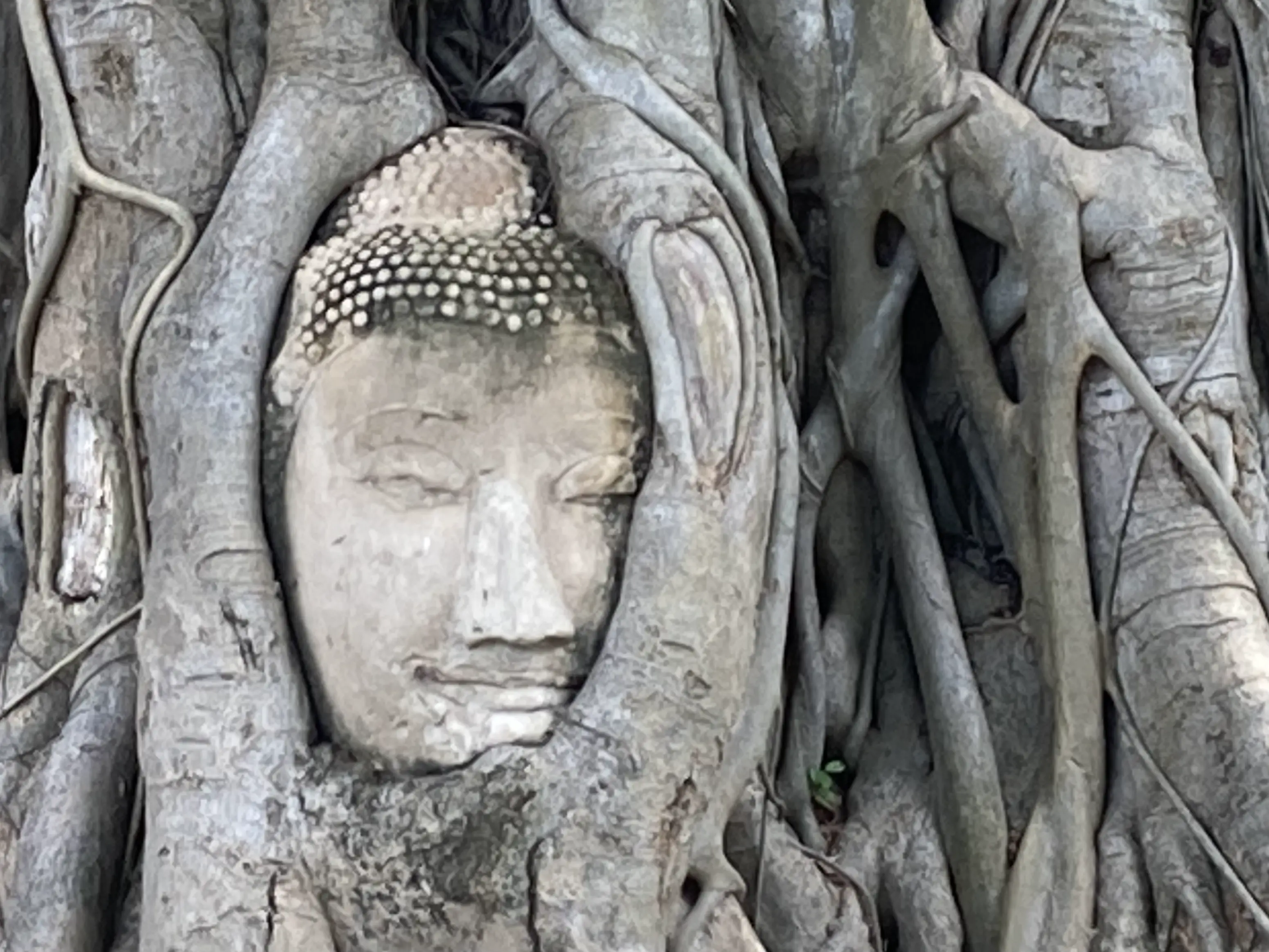
Image Gallery
Select an image to open it in a new tab.




Simon Caldwell
Enterprise Technology and Systems Editor
