The Greatest Hockey Goals in History: Defining Moments of Skill and Significance
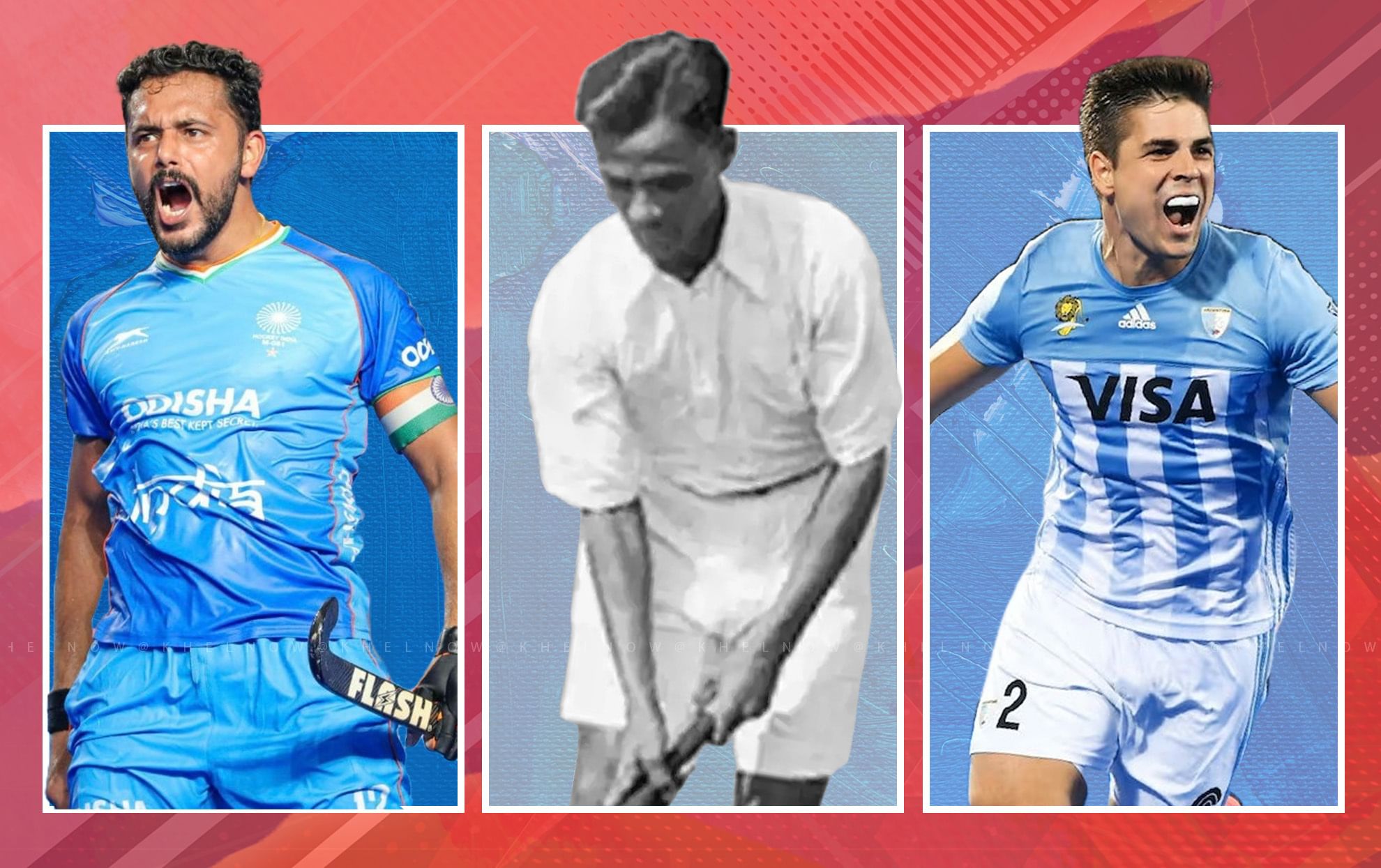
The greatest hockey goals in history are defined not only by their technical execution but by their timing, the stage upon which they were scored, and the emotional resonance they left on the sport. From Bobby Orr’s iconic 1970 overtime winner to modern displays of individual wizardry, these moments represent the pinnacle of professional hockey achievement.
Defining the Criteria of Greatness
Determining the "greatest" goals in hockey is inherently subjective, yet historians and analysts generally agree on a specific framework for evaluation. A goal earns its place in history when it intersects high-stakes pressure, technical innovation, and historical consequence.
Technical innovation refers to the execution of a maneuver that was either rare or unprecedented at the time. When a player employs a one-handed deke, a mid-air redirection, or a high-speed weaving maneuver through multiple defenders, they alter the standard of play for future generations. Historical consequence, meanwhile, is dictated by the game's outcome. A goal scored in a regular-season game rarely holds the same weight as one that secures a Stanley Cup, a gold medal, or a series victory in the final seconds of a deciding match.
Finally, the context of the era matters. The evolution of equipment—from heavy, wooden sticks to lightweight composite materials—has allowed players to manipulate the puck with increasing velocity and control. Therefore, historical greatness often accounts for the limitations of the technology available to the player at the time of the feat.
The Iconic Moments of the 20th Century
The 20th century provided the foundation for hockey's most enduring imagery. Before the era of high-definition slow-motion analysis, these goals were captured in grainier film, yet their impact remains undiminished.
Bobby Orr’s "The Goal" (1970): Perhaps the most famous photograph in hockey history features Bobby Orr flying through the air, horizontal to the ice, after scoring the Stanley Cup-clinching goal against the St. Louis Blues. Beyond the acrobatics, the goal represented the dominance of a defenseman who fundamentally changed how the position was played, transitioning from a purely defensive role to an offensive catalyst.
Paul Henderson’s Series-Winner (1972): During the Summit Series between Canada and the Soviet Union, Henderson’s goal in the final minute of the eighth game is widely considered the most significant marker in Canadian hockey history. It was not a display of finesse; it was a gritty, high-pressure rebound goal that carried the weight of national pride during the height of the Cold War.
Wayne Gretzky’s Record-Breaking Tally (1981): When Gretzky scored his 77th goal of the 1980-81 season to break Phil Esposito’s single-season record, he signaled the beginning of an era of unprecedented offensive production. The goal itself was a testament to his hockey IQ—anticipating the flow of the play before the defense had even recognized the vulnerability.
Evolution of Skill: Modern Era Innovations
As we move into 2026, the modern game has seen a shift toward extreme puck control and creativity. The "Michigan" goal—a lacrosse-style scoop where a player lifts the puck onto the blade of their stick behind the net and tucks it into the top corner—has redefined what is considered a scoring threat.
While players like Mike Legg first popularized the move in the 1990s, contemporary stars like Andrei Svechnikov brought it into the mainstream NHL. This shift reflects a fundamental change in player development; today’s youth players spend thousands of hours practicing trick shots that were once considered impossible or disrespectful to the game. These goals prove that the ceiling for individual skill continues to rise, forcing goaltenders to adapt to unconventional shooting angles and release points.
Technical Comparison of Iconic Goal Types
To understand why certain goals are categorized differently, it is helpful to analyze the mechanical requirements of the play.
| Goal Type | Technical Requirement | Primary Defensive Challenge | Historical Example |
|---|---|---|---|
| The Rush | High-speed puck handling | Closing gaps/Maintaining spacing | Mario Lemieux (1991) |
| The Redirection | Hand-eye coordination | Clearing the front of the net | Tomas Holmstrom style |
| The Lacrosse | Stick-blade control/Flexibility | Covering the roof of the net | Andrei Svechnikov (2019) |
| The Breakaway | Patience/Deception | Preventing the shooter's move | Peter Forsberg (1994) |
The Role of Coaching and Tactical Development
The greatest goals are often the byproduct of tactical shifts. In the 1970s and 80s, the "trap" or defensive systems were less sophisticated, allowing stars to utilize speed and raw talent to weave through entire teams. As coaching evolved to emphasize disciplined defensive structures and "gap control," individual goals required more creativity to bypass stifling defenses.
The modern goal-scorer relies on "deceptive shooting"—a technique where the player disguises their release by dragging the puck into their stance or using the defender’s body as a screen. This evolution demonstrates that the "greatest" goals of the future will likely be characterized by cognitive processing speed—the ability to identify a microscopic opening in a perfectly formed defensive shell.
Analyzing the "Goal-of-the-Year" Standard
In 2026, the industry standard for what constitutes a legendary goal has become increasingly rigorous. With advanced tracking data, scouts and fans can now view the velocity, distance, and pressure variables behind every shot. A goal that might have been considered "great" in 1990 is now often categorized as a standard play if it lacks creative flair.
However, the "clutch" factor remains the ultimate equalizer. A simple tap-in during the final seconds of a Game 7 will consistently be ranked higher in public memory than an aesthetically pleasing end-to-end rush during a regular-season blowout. This hierarchy confirms that hockey remains a sport defined by narrative as much as it is by athleticism.
Frequently Asked Questions
What makes a goal "historic" versus just "great"? A great goal is defined by its aesthetic beauty, speed, or skill. A historic goal is defined by its impact on a series, a league record, or a cultural moment. While they often overlap, the history of the sport is written by those who scored under the highest pressure.
How have sticks changed the way goals are scored? Composite materials and increased "kick point" technology allow players to flex their sticks more efficiently. This creates a "slingshot" effect, enabling players to score from distances and angles that were physically impossible with the stiff, heavy wooden sticks of the past.
Why is the "Michigan" goal controversial? Some traditionalists argue that the move is showboating or disrespectful to the goaltender. However, as the move becomes a standard part of elite skill training, it is increasingly viewed as an effective tactical tool to score when the traditional passing lanes are blocked.
Does goaltender equipment impact the frequency of great goals? Yes. Modern goaltenders wear highly specialized, form-fitting equipment and are coached in "butterfly" techniques that cover the bottom of the net efficiently. This forces scorers to aim for the top corners, increasing the technical difficulty required to score a highlight-reel goal.
Can a goal be considered the greatest if it was scored in a losing effort? Occasionally, yes. If a goal showcases a level of skill that is deemed "ahead of its time," it may be remembered as a landmark moment in the evolution of the sport, even if the team did not win the game.
What is the most important skill for a modern goal-scorer? Puck protection is the paramount skill. The ability to keep the puck away from an opponent while maintaining the strength to maneuver into a high-danger scoring area is what separates elite scorers from the rest of the field in today’s professional game.
Final Recommendation for Enthusiasts
For those looking to deepen their appreciation of hockey history, the best next step is to analyze the "Why" behind the goal. Rather than just watching the replay, examine the shift preceding the goal, the defensive coverage, and the specific stick-handling mechanics utilized by the shooter. Historical archives from the Hockey Hall of Fame and official league broadcasting resources provide the best context for these moments. By studying the progression of these goals, you gain a clearer understanding of how the sport balances tradition with constant innovation.

Image Gallery
Select an image to open it in a new tab.



Ingrid Bjornson
Global Cyber Policy and Regulation Analyst
