The U.S. presidential impeachment process is a two-stage constitutional mechanism used to charge and try a sitting president for "Treason, Bribery, or other high Crimes and Misdemeanors." First, the House of Representatives investigates and votes on impeachment articles; if a simple majority approves, the president is impeached. Second, the Senate holds a trial, where a two-thirds supermajority is required for conviction and removal.
The power of impeachment represents one of the most significant checks and balances within the United States government. Established under Article I and Article II of the Constitution, it serves as a "last resort" for addressing perceived misconduct by the Chief Executive. As of 2026, the process remains a rare and gravity-laden event in American history, having been fully executed through the trial phase only a handful of times. Understanding how this process unfolds requires looking at both the strict constitutional requirements and the procedural rules adopted by each chamber of Congress.
The Constitutional Grounds for Impeachment
The foundation of the impeachment process resides in Article II, Section 4 of the Constitution. It states: "The President, Vice President and all civil Officers of the United States, shall be removed from Office on Impeachment for, and Conviction of, Treason, Bribery, or other high Crimes and Misdemeanors."
While "Treason" and "Bribery" are relatively well-defined legal concepts, the phrase "high Crimes and Misdemeanors" has been the subject of intense debate since the Constitutional Convention of 1787. Historically, this term does not strictly refer to indictable criminal offenses found in a statutory code. Instead, it encompasses abuses of official power, neglect of duty, or conduct that violates the public trust.
Alexander Hamilton, writing in Federalist No. 65, described these as "offenses which proceed from the misconduct of public men, or, in other words, from the abuse or violation of some public trust." Because the definition is broad, the decision of what constitutes an impeachable offense is ultimately a political and constitutional judgment made by the House of Representatives.
Phase One: The House of Representatives
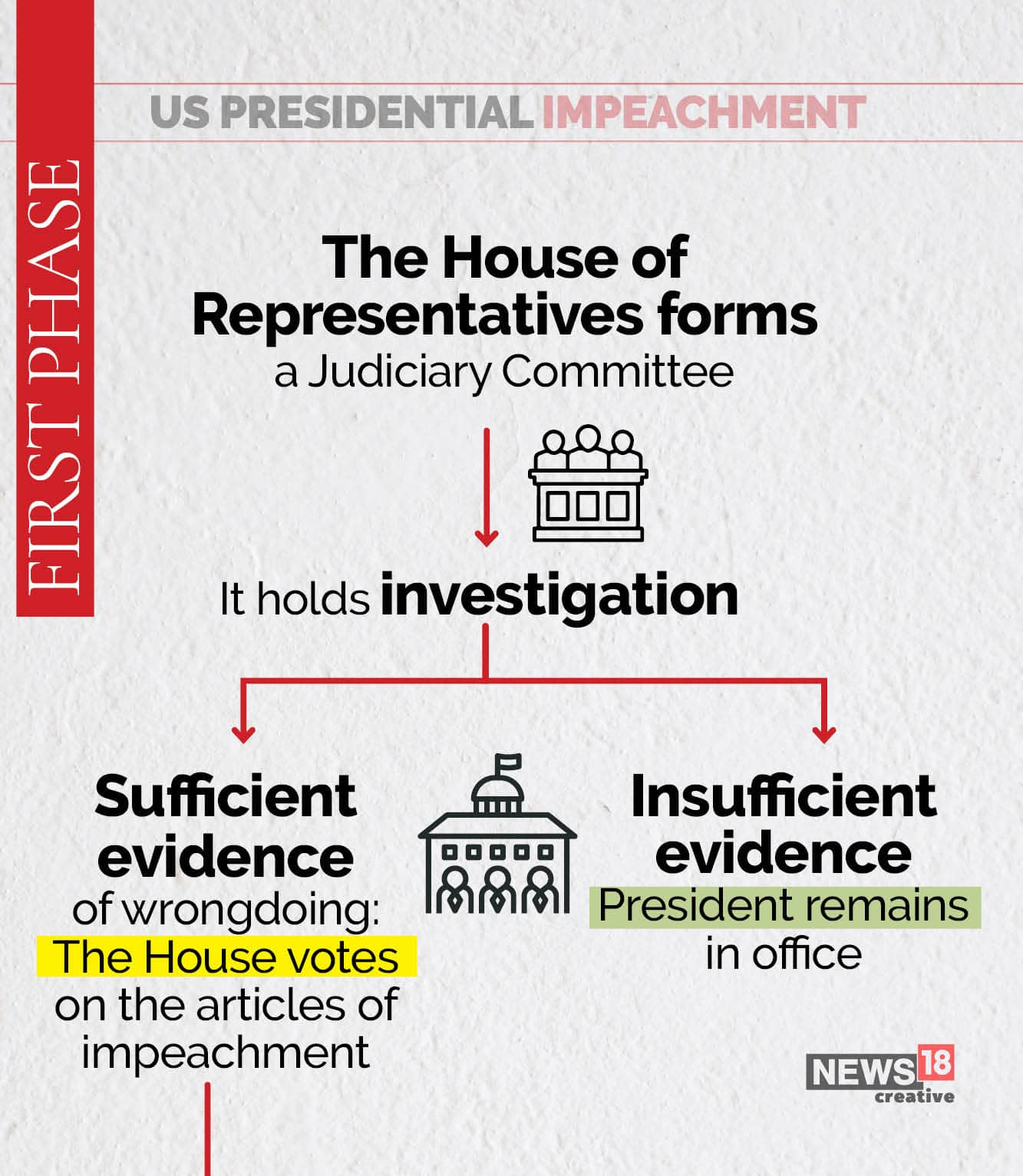
The House of Representatives holds the "sole Power of Impeachment" under Article I, Section 2. This phase functions similarly to a grand jury investigation and indictment in a criminal court, though it is a purely political and legislative action.
1. Initiation and Inquiry
An impeachment process typically begins with a resolution introduced by a member of the House. Alternatively, the House may pass a resolution authorizing an official impeachment inquiry. Once an inquiry is launched, the responsibility usually falls to the House Judiciary Committee, although other committees (such as Oversight or Intelligence) may conduct preliminary investigations.
During the inquiry, committees have the power to:
- Subpoena documents and internal communications from the executive branch.
- Compel witness testimony through depositions and public hearings.
- Gather evidence regarding the specific allegations against the president.
This stage is often characterized by legal battles over executive privilege, where the president may attempt to withhold certain information, and the House asserts its constitutional oversight authority.
2. Drafting Articles of Impeachment
If the investigating committees find sufficient evidence of misconduct, the Judiciary Committee drafts Articles of Impeachment. Each article represents a specific charge—such as "Abuse of Power" or "Obstruction of Congress." The committee then votes on whether to recommend these articles to the full House of Representatives.
3. The Floor Vote
The final step in the House is a debate and vote by the full membership. For a president to be impeached, only a simple majority (218 out of 435 members, if all seats are filled and voting) is required. If any single article of impeachment receives a majority vote, the president is officially "impeached." It is important to note that being impeached is not the same as being removed from office; it is merely the formal bringing of charges.

Phase Two: The Senate Trial
Once the House impeaches the president, the process moves to the Senate, which has the "sole Power to try all Impeachments" under Article I, Section 3. This phase functions as a trial, with the Senate serving as the jury.
1. Appointment of House Managers
The House appoints a group of members known as House Managers to act as prosecutors. These individuals present the case against the president to the Senate. The president is represented by private defense counsel.
2. The Presiding Officer
In most impeachment trials (such as those for federal judges), the Vice President or the President Pro Tempore of the Senate presides. However, the Constitution mandates that when the President of the United States is on trial, the Chief Justice of the Supreme Court must preside. This requirement avoids the conflict of interest that would arise if the Vice President (who stands to succeed the president) oversaw the proceedings.
3. The Trial Procedures
The Senate sets its own rules for the trial, meaning the length and scope can vary significantly. Standard procedures typically include:
- The Oath: All Senators must take a special oath to "do impartial justice according to the Constitution and laws."
- Opening Arguments: House Managers and the President’s defense team present their initial cases.
- Evidence and Witnesses: The Senate decides whether to allow new witness testimony or the introduction of additional documents. This is often a point of major procedural contention.
- Senator Questioning: Senators submit written questions to the Chief Justice, who reads them to the managers or defense counsel.
4. The Deliberation and Final Vote
After closing arguments, the Senate deliberates (often in a closed-door session). Finally, the Senate votes on each Article of Impeachment individually. To convict the president, a two-thirds supermajority (67 out of 100 Senators) is required.
If the president is convicted on any article, they are immediately removed from office. If the vote falls short of the two-thirds threshold, the president is acquitted and remains in office.
Consequences of Conviction
The Constitution limits the penalties the Senate can impose. According to Article I, Section 3, judgment in cases of impeachment "shall not extend further than to removal from Office, and disqualification to hold and enjoy any Office of honor, Trust or Profit under the United States."
Removal from Office
If convicted, the removal is automatic. There is no appeal process, and the Supreme Court ruled in Nixon v. United States (1993)—a case involving a judge, not the president of the same name—that the judiciary has no power to review the Senate's impeachment proceedings as they are considered "political questions."
Disqualification
Following a conviction, the Senate may hold a separate vote to permanently disqualify the individual from holding future federal office. Unlike the conviction vote, this disqualification vote requires only a simple majority.
Criminal Liability
Impeachment is a political process, not a criminal one. Therefore, the "double jeopardy" clause does not apply. A person removed from office through impeachment can still be "liable and subject to Indictment, Trial, Judgment and Punishment, according to Law" in a standard criminal court for the same actions that led to their impeachment.
Comparison of Historical Presidential Impeachments
The following table summarizes the formal impeachment proceedings against U.S. Presidents through the current era.
| President | Year | Primary Charges | House Vote Result | Senate Trial Result |
|---|---|---|---|---|
| Andrew Johnson | 1868 | Violation of the Tenure of Office Act | Impeached | Acquitted (1 vote short) |
| Richard Nixon | 1974 | Obstruction of Justice, Abuse of Power | Resigned before vote | N/A |
| Bill Clinton | 1998 | Perjury and Obstruction of Justice | Impeached | Acquitted |
| Donald Trump (1) | 2019 | Abuse of Power, Obstruction of Congress | Impeached | Acquitted |
| Donald Trump (2) | 2021 | Incitement of Insurrection | Impeached | Acquitted |
Note: Richard Nixon is the only president to resign as a direct result of the impeachment process before the House could vote on the articles.
The Role of the Vice President and Succession
If a president is removed from office by the Senate, the 25th Amendment and the Presidential Succession Act of 1947 dictate the transition. The Vice President is immediately sworn in as the President. The new president then nominates a new Vice President, who must be confirmed by a majority vote in both the House and the Senate.
This ensures that the executive branch remains functional without a gap in leadership. Because the stakes of succession are so high, the impeachment process is designed to be difficult to complete, requiring broad consensus across the legislative branch to overturn the results of a national election.
Common Misconceptions About Impeachment
Because the process is rare, several myths often persist in public discourse:
- "Impeachment means removal": As seen in the cases of Clinton and Trump, a president can be impeached (charged) but remain in office if the Senate acquits them.
- "The Supreme Court can overrule it": The Chief Justice presides over the trial, but the Court as an institution has no jurisdiction to overturn the Senate's verdict.
- "It requires a crime": While most impeachments involve alleged criminal acts, the House can impeach for non-criminal "abuses of power" that harm the constitutional order.
- "The President can pardon themselves from impeachment": Article II, Section 2 specifically states the president has the power to grant reprieves and pardons "except in Cases of Impeachment."
FAQs About the Impeachment Process
Can a president be impeached after they leave office?
The Constitution does not explicitly forbid "late impeachment." In 2021, the Senate held a trial for Donald Trump after he had already left office. While some Senators argued it was unconstitutional to try a private citizen, the Senate voted that it had jurisdiction. However, the practical effect is limited to disqualification from future office, as removal is no longer applicable.
Who pays for the legal defense of the president during impeachment?
The president typically pays for their own private legal counsel or uses campaign funds, subject to Federal Election Commission (FEC) regulations. The government does not provide a public defender for impeachment trials, as they are not criminal proceedings. However, the House Managers' expenses are covered by the House budget.
Can the Senate refuse to hold a trial?
There is ongoing debate among constitutional scholars regarding whether the Senate is required to hold a trial once the House transmits articles. Current Senate rules suggest a trial should proceed, but the Senate has the power to change its own rules. In practice, the Senate has always held a proceeding of some form once articles were delivered.
How long does the entire process take?
There is no set timeframe. The 1998-1999 impeachment of Bill Clinton took roughly five months from the authorization of the inquiry to the Senate acquittal. The first impeachment of Donald Trump took approximately four months, while the second was expedited, taking only a few weeks from the House vote to the Senate verdict.
What is the "Impeachment Manager" role?
House Managers are members of the House of Representatives who act as the prosecution team. They are responsible for presenting evidence, questioning witnesses (if allowed), and making the formal legal arguments to the Senators. They are usually selected for their legal expertise or their role in the initial investigation.
Practical Recommendations for Following Proceedings
For citizens or students tracking an unfolding impeachment in 2026, the best primary sources are the official government repositories. The U.S. House of Representatives provides access to committee reports and the text of impeachment articles. The U.S. Senate maintains the official record of trial proceedings and vote tallies.
When analyzing the process, it is essential to distinguish between the procedural steps (which are dictated by law and Senate rules) and the political rhetoric surrounding the charges. Because the Constitution provides only a broad framework, the specifics of any impeachment are often shaped by the prevailing political climate and the internal rules adopted by the Congress currently in session.
Image Gallery
Select an image to open it in a new tab.


Declan O'Connor
Higher Education and Campus Culture Reporter
