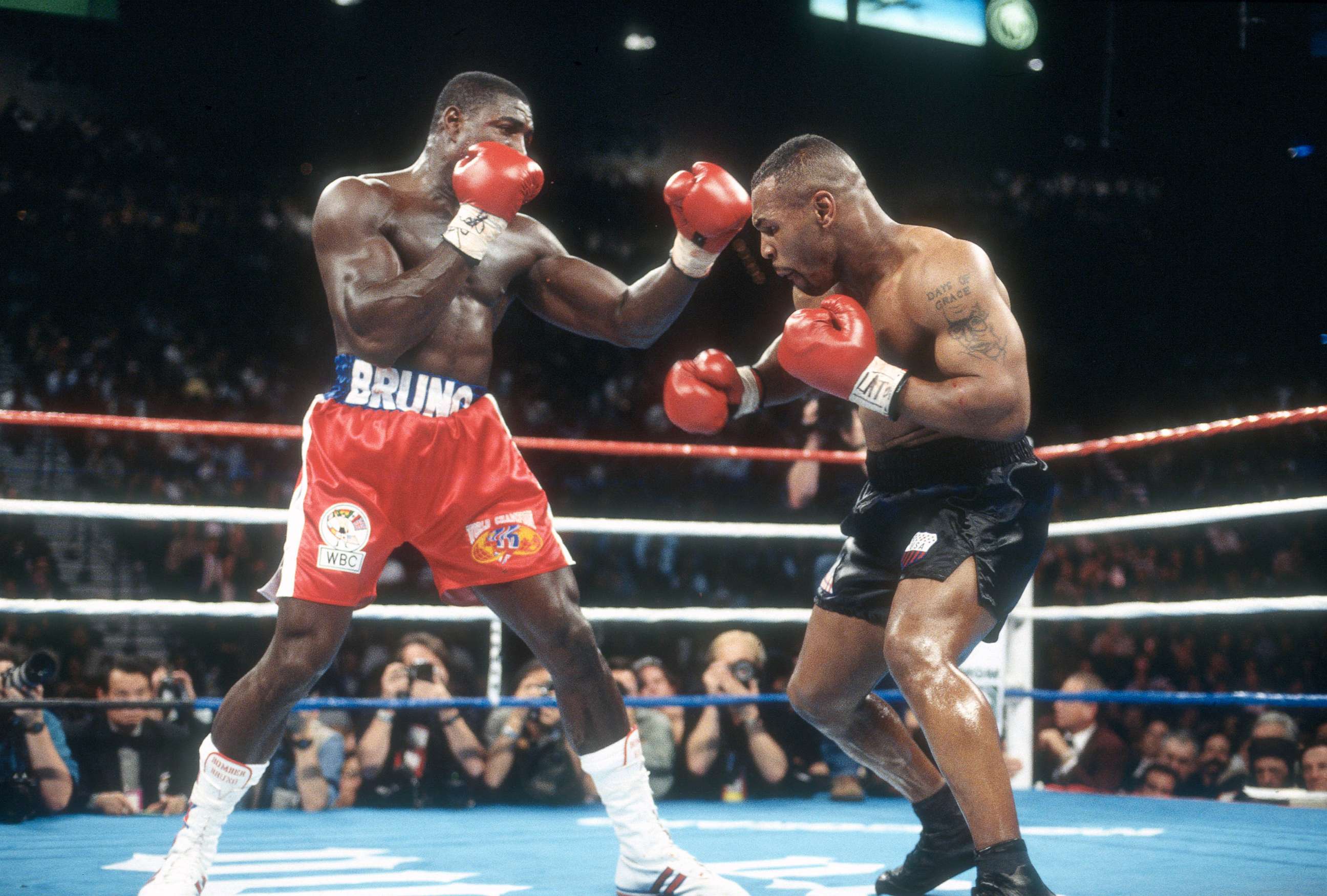
Mike Tyson’s professional boxing career spanned two decades, during which he faced 50 different opponents in 58 professional bouts. From his debut against Hector Mercedes in 1985 to his final professional retirement against Kevin McBride in 2005, and later his high-profile exhibition matches against Roy Jones Jr. and Jake Paul, Tyson’s list of opponents includes Hall of Famers, journeymen, and heavyweight icons.
Throughout his career, Mike Tyson recorded 50 wins (44 by knockout), 6 losses, and 2 no-contests. His opponents are often categorized by the era of Tyson's career in which they fought: the meteoric rise of the mid-1980s, the undisputed championship reign, the post-prison comeback of the 1990s, and the final decline in the early 2000s.
The Ascent: Tyson’s Early Opponents (1985–1986)
In his first year as a professional, Mike Tyson fought a staggering 15 times. These fights were designed to build his experience and highlight his devastating power. His first opponent, Hector Mercedes, lasted only one round on March 6, 1985. This set the tone for the "Iron Mike" era.
Many of these early opponents were experienced journeymen meant to test Tyson's stamina. James Tillis (May 1986) was the first man to take Tyson the distance, losing a ten-round unanimous decision. Tillis utilized lateral movement and a stiff jab to avoid Tyson’s hooks, providing the first blueprint on how to survive the Tyson onslaught. Shortly after, Mitch Green also survived ten rounds, though he suffered significant facial damage in a fight that later led to a famous street brawl between the two in Harlem.
The most significant name in this early stretch was Marvis Frazier, son of legend Joe Frazier. On July 26, 1986, Tyson knocked out the younger Frazier in just 30 seconds, the quickest knockout of his career. This victory solidified Tyson’s status as the number-one contender and paved the way for his first title shot.
The Championship Era and Unification
Tyson’s transition from prospect to champion involved facing the established "alphabet" champions of the 1980s.
Trevor Berbick (1986)
On November 22, 1986, Tyson faced Trevor Berbick for the WBC Heavyweight Championship. Berbick, who had previously beaten Muhammad Ali, was unable to withstand Tyson's power. He was knocked down twice, with the second knockdown causing him to lose his balance three times as he tried to stand. At 20 years old, Tyson became the youngest heavyweight champion in history.
James "Bonecrusher" Smith and Tony Tucker (1987)
Tyson then set his sights on unifying the belts. He faced James "Bonecrusher" Smith for the WBA title. Smith employed a controversial strategy of constant clinching to avoid being hit, resulting in a dull 12-round decision win for Tyson. To complete the unification, Tyson fought Tony Tucker for the IBF title. Tucker was a tall, skilled boxer who gave Tyson trouble in the early rounds, but Tyson’s relentless pressure eventually earned him a unanimous decision, making him the undisputed king of the division.
Larry Holmes and Michael Spinks (1988)
In 1988, Tyson faced two of the most significant names of the decade. Larry Holmes, the former longtime champion, came out of retirement to face Tyson. Though Holmes was past his prime, Tyson became the only man to ever knock him out, finishing him in the fourth round.
Later that year, Tyson faced the "lineal" champion Michael Spinks. Spinks was undefeated and had beaten Holmes twice, but the fight lasted only 91 seconds. Tyson’s performance against Spinks is widely considered the absolute pinnacle of his career, as he dismantled a highly technical fighter with terrifying efficiency.

The Fall in Tokyo: James "Buster" Douglas (1990)
The most famous opponent in Mike Tyson’s career, for reasons Tyson would rather forget, was James "Buster" Douglas. On February 11, 1990, in Tokyo, Japan, Douglas was a 42-to-1 underdog. However, Douglas fought the perfect fight, using a long jab to keep Tyson at bay and showing incredible heart by rising from an eighth-round knockdown.
In the tenth round, Douglas unleashed a multi-punch combination that sent Tyson to the canvas for the first time in his career. The sight of Tyson fumbling for his mouthpiece remains one of the most iconic images in sports history. This loss ended Tyson’s reign as the undisputed champion and changed the trajectory of his life and career.
The Comeback and the Holyfield Rivalry (1995–1997)
After serving three years in prison, Tyson returned to the ring in 1995 against Peter McNeeley. The fight was more of a spectacle than a contest, ending in 89 seconds after McNeeley’s manager stepped into the ring to stop the punishment. Tyson then reclaimed the WBC title by knocking out Frank Bruno in a rematch and the WBA title by stopping Bruce Seldon in one round.
Evander Holyfield
The rivalry with Evander Holyfield defined Tyson’s late 90s. In their first fight in November 1996, Holyfield, considered a massive underdog, used his strength and superior clinch-work to bully the "bully." Holyfield stopped Tyson in the 11th round.
The rematch in June 1997, known as "The Bite Fight," became one of the most infamous events in boxing history. Frustrated by what he perceived as intentional headbutts from Holyfield, Tyson bit a piece of Holyfield’s ear off in the third round. Tyson was disqualified, his boxing license was temporarily revoked, and the rivalry remains a dark chapter in the sport.
The Final Title Runs: Lewis and the Decline (1999–2005)
Tyson’s final years in the ring were marked by flashes of his old self followed by physical and mental exhaustion. He defeated several mid-tier heavyweights like Francois Botha, Lou Savarese, and Andrew Golota (though the Golota win was changed to a no-contest after Tyson tested positive for marijuana).
Lennox Lewis (2002)
Tyson’s last major title shot came against Lennox Lewis in Memphis. By 2002, Tyson was a shadow of his former self. Lewis, a master technician with a massive reach advantage, systematically broke Tyson down before knocking him out in the eighth round. This fight was the highest-grossing heavyweight bout at the time and signaled that Tyson could no longer compete with the elite of the division.
The Final Professional Opponents
The end of Tyson’s professional career came against opponents he would have easily dispatched a decade earlier. In 2004, he was knocked out by Danny Williams after suffering a knee injury during the fight. His final professional appearance occurred on June 11, 2005, against Kevin McBride. Tyson, visibly exhausted and lacking his signature explosiveness, quit on his stool before the start of the seventh round.
Exhibition Bouts and Later Encounters
Post-retirement, Tyson returned to the ring for exhibition matches that focused more on entertainment than championship rankings. In 2006, he toured with Corey Sanders. More significantly, in 2020, at the age of 54, Tyson faced Roy Jones Jr. in an eight-round exhibition. The fight was a technical draw and was praised for showing that both legends still possessed remarkable skills for their age.
Looking back from 2026, one of the most discussed late-career moments was the 2024 encounter with Jake Paul. While categorized differently than his prime championship bouts, it added another name to the long list of men who have shared a ring with "The Baddest Man on the Planet."
Summary of Major Opponents and Results
The following table highlights the most significant opponents in Mike Tyson's career, documenting the evolution of his competition from his rise to his eventual retirement.
| Opponent | Date | Result | Significance |
|---|---|---|---|
| Hector Mercedes | March 1985 | Win (TKO 1) | Professional Debut |
| Trevor Berbick | Nov 1986 | Win (TKO 2) | Won WBC Heavyweight Title; Youngest Champion |
| James Smith | March 1987 | Win (UD 12) | Won WBA Heavyweight Title |
| Tony Tucker | August 1987 | Win (UD 12) | Won IBF Title; Undisputed Champion |
| Larry Holmes | Jan 1988 | Win (TKO 4) | Only man to knock out Larry Holmes |
| Michael Spinks | June 1988 | Win (KO 1) | Defeated the Lineal Champion in 91 seconds |
| James Douglas | Feb 1990 | Loss (KO 10) | The greatest upset in boxing history |
| Frank Bruno | March 1996 | Win (TKO 3) | Reclaimed the WBC Title (Rematch) |
| Evander Holyfield | Nov 1996 | Loss (TKO 11) | First loss to Holyfield; lost WBA Title |
| Evander Holyfield | June 1997 | Loss (DQ 3) | The "Bite Fight" disqualification |
| Lennox Lewis | June 2002 | Loss (KO 8) | Last major world title challenge |
| Kevin McBride | June 2005 | Loss (TKO 6) | Final professional fight |
| Roy Jones Jr. | Nov 2020 | Draw (Exh) | Return to the ring after 15 years |
Frequently Asked Questions
Who was the first person to beat Mike Tyson?
The first boxer to defeat Mike Tyson was James "Buster" Douglas on February 11, 1990. Before this fight, Tyson was 37-0. Douglas was an enormous underdog, but he utilized a disciplined jab and took advantage of Tyson’s lack of preparation to score a tenth-round knockout in Tokyo.
How many times did Mike Tyson fight Evander Holyfield?
Mike Tyson and Evander Holyfield fought twice. The first encounter took place on November 9, 1996, which Holyfield won by an 11th-round technical knockout. The second fight, on June 28, 1997, ended in a disqualification for Tyson in the third round after he bit Holyfield’s ears.
Which opponent did Mike Tyson knock out the fastest?
Tyson’s fastest professional knockout came against Marvis Frazier on July 26, 1986. The fight lasted only 30 seconds. Tyson pinned Frazier into a corner and unleashed a series of uppercuts that ended the contest almost immediately after the opening bell.
Did Mike Tyson ever fight Lennox Lewis more than once?
No, Mike Tyson and Lennox Lewis only fought once in a professional capacity. The bout took place on June 8, 2002, at the Pyramid Arena in Memphis. Lewis won the fight via an eighth-round knockout. While there was talk of a rematch for years, it never materialized as Tyson's career continued to decline.
Who were the only boxers to go the full 12 rounds with prime Mike Tyson?
In his undisputed prime (1985–1989), only two fighters managed to go the full 12 rounds with Tyson: James "Bonecrusher" Smith and Tony Tucker. Both fights occurred in 1987 during Tyson's quest to unify the heavyweight titles. Most other opponents during this era were stopped well before the final bell.
Strategic Legacy of Tyson's Opponents
Studying the boxers who fought Mike Tyson reveals the evolution of heavyweight boxing tactics. Early opponents tried to trade power with him and failed. Later opponents, beginning with James Tillis and perfected by Evander Holyfield and Lennox Lewis, used "smothering" tactics. By leaning on Tyson, clinching his arms, and using their height to force him to carry their weight, they neutralized his explosive short-range hooks.
If you are researching the technical history of the heavyweight division, analyzing the footage of Tyson vs. Tillis (1986) and Tyson vs. Douglas (1990) provides the most insight into how the "peek-a-boo" style was eventually countered by disciplined, rangy boxers with high stamina.
Image Gallery
Select an image to open it in a new tab.
Vivian Cho
Executive IT and Emerging Technologies Reporter
