Understanding How Life Insurance Companies Transfer Risk

Life insurance companies operate as central pillars of the financial risk management industry by effectively transferring individual mortality risk from the policyholder to the insurer. Through a process rooted in actuarial science and large-scale pooling, these companies distribute the financial impact of unexpected events across a vast population, ensuring that long-term obligations are met despite individual volatility.
The Core Concept of Risk Transfer in Life Insurance
At its most fundamental level, risk transfer is the mechanism by which one party agrees to assume the financial burden of a loss that might otherwise fall upon another. In the context of life insurance, the policyholder faces the risk of premature death or the financial loss associated with longevity. Because the individual cannot easily predict the timing of these events, they transfer the financial uncertainty to a life insurance company in exchange for a series of premium payments.
For the insurance company, the process of assuming this risk is not a gamble but a calculated application of the Law of Large Numbers. This statistical principle dictates that as the number of independent, identically distributed variables increases, the actual observed results will converge toward the expected theoretical mean. By covering thousands or millions of policyholders, an insurer can predict with high accuracy the total number of claims they will pay out in any given year. While the company does not know which specific individual will trigger a claim, they know how many claims will occur in the aggregate.
The Role of Actuarial Science and Risk Pooling
Actuaries are the professionals responsible for quantifying the risks that insurers take on. They use mathematical models to evaluate mortality tables—datasets that track the probability of death at various ages—to determine the appropriate premium levels for different insurance products. This process is known as underwriting.
When an individual applies for a policy, the insurer assesses their health, occupation, lifestyle, and medical history. This is the first step in risk management: determining whether the risk profile of the individual falls within the company’s acceptable parameters. Once the policy is issued, the individual’s risk is added to the "pool" of other policyholders.
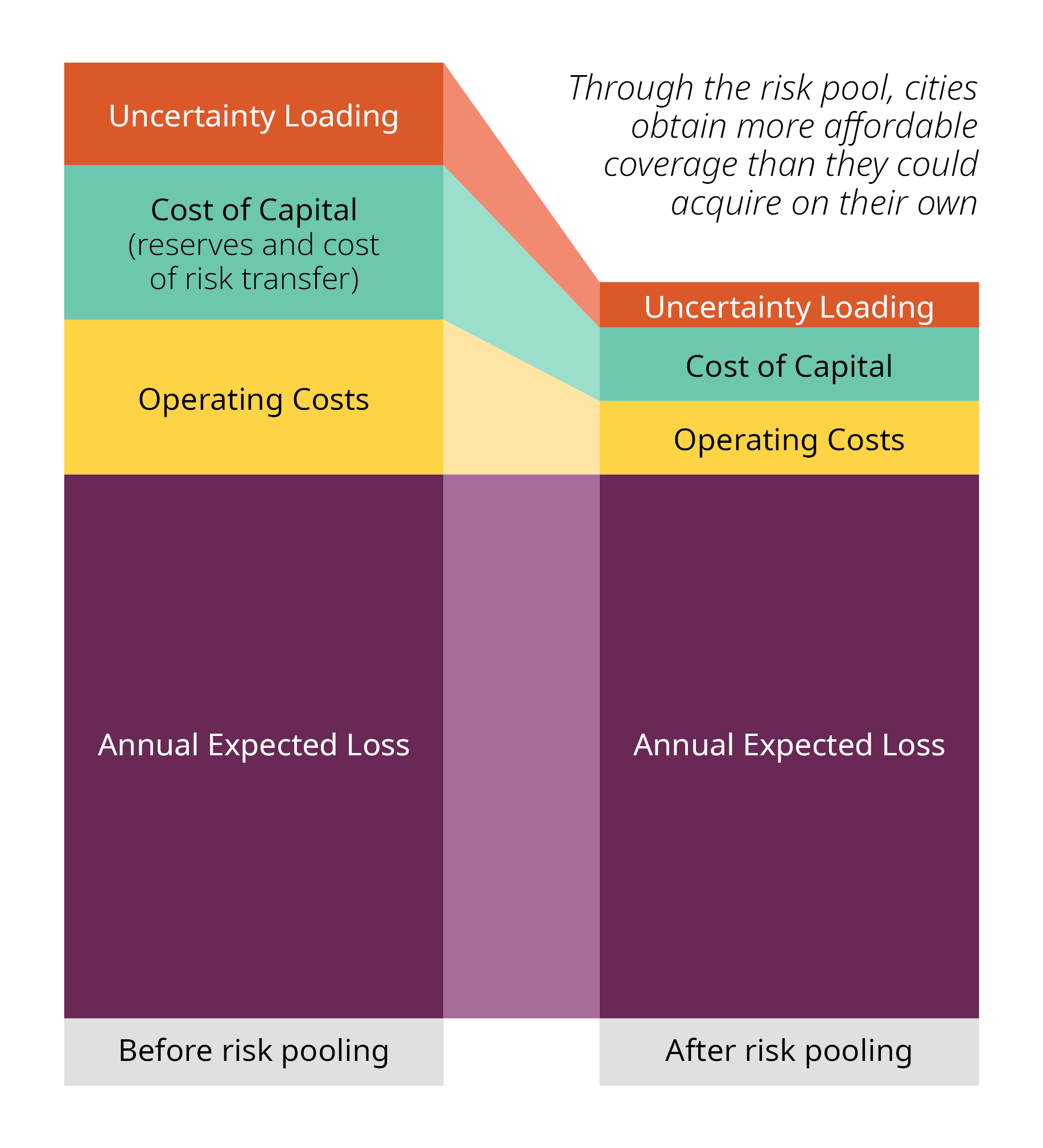
The pool is essential for risk transfer. If an insurer only held a few policies, a single claim could bankrupt the company. By aggregating thousands of risks, the insurer ensures that the premiums collected from the healthy, surviving majority are sufficient to cover the death benefits paid to the beneficiaries of the minority. This redistribution of wealth from the group to the affected individuals is the practical outcome of institutional risk transfer.
Secondary Risk Mitigation: Reinsurance
Life insurance companies do not always keep all the risk they underwrite. In instances where an insurer accepts an unusually large policy—such as high-net-worth life insurance or policies covering significant groups—the insurer may choose to transfer a portion of that risk to another entity, known as a reinsurer.
Reinsurance acts as "insurance for insurance companies." It allows primary insurers to stabilize their financial results and protect their balance sheets against catastrophic losses or a sudden spike in claims. There are two primary types of reinsurance used by life companies:
- Proportional Reinsurance: The reinsurer assumes a percentage of both the risk and the premiums. If the policyholder dies, the reinsurer pays their agreed-upon percentage of the claim.
- Non-Proportional (Excess of Loss) Reinsurance: The reinsurer only becomes liable if a claim exceeds a predetermined monetary threshold. This is particularly useful for protecting the insurer against large individual claims that could destabilize their reserves.
Financial Reserves and Regulatory Oversight
A primary concern for the consumer and the regulator is whether the insurer has the capacity to fulfill their side of the risk transfer agreement. Since life insurance policies are often long-term contracts—spanning decades—insurers must manage their assets to ensure liquidity far into the future.
Regulators, such as state-level insurance commissioners in the United States, mandate that insurance companies hold specific levels of capital reserves. These reserves are calculated to ensure that even under adverse economic conditions or unexpected mortality spikes, the company can meet its financial obligations. The assets backing these reserves are typically invested in conservative, income-generating vehicles like government bonds and high-grade corporate debt, which provide the steady cash flow required to pay benefits as they fall due.
How Policyholders Participate in Risk Transfer
For the policyholder, the transfer of risk is a strategic financial tool. It is not merely about providing a death benefit; it is about creating financial certainty. Without life insurance, an individual would have to self-insure—a process that would require saving an amount equal to the potential loss, which is often unattainable during the early stages of a career or family life.
| Feature | Self-Insuring (Saving) | Transferring Risk (Insurance) |
|---|---|---|
| Capital Requirement | Immediate, massive savings needed. | Small, periodic premium payments. |
| Timing Risk | High; if death occurs early, savings are insufficient. | Low; coverage is effective from day one. |
| Asset Volatility | Exposed to market and inflation risk. | Guaranteed benefit amount (in fixed products). |
| Complexity | Simple, but difficult to execute. | Complex underwriting, simple outcome. |
Limitations and Exclusions in Risk Transfer
It is a common misunderstanding that insurance companies accept all risks. In reality, insurers only accept "insurable risks." To be insurable, a risk must be:
- Definite: It must be possible to verify that the event (death) has occurred and establish the time and place.
- Accidental: The event must be beyond the control of the insured; intentional self-harm or suicide within a short period (typically two years) is generally excluded.
- Measurable: The financial loss must be quantifiable.
- Non-Catastrophic: The risk must not affect the entire population of the insurer simultaneously (e.g., insurers avoid covering damages from war or nuclear disaster, which would cause simultaneous claims for nearly all policyholders).
These exclusions ensure that the insurer maintains a predictable risk pool. By carefully defining what is and is not covered, the insurance company prevents the erosion of the pool’s integrity.
Frequently Asked Questions
1. Does the insurer assume the risk of inflation in life insurance? Generally, the insurer assumes the risk of the mortality cost, but the policyholder assumes the inflation risk for fixed-benefit policies. If a policy pays $500,000, that amount is fixed at inception. If inflation erodes the purchasing power of that money over 30 years, the insurer is not responsible for increasing the benefit unless the policy was explicitly indexed to inflation at the time of purchase.
2. Can an insurance company refuse to accept my risk? Yes. Through the underwriting process, companies analyze your medical and financial data. If your profile indicates a significantly higher likelihood of death than the company’s actuarial assumptions allow, they may charge a higher premium (substandard rating) or decline the application entirely.
3. What happens if a life insurance company goes bankrupt? In the United States, state-level Guaranty Associations act as a final layer of safety. If an insurance company fails, these associations provide coverage for policyholders up to certain limits defined by state law. It is a critical safeguard, though it reinforces the importance of selecting highly rated, financially stable insurance carriers.
4. How do term and whole life insurance differ in risk transfer? Term life insurance transfers the risk of death for a specific, limited period. Whole life insurance transfers the risk of death for the entire duration of the insured’s life, provided premiums are paid, while also incorporating a cash value component. The latter involves the insurer managing both mortality risk and investment risk.
5. Are premiums guaranteed throughout the life of the policy? This depends on the product. In term insurance, premiums are typically guaranteed for the length of the term (e.g., 10, 20, or 30 years). In whole life insurance, premiums are often level and guaranteed for the life of the policy. However, universal life insurance policies may have adjustable premiums based on the performance of the underlying account.
Final Guidance for Policyholders
The act of transferring risk to a life insurance company is a cornerstone of responsible financial planning. Before entering into such an agreement, ensure you have clearly identified the "why" behind your coverage—whether it is income replacement, debt mitigation, or estate planning.
Review the financial strength ratings of your potential insurer via independent rating agencies such as A.M. Best, Moody’s, or Standard & Poor’s. Because you are engaging in a decades-long relationship with a company that is assuming your mortality risk, their long-term solvency is the most important factor in the success of your personal risk management strategy. Always read the policy document thoroughly to understand the specific exclusions, as these define the boundaries of the risk the insurer has agreed to carry for you.
Image Gallery
Select an image to open it in a new tab.






Ingrid Bjornson
Global Cyber Policy and Regulation Analyst
