Understanding Radium-223 Decay: Mechanisms, Medical Applications, and Safety Profiles
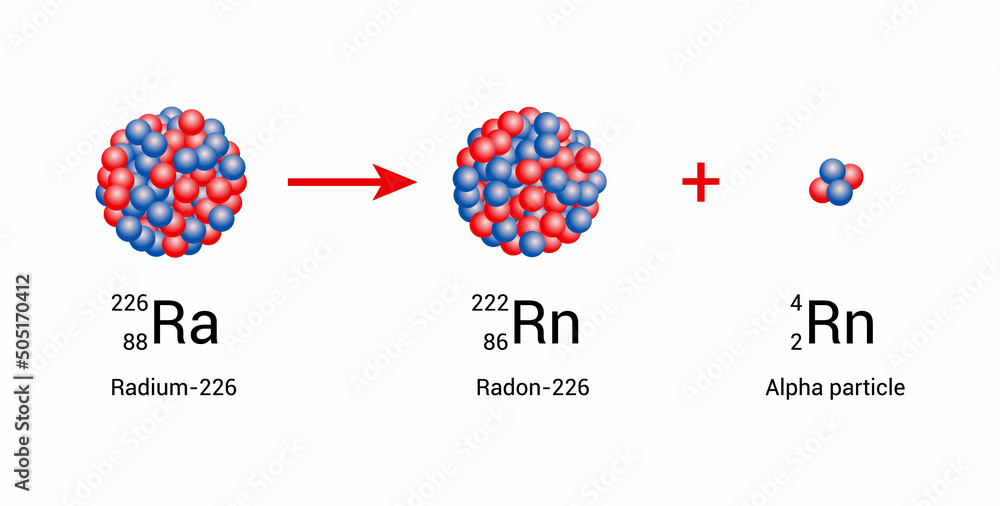
Radium-223 is a targeted alpha-emitting radioisotope that primarily treats bone metastases by mimicking calcium and integrating into areas of high bone turnover. Through its decay process, it releases high-energy alpha particles that induce lethal double-strand DNA breaks in cancer cells within a highly localized range of less than 100 micrometers.
The Nuclear Physics of Radium-223 Decay
Radium-223 ($^{223}\text{Ra}$) is a naturally occurring radioisotope, though for medical applications, it is typically produced via a generator system involving Actinium-227. To understand its efficacy in oncology, one must first analyze the specific nuclear characteristics that define its decay energy and timeframe.
The Actinium-227 Decay Series
Radium-223 is a member of the actinium decay series (also known as the "4n+3" series). It undergoes a complex decay chain that eventually terminates at stable Lead-207 ($^{207}\text{Pb}$). The primary significance of this chain is the cumulative energy released. During the transformation from Radium-223 to stable Lead, a total of four alpha particles and two beta particles are emitted.
The decay of a single nucleus of Radium-223 yields approximately 28.2 MeV of energy. Over 95% of this energy is carried by the alpha particles. Because alpha particles are significantly more massive than beta particles or gamma rays, they transfer a massive amount of energy over a very short distance. This high Linear Energy Transfer (LET) is the cornerstone of its therapeutic value.
Half-Life and Logistics
The physical half-life of Radium-223 is 11.43 days. In the context of nuclear medicine in 2026, this timeframe is considered optimal for clinical logistics. It is long enough to allow for centralized manufacturing and international shipping to hospitals without significant loss of potency, yet short enough that the radioactivity does not persist indefinitely in the patient’s body. From a physiological standpoint, the 11.4-day half-life provides ample time for the isotope to localize in the bone matrix before the majority of the radioactive decay occurs.
The Decay Chain: From Radium to Stable Lead
The decay of Radium-223 is not a single event but a cascade of transformations. Each step in this cascade contributes to the total radiation dose delivered to the target tissue.
| Isotope | Decay Mode | Half-Life | Energy (approx.) |
|---|---|---|---|
| Radium-223 | Alpha | 11.43 Days | 5.71 MeV |
| Radon-219 | Alpha | 3.96 Seconds | 6.82 MeV |
| Polonium-215 | Alpha | 1.78 Milliseconds | 7.39 MeV |
| Lead-211 | Beta | 36.1 Minutes | 1.37 MeV |
| Bismuth-211 | Alpha | 2.14 Minutes | 6.62 MeV |
| Thallium-207 | Beta | 4.77 Minutes | 1.42 MeV |
| Lead-207 | Stable | N/A | N/A |
As illustrated in the table, the intermediate daughter products (like Radon-219 and Polonium-215) have extremely short half-lives. This ensures that the energy from the entire decay chain is deposited almost exactly where the original Radium-223 atom was sequestered. This "localized energy deposition" minimizes the "crossfire effect," where radiation intended for a tumor accidentally damages distant healthy organs.
Biological Mechanism of Action: Why Bone?
The utility of Radium-223 decay is inextricably linked to its chemical properties. Radium is an alkaline earth metal, residing in Group 2 of the periodic table, directly below Calcium. Because of this chemical similarity, the human body—and specifically the skeletal system—treats Radium-223 ions much like Calcium ions.
Targeted Bone Uptake
When Radium-223 dichloride (marketed as Xofigo) is injected intravenously, it circulates through the bloodstream and gravitates toward areas of active bone remodeling. In patients with metastatic prostate cancer, the cancer cells trigger "osteoblastic" activity—excessive, disorganized bone growth. Radium-223 incorporates itself into the hydroxyapatite mineral of these new bone matrixes.
Once embedded in the bone, the Radium-223 decay process begins in earnest. Because the cancer cells are in the immediate vicinity of this new bone growth, they are positioned directly in the path of the emitted alpha particles.
Alpha Radiation vs. Beta Radiation
Historically, bone metastases were treated with beta-emitters like Strontium-89 or Samarium-153. However, Radium-223’s alpha decay offers two distinct advantages:
- Potency: Alpha particles are roughly 7,000 times heavier than beta particles. When they strike DNA, they cause double-strand breaks that are nearly impossible for the cell to repair. Beta particles often only cause single-strand breaks, which cancer cells can sometimes survive.
- Precision: A beta particle can travel several millimeters or even centimeters through tissue, potentially reaching the sensitive bone marrow and causing significant blood toxicity. In contrast, an alpha particle from Radium-223 decay travels less than 100 micrometers—roughly the width of 2 to 10 cells. This ensures that the radiation dose is concentrated on the bone surface and the adjacent tumor cells, sparing the deeper marrow.
Clinical Application in 2026: Xofigo and Beyond
As of 2026, Radium-223 dichloride remains a foundational therapy for patients with metastatic castration-resistant prostate cancer (mCRPC) that has spread to the bones but not to other visceral organs (like the liver or lungs).
Therapeutic Regimen
The standard protocol typically involves a series of six intravenous injections, spaced four weeks apart. This schedule is designed to balance the cumulative radiation dose to the tumor sites while allowing the patient’s hematopoietic (blood-forming) system to recover between doses.
Physicians monitor the patient’s "ALSYMPCA" markers—named after the landmark clinical trial that proved Radium-223 improved overall survival and delayed skeletal-related events (like fractures). By 2026, clinicians also frequently use bone-scintigraphy or PSMA-PET scans to verify that the patient’s disease remains bone-dominant before proceeding with the decay-based therapy.
Survival and Quality of Life
The primary goal of Radium-223 decay therapy is two-fold: extending life and reducing pain. Because the alpha particles destroy the tumor cells that cause bone pressure and nerve irritation, many patients experience a significant reduction in bone pain. Unlike palliative treatments that only mask symptoms, the radioactive decay of Radium-223 actively reduces the tumor burden within the skeletal system.
Safety, Toxicity, and Handling Procedures
While Radium-223 is designed to be highly localized, it is still a potent radioactive substance. Understanding the safety profile is essential for both patients and healthcare providers.
Common Side Effects
The most significant risk associated with Radium-223 decay is bone marrow suppression. Although the alpha particles have a short range, the high concentration of the isotope on bone surfaces can still impact the production of:
- Neutrophils: Leading to neutropenia and increased infection risk.
- Platelets: Leading to thrombocytopenia and bruising or bleeding risks.
- Red Blood Cells: Leading to anemia and fatigue.
Gastrointestinal issues, such as diarrhea and nausea, are also reported. These are often attributed to the fact that a portion of the Radium-223 that is not absorbed by the bones is excreted through the gut.
Radiologic Protection and Waste
Because Radium-223 is primarily an alpha-emitter, external radiation risk to family members is minimal. Alpha particles cannot penetrate the outer layer of human skin or even a sheet of paper. However, the decay chain does produce very low levels of gamma radiation, which can be detected by sensitive monitors.
The primary safety concern is internal contamination. Patients are advised to follow strict hygiene practices for at least one week following an injection:
- Toilet Hygiene: Use a toilet rather than a urinal, flush several times, and wash hands thoroughly to prevent the spread of isotope traces found in feces and urine.
- Fluid Management: Caregivers should wear gloves when handling any bodily fluids or soiled linens.
- Spill Cleanup: Any spills of blood or urine must be cleaned immediately according to nuclear medicine safety guidelines to prevent accidental ingestion or inhalation of the isotope.
Comparison with Other Radiopharmaceuticals
In the landscape of 2026 oncology, Radium-223 is often compared to newer "theranostic" agents like Lutetium-177 PSMA.
- Radium-223: Targets the bone environment (the "soil") rather than the cancer cell itself. It is most effective when the primary issue is bone remodeling.
- Lutetium-177: Targets a specific protein (PSMA) on the surface of the cancer cell regardless of where it is in the body (bone, lymph nodes, or organs).
Often, these therapies are used sequentially. If a patient has predominantly bone disease, the localized decay of Radium-223 provides a powerful, low-toxicity option that avoids the broader systemic radiation of beta-emitters.
Frequently Asked Questions
How long does Radium-223 stay in the body?
While the physical half-life is 11.4 days, the biological half-life varies. Most of the isotope is either rapidly sequestered into the bone or excreted through the fecal route within 48 to 72 hours. Once integrated into the bone, it remains there, decaying through its chain until it reaches stable Lead-207.
Is Radium-223 decay dangerous to my family?
The alpha particles emitted during decay do not travel far enough to leave the patient’s body. There is no need for strict "social distancing" as there is with Iodine-131 treatments. However, standard precautions regarding bodily fluids should be maintained for several days to avoid accidental cross-contamination.
Can Radium-223 be used for other types of cancer?
While currently FDA-approved for prostate cancer, research continues into its use for other bone-dominant cancers, such as certain types of breast cancer or primary bone tumors. Its use is strictly limited to cases where the mechanism of bone turnover can be leveraged to "trap" the isotope.
What happens if I miss a dose in the six-cycle series?
The timing of the radioactive decay is fixed by physics, but the clinical schedule can be adjusted. If blood counts (like white blood cell or platelet counts) are too low, a physician may delay the next injection to allow the bone marrow to recover. The efficacy of the treatment is generally maintained as long as the series is completed.
Does the decay process cause secondary cancers?
Any radiation therapy carries a theoretical risk of inducing secondary malignancies years later. However, because Radium-223 is typically used in patients with advanced metastatic disease, the immediate benefit of controlling the existing cancer and extending survival far outweighs the long-term risk of a secondary radiation-induced tumor.
Final Recommendations for Patients and Clinicians
For those navigating the complexities of Radium-223 therapy in 2026, the focus should remain on precise patient selection. The decay of Radium-223 is a potent tool, but it is specifically "bone-seeking." Patients with significant soft-tissue metastases (in the lungs or liver) will not receive adequate treatment from this isotope alone and may require combination therapies.
Always ensure a baseline hematologic panel is performed before each injection to monitor marrow health. By respecting the physics of the alpha-decay process—its high energy and short range—medical teams can maximize tumor destruction while preserving the patient’s quality of life and systemic health.
Image Gallery
Select an image to open it in a new tab.
Omar Farooq
EdTech Innovation and Virtual Pedagogy Journalist
