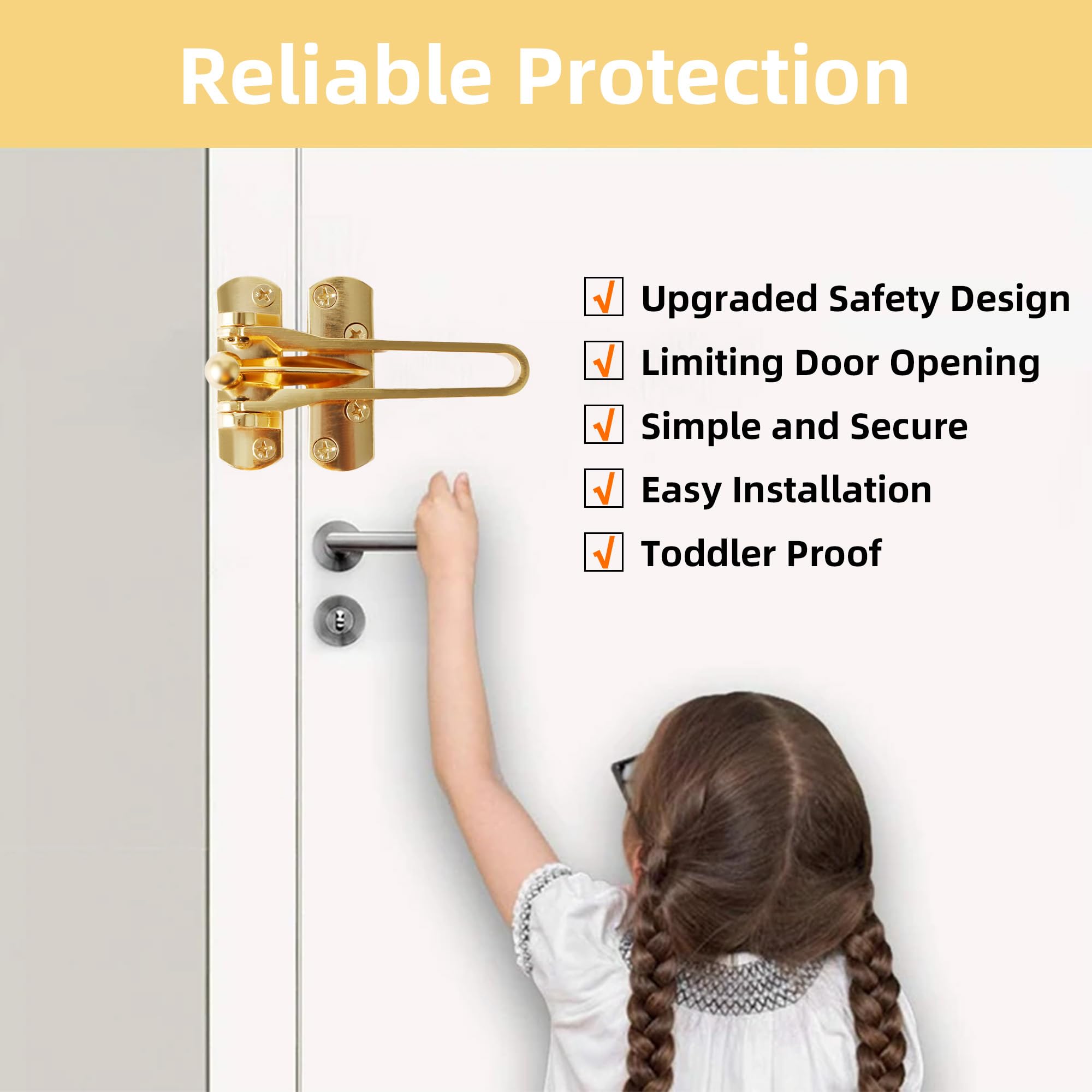
A lock provides primary security by using a solid metal bolt to physically prevent a door from opening, whereas a latch is a spring-loaded mechanism designed primarily to hold a door closed for privacy or convenience. For maximum security on exterior doors, a deadbolt lock is essential, as latches are vulnerable to simple bypass techniques.
Understanding the fundamental differences between a lock and a latch is critical for any homeowner or property manager looking to upgrade their physical security. While these terms are often used interchangeably in casual conversation, they represent two distinct mechanical functions. In the context of 2026 home security standards, relying on the wrong mechanism for an entry point can leave your property significantly more vulnerable to forced entry. This guide explores the technical specifications, security ratings, and practical applications of both locks and latches to help you make an informed decision for your door hardware.
Defining the Latch: Convenience and Closure
A latch is a type of mechanical fastener that joins two objects—in this case, the door and the door frame—while allowing for their regular separation. The most common form found in residential settings is the spring latch. This mechanism features a beveled (angled) metal bolt that is held in the extended position by a spring. When you turn the door handle or close the door, the spring compresses, allowing the bolt to retract. Once the door is fully shut, the spring pushes the bolt into the strike plate hole in the frame, holding the door in place.
The primary purpose of a latch is not high-level security, but rather operational convenience. Latches keep doors from swinging open due to drafts or minor pressure. Because the bolt is beveled, the door can be "slammed" shut without manually turning the handle; the angle of the bolt allows it to retract automatically upon contact with the strike plate. However, this very feature is what makes a standard latch a poor choice for security. The spring-loaded nature means that if an intruder can apply pressure to the spring (using a tool like a credit card or a screwdriver), they can often retract the bolt and open the door without a key.
The Deadlocking Latch Exception
It is important to note the "deadlocking plunger" or "deadlatch." This is a smaller, secondary pin found on many modern entry-way latches. When the door is closed correctly, this plunger is depressed against the strike plate, which mechanically "deadlocks" the main latch bolt so it cannot be pushed back with a credit card. While this significantly improves the security of a latch, it is still not a substitute for a dedicated deadbolt.
Defining the Lock: The Barrier of Resistance
Unlike a latch, a lock—specifically a deadbolt—does not rely on a spring to stay in place. A deadbolt lock uses a solid metal cylinder (the bolt) that must be manually extended or retracted using a key, a thumbturn, or an electronic motor. Because there is no spring-loaded mechanism holding the bolt out, it cannot be "shimmied" or "loided" (the technical term for the credit card trick).
In 2026, the standard for residential exterior security remains the Grade 1 or Grade 2 deadbolt. The bolt typically extends at least one inch into the door frame, often reinforced by a heavy-duty strike plate and long mounting screws that anchor into the structural studs of the house. This creates a rigid physical connection that requires immense force to overcome. While a latch might fail under a single heavy kick, a properly installed deadbolt distributes that force across the door's core and the building's framing.

Technical Comparison: Lock vs. Latch
To better understand which mechanism is appropriate for your specific needs, we must compare them across several performance metrics, including physical resistance, ease of use, and typical application.
| Feature | Spring Latch | Deadbolt Lock | Mortise Lock (Hybrid) |
|---|---|---|---|
| Mechanism | Spring-loaded, beveled bolt | Manually thrown solid bolt | Combined latch and bolt |
| Primary Goal | Privacy and closure | High-level security | Comprehensive entry control |
| Bypass Resistance | Low (Vulnerable to loiding) | High (Cannot be shimmied) | High (Heavy-duty housing) |
| Kick Resistance | Low to Moderate | Very High | Exceptional |
| Common Use | Interior doors, bedrooms | Exterior entry doors | Commercial & High-end homes |
| ANSI Rating | Typically Grade 3 | Grade 1 or 2 | Grade 1 |
| Operation | Automatic upon closing | Manual (Key or Thumbturn) | Mixed |
Security Vulnerabilities: Why Latches Fail
The primary reason a latch is insufficient for exterior security lies in its mechanical geometry. Because the bolt is angled to facilitate easy closing, there is a gap between the door and the frame where that angle is exposed. An intruder can insert a thin, flexible piece of plastic or metal to catch the bevel and force the bolt back into the housing.
Furthermore, latches are often made of softer metals or alloys like zinc to keep manufacturing costs low and allow for the complex shapes required for spring operation. In contrast, high-quality locks are manufactured from hardened steel or brass. In a forced-entry scenario, a zinc latch bolt can actually shear or snap under pressure.
The Role of ANSI/BHMA Ratings
When evaluating locks and latches in 2026, you should look for the Builders Hardware Manufacturers Association (BHMA) ratings, which are accredited by the American National Standards Institute (ANSI).
- Grade 1: The highest level of security. Tested to withstand 10 strikes of 75 foot-pounds of force and 1,000,000 cycles.
- Grade 2: Intermediate security, suitable for most residential applications.
- Grade 3: Basic security, often found on interior latch sets.
A latch rarely exceeds Grade 2 or 3, whereas a high-security deadbolt should always be Grade 1.
The Mortise Lock: The Best of Both Worlds
For those seeking the ultimate in door security, the mortise lock offers a hybrid solution. A mortise lock is a large, rectangular hardware set that is installed into a deep pocket (the mortise) carved into the edge of the door. This system contains both a latch and a deadbolt within a single heavy-duty metal housing.
The advantage of a mortise lock is structural. Because the entire mechanism is encased in a steel box inside the door itself, it is incredibly difficult to bypass or break. In many high-end residential and commercial buildings in 2026, mortise locks are the standard because they provide the "slam-to-close" convenience of a latch with the uncompromising security of a deadbolt. However, they are significantly more expensive and require professional installation compared to standard bored-hole locks.
Smart Locks and Latches in 2026
The rise of smart home technology has blurred the lines between locks and latches, but the physical security rules remain the same. A "Smart Latch" (often seen as a smart handle-set) still relies on a spring mechanism. These are popular for interior home offices or short-term rental room doors.
However, for a front door, a "Smart Deadbolt" is the only recommended electronic option. These devices replace the traditional thumbturn with a motorized bolt. Even if the smart features (like Wi-Fi or Bluetooth) are hacked, the physical security of the door still depends on the physical bolt. It is a common mistake to assume that because a latch is "smart," it is secure. A smart latch is still a latch and remains vulnerable to physical bypass methods like prying or loiding.
Installation Matters: Reinforcing the System
Even the strongest Grade 1 deadbolt lock is useless if it is installed into a weak frame. The "lock vs. latch" debate often ignores the third critical component: the strike plate.
A standard latch strike plate is usually held in place by 3/4-inch screws that only grip the thin wooden door jamb. A single kick can splinter this wood, regardless of whether you have a lock or a latch. For a lock to provide true security, it must be paired with a reinforced strike plate and 3-inch screws that bypass the door jamb and anchor directly into the 2x4 or 2x6 wall studs. This ensures that the force of an attempted entry is transferred to the structure of the house rather than the decorative trim.
When to Use Each: Practical Recommendations
Security is about layers. You do not need a Grade 1 deadbolt on your bathroom door, and you should never rely on a simple privacy latch for your back door.
Use a Latch For:
- Interior Bedrooms and Bathrooms: Where privacy is the goal, not preventing a determined intruder.
- Closets and Pantries: To keep doors closed neatly.
- Interconnecting Doors: In commercial settings where fire codes require "latching" but not necessarily "locking" during business hours.
Use a Lock For:
- Front and Back Entry Doors: A deadbolt is non-negotiable here.
- Garage-to-House Doors: A common entry point for burglars; these require the same security as a front door.
- Storage Sheds with Valuables: Any exterior structure housing expensive tools or equipment.
Common Mistakes in Door Security
- Relying on the "Lock" in the Handle: Most entry handle-sets have a "lock" button. This is technically a locking latch, not a deadbolt. It is easily bypassed and should only be used as a secondary measure.
- Incorrect Strike Plate Alignment: If the deadbolt does not fully extend into the frame, it cannot "deadlock." Many homeowners force their door shut and turn the lock only halfway; in this state, the bolt can be pushed back just like a latch.
- Ignoring the Door Material: A high-security lock on a hollow-core door is a waste of resources. The door will fail long before the lock does.
Frequently Asked Questions
Can a latch be as secure as a lock?
Generally, no. While high-security "night latches" (often called Yale locks in some regions) exist, they are still fundamentally more vulnerable to prying than a deadbolt that is deeply recessed into the door frame. A latch's primary weakness is its spring-loaded bolt, which can be manipulated.
Is a "deadlocking latch" enough for a front door?
While a deadlocking latch (one with a plunger pin) is much better than a simple spring latch, it is still not considered sufficient for primary exterior security. It lacks the physical mass and depth of a true deadbolt. Most insurance companies and security experts recommend a deadbolt in addition to any latching handle-set.
What is the difference between a privacy latch and a passage latch?
A passage latch has no locking mechanism at all and is used for hallways or closets. A privacy latch has a button or thumbturn that prevents the outside handle from turning, but it usually has an emergency release hole on the outside. Neither is intended for security against intruders.
Do smart locks use latches or bolts?
Smart locks come in both varieties. Most "retrofit" smart locks (like August or Yale) attach to your existing deadbolt, keeping the bolt mechanism intact. "Integrated" smart locks replace the entire handle and may use either a latch or a bolt. Always ensure your primary entry smart lock is a deadbolt.
Why does my deadbolt feel like a latch when I turn it?
If your deadbolt is easy to "flick" open and closed, it may be a high-quality, well-lubricated mechanism. However, if it springs back on its own, it is likely a rim latch or a night latch. A true deadbolt requires a deliberate manual turn to move the bolt in either direction and should stay in place once thrown.
Final Recommendation
For the highest level of security in 2026, always use a Grade 1 or Grade 2 deadbolt lock on all exterior doors. Use the latch only for the convenience of keeping the door closed when the lock is disengaged. If you are building a new home or performing a major renovation, consider installing mortise locks on primary entrances to combine the benefits of both mechanisms into a single, high-durability unit. Ensure that every lock is installed with reinforced strike plates and 3-inch screws to provide the structural integrity required to withstand forced entry.
Image Gallery
Select an image to open it in a new tab.
Akira Tanaka
International Academic Trends Correspondent
