How Ronald Acuña Jr.’s Injury Impacts the Atlanta Braves: Roster Strategy, Offense, and Long-Term Outlook

Ronald Acuña Jr.’s season-ending left ACL tear in May 2024 fundamentally altered the trajectory of the Atlanta Braves, stripping the franchise of its reigning National League Most Valuable Player and lead-off engine. The injury disrupted Atlanta’s high-powered offensive system, exposed critical outfield depth vulnerabilities, and forced major front-office roster adjustments that carry lasting implications for the team's long-term competitive strategy.
The Context of the Injury: A Devastating Recurrence
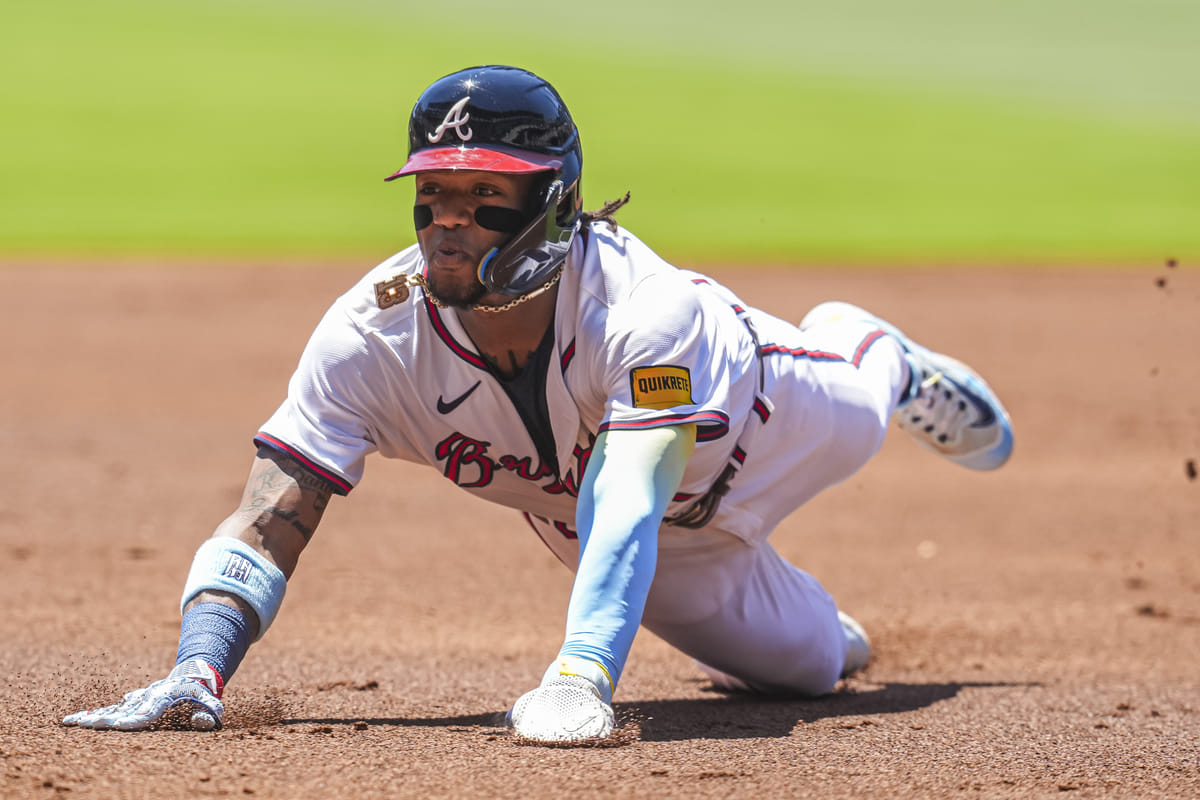
On May 26, 2024, during a contest against the Pittsburgh Pirates, Ronald Acuña Jr. suffered a non-contact injury while non-chalantly tearing back toward second base on a misjudged base-running read. Subsequent MRI scans confirmed a complete tear of the anterior cruciate ligament (ACL) in his left knee, requiring season-ending reconstruction surgery.
This injury marked a troubling milestone for the superstar outfielder. Just three years prior, in July 2021, Acuña suffered a complete ACL tear in his right knee while attempting a track-down catch at the warning track in Miami. Experiencing major structural knee reconstructions on both legs before the age of 27 presents unprecedented physical challenges for an elite player whose game relies heavily on explosive acceleration, sprint speed, and dynamic defensive range.
When healthy, Acuña is a generational catalyst. In his historic 2023 campaign, he established the MLB 40-70 club—blasting 41 home runs while stealing 73 bases—a performance that earned him unanimous NL MVP honors and served as the foundation of Atlanta's record-setting offense. Losing a player of that caliber creates a compounding deficit across multiple operational areas of a major league baseball team.
Offensive Disruption: Quantifying the Loss at the Top of the Order
Replacing an MVP-caliber lead-off hitter is virtually impossible within modern baseball. Acuña’s presence at the top of the batting order provided the Atlanta Braves with an immediate tactical advantage every game.
- High On-Base Percentage + Elite Sprint Speed / SB Threat
- Distracts Opposing Pitchers & Alters Pitch Selection
- Creates Premium Fastballs for Core Sluggers (Albies, Riley, etc.)
1. Loss of Immediate Run Creation and Pitcher Stress
Acuña’s ability to get on base at a high rate while threatening to steal on any pitch fundamentally changes how opposing pitchers approach the first inning. Pitchers are forced to throw more fastballs in the zone to prevent walks, which directly benefits subsequent hitters like Austin Riley, Matt Olson, and Ozzie Albies. Without Acuña forcing uncomfortable pitch sequences, opposing starters comfortably execute their primary game plans, reducing overall run-manufacturing efficiency for the entire lineup.
2. Lineup Ripple Effects and Slot Misalignment
Following Acuña's departure, Braves manager Brian Snitker was forced to experiment continuously with the lead-off spot. Options included Jarred Kelenic, Michael Harris II, Whit Merrifield, and Ozzie Albies. Moving lower-order batters into the top spot often exposed them to tougher pitching matchups, while simultaneously thinning out the bottom third of the order. The resulting lack of length in the lineup allowed opposing managers to navigate the Braves' order with far less stress during high-leverage late-inning scenarios.
3. Power-Speed Metric Reduction
In 2023, the Braves tied the single-season MLB team home run record (307 HRs) and posted a collective slugging percentage not seen in decades. Acuña accounted for a major share of the team's extra-base hits and over a third of their total stolen bases. His absence severely curtailed Atlanta's ability to score without relying strictly on multi-run home runs, turning what was once a dynamic, multi-dimensional offense into a more static, hit-or-miss group.

Outfield Defense and Roster Restructuring
Acuña’s absence did not merely leave a void in the batter’s box; it disrupted the Braves' outfield defensive alignment and forced General Manager Alex Anthopoulos into aggressive mid-season transactions.
Defensive Alignment Challenges
While Acuña’s defensive metrics in right field had fluctuated in the years following his 2021 right ACL surgery, his arm strength remained an elite deterrent against advancing runners. Replacing him required shifting defensive responsibilities:
- Right Field Coverage: Players like Adam Duvall and Ramon Laureano were tasked with taking over right field duties, providing serviceable defense but lacking Acuña's raw throwing tool and range.
- Center Field Stress: With right field experiencing diminished range, center fielder Michael Harris II was forced to cover additional ground toward the right-center alley, increasing his physical burden prior to his own stint on the injured list in mid-2024.
Front-Office Pivot and Trade Deadline Activity
Faced with a mounting injury list that included both Acuña and ace pitcher Spencer Strider, the Braves' front office had to decide whether to pivot toward rebuilding or aggressively patch the roster. Recalling their successful 2021 trade deadline strategy—where Anthopoulos acquired Jorge Soler, Eddie Rosario, Adam Duvall, and Joc Pederson following Acuña's first ACL injury—the front office again sought external outfield reinforcements.
The Braves brought back 2021 World Series MVP Jorge Soler from the San Francisco Giants to add right-handed power, while also signing veteran free agents like Whit Merrifield and Ramon Laureano to stabilize the outfield rotation and bench depth. While these additions restored baseline competitiveness, they represented short-term fixes rather than true structural replacements for a generational talent.
Strategic Shift: Performance Metrics With and Without Acuña
The functional impact of losing Ronald Acuña Jr. can be measured across multiple performance categories, illustrating how the team's tactical approach shifted out of necessity.
| Performance Metric / Area | With Ronald Acuña Jr. (Peak Operational Baseline) | Post-Injury Adjustment (Roster Impact) | Strategic Consequence for Braves |
|---|---|---|---|
| Lead-Off Production (OBP / OPS) | Elite (.400+ OBP / .900+ OPS potential) | Volatile (.300–.330 OBP across multiple replacements) | Lower leverage opportunities for heart-of-the-order sluggers |
| Base-Stealing Aggression | High threat (70+ stolen base capability) | Moderate to Conservative | Reliance on situational hitting rather than advancing via steal |
| Pitcher Pitch Selection | High percentage of fastballs seen by top of order | Elevated rate of breaking/off-speed pitches thrown to Braves | Increased strikeout rates and reduced early-inning rallies |
| Outfield Arm Strength & Deterrence | Elite arm strength in Right Field (95+ mph throws) | Average to Above-Average arm capability | Opposing runners take aggressive turns and advance more freely |
| Roster Depth & Flexibility | Deep bench, set daily positions | Heavy reliance on platoon splits and waiver-wire pickups | Reduced bench utility late in close contests |
Long-Term Implications for 2025, 2026, and Beyond
As the Braves navigate the mid-2020s, the long-term ramifications of Acuña suffering two distinct ACL reconstructions on opposing knees will shape franchise decision-making across several key operational areas.
- Workload Management: Increased Designated Hitter (DH) days
- Base-Running Style: Shift from volume stealing to quality
- Defensive Positioning: Conservative RF depth & outfield range
- Financial Planning: Retaining high-grade outfield depth
1. Workload and Positional Management (The DH Factor)
The most immediate structural change facing the Braves is how Acuña’s games are distributed between right field and the Designated Hitter (DH) spot. To protect his surgically repaired knees over the remaining length of his contract, Atlanta must strategically reduce his outfield innings:
- Increased DH Usage: Acuña will likely see a significant increase in DH starts to minimize high-impact defensive breaks, sudden stops, and warning-track collisions.
- Roster Flexibility Limitations: Utilizing Acuña regularly at DH reduces manager Brian Snitker's ability to use the spot to give other core veterans (such as Marcell Ozuna or Matt Olson) half-days off from the field.
2. Adaptation of Base-Running Style
Speed and fearlessness on the basepaths have been core components of Acuña’s identity. However, executing 70+ stolen base attempts per season carries inherent risk for an athlete with bilateral ACL reconstructions. The Braves' medical and coaching staff must encourage a more selective, calculated approach to stolen bases. Transitioning from high-volume base-stealing to high-efficiency situational running will preserve Acuña's lower body while maintaining a baseline threat on the basepaths.
3. Financial and Roster Construction Strategy
Acuña’s highly team-friendly contract extension—signed early in his career—runs through 2026 with club options for 2027 and 2028. While this provides the Braves with exceptional financial value, the front office can no longer assume Acuña will play 155+ games in right field every season. Consequently, General Manager Alex Anthopoulos must allocate payroll toward maintaining premium, everyday-capable outfield depth rather than relying on minimum-salary platoon options to fill out the roster.
4. Franchise Mindset and Postseason Margins
The Braves built their championship culture around continuous regular-season dominance, winning six consecutive NL East titles from 2018 through 2023. Acuña's injury highlighted how narrow the margin for error becomes when an anchor player is removed. To remain an elite contender in the National League alongside powers like the Los Angeles Dodgers and Philadelphia Phillies, the Braves must construct a more resilient overall roster that does not rely exclusively on one player's superhuman health.
Managing Medical Recoveries in Elite Athletes
Rehabilitating a second ACL tear involves distinct physical and psychological hurdles compared to a primary reconstruction. Medical consensus in sports orthopedics highlights several critical factors during this process:
- Graft Selection and Healing: Surgeons must evaluate whether to use autografts (such as patellar tendon or hamstring tendon) or allografts. For elite, high-velocity athletes, patellar tendon autografts remain the gold standard due to long-term stability.
- Neuromuscular Retraining: Achieving full functional movement requires extensive reconditioning of the kinetic chain. Muscle asymmetry between the right leg (repaired in 2021) and the left leg (repaired in 2024) must be equalized to prevent compensatory injuries to the hips, hamstrings, or groin.
- Psychological Readiness: Returning to game speed requires overcome baseline hesitation when cutting, deceleration, or sliding. Regaining complete trust in both knees is often the final hurdle before an athlete recovers their peak instinctual reactivity.
FAQs
How does Acuña’s 2024 ACL injury compare to his 2021 ACL injury?
In July 2021, Acuña tore the ACL in his right knee while attempting a jumping catch in Miami. In May 2024, he tore the ACL in his left knee while stepping back on a base-running maneuver in Pittsburgh. Both required full reconstructive surgery and forced him to miss the remainder of their respective seasons.
Will Ronald Acuña Jr. remain a lead-off hitter upon returning?
While Acuña’s natural power and high on-base percentage make him an ideal lead-off candidate, the Braves may occasionally adjust his lineup positioning to manage physical exertion. However, given his historic success at the top of the order, he is expected to remain Atlanta's primary lead-off hitter when playing full-time.
How did the Braves attempt to replace Acuña during the 2024 season?
The Braves utilized a combination of internal options (Jarred Kelenic, Adam Duvall, Michael Harris II) and external mid-season acquisitions (Jorge Soler, Ramon Laureano, Whit Merrifield). While these players provided necessary depth, no single player could replicate Acuña’s combined offensive output and base-running threat.
Will Acuña transition permanently to Designated Hitter (DH)?
A complete, permanent transition to DH is unlikely while Acuña is in his late 20s, as his outfield throwing arm remains a clear defensive asset. However, the Braves will likely increase his frequency at DH to reduce wear and tear on his knees, balancing his outfield starts throughout the 162-game season.
Strategic Recommendation for Following Braves Roster Developments
To evaluate how the Atlanta Braves navigate the post-injury era with Ronald Acuña Jr., track the following operational indicators:
- Outfield Innings vs. DH Splits: Monitor spring training lineups and regular-season rotation schedules to see how aggressively the coaching staff limits Acuña's outfield workload.
- Sprint Speed and Metric Tracking: Utilize Statcast data (available via Baseball Savant) to observe whether Acuña maintains his top-percentile sprint speed and acceleration metrics post-surgery.
- Bench and Outfield Payroll Allocation: Track front-office transactions via MLB.com Transactions to verify if the organization continues to invest in high-caliber third and fourth outfielders to shield against potential rotational absences.
Image Gallery
Select an image to open it in a new tab.


Simon Caldwell
Enterprise Technology and Systems Editor
