
While a 20-cup rice cooker may seem like an efficient solution for meal prepping or large families, it is rarely worth the investment for the average household. These oversized appliances suffer from significant heat distribution issues when cooking smaller batches, occupy excessive counter space, and are often more difficult to clean and maintain than standard 5.5-cup or 10-cup models.
Understanding the "Cup" Measurement Discrepancy
Before evaluating the utility of a 20-cup rice cooker, it is essential to understand what a "cup" actually represents in the world of kitchen appliances. Most rice cooker manufacturers, particularly those based in Asia like Zojirushi, Tiger, and Cuckoo, use the traditional Japanese measurement known as a gō.
One gō is approximately 180 milliliters (about 6.1 ounces), which is significantly smaller than a standard U.S. measuring cup (240 milliliters). Therefore, a "20-cup" cooker does not actually hold 20 standard U.S. cups of dry rice. Furthermore, brands often market their products based on cooked rice capacity rather than dry rice capacity. A "20-cup cooked rice" machine is actually a 10-cup dry rice machine. Conversely, a true 20-cup dry rice machine is a massive commercial-grade appliance.
In the 2026 market, many consumers still fall into the trap of purchasing based on the largest number available, assuming it offers better value. However, the volume of rice produced by a true 20-cup (dry) cooker can feed up to 40 to 60 people in a single sitting. For a standard family of four, this capacity is not just unnecessary—it is a functional hindrance.
The Minimum Capacity Trap and Rice Quality
The primary reason a 20-cup rice cooker fails the average user is the minimum threshold requirement. Rice cookers are engineered to perform optimally when they are filled to at least 25% to 50% of their total capacity.
When you attempt to cook a small amount of rice—such as two or three cups—in a 20-cup vessel, several technical failures occur:
- Heat Distribution: The heating element at the bottom of a large cooker is designed to penetrate a thick layer of rice and water. With a shallow layer, the heat is often too intense for the volume, leading to a "crust" or scorched bottom (often called socarrat in paella, but generally undesirable in standard steamed white rice).
- Steam Circulation: Proper rice cooking relies on a specific ratio of headspace to grain. In an oversized pot, the steam disperses too quickly into the vast empty space, leading to unevenly cooked grains that are often dry on top and mushy on the bottom.
- Sensor Inaccuracy: Modern rice cookers use thermal sensors to detect when water has been fully absorbed. In a 20-cup machine, the sensors may struggle to accurately read the temperature of a thin layer of rice, causing the machine to switch to "Keep Warm" mode prematurely or too late.
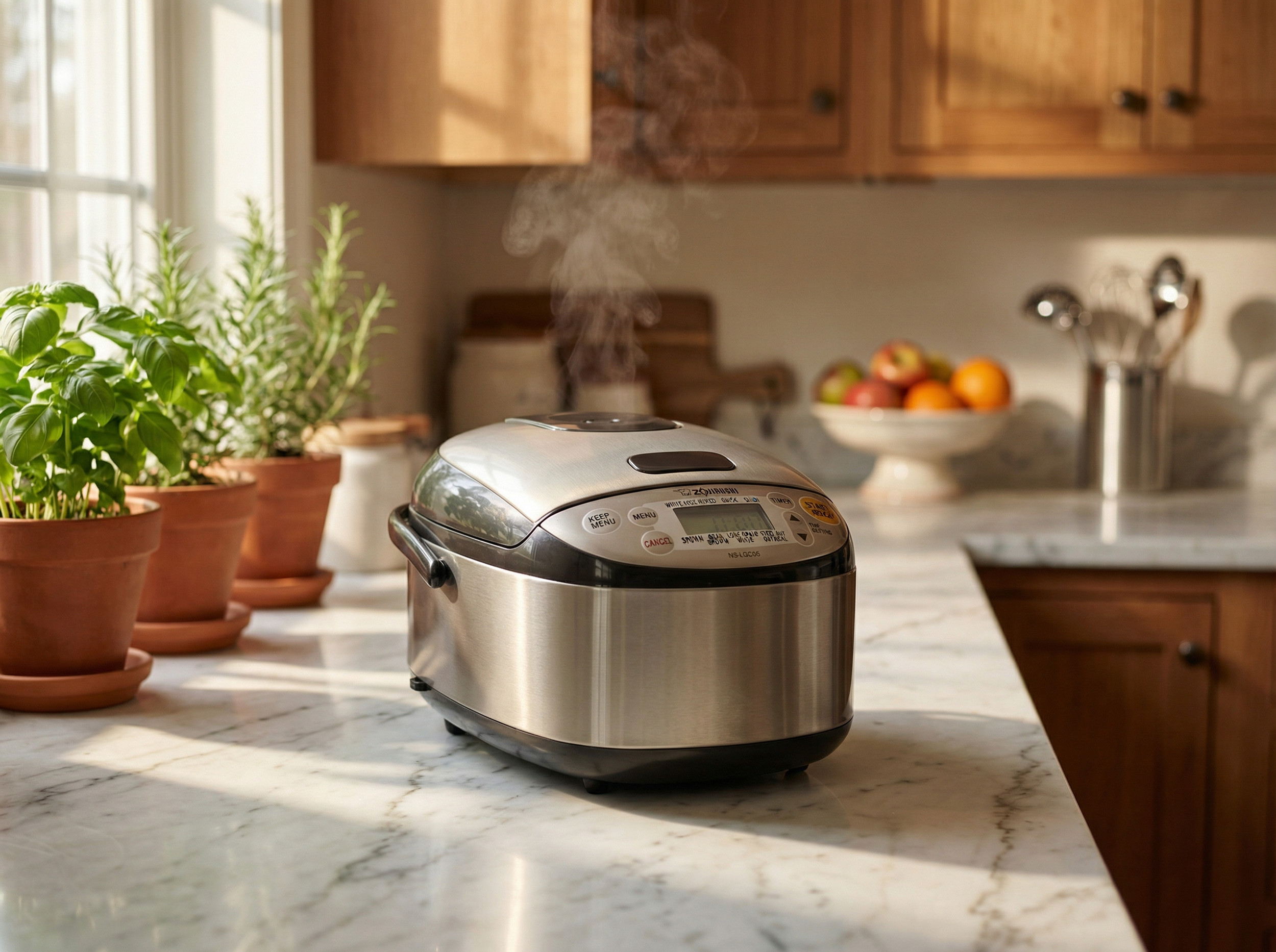
Physical Footprint and Kitchen Ergonomics
As of 2026, kitchen real estate remains at a premium for most homeowners. A 20-cup rice cooker is a massive appliance that typically measures 12 to 15 inches in both diameter and height.
Countertop Dominance
A machine of this size cannot easily be tucked into a corner. It requires a significant dedicated space, often preventing the use of other essential appliances like air fryers or espresso machines. Because of its height, it may not even fit under standard kitchen upper cabinets, forcing users to operate it on a kitchen island or a separate utility cart.
Storage Difficulties
Most standard kitchen cabinets are not designed to house an appliance with the circumference of a 20-cup rice cooker. This leads to the "out of sight, out of mind" problem; if the appliance is too heavy or bulky to move easily, it is rarely used. Weighing significantly more than its smaller counterparts, the physical strain of moving a commercial-sized cooker from a lower cabinet to the counter is a deterrent to daily cooking.
The Cleaning and Maintenance Burden
The "worth" of an appliance is often measured by the time it saves versus the time it requires for maintenance. A 20-cup rice cooker fails this ratio for the following reasons:
- The Sink Problem: The inner cooking bowl of a 20-cup model is often too large to fit comfortably in a standard double-basin kitchen sink. Scrubbing a bulky, heavy non-stick or stainless steel pot without hitting the faucet or splashing water across the counter is a constant frustration.
- Dishwasher Incompatibility: Even if the bowl is labeled as dishwasher safe, it will likely occupy the entire bottom rack of a standard dishwasher, leaving no room for plates or cutlery.
- The Lid and Gasket: Large cookers often have complex inner lids and steam vents that must be disassembled and cleaned to prevent mold and "old rice" odors. The sheer surface area of these components makes the cleaning process twice as long as that of a 5-cup model.
Commercial vs. Consumer Build Quality
There is a distinct divide in the manufacturing of 20-cup units. Most machines at this capacity are "commercial" models. While "commercial" sounds like it might imply higher quality, for the home user, it often means fewer features.
Many 20-cup commercial cookers use a simple "one-touch" mechanical switch. They lack the Fuzzy Logic or Induction Heating (IH) technology found in premium 5.5-cup or 10-cup consumer models. Fuzzy Logic allows a cooker to make micro-adjustments to the temperature and cooking time based on the type of rice and environmental conditions. Without this, the 20-cup cooker is essentially just a large, blunt heating element that lacks the nuance required for high-quality brown rice, GABA rice, or porridge.
| Feature | 5.5-Cup Premium (Standard) | 20-Cup Commercial/Large |
|---|---|---|
| Typical Servings | 1–10 people | 15–40 people |
| Technology | Fuzzy Logic / Induction | Simple Mechanical / Thermal |
| Versatility | Excellent (Sushi, Brown, Steel-cut Oats) | Limited (White rice focused) |
| Counter Space | Moderate (approx. 9"x12") | High (approx. 15"x15"+) |
| Energy Usage | Low to Moderate | High (requires heavy-duty draw) |
| Cleaning Effort | 2–5 minutes | 10–15 minutes |
Energy Inefficiency and Electrical Requirements
Heating a 20-cup vessel requires significantly more wattage than a standard household model. If you are only cooking 2 cups of rice in a 20-cup machine, you are wasting a substantial amount of electricity to heat the large internal cavity and the heavy-duty heating element.
In some older homes, running a commercial-grade 20-cup rice cooker on the same circuit as a microwave or toaster can trip a circuit breaker. These machines are designed for commercial kitchens with dedicated high-amperage circuits, not necessarily for a standard 2026 residential kitchen.
When Is a 20-Cup Rice Cooker Actually Worth It?
While rarely worth it for individuals or standard families, there are specific scenarios where this appliance is the correct choice:
- Religious or Community Centers: For weekly gatherings where large volumes of grain are served simultaneously.
- Small Catering Businesses: For those operating out of a home kitchen who need to produce consistent bulk quantities.
- Extreme Meal Prepping: If a user cooks 10+ dry cups of rice once a week to freeze in individual portions (though many argue that fresh rice from a smaller cooker tastes significantly better).
- Multi-Generational Households: Homes with 10 or more active adults eating rice at every meal.
Better Alternatives for High-Volume Needs
If you occasionally host large parties but usually cook for a small group, there are better strategies than buying a 20-cup monster:
- The 10-Cup Premium Cooker: A 10-cup (dry) rice cooker is the "sweet spot" for large families. It can handle up to 20 cups of cooked rice, which is enough for a party of 15, yet it still performs reasonably well when cooking as little as 3 cups of rice.
- The Two-Cooker Strategy: Buying two high-quality 5.5-cup cookers is often more expensive but provides much more flexibility. You can cook white rice in one and brown rice or quinoa in the other simultaneously.
- The Instant Pot / Multicooker: A 6-quart or 8-quart multicooker can handle large batches of rice when needed but serves multiple other purposes (pressure cooking, slow cooking, sautéing), making the "storage cost" more justifiable.
Frequently Asked Questions
Can I cook just 2 cups of rice in a 20-cup cooker?
Technically, yes, but it is not recommended. The rice will likely be unevenly cooked, dry, or stuck to the bottom. Most large cookers have a minimum requirement of at least 4 or 5 cups to function correctly.
What is the difference between "20-cup cooked" and "20-cup uncooked"?
This is a common marketing tactic. A "20-cup cooked" model is actually a 10-cup capacity machine (since rice roughly doubles in volume). A "20-cup uncooked" model is a massive commercial unit that produces 40+ cups of food. Always check the dry-cup capacity before purchasing.
Does a 20-cup rice cooker take longer to cook?
Yes. Because of the sheer volume of water and rice that needs to be brought to a boil, a full 20-cup load can take 45 to 60 minutes, whereas a standard 5.5-cup load in a smaller machine typically takes 20 to 30 minutes.
Are there any "Fuzzy Logic" 20-cup cookers for home use?
They are extremely rare and expensive. Most high-end brands like Zojirushi or Tiger cap their consumer "smart" models at the 10-cup (dry) size. Models larger than that usually revert to simpler, less precise heating technology.
How much dry rice does a 20-cup cooker actually hold?
If it is a true 20-cup machine, it holds 20 gō cups, which is approximately 3.6 liters of dry rice. This is enough to fill a standard large mixing bowl to the brim once cooked.
Final Recommendation
For 95% of households, a 20-cup rice cooker is an impractical purchase that will eventually be relegated to a garage shelf or a donation bin. If you frequently feed more than 10 people, consider a high-end 10-cup (dry) induction heating rice cooker. This provides the best balance of capacity, sophisticated cooking technology, and manageable cleaning. If you only occasionally host large groups, stick to a standard 5.5-cup model and use a stovetop pot or an Instant Pot as a secondary vessel for those rare occasions.
Image Gallery
Select an image to open it in a new tab.

Omar Farooq
EdTech Innovation and Virtual Pedagogy Journalist
