You must repay a Direct Unsubsidized Loan regardless of whether you complete your education, find immediate employment, or are dissatisfied with your school. Unlike subsidized loans, interest on unsubsidized loans begins to accrue the moment funds are disbursed, making proactive repayment strategies essential to prevent the total balance from growing through capitalization.
In the landscape of federal student aid, the Direct Unsubsidized Loan (sometimes referred to as a Stafford Loan) is a cornerstone of financing for both undergraduate and graduate students. However, the legal obligation to repay these funds is absolute. This guide examines the mechanics of these loans, the timeline for repayment in 2026, and the critical strategies required to manage interest accrual and avoid the long-term pitfalls of debt.
The Legal and Financial Nature of the Unsubsidized Loan
When you accept a Direct Unsubsidized Loan, you sign a Master Promissory Note (MPN). This is a legally binding document in which you promise to repay the loan principal plus all accrued interest and fees to the U.S. Department of Education. This obligation persists even if you do not graduate or if the education you received did not meet your expectations.
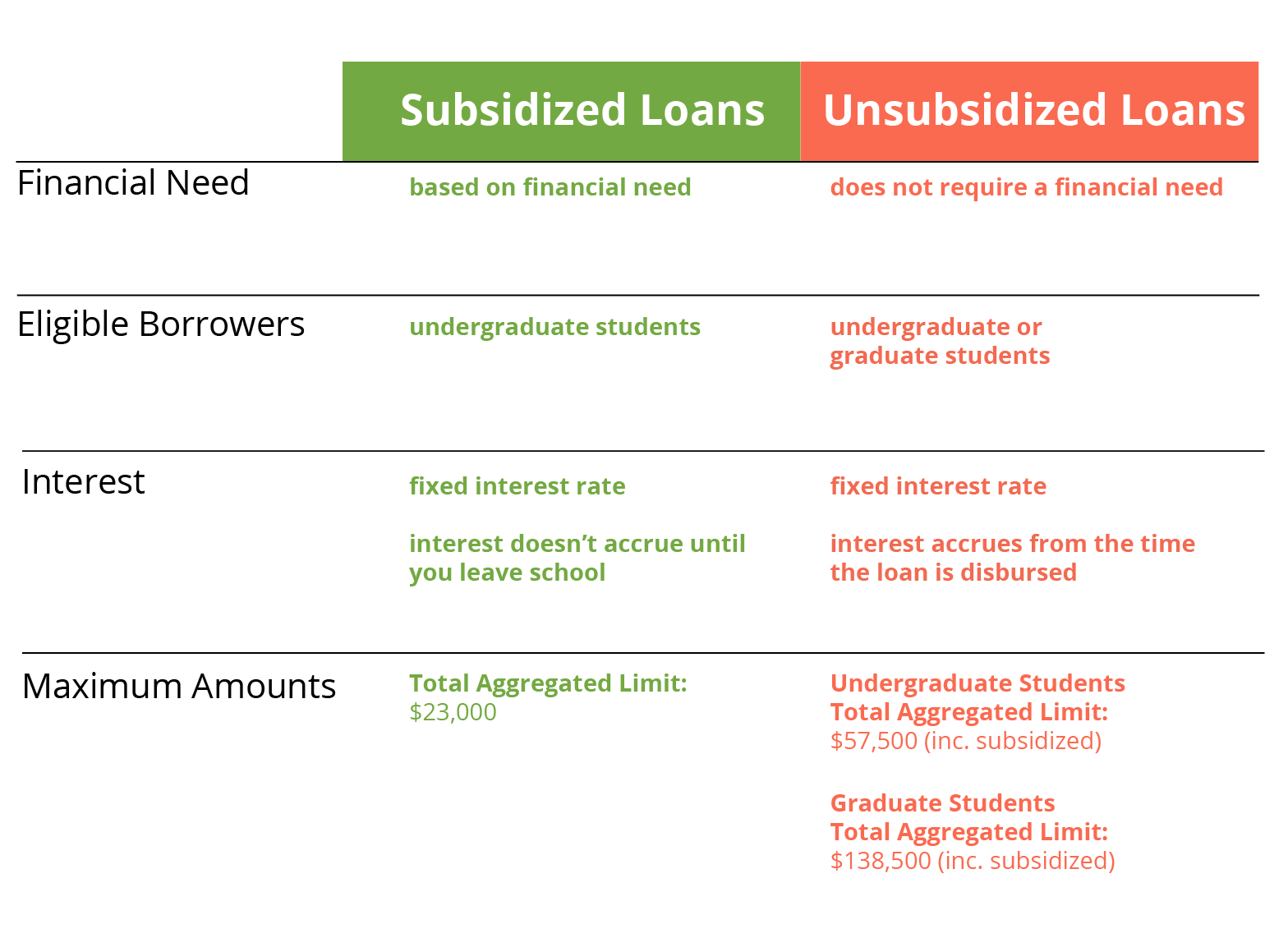
The "unsubsidized" designation is the most critical factor for borrowers to understand. While the federal government "subsidizes" (pays) the interest on Direct Subsidized Loans while a student is in school at least half-time, it does not do so for unsubsidized loans. From the day the loan servicer sends the funds to your school, interest begins to accumulate.
If you do not pay this interest while you are in school or during your grace period, the interest will be capitalized. This means the unpaid interest is added to the principal balance of your loan. Future interest is then calculated based on this new, higher principal. In essence, you begin paying interest on your interest, which significantly increases the total cost of the loan over time.
Critical Repayment Timelines and the Grace Period
For most Direct Unsubsidized Loans, you are granted a six-month grace period that begins immediately after you graduate, leave school, or drop below half-time enrollment. This period is intended to give you time to find employment and choose a repayment plan.
The 2026 Repayment Lifecycle
- Disbursement: Interest begins accruing at the fixed rate set at the time of the loan's issuance.
- In-School Status: You are not required to make payments, but interest continues to build.
- Separation: You graduate or drop below half-time enrollment.
- Grace Period: A six-month window where monthly payments are not yet due. Note: Interest continues to accrue during these six months.
- First Payment: Your first bill typically arrives within 30 to 60 days after the grace period ends.
It is a common misconception that the grace period is "interest-free." On an unsubsidized loan, the meter is always running. By making small "interest-only" payments during your time in school and during the grace period, you can prevent capitalization and save thousands of dollars over the life of the loan.

Strategic Repayment Plans for 2026
The U.S. Department of Education offers several repayment plans to ensure that borrowers can meet their obligations. Choosing the right plan depends on your current income, your total debt load, and your long-term financial goals.
1. The Standard Repayment Plan
This is the default plan for all federal borrowers. It consists of fixed monthly payments over a 10-year term. While the monthly payments are higher than under other plans, the Standard Plan is the most cost-effective in the long run because it minimizes the total interest paid.
2. Graduated Repayment Plan
Under this plan, payments start low and increase every two years. The repayment term is still 10 years. This is often preferred by recent graduates who expect their income to rise steadily but need lower initial monthly obligations. However, because you pay less principal in the early years, you will ultimately pay more in interest than under the Standard Plan.
3. Extended Repayment Plan
Available to borrowers with more than $30,000 in outstanding Direct Loans, this plan extends the repayment term to 25 years. You can choose between fixed or graduated payments. While this significantly lowers the monthly payment, it dramatically increases the total interest paid over the life of the loan.
4. Income-Driven Repayment (IDR) Plans
IDR plans, including the Saving on a Valuable Education (SAVE) Plan (and its predecessors like IBR and PAYE), base your monthly payment on your discretionary income and family size.
- Payment Caps: Payments may be as low as $0 per month for those under specific income thresholds.
- Forgiveness: Any remaining balance is typically forgiven after 20 or 25 years of qualifying payments.
- Tax Implications: As of 2026, borrowers should consult the latest IRS guidelines regarding whether forgiven amounts are treated as taxable income, as temporary federal exemptions have shifted in recent years.
| Repayment Plan | Term Length | Monthly Payment Basis | Best For |
|---|---|---|---|
| Standard | 10 Years | Fixed amount | Minimizing total interest cost. |
| Graduated | 10 Years | Starts low, increases every 2 years | Borrowers expecting steady raises. |
| Extended | Up to 25 Years | Fixed or Graduated | Borrowers with >$30k debt needing lower payments. |
| SAVE / IDR | 20–25 Years | Percentage of discretionary income | Borrowers with high debt relative to income. |
Managing Interest and Capitalization
Because you must repay an unsubsidized loan with its full interest, understanding the daily interest formula is vital for financial planning. Federal student loans use a simple daily interest calculation:
(Outstanding Principal Balance × Interest Rate Factor) = Daily Interest Amount
The "Interest Rate Factor" is determined by dividing the loan's annual interest rate by the number of days in the year. If you have a $10,000 loan at a 5% interest rate, you are accruing approximately $1.37 in interest every single day.
To minimize the impact:
- Pay Interest Monthly: Even while in school, try to pay off the interest that accrues each month. This prevents the "interest on interest" cycle of capitalization.
- Target High-Interest Loans: If you have multiple unsubsidized loans, use the "debt avalanche" method by applying extra payments to the loan with the highest interest rate first.
- Automatic Debit: Most federal loan servicers offer a 0.25% interest rate deduction if you enroll in auto-pay. This reduces the daily interest accrual and ensures you never miss a payment.
The Role of Loan Servicers
The U.S. Department of Education does not collect your payments directly. Instead, they assign your loan to a third-party loan servicer (such as Nelnet, Mohela, or Aidvantage). Your servicer is your primary point of contact for:
- Changing repayment plans.
- Applying for deferment or forbearance.
- Processing payments.
- Verifying your loan balance and interest rates.
It is your responsibility to keep your contact information updated with your servicer. Failing to receive a bill is not a legal excuse for missing a payment. In 2026, most servicers utilize mobile apps and digital portals, making it easier to track the exact moment interest is added to your account.
Consequences of Non-Repayment
Federal student loans are among the most strictly enforced debts in the United States. Unlike consumer credit card debt or medical bills, student loans are extremely difficult to discharge in bankruptcy.
Delinquency vs. Default
- Delinquency: This begins the first day after you miss a scheduled payment. Your servicer will report this to the three major credit bureaus after 90 days, which can severely lower your credit score.
- Default: For most federal loans, you enter default after 270 days of non-payment.
The consequences of default are severe and include:
- Treasury Offset: The government can seize your federal tax refunds and Social Security benefits.
- Wage Garnishment: The Department of Education can order your employer to withhold up to 15% of your disposable pay.
- Loss of Eligibility: You lose access to further federal student aid and lose the ability to use deferment, forbearance, or IDR plans.
- Collection Fees: You may be charged significant fees (up to 15-25% of the total balance) to cover the costs of the collection process.
Loan Forgiveness and Discharge Options
While you must repay the loan under normal circumstances, there are specific federal programs that allow for the discharge or forgiveness of Direct Unsubsidized Loans.
Public Service Loan Forgiveness (PSLF)
If you work full-time for a government or non-profit organization, you may be eligible for PSLF. After making 120 qualifying monthly payments under an IDR plan while working for a qualifying employer, the remaining balance of your unsubsidized loans is forgiven tax-free.
Teacher Loan Forgiveness
Teachers who work full-time for five complete and consecutive academic years in a low-income school or educational service agency may be eligible for forgiveness of up to $17,500 on their Direct Unsubsidized Loans.
Discharge for Special Circumstances
In rare cases, you may be relieved of the obligation to repay if:
- The school closed while you were enrolled.
- The school falsely certified your eligibility.
- You become Total and Permanently Disabled (TPD).
- The borrower (or the student for whom a parent took a PLUS loan) dies.
Frequently Asked Questions
Can I pay off my unsubsidized loan early without penalty?
Yes. Federal student loans have no prepayment penalties. Any extra amount you pay over the required monthly payment is applied to any accrued interest first, and then to the principal balance. This is one of the most effective ways to reduce the total cost of the loan.
What happens if I can't afford my payments in 2026?
If you face temporary financial hardship, you should immediately contact your loan servicer. You may qualify for deferment or forbearance, which allows you to stop or reduce payments temporarily. However, be aware that interest will continue to accrue on your unsubsidized loans during these periods, and it will capitalize once the period ends.
Does the interest on unsubsidized loans ever stop accruing?
Generally, no. Interest on Direct Unsubsidized Loans accrues during all periods, including while you are in school, during the grace period, and during periods of deferment or forbearance. The only time accrual stops is when the loan is paid in full, forgiven, or discharged.
How do I know who my loan servicer is?
You can identify your loan servicer by logging into the Federal Student Aid (FSA) website using your FSA ID. Your dashboard will list every federal loan you have ever taken out and the company currently managing the repayment.
Is the interest on my unsubsidized loan tax-deductible?
As of 2026, you may be able to deduct up to $2,500 of the interest you paid on your student loans during the tax year. This is an "above-the-line" deduction, meaning you do not need to itemize to claim it. There are, however, income phase-out limits that apply.
Moving Forward: Managing Your Debt
The mandate that you must repay an unsubsidized loan is a serious financial commitment, but it is manageable with a proactive approach. The most effective strategy is to stay in constant communication with your loan servicer and to prioritize paying off interest as it accrues. If your income does not support the Standard Repayment Plan, pivot to an Income-Driven Repayment plan immediately to protect your credit and maintain eligibility for future financial opportunities.
Image Gallery
Select an image to open it in a new tab.


Ingrid Bjornson
Global Cyber Policy and Regulation Analyst
