
Navigating Pennsylvania solar incentives involves combining federal tax credits, state-mandated Solar Renewable Energy Certificates (SRECs), and utility-specific net metering policies to significantly lower the upfront and long-term costs of photovoltaic (PV) system installation.
Introduction to Pennsylvania Solar Landscape
Transitioning to residential or commercial solar power in Pennsylvania requires a clear understanding of the financial mechanisms available to property owners. While Pennsylvania may not offer a direct, statewide cash rebate for installing solar panels, it provides one of the most dynamic Solar Renewable Energy Certificate (SREC) markets in the mid-Atlantic region. Combined with the federal residential clean energy credit, these financial levers drastically reduce the payback period for a typical rooftop solar array.
When evaluating solar incentives for Pennsylvania, homeowners and businesses must look past simple marketing claims and examine the intersection of federal legislation, state energy mandates under the Alternative Energy Portfolio Standards (AEPS) Act, and the local utility's interconnection rules. This guide breaks down every verified incentive, credit, and compliance requirement needed to maximize your solar investment return.
The Federal Residential Clean Energy Credit (Section 25D)
The foundational financial pillar for any residential solar installation in Pennsylvania is the federal Residential Clean Energy Credit, formerly known as the Investment Tax Credit (ITC) or Section 25D.
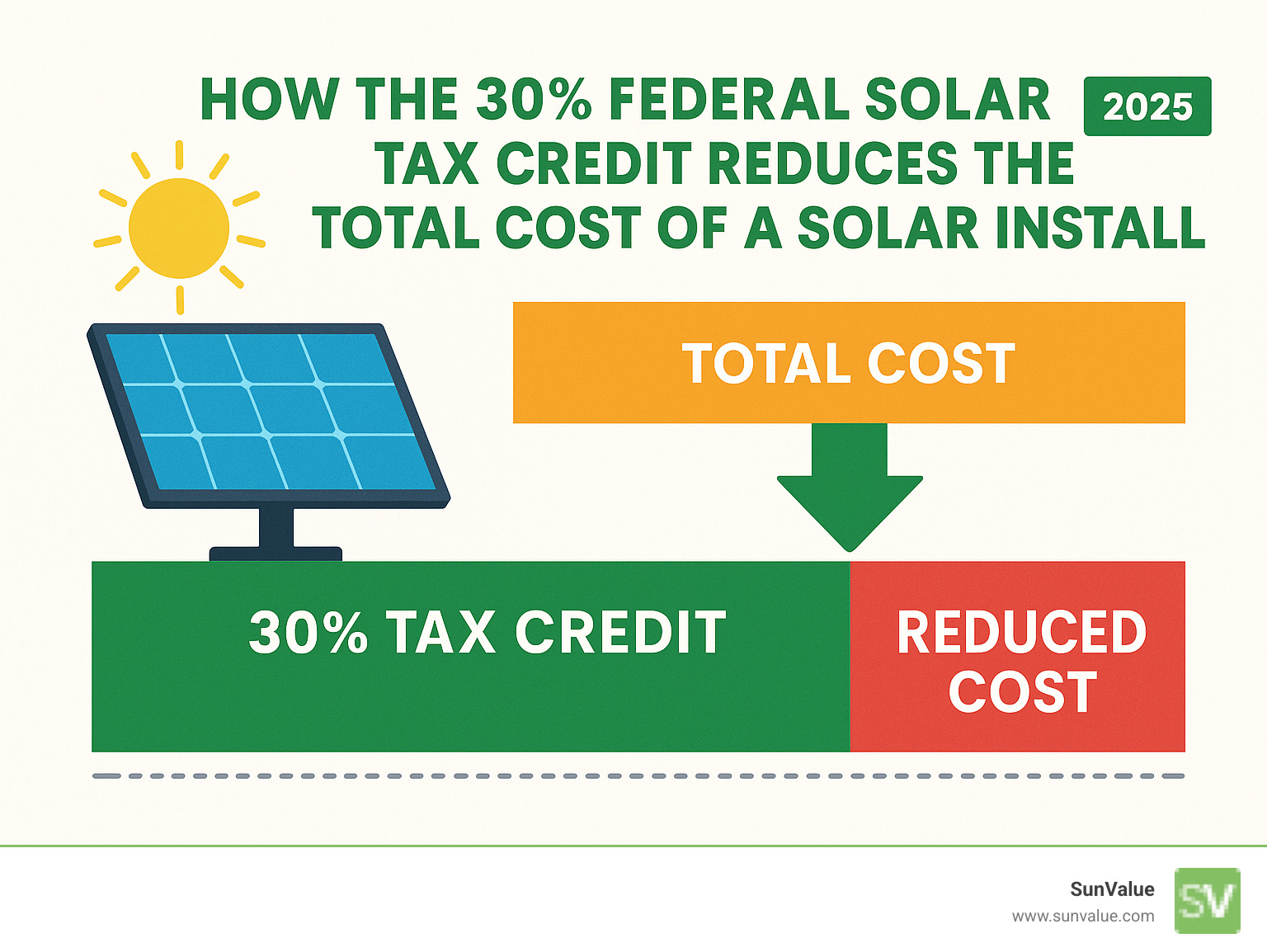
Understanding the 30% Tax Credit
Under current federal guidelines, homeowners who install a qualifying solar photovoltaic system can claim a federal income tax credit equal to 30% of the total system cost. This credit applies to both equipment and labor costs, including necessary site preparation, permitting fees, and battery storage systems (even if installed independently of the solar array, provided they meet capacity requirements).
- How it Works: The credit is a dollar-for-dollar reduction of your federal income tax liability. If your total tax liability is lower than the credit amount, the remaining balance can be rolled over to subsequent tax years.
- Eligibility Requirements: You must own the solar system (either through a cash purchase or a solar loan). Systems acquired via third-party ownership structures like Power Purchase Agreements (PPAs) or solar leases do not qualify the homeowner for the tax credit directly; instead, the leasing company claims the credit.
- Tax Preparation: Homeowners claim this credit by filing IRS Form 5695 along with their annual federal income tax return.
Pennsylvania Solar Renewable Energy Certificates (SRECs)
Pennsylvania’s Alternative Energy Portfolio Standards (AEPS) Act requires electricity distribution companies and electric generation suppliers to source a specific percentage of their electricity from solar photovoltaic generators. This regulatory mandate creates a market-based incentive known as Solar Renewable Energy Certificates (SRECs).
How SRECs Generate Income
For every 1 megawatt-hour (MWh)—or 1,000 kilowatt-hours (kWh)—of electricity your solar panel system produces, you earn one SREC. You can then sell these certificates on the open market to utilities or energy aggregators that need them to meet state compliance quotas.
- The SREC Market Mechanism: SREC prices fluctuate based on supply and demand within Pennsylvania. While historical prices experienced volatility, active tracking platforms allow system owners to monetize their generation monthly or quarterly.
- Aggregation Services: Most residential system owners use an SREC aggregator or broker (such as SRECTrade, SolSystems, or Fintura) to manage the certification, minting, and selling processes. These companies typically charge a small management fee or commission percentage.
- Duration: Solar installations are typically eligible to generate SRECs for 15 years from the date of system commissioning, providing a steady, passive income stream over the operational lifespan of the equipment.
Net Metering Policies in Pennsylvania
Net metering is a billing mechanism that credits solar system owners for the excess electricity their panels push back onto the local electric grid.
Utility Regulations and Compensation
Pennsylvania’s net metering rules are governed by the Public Utility Commission (PA PUC) under regulations that require major Electric Distribution Companies (EDCs)—such as PECO, PPL Electric Utilities, FirstEnergy (Met-Ed, Penelec, Penn Power), and Duquesne Light—to offer net metering.
- True Net Metering: For systems up to 50 kW (which covers nearly all residential and small commercial installations), excess generation is typically credited at the full retail rate (kWh for kWh) or via a generation-credit structure depending on the specific utility tariff.
- Annual True-Up: Most utilities calculate net energy usage monthly, carrying over excess kilowatt-hour credits. At the end of an annual reconciliation period (often May or June), any accumulated credits may be cleared out, making proper system sizing essential to avoid producing excess power that goes uncompensated.
- Interconnection Process: Before connecting to the grid, your installer must submit an interconnection application to your EDC. The utility reviews the technical specifications to ensure grid safety and stability before issuing permission to operate (PTO).
Property Tax Exemptions for Solar Installations
Adding solar panels increases the overall appraisal value of residential and commercial real estate. In many states, this valuation increase triggers higher property taxes. Fortunately, Pennsylvania provides favorable tax treatment regarding solar energy systems.
- Assessment Exclusion: While Pennsylvania does not have a single, statewide mandatory property tax exemption statute for residential solar, many county and municipal assessment practices exclude the added value of renewable energy equipment from property tax reassessments.
- Local Variations: Because property assessments are handled at the county level, homeowners should consult their local county tax assessment office or municipal tax authority to verify specific local policies regarding alternative energy system assessments.
Summary of Pennsylvania Solar Financial Mechanisms
| Incentive / Program | Type | Value / Benefit | Eligibility Criteria |
|---|---|---|---|
| Federal Clean Energy Credit | Federal Tax Credit | 30% of total installation cost | System ownership (cash or loan); tax liability |
| PA SRECs | Market-Based Revenue | Variable per MWh generated | Grid-tied PA solar systems registered with AEPS |
| PA Net Metering | Utility Billing Credit | Retail rate offset for excess generation | Systems under 50 kW interconnected with local EDC |
| Property Tax Impact | Local Assessment | Varies; often excludes solar value from assessment | Dependent on county assessment policies |
Frequently Asked Questions
Are there direct state cash rebates for solar panels in Pennsylvania?
No. Pennsylvania does not offer a direct upfront state cash rebate or grant program for residential solar installations. Instead, the state relies on the SREC market, which provides ongoing financial returns over time, coupled with federal tax incentives and utility net metering.
How much do solar panels cost in Pennsylvania before incentives?
The cost of a residential solar system in Pennsylvania typically ranges from $2.80 to $3.50 per watt before incentives, depending on equipment quality, roof complexity, and installer overhead. For an average 8 kW system, gross costs generally fall between $22,400 and $28,000 before applying the 30% federal tax credit.
Can I get solar incentives if I lease my solar panels?
If you enter into a solar lease or a Power Purchase Agreement (PPA), you do not own the equipment. Consequently, you are not eligible for the 30% federal tax credit or the SREC revenue stream. The third-party owner claims these financial benefits and passes on savings through a lower monthly energy rate.
What happens to my SRECs if my system produces more energy than expected?
You earn SRECs based on actual generation tracked by your inverter or dedicated revenue-grade production meter. Every time your system crosses the 1,000 kWh (1 MWh) threshold, a new SREC is minted in your tracking account, which you can then sell on the open market.
Do Pennsylvania utilities charge fees for net metering?
Major Pennsylvania EDCs do not charge punitive standby fees or fixed grid-access fees solely for residential net-metering participants with systems under 50 kW, though standard monthly service connection fees still apply.
Next Steps for Going Solar in Pennsylvania
To begin your solar journey in Pennsylvania, start by requesting multiple itemized quotes from reputable, NABCEP-certified local solar installers. Verify that each quote outlines estimated annual production, equipment warranties, and a breakdown of how they handle SREC registration and utility interconnection paperwork. Confirm your roof's structural integrity and sun exposure before signing any contracts to ensure your investment delivers optimal long-term financial performance.
Image Gallery
Select an image to open it in a new tab.


Declan O'Connor
Higher Education and Campus Culture Reporter
