A Comprehensive List of Famous American Authors and Their Contributions to Literature

Exploring the landscape of American literature reveals a diverse array of voices that have shaped the cultural, political, and philosophical identity of the United States. From the foundational narratives of the nineteenth century to the experimental prose of the modern era, these authors are categorized by their stylistic innovations, thematic depth, and lasting impact on the global canon. Understanding this lineage requires looking at key figures whose works have defined specific movements, ranging from Transcendentalism and Realism to the Southern Gothic and the Beat Generation.
The study of American literature is often divided into distinct eras or schools of thought. While no single list can encompass every significant writer, certain authors remain essential to academic curricula and public discourse due to the enduring relevance of their prose and poetry. These individuals did not merely reflect the society of their time; they often challenged established social norms, documented the struggle of marginalized groups, and pushed the boundaries of the English language.
Founding Voices and the Rise of American Romanticism
The early development of an "American" voice in literature was heavily influenced by the transition from colonial reliance on British forms to a distinctly domestic style. During the mid-19th century, writers began to grapple with the vastness of the American landscape and the complexities of its burgeoning democracy.
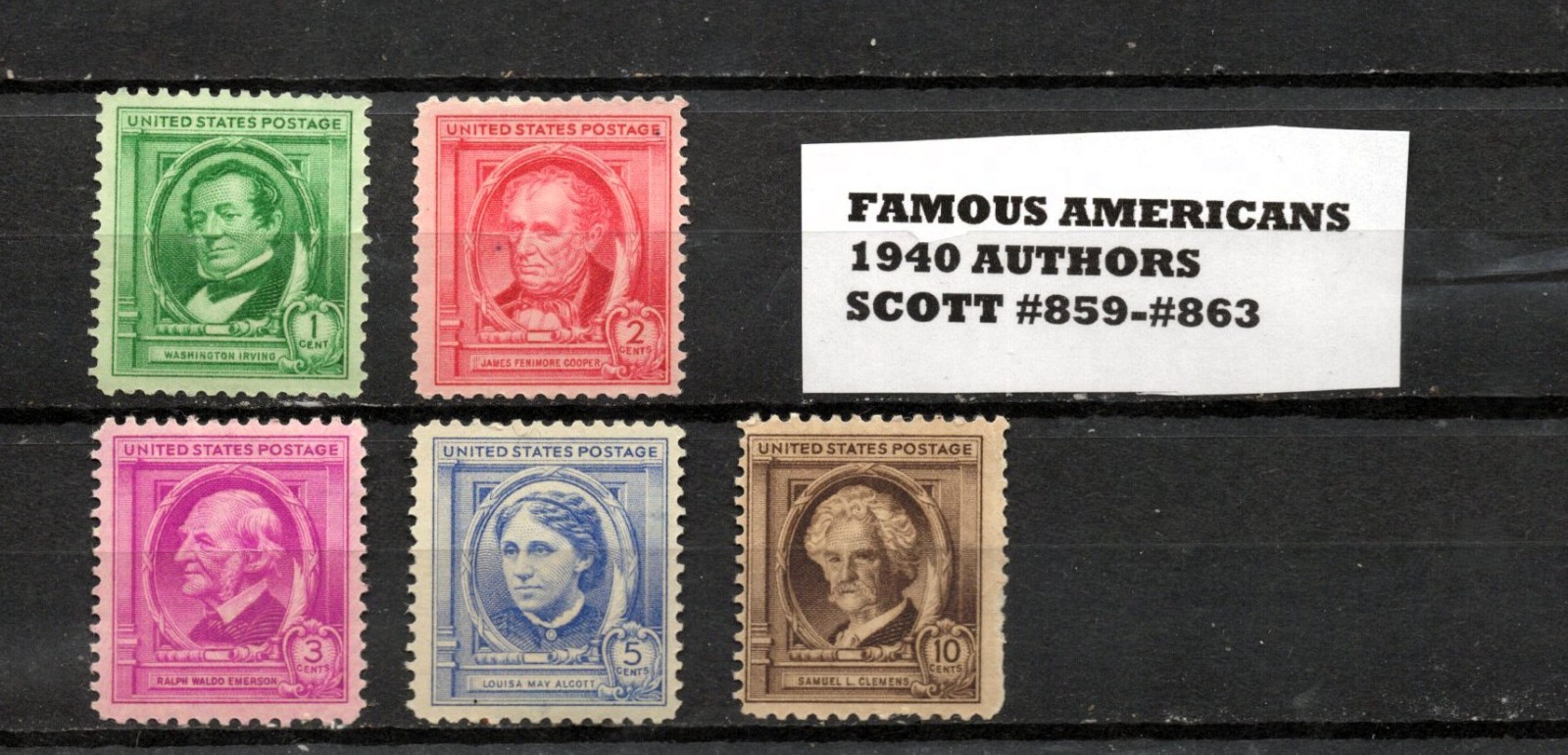
Ralph Waldo Emerson and Henry David Thoreau serve as the architects of American Transcendentalism. Emerson’s essays, such as "Self-Reliance," championed the individual’s intuition and connection to nature, while Thoreau’s Walden provided a practical, albeit singular, application of these philosophical beliefs through intentional, minimalist living. Their work shifted the literary focus inward, emphasizing self-reliance as a core American value.
Parallel to this philosophical shift, Nathaniel Hawthorne and Herman Melville explored the darker psychological undercurrents of the American experience. Hawthorne, in works like The Scarlet Letter, examined the weight of historical guilt and moral rigidity in New England. Melville, meanwhile, expanded the scope of the novel to an epic scale with Moby-Dick, utilizing the hunt for the white whale to interrogate human obsession, divine authority, and the indifference of nature.
The Realist Movement and Social Critique
As the United States underwent rapid industrialization following the Civil War, the literary focus shifted toward realism—an attempt to depict life as it was, rather than as it was idealized. This era produced writers who were deeply concerned with the nuances of social class, regional identity, and the disillusionment that followed the Reconstruction period.
Mark Twain (the pseudonym of Samuel Clemens) is perhaps the most significant figure in this transition. In Adventures of Huckleberry Finn, Twain employed vernacular language to expose the systemic hypocrisy of Southern society. His work was pivotal in establishing a truly American literary dialect, moving away from the formal, elevated prose that dominated earlier centuries.
Simultaneously, Edith Wharton and Henry James focused on the social anxieties of the elite. Wharton’s The Age of Innocence provides a biting critique of Gilded Age New York, where social conformity frequently stifled personal ambition. Henry James, known for his psychological complexity in works such as The Portrait of a Lady, explored the "international theme"—the tension between the old-world values of Europe and the fresh, often naïve energy of Americans abroad.
Modernism and the Lost Generation
The early 20th century, specifically the period between the two World Wars, was defined by the Modernist movement. Following the devastation of World War I, American authors felt a profound sense of fragmentation and loss. This sentiment gave rise to the "Lost Generation," a group of writers who questioned the validity of traditional narratives and sought new ways to capture the human condition in a rapidly changing world.
Ernest Hemingway is synonymous with the era’s "iceberg theory" of writing—a minimalist style where the emotional core of the story is left unsaid, requiring the reader to infer meaning from sparse details. Works like The Sun Also Rises and A Farewell to Arms became blueprints for modern narrative structure.
In contrast, F. Scott Fitzgerald captured the glamour and moral rot of the Jazz Age. The Great Gatsby remains the definitive critique of the American Dream, illustrating how the obsession with wealth and status can lead to inevitable isolation.
During this same period, the Harlem Renaissance, spearheaded by writers like Langston Hughes and Zora Neale Hurston, asserted a vital Black aesthetic in American literature. Hughes’s poetry integrated jazz rhythms and blues motifs, while Hurston’s Their Eyes Were Watching God celebrated the resilience and autonomy of the African American experience in the rural South, often using phonetic dialect to maintain the authenticity of the voice.
Post-War Literature and Contemporary Perspectives
The latter half of the 20th century saw an expansion of the American literary canon, characterized by greater diversity and a willingness to tackle uncomfortable historical realities. Authors began to deconstruct the myths of the American past and present, offering more inclusive perspectives on citizenship, race, and identity.
Toni Morrison stands out as a titan of this period. Her novels, such as Beloved, integrated elements of magical realism with the traumatic legacy of slavery, forcing a national confrontation with historical ghosts. Similarly, Maya Angelou’s autobiographical works provided a voice for the struggle of Black women in America, emphasizing the power of endurance and the importance of storytelling as a tool for survival.
The contemporary era also includes those who have pushed the boundaries of genre, such as Cormac McCarthy, whose stark, often apocalyptic prose in The Road or Blood Meridian re-examines the violent origins of the American West.
Comparative Table: Key American Authors and Notable Works
| Author | Primary Movement/Era | Signature Work | Key Themes |
|---|---|---|---|
| Nathaniel Hawthorne | Romanticism | The Scarlet Letter | Sin, guilt, morality |
| Mark Twain | Realism | Adventures of Huckleberry Finn | Satire, race, hypocrisy |
| Edith Wharton | Realism | The Age of Innocence | Social class, conformity |
| F. Scott Fitzgerald | Modernism | The Great Gatsby | The American Dream, wealth |
| Ernest Hemingway | Modernism | The Sun Also Rises | Disillusionment, masculinity |
| Zora Neale Hurston | Harlem Renaissance | Their Eyes Were Watching God | Identity, autonomy, folklore |
| Toni Morrison | Contemporary | Beloved | Memory, trauma, slavery |
| Cormac McCarthy | Contemporary | The Road | Survival, morality, isolation |
Practical Guidance for Exploring American Literature
For those interested in navigating this vast body of work, it is helpful to approach the subject by era or theme rather than attempting to read chronologically. Many readers find that pairing a classic text with a modern biography or literary criticism provides a deeper context for why a specific work remains "famous" or culturally significant.
- Select a Representative Text: Do not start with long, dense novels. For example, begin with a collection of essays by Emerson or short stories by Hemingway to understand their stylistic goals before moving to their major novels.
- Contextualize with History: Understanding the socio-political environment—such as the abolitionist movement for Harriet Beecher Stowe or the economic collapse of the Great Depression for John Steinbeck—often clarifies the author's intent.
- Utilize Academic Resources: Reputable databases or library guides often provide reading lists that categorize authors by region (e.g., Southern Gothic, New England transcendentalists) or demographic focus.
- Engage with Diverse Voices: Ensure your reading list includes a cross-section of American identities to get a full picture of the national literature, as the "famous" list has historically been skewed toward white male authors.
Frequently Asked Questions
Who is considered the greatest American author? There is no consensus, as the answer depends on the criteria. Mark Twain is frequently cited for his role in establishing a distinctively American voice, while Toni Morrison is widely regarded for her profound contribution to the understanding of the American experience through language and history.
What is the defining characteristic of American literature? American literature is often defined by its tension between individualism and community, the interrogation of the "American Dream," and a persistent focus on democratic ideals and their failures.
How does regionalism affect American literature? Regionalism is fundamental to American writing. The Southern Gothic style of William Faulkner differs significantly from the New York modernism of Edith Wharton. These regional differences highlight the vast geographic and cultural variations within the United States.
Why are some authors considered "classic" while others are not? The designation of "classic" is generally applied to works that have stood the test of time, influencing subsequent generations of writers and providing deep insight into the human condition. Academic institutions and literary critics play a large role in curating this canon.
Where can I find authoritative biographies on these authors? For reliable, fact-based information, look for biographies published by academic university presses or recognized literary journals. The Library of Congress and the National Endowment for the Arts also maintain archives documenting the lives and works of major American writers.
Next Steps for Literary Research
If you are beginning a deep dive into American literature, your next action should be to select a single era that interests you and obtain one primary text and one reputable critical introduction. By focusing on a specific movement, you can build a framework that will make reading authors from other eras significantly more accessible. For current, verified information regarding the life or bibliography of a specific author, prioritize records from the Modern Language Association or university-affiliated archives to ensure historical accuracy.
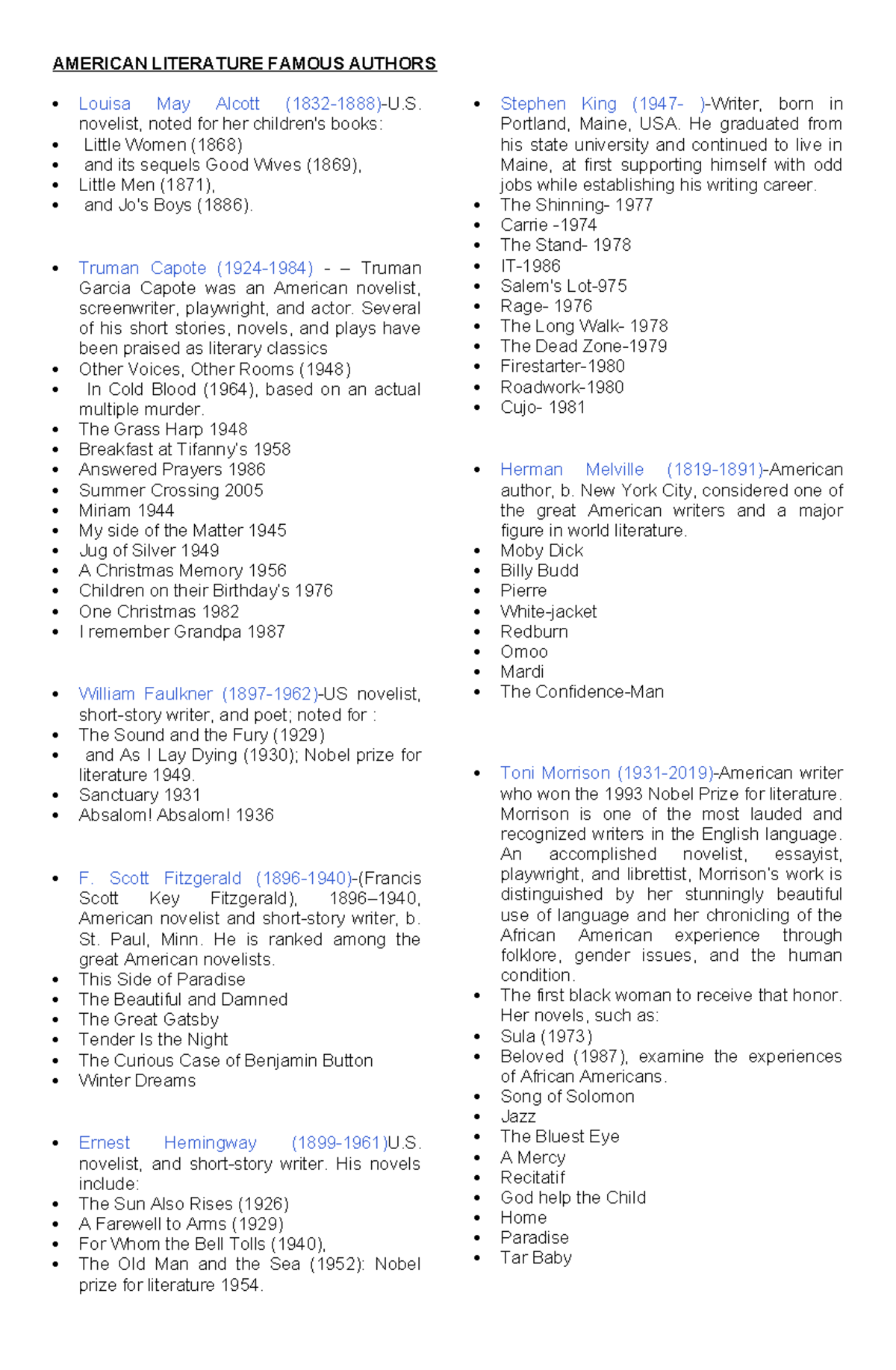
Image Gallery
Select an image to open it in a new tab.


Ingrid Bjornson
Global Cyber Policy and Regulation Analyst
