
A bank deposit sweep program is an automated cash management service that transfers funds between a client’s primary transaction account and one or more interest-bearing accounts or money market funds. By "sweeping" excess cash, these programs ensure that money remains productive during idle periods while often providing enhanced liquidity and, in some cases, additional deposit insurance coverage through institutional diversification.
The Mechanics of Deposit Sweeping
At its core, a sweep program operates on a set of pre-determined rules established between the financial institution and the client. Most modern commercial and retail banking platforms utilize these programs to solve the problem of "idle cash"—money sitting in a non-interest-bearing checking account that loses purchasing power to inflation.
The process typically occurs at the close of every business day. The bank’s back-end software calculates the balance in the client’s operating account. If the balance exceeds a pre-set threshold (often referred to as a "target balance"), the system automatically sweeps the excess funds out of the account. These funds are then moved into a secondary, interest-earning vehicle. Conversely, if the client’s balance falls below a certain level—or if the client initiates a withdrawal—the system performs a "reverse sweep," moving funds back into the operating account to cover obligations and maintain liquidity.
This automation is invisible to the account holder. Deposits, checks, and electronic payments continue to function as expected, but the underlying capital moves seamlessly in the background to optimize yield and risk management.
Types of Sweep Vehicles
Not all sweep programs are identical. The underlying asset class into which the money is swept significantly impacts the risk profile, the potential return, and the regulatory environment.
Bank Deposit Sweeps (Insured)
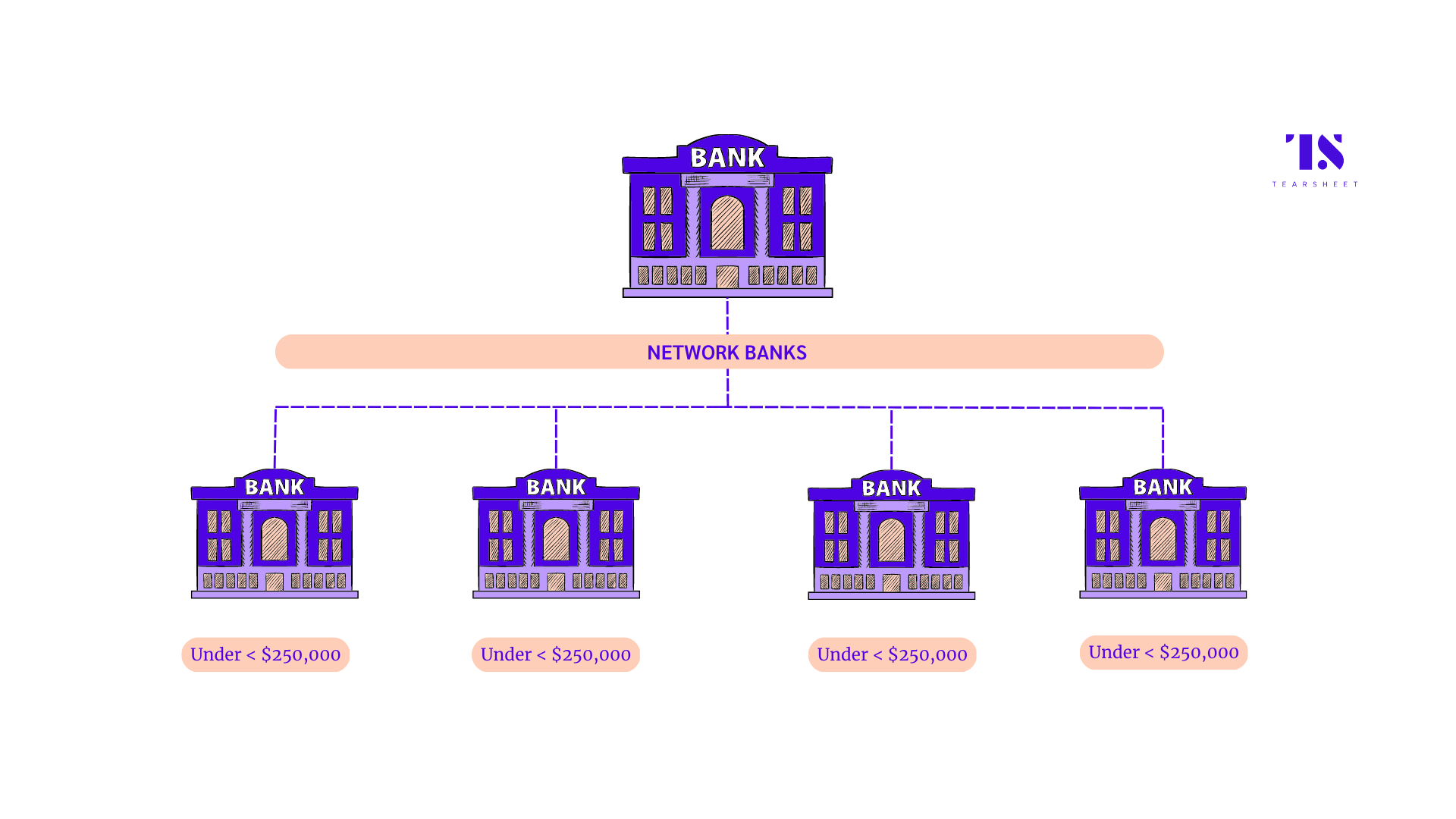
In this model, the funds are swept into one or more interest-bearing deposit accounts at banks other than the one where the primary account is held. Because the Federal Deposit Insurance Corporation (FDIC) provides insurance coverage of up to $250,000 per depositor, per institution, per ownership category, these programs use a "network" of banks. By spreading a large sum of money across ten different banks, a client can theoretically obtain $2.5 million in FDIC coverage. This is a primary strategy for businesses and high-net-worth individuals to mitigate counterparty risk.
Money Market Mutual Fund (MMMF) Sweeps
In this scenario, excess cash is swept into a money market mutual fund. Unlike bank deposits, these are investment products. While they are generally considered low-risk, they are not FDIC-insured. They seek to maintain a stable net asset value (NAV) of $1.00 per share, though they are subject to market fluctuations. Returns are historically more competitive than standard savings accounts, but they carry the risk of "breaking the buck" (falling below a $1.00 NAV), which is rare but historically documented.
Repo Sweeps
Repurchase agreement (repo) sweeps involve the purchase of government securities with an agreement to sell them back to the bank the following day. These are typically reserved for large institutional clients. The security of the repo sweep depends on the underlying collateral, usually U.S. Treasury or agency securities, making it a highly liquid and secure, albeit technically complex, option.

Table: Comparison of Sweep Vehicle Characteristics
| Feature | Bank Deposit Sweep | Money Market Sweep | Repo Sweep |
|---|---|---|---|
| Primary Goal | FDIC Insurance/Yield | Yield/Liquidity | Institutional Security |
| Insurance | FDIC Insured | Not Insured | Not Insured (Collateralized) |
| Risk Profile | Very Low | Low (Market Risk) | Very Low (Collateral Risk) |
| Typical Client | Retail/Small Business | Retail/Individual | Large Institutional |
| Liquidity | Daily | Daily | Daily |
Prerequisites and Eligibility
Accessing a deposit sweep program is not always automatic. Most banks reserve these features for specific account tiers.
- Minimum Balance Requirements: Many programs require a minimum balance in the primary account (e.g., $10,000 or $50,000) before the sweep automation triggers.
- Account Type: These programs are most commonly associated with commercial checking, brokerage cash management accounts, or high-tier business banking services.
- Legal Documentation: Because these programs involve moving money across different entities or into investment vehicles, clients must sign specific custodial or sweep agreements. These documents outline the bank's authority to move funds and disclose the specific risks associated with the chosen sweep vehicle.
- Platform Integration: The client's banking portal must be technically compatible with the bank's automated clearing house (ACH) or internal ledger system to facilitate the daily balancing process.
Why Use a Sweep Program?
The primary appeal of a sweep program is the reconciliation of liquidity and yield. Without a sweep, money in a business operating account earns 0% interest and sits exposed to institutional failure risk if it exceeds the $250,000 limit.
For businesses that manage high volumes of payroll, tax obligations, and vendor payments, the sweep program acts as a financial utility. It allows the treasury manager to maintain high liquidity for day-to-day operations while ensuring that cash which is not needed until next week—or even tomorrow—is earning a competitive interest rate.
Furthermore, for those who manage wealth, the "insured sweep" option is a powerful tool for asset protection. It allows a client to hold millions of dollars in cash while keeping virtually all of it within the protective umbrella of the FDIC, effectively outsourcing the complex task of manual bank account management to the brokerage or bank.
Potential Downsides and Risks
While convenient, sweep programs are not devoid of drawbacks:
- Lower Returns vs. Active Investing: The interest rates provided by bank deposit sweeps are often lower than what might be achieved in a high-yield savings account or an actively managed money market fund.
- Complexity of Reporting: Tax reporting for accounts with sweeps can be more complex. Because the money moves between multiple banks, the year-end tax documentation (such as 1099-INT forms) may come from several different institutions rather than a single source.
- Service Fees: Some institutions charge a monthly administrative fee or an "asset under management" fee for the privilege of the sweep service. It is critical to compare the yield earned against these fees to determine if the program is net-positive.
- Collateral Quality: In the case of repo sweeps, the security of the funds depends on the quality of the collateral. While these are usually high-quality government securities, it is an indirect investment and requires a higher degree of due diligence than a standard insured deposit.
Common Operational Mistakes
Even with automated systems, account holders can encounter issues if they do not monitor their sweep activities:
- Over-allocation: Placing too much money into a sweep program that has limited insurance capacity can lead to a false sense of security. Always verify the total number of banks in your network to ensure your balance does not exceed the aggregate insurance coverage.
- Ignoring the "Target Balance": If the target balance (the amount left in the checking account) is set too low, the account may face insufficient funds issues if an unexpected debit occurs. Conversely, if it is set too high, you are leaving money uninvested.
- Failure to Review Monthly Statements: Because the movement of funds is automated, it is easy to become detached from the process. Reviewing monthly statements is the only way to confirm that the interest rates being applied remain competitive with current market conditions.
Frequently Asked Questions
Is my money truly liquid in a sweep program?
Yes. Sweep programs are designed specifically to support daily operations. While the money is technically moved to a secondary account overnight, it is "swept" back into your primary account the moment you write a check or initiate a wire transfer, ensuring that your funds are available for immediate use during business hours.
Are all sweep programs covered by the FDIC?
No. FDIC insurance only applies to bank deposit sweeps. If your sweep program is linked to a money market mutual fund or a repurchase agreement, your money is not covered by the FDIC and is subject to market or counterparty risks.
Can I choose which banks are in my sweep network?
In most cases, no. Financial institutions provide a pre-set list of program banks. While you can typically opt out of having your funds sent to a specific bank if you have a pre-existing relationship or a conflict of interest with that institution, you generally cannot hand-pick the entire network.
How often are the interest rates updated?
Interest rates for sweep accounts are typically variable and move in correlation with the federal funds rate and broader market conditions. Most banks adjust these rates on a monthly or quarterly basis, though some may adjust more frequently depending on the contract.
What happens if the bank in the network fails?
If your funds are in an FDIC-insured deposit sweep, the FDIC will step in, just as it would with a standard savings account. Because the sweep program distributes your funds across multiple banks, only the portion of your money held at the failed institution would be subject to the FDIC claim process, effectively isolating your risk.
Next Steps for Account Holders
If you are interested in implementing a sweep program, begin by reviewing your current business or brokerage agreement to see if this feature is already available. If it is not, contact your relationship manager to request a "Product Disclosure Statement" for their cash management services.
Ensure you specifically ask about the net yield after all fees are deducted. Finally, request a list of the participating banks in their insured sweep network to ensure that you are not already holding personal deposits at those same institutions, as this could inadvertently jeopardize your total FDIC insurance coverage limits.
Image Gallery
Select an image to open it in a new tab.
Ingrid Bjornson
Global Cyber Policy and Regulation Analyst
