Bronx Auto Insurance Coverage Options in 2026: A Complete Guide to NYC Policies

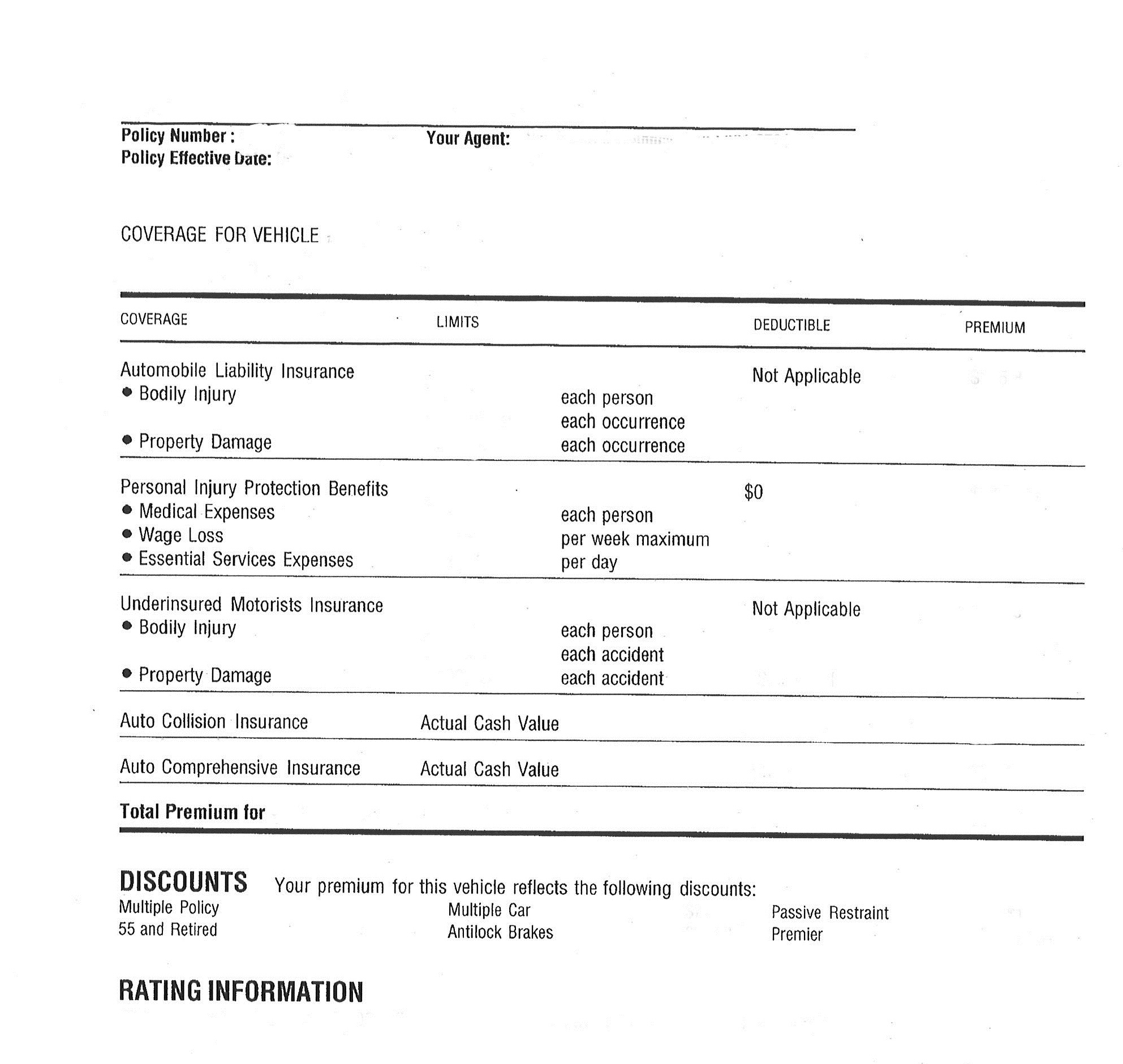
In 2026, Bronx drivers must carry New York State’s mandatory "no-fault" insurance, which includes Personal Injury Protection (PIP), liability coverage, and uninsured motorist protection. Beyond these legal minimums, Bronx residents typically require optional comprehensive and collision coverage to mitigate high urban risks such as theft, vandalism, and frequent traffic-related accidents.
Navigating the insurance landscape in the Bronx requires a specialized understanding of both New York State (NYS) mandates and the localized environmental factors that influence premium costs and risk exposure. Whether you are commuting via the Major Deegan Expressway or parking on the crowded streets of Pelham Bay, your insurance policy serves as the primary financial barrier between you and the high cost of litigation, medical bills, and vehicle repairs. As of 2026, the complexity of urban driving—characterized by increased delivery traffic and evolving liability laws—makes a surface-level policy insufficient for most vehicle owners.
Mandatory Auto Insurance Requirements in New York State
Every motor vehicle registered in New York State must be covered by liability insurance that remains in effect as long as the registration is valid. In the Bronx, the New York Department of Financial Services (DFS) oversees these regulations to ensure that all drivers can provide a minimum level of financial restitution following an accident.
Personal Injury Protection (PIP) / No-Fault Insurance
New York is one of several "no-fault" insurance states. This means that if you are involved in an accident, your own insurance company will pay for your "basic economic loss," regardless of who was at fault for the collision. In 2026, the standard mandatory PIP limit remains $50,000 per person.
This coverage is designed to expedite medical payments and lost wage recovery without the need for lengthy legal battles to determine liability. It covers:
- Medical expenses: All necessary medical and rehabilitation costs resulting from the accident.
- Lost earnings: Up to 80% of lost wages, capped at $2,000 per month for up to three years.
- Other expenses: Up to $25 per day for essential services (such as household help) that the injured person can no longer perform.
- Death benefit: A $2,000 death benefit in addition to the $50,000 basic PIP limit.
Liability Coverage: The 25/50/10 Rule
While PIP covers your own injuries, liability insurance covers damages you cause to others. New York law requires specific minimum limits, often referred to as the 25/50/10 rule:
- $25,000 for bodily injury to one person.
- $50,000 for bodily injury to two or more people in a single accident.
- $10,000 for property damage per accident.
In the Bronx, where many vehicles are late-model luxury SUVs or electric vehicles with high repair costs, the $10,000 property damage minimum is often viewed by experts as inadequate. A minor collision involving a modern sensor-equipped bumper can easily exceed this limit, leaving the driver personally liable for the remaining balance.
Uninsured Motorist (UM) Coverage
Despite strict registration laws, uninsured vehicles remain a reality in high-density urban areas. Mandatory Uninsured Motorist coverage protects you, your family members, and your passengers if you are involved in an accident with a driver who does not have insurance or in the event of a hit-and-run. This coverage applies only to bodily injury and matches the minimum liability limits of 25/50.
Optional Coverage Enhancements for Bronx Drivers
While mandatory coverage keeps you legal, optional coverages keep you solvent. Given the Bronx's unique urban environment—ranging from the high-traffic corridors of the Cross Bronx Expressway to the street-parking challenges in the South Bronx—several "optional" coverages are considered essential by experienced drivers.
Collision Coverage
Collision insurance pays for damage to your vehicle resulting from a crash with another vehicle or an object (like a guardrail or a telephone pole). Given the high density of traffic in the Bronx, fender benders are statistically more likely than in rural or suburban areas. If you are financing or leasing your vehicle, the lender will almost certainly require you to carry collision coverage to protect their asset.
Comprehensive Coverage (Other Than Collision)
For Bronx residents who park on the street, comprehensive coverage is arguably the most critical optional policy component. This covers damage to your vehicle not caused by a collision, including:
- Theft and Vandalism: High-density areas often see higher rates of vehicle theft or "smash and grab" incidents.
- Glass Damage: Chipped or cracked windshields from road debris are common on NYC parkways.
- Natural Disasters: Coverage for flooding (increasingly relevant in NYC) and falling objects (such as tree limbs during storms).
- Animal Strikes: While less common in the South Bronx, strikes involving deer or other animals are a risk near Van Cortlandt Park and Pelham Bay Park.
Supplementary Spousal Liability (SSL)
As of 2023 and continuing through 2026, New York law requires insurers to provide Supplementary Spousal Liability (SSL) insurance unless the policyholder explicitly opts out in writing. SSL provides bodily injury liability coverage for a spouse who is injured in an accident caused by the policyholder’s negligence. Before this law, many drivers were unaware that they could not sue their own liability policy if they caused an accident that injured their spouse.
OBEL and APIP: Enhancing No-Fault Limits
For those concerned that the standard $50,000 PIP limit is insufficient given modern New York City hospital costs, two options exist:
- Optional Basic Economic Loss (OBEL): Adds an additional $25,000 to be used for medical expenses, lost wages, or psychiatric/rehabilitation costs.
- Additional PIP (APIP): Can significantly increase the medical and wage loss limits, often providing up to $100,000 or more in total coverage.
Comparing Bronx Insurance Coverage Options
| Coverage Type | Status | Primary Purpose | Expert Recommendation for Bronx |
|---|---|---|---|
| PIP (No-Fault) | Mandatory | Covers medical/wages for you and passengers regardless of fault. | Minimum $50k required; consider OBEL for $25k extra. |
| Bodily Injury Liability | Mandatory | Covers injuries you cause to others. | Increase to 100/300 to protect personal assets. |
| Property Damage | Mandatory | Covers damage you cause to other vehicles/property. | Increase to $50k or $100k due to high vehicle values in NYC. |
| Uninsured Motorist | Mandatory | Protects you if hit by an uninsured or hit-and-run driver. | Ensure this matches your Liability limits (SUM coverage). |
| Collision | Optional | Pays for your car's repairs after an accident. | Essential for newer vehicles and those with auto loans. |
| Comprehensive | Optional | Pays for theft, fire, glass, and vandalism. | Highly recommended for Bronx street parkers. |
| Rental Reimbursement | Optional | Pays for a rental car while yours is in the shop. | Useful if you rely on your car for work/commuting. |
Factors Influencing Insurance Premiums in the Bronx
Insurance companies use actuarial data to determine risk, and the Bronx presents a distinct profile compared to other regions. In 2026, several factors remain dominant in calculating your "Bronx rate."
Zip Code Variations
Premiums are not uniform across the borough. Areas with higher rates of vehicle theft or accident frequency—such as portions of the 10451 (Concourse) or 10467 (Williamsbridge) zip codes—may see higher base rates than quieter residential areas like Riverdale (10471). Insurers analyze the specific blocks where the car is garaged or parked overnight.
The "Serious Injury" Threshold
In New York, the no-fault law limits your ability to sue for "pain and suffering" unless your injuries meet a specific "serious injury" threshold as defined by New York Insurance Law Section 5102(d). This includes permanent loss of use of a body organ, significant limitation of use of a body function, or a fracture. Understanding this threshold is vital when deciding how much liability and SUM (Supplementary Uninsured/Underinsured Motorist) coverage to purchase.
Technology and Telematics
By 2026, "Usage-Based Insurance" (UBI) has become a standard offering. Many Bronx drivers opt into telematics programs—usually via a smartphone app or a plug-in device—that track braking, speed, and time of day. For a Bronx driver who avoids late-night trips and maintains safe following distances on the Cross Bronx Expressway, these programs can lead to significant discounts, sometimes up to 30%.
Strategies for Reducing Insurance Costs in the Bronx
Living in a high-premium area doesn't mean you have to accept the highest rates. Several verified methods can lower your annual costs in 2026.
- The Defensive Driving Course: Completing an NYS-approved Point and Insurance Reduction Program (PIRP) provides a mandatory 10% discount on the base rate of your liability and collision premiums for three years. It also subtracts up to four points from your driving record.
- Bundle Policies: Standard practice remains effective; combining your auto insurance with a renters or homeowners policy often triggers a multi-policy discount.
- Increase Deductibles: If you have an emergency fund, raising your collision or comprehensive deductible from $500 to $1,000 can reduce your monthly premium. However, this is only advisable if you can afford the out-of-pocket cost if a claim occurs.
- Anti-Theft Discounts: Given the Bronx's urban setting, insurers offer discounts for vehicles equipped with VIN etching, GPS tracking (like LoJack), or factory-installed immobilizers.
- Review Coverage on Older Vehicles: If your vehicle’s market value is less than the cost of your annual collision premium plus your deductible, it may be time to drop collision and comprehensive coverage and stick to liability only.
Frequently Asked Questions
What is the minimum auto insurance required in the Bronx?
As of 2026, the minimum required coverage in the Bronx (and all of New York) is $25,000 for bodily injury per person, $50,000 for bodily injury per accident, $10,000 for property damage, $50,000 in No-Fault (PIP), and mandatory Uninsured Motorist coverage. Driving without this minimum coverage can lead to registration suspension and significant fines.
Does my insurance cover damage from Bronx potholes?
Generally, damage caused by hitting a pothole (such as a popped tire or a bent rim) is covered under Collision Coverage, not comprehensive. However, you must pay your deductible first. If the damage is less than your deductible (e.g., $500), the insurance company will not pay. You may also attempt to file a claim with the New York City Comptroller’s Office, though these claims can be difficult to prove.
Why are premiums higher in the Bronx than in Westchester?
Insurance rates are higher in the Bronx due to population density, higher rates of litigation, and increased statistical frequency of accidents and thefts. Insurance companies view the Bronx as a "high-risk" territory because the probability of a claim—whether for a multi-car pileup on the expressway or a stolen catalytic converter—is higher than in less dense suburban areas like Westchester County.
What is Supplementary Uninsured/Underinsured Motorist (SUM) coverage?
SUM coverage is an optional addition that increases your protection if you are hit by a driver who either has no insurance or has insurance limits that are lower than yours. For example, if you have $100,000 in liability but the person who hit you only has the $25,000 minimum, your SUM coverage can bridge the gap to ensure you receive full compensation for your injuries.
Is "Full Coverage" a real insurance term?
Technically, no. "Full coverage" is a colloquialism usually meaning the driver has the state-mandated liability plus collision and comprehensive. It does not mean every possible scenario is covered. You should always review your specific "Declarations Page" to see exactly what limits and exclusions apply to your Bronx policy.
Next Steps for Bronx Vehicle Owners
To ensure you have the best protection at the most competitive rate in 2026, follow these steps:
- Audit your current limits: Check if your property damage limit is at least $50,000 to account for modern vehicle costs.
- Verify your SSL status: Ensure you haven't inadvertently opted out of Supplementary Spousal Liability if you drive with your spouse.
- Shop around annually: Use the New York Department of Financial Services (DFS) shopping guide to compare the complaint ratios and average rates of different carriers in the Bronx market.
- Update your mileage: If your commuting habits have changed (e.g., you now take the D train instead of driving to Manhattan), notify your insurer to see if you qualify for a low-mileage discount.
Image Gallery
Select an image to open it in a new tab.

Omar Farooq
EdTech Innovation and Virtual Pedagogy Journalist
