
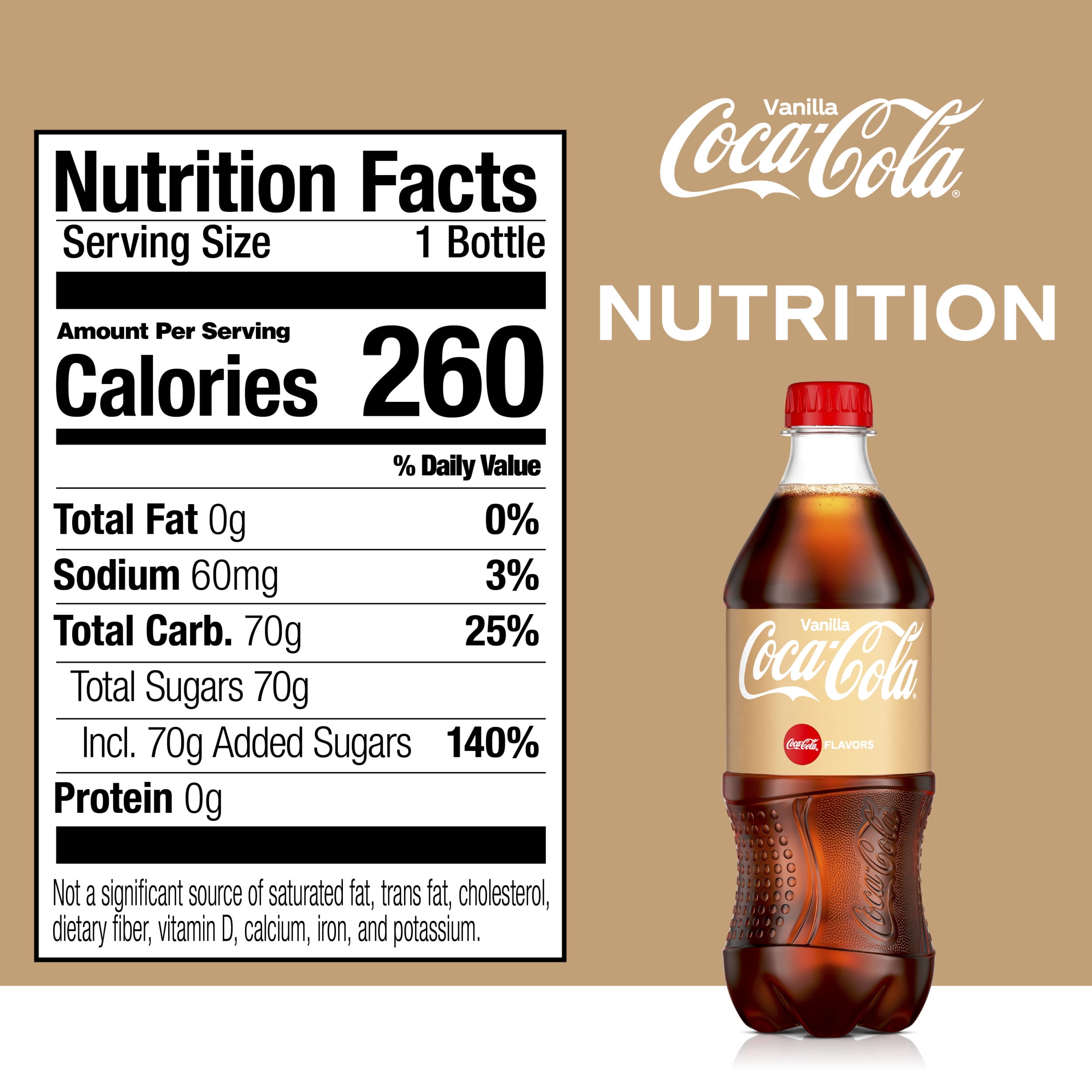
A standard 12-ounce (355 ml) can of Coca-Cola Classic contains 140 calories, 39 grams of total carbohydrates (all of which are added sugars), and 45 milligrams of sodium. It contains zero grams of fat and protein. The primary sweetener in the United States is high fructose corn syrup, providing a high-glycemic energy source without essential vitamins or minerals.
Understanding the nutrition facts for Coca-Cola requires looking beyond the basic calorie count. As one of the most widely consumed beverages globally, its formulation has remained largely consistent, though serving sizes and packaging have evolved significantly by 2026. This guide provides a technical breakdown of its ingredients, metabolic impact, and how it compares to modern dietary standards.
The Standard Nutritional Profile of Coca-Cola
To accurately assess the nutritional value of Coca-Cola, one must look at the specific measurements provided on the FDA-mandated nutrition facts label. While the 12-ounce can remains the industry benchmark, the proliferation of "mini-cans" and larger "share-size" bottles has made portion awareness more complex.
The following data represents the nutritional values for the three most common consumer sizes available in 2026.
| Nutrient | 7.5 oz Mini-Can | 12 oz Standard Can | 20 oz Plastic Bottle |
|---|---|---|---|
| Calories | 90 | 140 | 240 |
| Total Fat | 0g | 0g | 0g |
| Sodium | 30mg | 45mg | 75mg |
| Total Carbohydrates | 25g | 39g | 65g |
| Total Sugars | 25g | 39g | 65g |
| Added Sugars | 25g | 39g | 65g |
| Protein | 0g | 0g | 0g |
| Caffeine | 21mg | 34mg | 57mg |
Calories and Energy Density
The 140 calories in a standard serving are derived entirely from simple carbohydrates. In nutritional science, these are often referred to as "empty calories" because the beverage provides energy (in the form of sugar) but lacks fiber, protein, healthy fats, vitamins, or minerals. For an average adult on a 2,000-calorie diet, a single 12-ounce can represents 7% of their daily caloric intake but nearly 80% to 150% of their recommended daily added sugar limit.
Sodium Content
While Coca-Cola is not considered a high-sodium beverage, it does contain 45mg of sodium per 12-ounce serving. This sodium serves two primary purposes: it acts as a subtle flavor enhancer and balances the extreme sweetness of the high sugar content. In the context of a low-sodium diet (usually defined as less than 2,300mg per day), the sodium in a single soda is negligible, but it can contribute to a cumulative daily total in individuals who consume multiple servings.
Detailed Breakdown of Ingredients
The iconic taste of Coca-Cola is the result of a precise chemical formulation. While the exact "natural flavors" are a trade secret, the primary ingredients are listed in descending order of weight on the product label.
Carbonated Water
The base of the beverage is purified water infused with carbon dioxide (CO2) under pressure. Carbonation creates carbonic acid, which provides the characteristic "bite" or "fizz" and contributes to the overall acidity of the drink.
High Fructose Corn Syrup (HFCS)
In the United States and several other regions, HFCS-55 (comprising 55% fructose and 45% glucose) is the primary sweetener. Fructose is processed primarily in the liver, while glucose is managed by insulin throughout the bloodstream. The high concentration of HFCS is the reason for the 39 grams of sugar per can. In other markets, such as Mexico or parts of Europe, sucrose (cane or beet sugar) is used instead, though the caloric and carbohydrate counts remain virtually identical.
Caramel Color
Caramel color gives the beverage its deep brown hue. This additive is produced through the heat treatment of carbohydrates, sometimes in the presence of acids, alkalis, or salts. While it is generally recognized as safe (GRAS) by the FDA, some health advocates monitor the presence of 4-methylimidazole (4-MEI), a byproduct of certain caramel coloring processes, though levels in modern Coca-Cola are strictly regulated to meet safety standards.
Phosphoric Acid
Phosphoric acid provides the tartness that balances the sugar. It also acts as a preservative, preventing the growth of mold and bacteria in the sugary solution. From a health perspective, phosphoric acid is often discussed in relation to bone density and dental enamel erosion, as high phosphorus levels can interfere with calcium absorption if the diet is otherwise deficient in calcium.
Natural Flavors and Caffeine
The "natural flavors" encompass a blend of fruit oils, spices, and plant extracts. Caffeine is added not only for its mild stimulant effect but also as a flavor component; it contributes a subtle bitterness that rounds out the sweetness profile. A 12-ounce can contains approximately 34mg of caffeine, which is significantly less than a standard 8-ounce cup of coffee (typically 95mg).
Metabolic Impact and Blood Sugar Response
Consuming a Coca-Cola triggers a specific physiological response due to the rapid absorption of liquid sugar. Because there is no fiber, fat, or protein to slow down digestion, the 39 grams of sugar enter the bloodstream almost immediately.
The Insulin Spike
Within 10 to 15 minutes of consumption, blood glucose levels rise sharply. In response, the pancreas secretes a significant amount of insulin to move the sugar out of the bloodstream and into the cells for energy. Any sugar that is not immediately required for physical activity is often converted into glycogen or stored as adipose tissue (fat).
Fructose and the Liver
Because HFCS contains a high percentage of fructose, the liver bears the primary burden of processing the sweetener. Unlike glucose, which can be used by almost every cell in the body, fructose is metabolized almost exclusively by the liver. Frequent consumption of high doses of liquid fructose has been linked by clinical research to increased lipogenesis (fat production) in the liver, which can contribute to non-alcoholic fatty liver disease (NAFLD) over time.
The "Sugar Crash"
Following the insulin spike, blood sugar levels can drop rapidly, sometimes falling below baseline. This can lead to what is colloquially known as a "sugar crash," characterized by fatigue, irritability, and renewed cravings for high-carbohydrate foods. This cycle of spiking and crashing is a primary focus for dietitians working on metabolic health and weight management.
Acidity and Dental Health
The pH level of Coca-Cola is approximately 2.6 to 2.7, making it highly acidic. For context, battery acid has a pH of 1.0, while pure water has a pH of 7.0. The combination of high acidity and high sugar creates a "double threat" to dental health.
- Enamel Erosion: The phosphoric and carbonic acids can temporarily soften tooth enamel, the hard protective outer layer of the teeth.
- Bacterial Growth: The sugar provides an immediate food source for Streptococcus mutans and other bacteria in the mouth. These bacteria produce their own acids as they metabolize the sugar, further contributing to tooth decay and cavities.
Dental professionals often recommend drinking water immediately after consuming soda or using a straw to minimize contact between the acidic liquid and the tooth surfaces.
Comparing Coca-Cola Classic to Other Varieties
By 2026, the beverage landscape has shifted toward lower-calorie options, yet Coca-Cola Classic remains a staple. Understanding how it differs from its counterparts is essential for consumers making dietary choices.
- Coca-Cola Zero Sugar: Designed to mimic the taste of the original, it uses a blend of aspartame and acesulfame potassium (Ace-K). It contains zero calories, zero sugar, and zero carbohydrates.
- Diet Coke: Uses a different flavor profile (closer to the "New Coke" formula of the 1980s) and is sweetened primarily with aspartame. It also contains zero calories.
- Coca-Cola Life (Stevia/Cane Sugar): In some markets, a mid-calorie version exists that uses stevia leaf extract to reduce sugar content by approximately 35-45% compared to the classic version.
Dietary Guidelines and Recommended Limits
Major health organizations have established clear guidelines regarding added sugar intake, which provide a framework for where Coca-Cola fits into a balanced diet.
- World Health Organization (WHO): Recommends that added sugars make up less than 10% of total daily energy intake, with a further reduction to below 5% (about 25 grams) suggested for additional health benefits. A single can of Coke exceeds this 5% threshold.
- American Heart Association (AHA): Recommends a limit of no more than 36 grams of added sugar per day for men and 25 grams for women. One 12-ounce can of Coca-Cola (39g) exceeds the daily limit for both demographics in a single serving.
- Dietary Guidelines for Americans: Suggests limiting added sugars to less than 10% of total calories. For a 2,000-calorie diet, this equals 200 calories, or about 50 grams of sugar. One can of Coke consumes nearly 80% of this allowance.
Common Misconceptions About Coca-Cola
Despite its long history, several myths persist regarding the nutritional and chemical makeup of the beverage.
Myth: Coca-Cola contains cocaine. While the original 19th-century formula did contain a small amount of cocaine from coca leaves, the drug was removed in the early 1900s. Today, a "spent" coca leaf extract (with the alkaloid cocaine removed) is used for flavoring, which is legally overseen by the DEA.
Myth: The acidity can dissolve a steak overnight. While Coca-Cola is acidic, its acid concentration is not high enough to dissolve solid meat in a short timeframe. However, the acidity is sufficient to clean tarnished pennies or remove rust from certain metals over several days, illustrating its corrosive potential on inorganic materials.
Myth: It is a good source of hydration during exercise. Because of its high sugar concentration (osmolality) and caffeine content, Coca-Cola is not an ideal hydration fluid for intense physical activity. The high sugar can lead to gastrointestinal distress during exercise, and it lacks the electrolytes (like potassium and magnesium) found in dedicated sports drinks.
FAQs
How much sugar is in a 12 oz can of Coca-Cola?
A 12-ounce can contains 39 grams of total sugar, all of which are added sugars. This is equivalent to approximately 9.3 teaspoons of granulated sugar.
Does Coca-Cola contain any vitamins or minerals?
No, Coca-Cola Classic does not contain significant amounts of any vitamins or minerals. It is composed of carbonated water, sweeteners, and flavorings, providing calories without micronutrient density.
Is the caffeine in Coca-Cola significant?
For most adults, the 34mg of caffeine in a 12-ounce can is considered a low to moderate amount. It is roughly one-third of the caffeine found in a standard cup of coffee and half of what is found in many 8.4-ounce energy drinks. However, individuals sensitive to stimulants may still feel the effects.
What is the difference between the sugar in "Mexican Coke" and regular Coke?
"Mexican Coke" is typically bottled with cane sugar (sucrose), while standard American Coca-Cola uses high fructose corn syrup (HFCS). While some consumers prefer the taste of cane sugar, both sweeteners contain roughly the same amount of calories and have a similar metabolic impact on blood glucose levels.
Does Coca-Cola contain preservatives?
Yes, phosphoric acid acts as a preservative by creating an acidic environment that inhibits the growth of microorganisms. The carbonation also helps preserve the beverage by displacing oxygen.
Can I drink Coca-Cola if I have diabetes?
Individuals with diabetes should consult their healthcare provider, but generally, Coca-Cola Classic is discouraged due to its high glycemic index and 39 grams of rapid-acting sugar, which can cause dangerous spikes in blood glucose. Diet or Zero Sugar versions are often recommended as alternatives if a soda is desired.
Practical Recommendations
If you choose to include Coca-Cola in your diet, moderation and timing are key factors in mitigating its nutritional impact.
- Treat it as a Dessert: Given its high sugar content, it is best viewed as a treat rather than a primary hydration source.
- Pair with Protein or Fiber: If consuming a sugary soda, having it alongside a meal containing fiber, protein, or healthy fats can help slow the absorption of sugar into the bloodstream, reducing the intensity of the insulin spike.
- Monitor Portion Sizes: Opting for 7.5-ounce mini-cans can help you enjoy the flavor while staying closer to recommended daily sugar limits.
- Maintain Dental Hygiene: Rinse your mouth with water after drinking soda to help neutralize acids and wash away residual sugars from the tooth enamel.
Image Gallery
Select an image to open it in a new tab.


Lars Thomsen
Global Labor Markets and Economic Strategy Editor
