
Neon electron affinity refers to the energy change that occurs when an electron is added to a neutral neon atom in the gaseous state. For neon, this value is effectively zero or positive (endothermic), meaning that neon does not naturally accept extra electrons because its valence shell is already complete and stable.
In the realm of chemistry and atomic physics, few concepts are as fundamental yet frequently misunderstood as electron affinity (EA), particularly when applied to the noble gases. As of 2026, our understanding of atomic structures remains anchored in the quantum mechanical models developed over the last century, but the way we interpret the "reluctance" of certain elements to interact has become more nuanced. Neon ($Ne$), the second noble gas on the periodic table, serves as the ultimate case study for why certain atoms refuse to form negative ions under standard conditions.
To truly understand what neon electron affinity "really means," we must look beyond a simple number on a chart. We must explore the interplay of electrostatic forces, the Pauli Exclusion Principle, and the inherent architecture of the electron shells that define the identity of every element in the universe.
Defining Electron Affinity in the Modern Era
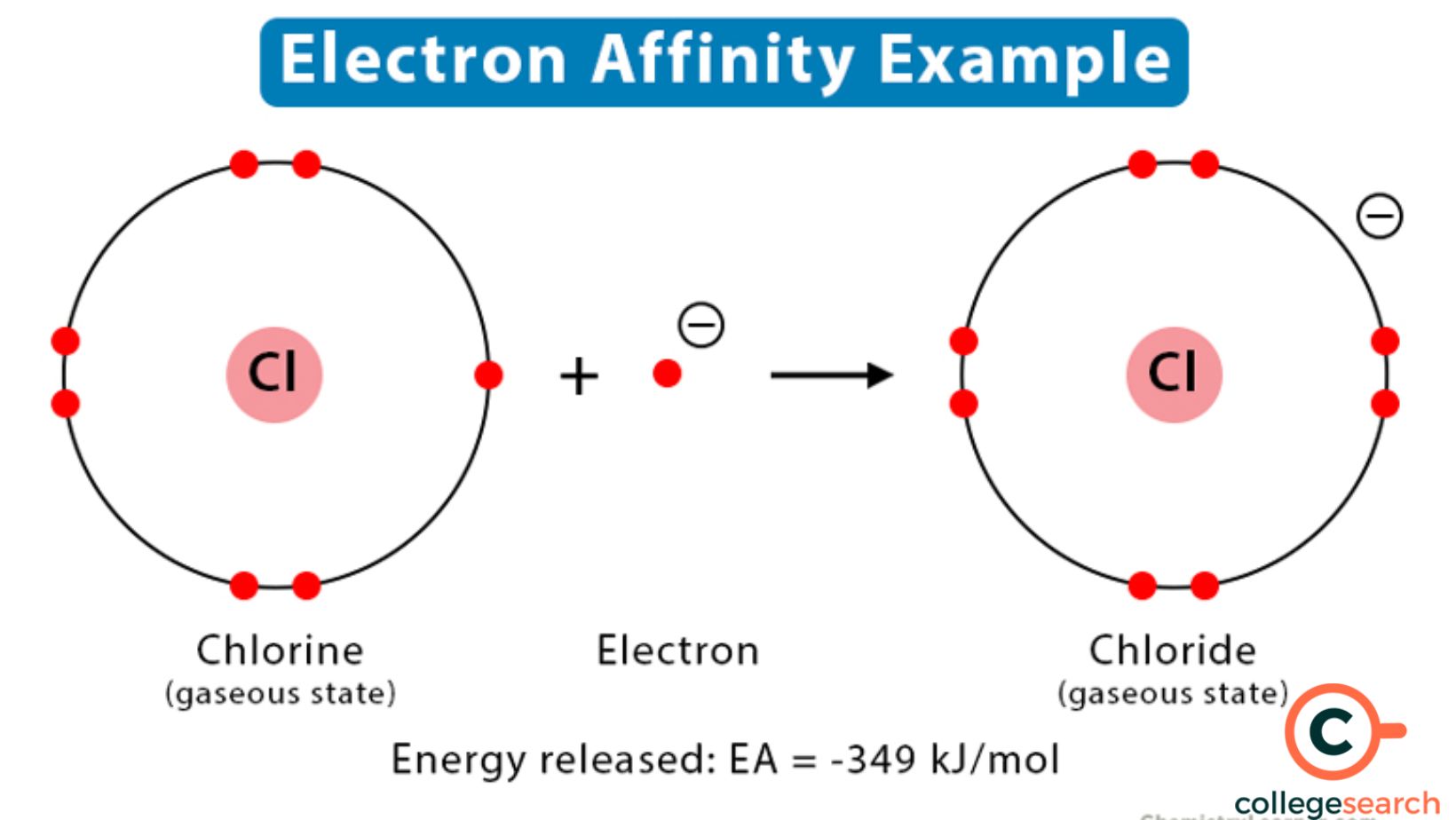
Electron affinity is formally defined as the amount of energy released when an electron is added to a neutral atom in the gaseous state to form a negative ion (anion). Mathematically, it is represented by the equation:
$X(g) + e^- \rightarrow X^-(g) + \text{Energy}$
In most chemistry curricula, if energy is released (an exothermic process), the electron affinity is reported as a positive value. However, in strictly thermodynamic terms ($\Delta H$), a release of energy is denoted by a negative sign. This dual convention often leads to confusion. For neon, the process is endothermic, meaning energy must be forced into the system to make the electron stick, even momentarily.
The Significance of the Sign
When we say an element like Fluorine has a high electron affinity, we mean it "wants" an electron badly and will release a significant amount of energy (328 kJ/mol) when it gets one. Neon is the polar opposite. To understand what neon's electron affinity "really means," you must recognize it as a measure of atomic resistance. It tells us that a neon atom is in its lowest possible energy state relative to its surroundings and that adding an electron would create an inherently unstable, high-energy configuration.
The Quantum Mechanical Barrier: Why Neon Says No
Neon's atomic number is 10, meaning it has 10 protons and 10 electrons. Its ground-state electron configuration is $1s^2 2s^2 2p^6$. This configuration represents a closed-shell or "stable octet" in its outermost principal energy level ($n=2$).
1. Full Occupancy and the Pauli Exclusion Principle
The Pauli Exclusion Principle states that no two electrons in an atom can have the same set of four quantum numbers. In neon, all available orbitals in the first and second shells are completely occupied. There is no "room" in the $2p$ subshell for an eleventh electron.
If we were to force an electron onto a neon atom, that electron would be required to occupy the next available orbital, which is the $3s$ orbital. This orbital belongs to a higher principal energy level ($n=3$).
2. The Energy Gap and Shielding
The jump from the $n=2$ shell to the $n=3$ shell is energetically expensive. In neon, the ten existing electrons are very effective at "shielding" the nucleus. The incoming eleventh electron would be positioned much further from the nucleus than the existing valence electrons.
At this distance, the effective nuclear charge ($Z_{eff}$) felt by the new electron is extremely low. The attractive force from the 10 protons in the nucleus is almost entirely cancelled out by the repulsive forces of the 10 electrons already present. Consequently, there is no net attractive force to hold the new electron in place. The resulting $Ne^-$ ion is not a stable bound state; it is a short-lived "resonance" that quickly decays as the extra electron is ejected.
Neon vs. Its Neighbors: A Study in Contrasts
To grasp the magnitude of neon's stability, it is helpful to compare it to its immediate neighbors on the periodic table: Fluorine ($F$) and Sodium ($Na$).
| Property | Fluorine (F) | Neon (Ne) | Sodium (Na) |
|---|---|---|---|
| Atomic Number | 9 | 10 | 11 |
| Electron Configuration | $[He] 2s^2 2p^5$ | $[He] 2s^2 2p^6$ | $[He] 2s^2 2p^6 3s^1$ |
| Electron Affinity (kJ/mol) | +328 (Exothermic) | $\approx 0$ or Negative (Endothermic) | +53 (Exothermic) |
| Primary Goal | Gain 1 electron to reach octet | Maintain current octet | Lose 1 electron to reach octet |
| Ion Stability | $F^-$ is very stable | $Ne^-$ is unstable | $Na^-$ is rare but possible |
The Fluorine Comparison
Fluorine is one electron short of a full octet. Its nucleus has 9 protons, and its $2p$ subshell has a vacancy. When an electron enters that vacancy, it feels a strong pull from the nucleus because it is entering the same energy level as the other valence electrons. This results in a massive release of energy. Neon, having filled that vacancy, sees no such benefit.
The Sodium Comparison
Sodium has 11 electrons. Its eleventh electron sits in the $3s$ orbital—the same place an extra electron would have to go in neon. However, sodium has 11 protons to pull on that electron, whereas a neon anion ($Ne^-$) would only have 10 protons attempting to hold 11 electrons. This explains why even sodium has a positive (exothermic) electron affinity, while neon does not.
Experimental Measurement: How Do We Know?
Measuring the electron affinity of noble gases like neon is notoriously difficult because they do not form stable negative ions that can be easily weighed or analyzed in a mass spectrometer.
In 2026, researchers continue to use advanced techniques like laser photodetachment threshold spectroscopy and high-level ab initio quantum chemical calculations to estimate these values. Because $Ne^-$ does not exist as a stable ground-state ion, "electron affinity" for neon is often discussed in terms of "scattering resonances."
When an electron beam is fired through neon gas, physicists look for specific electron energies where the electrons seem to "stick" to the neon atoms for a fraction of a microsecond before being kicked off. These resonances provide the data points used to conclude that the energy of the $Ne$ atom plus a free electron is lower than the energy of a $Ne^-$ ion. For more technical data on atomic energy levels, the NIST Atomic Spectra Database remains the gold standard for verified physical constants.
Why Neon's Electron Affinity Matters in Engineering and Industry
You might wonder why we care about the "meaning" of a value that is essentially zero. In industrial applications, neon’s refusal to accept electrons is its greatest strength.
1. High-Voltage Equipment
Neon is used in lighting and high-voltage indicators because of its high ionization energy and zero electron affinity. It does not easily form ions, allowing it to remain a stable insulator until a specific, high voltage is reached, at which point it glows as a plasma.
2. Cryogenics and Inert Atmospheres
In specialized manufacturing (such as semiconductor fabrication in the mid-2020s), an inert atmosphere is required to prevent oxidation. While argon is more common due to cost, neon is used when specific thermal properties are needed without the risk of the gas reacting with high-energy electrons in the processing chamber.
3. Laser Physics
The Helium-Neon (HeNe) laser relies on the specific energy levels of neon. If neon had a high electron affinity, the electronics of the laser would likely cause the formation of negative ions, quenching the "population inversion" required for the laser to function. Its lack of electron affinity ensures that the electrons in the system interact with neon atoms primarily through collisions that excite them to higher energy states rather than sticking to them.
Common Misconceptions About Noble Gas Electron Affinity
As students and professionals navigate chemical theory, several "mental traps" often arise regarding neon's behavior.
The "Happy" Atom Myth
In introductory chemistry, we often say neon is "happy" because it has a full shell. In reality, atoms don't have emotions; they have energy states. Neon doesn't "want" to stay as it is; it is simply in a deep "energy well." To change it requires a massive input of energy, and systems naturally tend toward the lowest energy state.
Electron Affinity vs. Electronegativity
These terms are often used interchangeably, but they mean different things.
- Electron Affinity is a physical measurement of energy for a single atom in isolation.
- Electronegativity (like the Pauling Scale) is a chemical concept describing how well an atom attracts electrons within a chemical bond. Because neon doesn't form standard bonds, its electronegativity is usually not even listed on the scale, though some theoretical scales (like the Allen scale) assign it the highest value because its electrons are so tightly held.
The Periodic Trend Exception
Generally, electron affinity increases as you move from left to right across a period. However, this trend "breaks" at the noble gases. If you were to graph electron affinity vs. atomic number, you would see a jagged line that peaks at the halogens (Group 17) and then crashes to zero or below at Group 18. Understanding neon's electron affinity means understanding that periodic trends are not laws—they are reflections of underlying electronic structures that have hard boundaries.
Summary Table: Key Aspects of Neon's Electronic Profile
| Characteristic | Detail |
|---|---|
| Value | Effectively zero or negative (Endothermic process) |
| Cause | Full $n=2$ shell ($2s^2 2p^6$) |
| Electron Placement | Extra electron must go to $3s$ orbital |
| Nuclear Shielding | 10 core electrons highly shield the 10 protons |
| Chemical Result | Inertness; no known stable anions |
| Physical State | Monatomic gas |
FAQs
Can neon ever form a negative ion ($Ne^-$)?
In a strictly stable, long-term sense, no. However, in high-energy physics experiments, "temporary negative ion states" or resonances can be observed. These exist for only a few femtoseconds before the extra electron is repelled by the existing electron cloud and leaves the atom.
Why do some charts show noble gases having "no" electron affinity instead of a negative number?
This is a matter of convention. Some sources list it as "0" because a stable ion cannot be formed. Others list it as a negative value (e.g., -120 kJ/mol) to indicate that the process of adding an electron is energetically unfavorable (endothermic). The International Union of Pure and Applied Chemistry (IUPAC) provides guidelines on these conventions to ensure global consistency.
Is neon's electron affinity the same as its ionization energy?
No. Ionization energy is the energy required to remove an electron from a neutral atom. Neon has a very high ionization energy (approx. 2080 kJ/mol), which is another reason it is so stable. While electron affinity is about adding an electron, both properties reflect the extreme stability of neon's full electron shells.
Does the electron affinity of neon change under high pressure?
While the fundamental atomic properties remain the same, extreme pressures (like those found in the cores of gas giant planets) can force atoms close enough together that their electron shells overlap. In these "compressed" states, the traditional rules of electron affinity change, and noble gases can sometimes be forced into unconventional bonds, but this is not "standard" electron affinity.
How does neon's electron affinity compare to helium?
Both are effectively zero/negative. Helium is even more stable in some regards because its electrons are in the $1s$ shell, which is much closer to the nucleus. However, the principle remains the same: adding an electron to helium would require starting the $n=2$ shell, which is energetically "expensive."
Final Recommendation for Students and Educators
When studying what neon electron affinity really means, focus on the cost of entry. View the neon atom as a completed puzzle. There is no space left for another piece in the current frame ($n=2$). To add another piece, you have to build a whole new, larger frame ($n=3$), and the existing pieces are actively pushing the new one away.
For those pursuing careers in chemistry or materials science, understanding these "zero points" on the periodic table is essential for predicting how materials will behave in plasma states, under intense radiation, or in high-vacuum environments. Always verify specific energy values through peer-reviewed databases like the Journal of Physical and Chemical Reference Data rather than relying on simplified classroom charts which may use conflicting sign conventions.
Image Gallery
Select an image to open it in a new tab.



Akira Tanaka
International Academic Trends Correspondent
