Understanding the History of Positivism: From Auguste Comte to the Vienna Circle
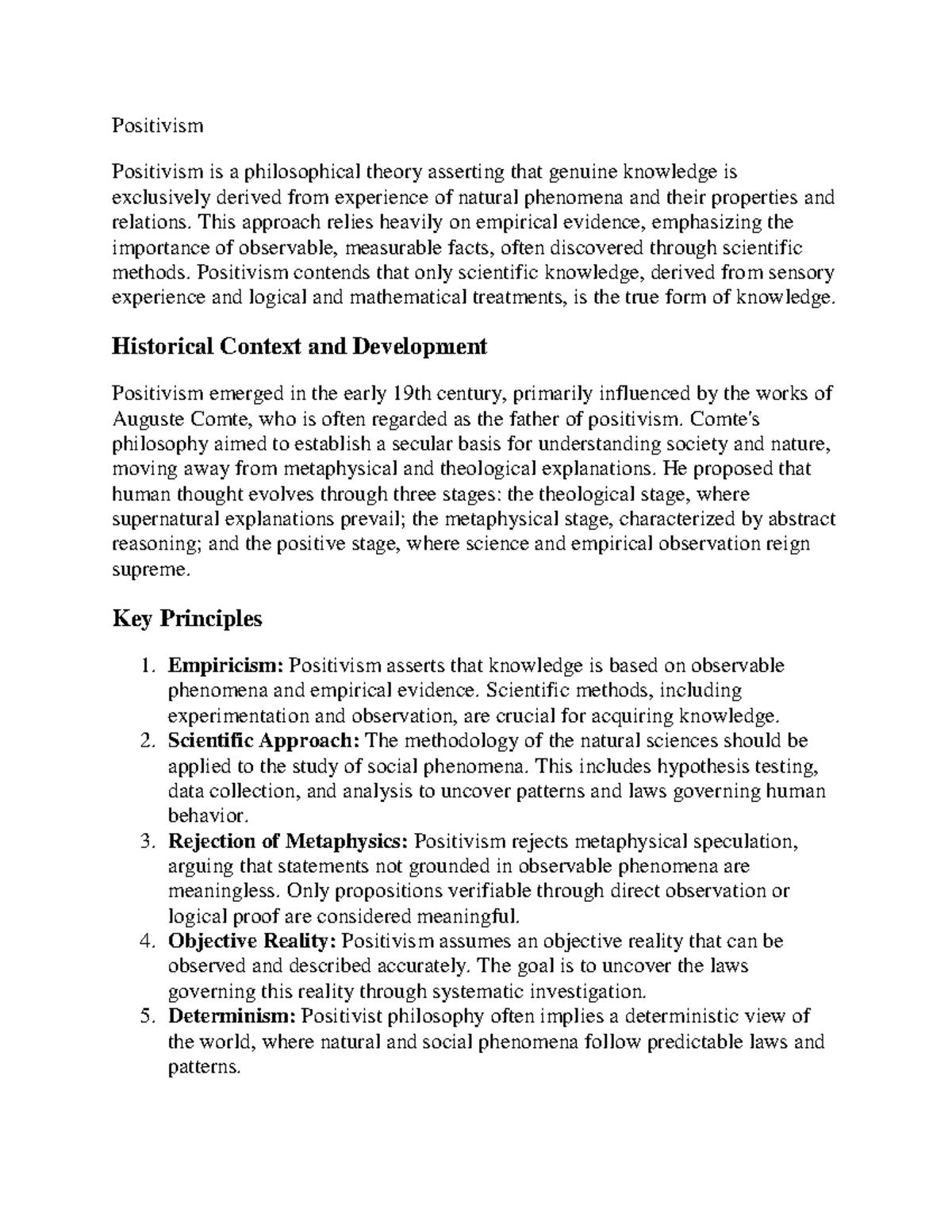
Understanding the history of positivism requires tracing the evolution of the belief that empirical evidence and scientific methods are the only valid sources of knowledge. Emerging in the 19th century, this movement shifted human inquiry from metaphysical speculation toward observable phenomena, fundamentally shaping modern social sciences and scientific methodology.
Positivism is not a single, static doctrine but a family of philosophical positions that share a common commitment to the "positive" (the certain, the precise, and the useful). To grasp its history, one must look at its origins in post-revolutionary France, its refinement in British empiricism, its radicalization by the Vienna Circle in the 20th century, and its eventual evolution into contemporary post-positivism.
The Intellectual Roots and the Enlightenment Context
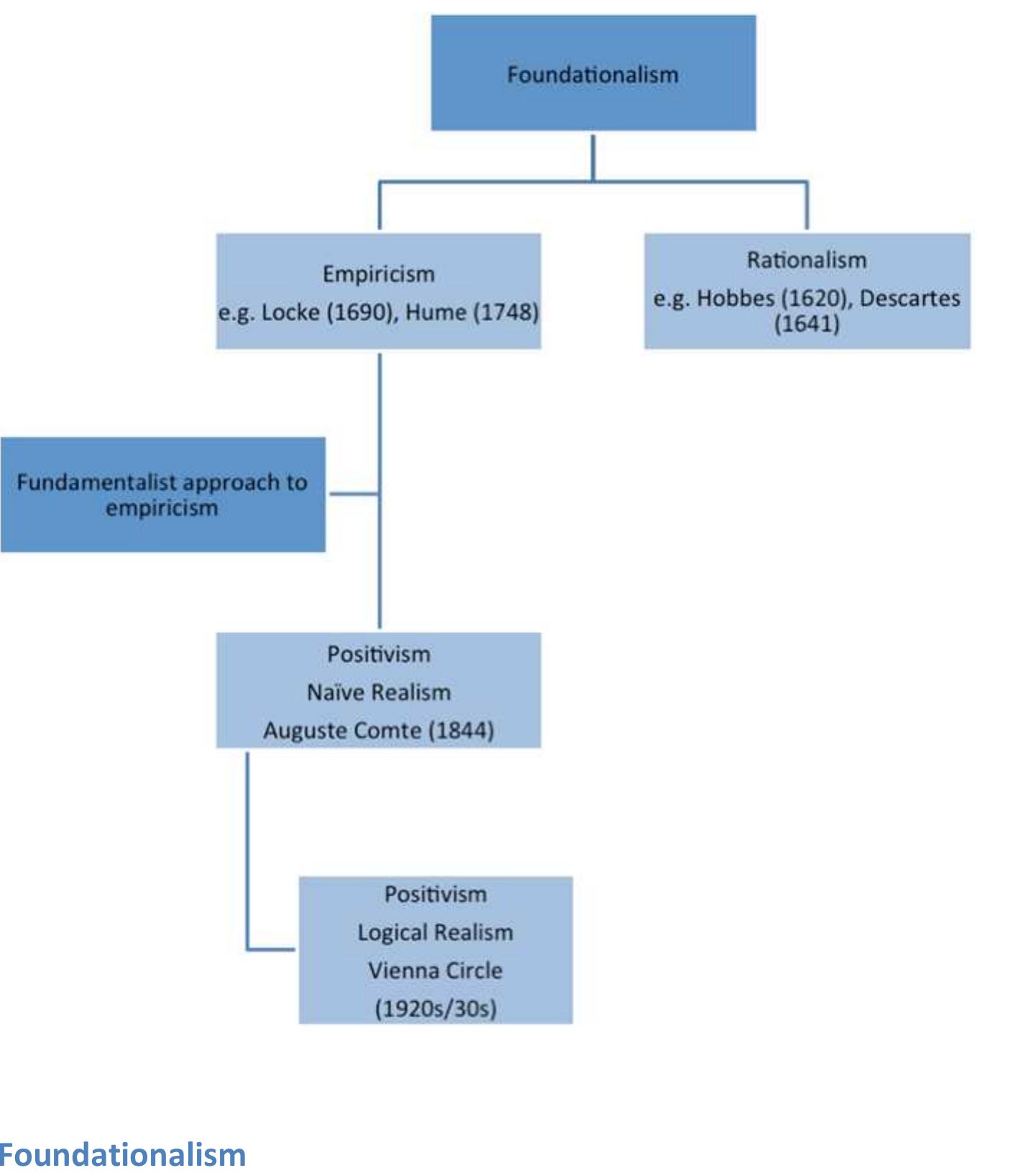
Before the term "positivism" was coined, the intellectual ground was prepared by the Enlightenment and the Scientific Revolution. Philosophers like Francis Bacon and David Hume had already begun prioritizing sensory experience over abstract reasoning. Hume’s "fork"—the distinction between matters of fact and relations of ideas—served as a precursor to the positivist rejection of any claim that could not be verified by experience or logic.
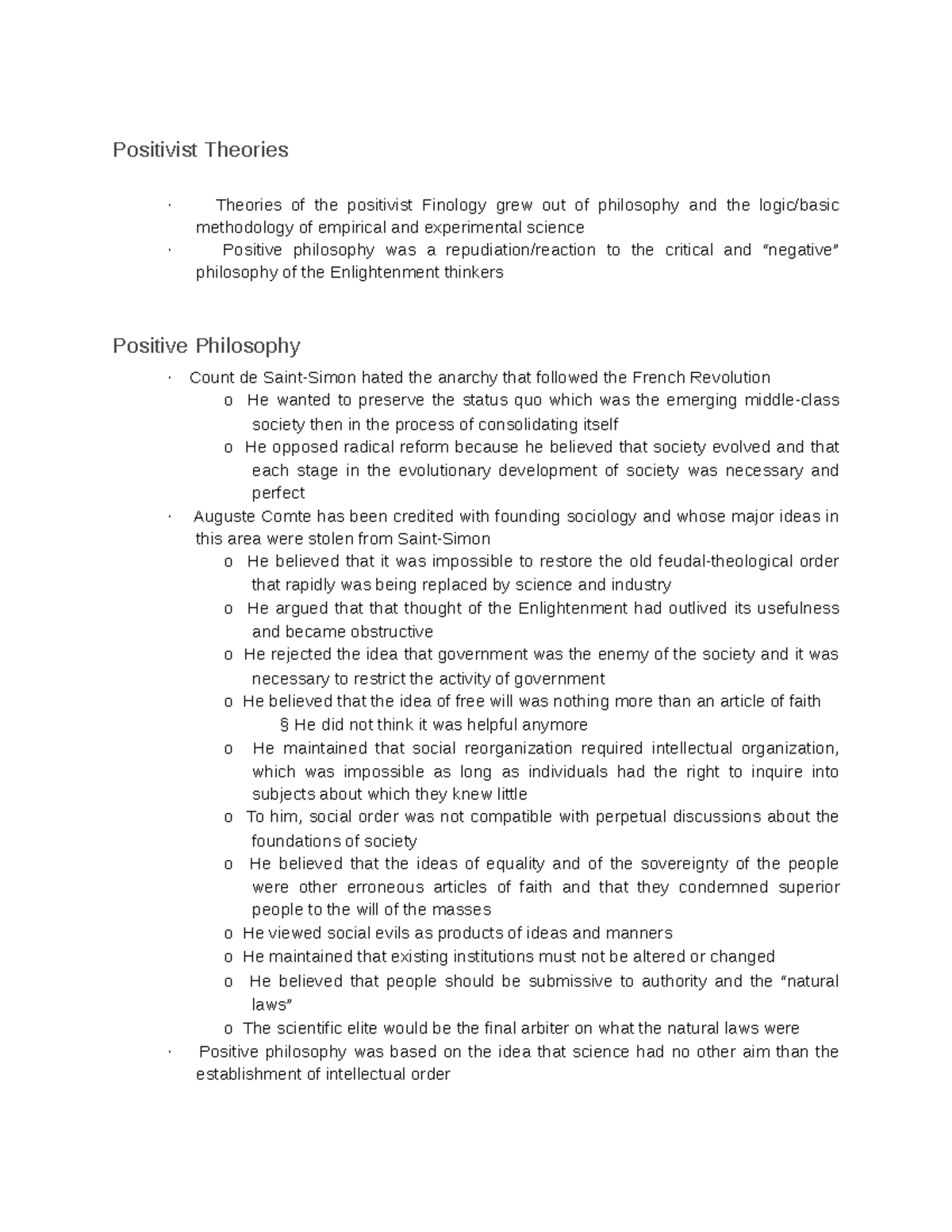
In the early 19th century, the social upheaval following the French Revolution created a demand for social order and intellectual clarity. Henri de Saint-Simon, a social reformer, began suggesting that society should be organized according to scientific principles. It was his student, Auguste Comte, who would synthesize these ideas into a formal philosophical system.
Auguste Comte and the Birth of Positive Philosophy
Auguste Comte (1798–1857) is widely recognized as the father of positivism. In his seminal work, The Course in Positive Philosophy (1830–1842), he sought to cure the social instability of France by applying the methods of the natural sciences to the study of society.
The Law of Three Stages
The cornerstone of Comte’s history of positivism is the Law of Three Stages. He argued that human knowledge, and society itself, progresses through three distinct historical phases:
- The Theological Stage: In this earliest phase, humans explain natural phenomena through the intervention of supernatural beings, gods, or spirits. This stage is dominated by military authority and traditional religious institutions.
- The Metaphysical Stage: A transitional period where abstract forces, "natures," or essences replace personal deities. While it moves away from religion, it remains speculative rather than observational.
- The Positive Stage: The final and most mature stage where the mind gives up the search for absolute origins or "first causes" and instead focuses on discovering the "laws" that govern phenomena—the constant relations of succession and resemblance.
The Hierarchy of the Sciences
Comte also proposed a "hierarchy of the sciences," which categorized knowledge by its increasing complexity and decreasing generality. At the base was mathematics, followed by astronomy, physics, chemistry, and biology. At the summit, Comte placed sociology (a term he invented), which he viewed as the "Queen of the Sciences" because it addressed the most complex subject: human society.
In 2026, many academic institutions still use a variation of this hierarchy to organize departments, highlighting the enduring structural impact of Comtean thought on the modern university system.

The British Reception: John Stuart Mill and Herbert Spencer
As positivism crossed the English Channel, it merged with the long-standing tradition of British empiricism. John Stuart Mill (1806–1873) was an early supporter of Comte, though he eventually broke with him over Comte’s authoritarian social prescriptions. Mill’s contribution to the history of positivism was his refinement of inductive logic—the process of drawing general conclusions from specific observations—which provided a more robust logical framework for positivist science.
Simultaneously, Herbert Spencer (1820–1903) applied positivist principles to the concept of evolution. While Spencer is often associated with social Darwinism, his historical role was to spread the idea that the entire universe, from biology to human ethics, followed scientific laws that could be mapped and understood without recourse to the supernatural.
The Rise of Logical Positivism and the Vienna Circle
The early 20th century saw a radical shift in the history of positivism. While Comte focused on the progress of history and society, a group of scientists, mathematicians, and philosophers known as the Vienna Circle (Wiener Kreis) turned their attention to the logic of language.
The Verification Principle
Led by Moritz Schlick and including figures like Rudolf Carnap and Otto Neurath, this movement—known as Logical Positivism or Logical Empiricism—sought to eliminate "meaningless" talk from philosophy. They introduced the Verification Principle, which stated that a statement is only cognitively meaningful if it is either:
- Analytic: True by definition (e.g., "All bachelors are unmarried").
- Synthetically Verifiable: Capable of being proven true or false through sensory experience.
Under this strict criterion, most of traditional philosophy, including ethics, metaphysics, and theology, was dismissed as "nonsensical" because it could not be empirically tested.
The Influence of the Tractatus
The Vienna Circle was heavily influenced by Ludwig Wittgenstein’s Tractatus Logico-Philosophicus. Although Wittgenstein later distanced himself from the movement, the Circle adopted his idea that philosophy should be a "critique of language," clearing away the conceptual confusion that arises when we use words outside the limits of possible experience.
Comparative Framework of Positivist Evolution
The following table outlines the differences between the major eras of positivist thought, illustrating how the movement transitioned from a social project to a linguistic one.
| Feature | Early Positivism (Comte) | Logical Positivism (Vienna Circle) | Post-Positivism (Popper/Kuhn) |
|---|---|---|---|
| Primary Goal | Social order and scientific progress | Logical clarity and scientific unity | Understanding how theories evolve |
| Central Focus | The Law of Three Stages | The Verification Principle | Falsifiability and paradigms |
| View of Metaphysics | Historical phase to be outgrown | Linguistically meaningless | Not science, but potentially useful |
| Role of Science | To discover absolute social laws | To describe sensory data via logic | To create fallible models of reality |
| Primary Tool | Observation and Hierarchy | Symbolic logic and Language | Critique and historicism |
Critiques and the Decline of "Strict" Positivism
The decline of logical positivism is as crucial to its history as its rise. By the mid-20th century, internal contradictions and external critiques began to dismantle the movement’s foundations.
The Problem of Self-Refutation
One of the most devastating critiques was that the Verification Principle itself could not be verified. It was neither an analytic truth by definition nor an empirical fact discovered in nature. This meant that, by its own standards, the core tenet of logical positivism was "meaningless."
Karl Popper and Falsifiability
Karl Popper, though often associated with the Vienna Circle, was actually its "official opposition." He argued that science does not work by verifying theories (which is impossible, as you can never observe every instance), but by attempting to falsify them. A theory is scientific only if it makes predictions that could, in principle, be proven wrong. This shifted the focus of positivism from certainty to fallibility.
The Transition to Post-Positivism
By the 1960s, Thomas Kuhn’s The Structure of Scientific Revolutions introduced the idea that science does not progress in a straight, objective line. Instead, it moves through "paradigm shifts" influenced by social and historical factors. This led to post-positivism, which maintains the importance of empirical evidence but acknowledges that researchers are not entirely objective and that theories are "theory-laden"—influenced by the perspectives of the people who create them.
The Legacy of Positivism in the 2020s
As of 2026, the history of positivism continues to inform how we conduct research. In the social sciences, the "quantitative vs. qualitative" debate is a direct descendant of the positivist legacy. Quantitative researchers, using statistical models and big data, operate within a modified positivist framework, seeking objective patterns in human behavior.
Furthermore, the rigorous demand for evidence-based policy in government and medicine is a modern application of Comte’s original vision: using the best available data to improve human life. While the radical "anti-metaphysical" stance of the 1930s has softened, the insistence on empirical accountability remains a pillar of modern intellectual life.
Frequently Asked Questions
What is the difference between positivism and empiricism?
Empiricism is a broad epistemological theory that all knowledge comes from sensory experience. Positivism is a more specific philosophical and social movement that applies empiricism to the methodology of science and the organization of society, often explicitly rejecting metaphysics as a valid field of study.
Is positivism still used in sociology today?
Yes, but rarely in its original "Comtean" form. Modern sociology utilizes "positivist" methods in the form of quantitative analysis, surveys, and statistical modeling. However, many sociologists now adopt a "post-positivist" or "interpretivist" stance, recognizing that human behavior is influenced by meanings that cannot always be measured like physical particles.
Why did Auguste Comte try to start a "Religion of Humanity"?
In his later years, Comte believed that society needed the cohesive power of religion but without the supernatural elements. He proposed a "Positive Religion" where humanity itself was the object of worship, complete with secular rituals and a calendar of scientific "saints." This move was largely rejected by his followers, such as John Stuart Mill, who found it illiberal.
How did the Vienna Circle end?
The Vienna Circle was largely dispersed by the rise of Nazism in the 1930s. Many of its members were Jewish or held socialist views, leading them to flee to the United Kingdom or the United States. This migration actually helped spread logical positivism to the English-speaking world, where it heavily influenced the development of analytic philosophy.
Does positivism claim that science can solve all problems?
Early positivism, particularly Comte's version, was highly optimistic and suggested that scientific laws could eventually address all social and physical issues. Modern post-positivism is much more cautious, acknowledging the limits of scientific inquiry and the role of ethics and value judgments that science alone cannot resolve.
Recommendations for Further Study
To deepen your understanding of the history of positivism, researchers should begin with primary texts to see the evolution of the language used. Start with the early chapters of Auguste Comte’s Introduction to Positive Philosophy to understand the original intent. Follow this with A.J. Ayer’s Language, Truth, and Logic (1936), which serves as the most accessible English-language summary of the logical positivist era.
For those interested in the critique of these ideas, Karl Popper’s The Logic of Scientific Discovery is the essential next step. Understanding these historical shifts is not merely an academic exercise; it provides the necessary context for evaluating the "scientific" claims made in contemporary policy debates and social research today in 2026.
Image Gallery
Select an image to open it in a new tab.


Akira Tanaka
International Academic Trends Correspondent
