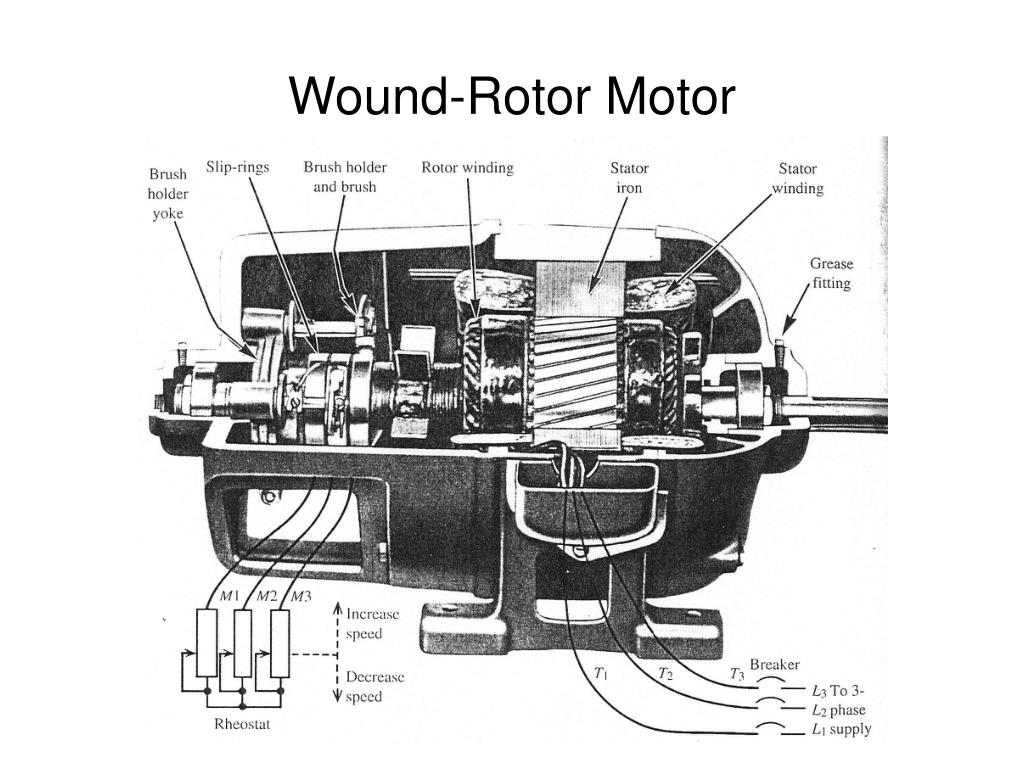
Wound rotor induction motors (WRIM) remain a cornerstone of heavy industry because they provide exceptional starting torque and precise current control for high-inertia loads. By utilizing external resistance connected through slip rings, these drives manage thermal stress and power grid stability more effectively than standard squirrel-cage motors in specific large-scale applications like mining, cement, and water treatment.
Despite the rapid advancement of Variable Frequency Drive (VFD) technology and the increasing efficiency of permanent magnet motors, the wound rotor induction motor (WRIM) holds a unique and often indispensable position in the 2026 industrial landscape. Often referred to as a slip-ring motor, the wound rotor drive is a specialized variation of the ubiquitous AC induction motor. While the standard squirrel-cage motor is the "workhorse" for general-purpose tasks, the wound rotor is the "heavy lifter," designed for scenarios where the mechanical and electrical demands exceed the capabilities of simpler designs.
Understanding why the wound rotor matters requires a deep dive into the physics of induction, the economics of power distribution, and the practicalities of maintaining massive industrial machinery. In high-power applications—often exceeding 1,000 horsepower—the choice of motor can dictate the reliability of an entire production line and the longevity of the local electrical infrastructure.
The Mechanical and Electrical Architecture of the Wound Rotor
To appreciate the significance of the wound rotor, one must first distinguish it from the more common squirrel-cage induction motor. In a squirrel-cage motor, the rotor consists of solid conducting bars shorted at the ends. In contrast, the wound rotor features a complete set of three-phase windings, much like the stator. These rotor windings are connected to three insulated slip rings mounted on the motor shaft.
The "magic" of the wound rotor happens through these slip rings. Carbon brushes ride on the rings, providing a physical electrical connection to an external circuit, typically a bank of resistors or a liquid resistance starter (LRS). This configuration allows engineers to physically modify the electrical characteristics of the rotor while it is in motion—a feat impossible with a sealed squirrel-cage design.
By adding resistance to the rotor circuit, the motor's torque-speed curve is shifted. In a standard motor, maximum torque (breakdown torque) occurs at a specific, relatively high speed. By increasing rotor resistance in a WRIM, that point of maximum torque can be moved down the speed scale, even to the point of zero RPM (standstill). This allows the motor to produce maximum torque at the exact moment of startup without drawing the massive, grid-disturbing currents associated with other motor types.
High Starting Torque and Grid Stability
One of the primary reasons the wound rotor matters in 2026 is its ability to handle "hard starts." Large industrial machines, such as ball mills in mining or massive crushers in cement plants, possess immense rotational inertia. Accelerating these machines from a dead stop requires a monumental amount of torque.
In a standard squirrel-cage motor, starting under such a heavy load would result in an "inrush current" that can be six to eight times the motor's full-load current rating. For a multi-megawatt motor, this spike can cause voltage dips across the entire industrial facility or even the local utility grid. This "brownout" effect can trip sensitive electronics, damage other equipment, and lead to heavy penalties from utility providers.
The wound rotor drive solves this through its external resistance. As the motor starts, the external resistors are at their maximum value, which limits the current draw while simultaneously maximizing the starting torque. As the motor gains speed, the resistance is gradually stepped down or "cut out," allowing the motor to transition smoothly to its efficient operating speed. This controlled acceleration protects the electrical grid and reduces the mechanical stress on gearboxes, couplings, and belts.
Thermal Management and External Heat Dissipation
Heat is the enemy of motor longevity. In a squirrel-cage motor, all the energy lost during the high-current startup phase is converted into heat directly within the rotor bars and the stator windings. If a large motor fails to reach its operating speed quickly—often due to a heavy or jammed load—the internal heat can rise to catastrophic levels, melting insulation and causing a "burnout."
The wound rotor architecture offers a superior solution for thermal management. Because a significant portion of the rotor's electrical resistance is located in an external resistor bank or a liquid starter tank, the heat generated during the startup process is dissipated outside the motor frame.
Liquid Resistance Starters (LRS)
In 2026, the Liquid Resistance Starter remains the preferred companion for large wound rotor drives. An LRS uses an electrolyte solution (usually a mixture of water and sodium carbonate) and movable electrodes to provide a perfectly smooth, stepless transition of resistance. As the heat is generated within the electrolyte, it can be managed via heat exchangers or simply by the large thermal mass of the tank. This allows for "frequent starts"—a process that would destroy a squirrel-cage motor due to cumulative heat buildup.
Slip Power Recovery: Enhancing Efficiency
Historically, the biggest criticism of wound rotor motors was the energy wasted as heat in the external resistors during speed control. However, modern industrial drives have turned this weakness into a strength through Slip Power Recovery Systems (SPRS), often referred to as static Scherbius drives.
Instead of burning off the excess rotor energy as heat, an SPRS captures the electrical power from the slip rings. Using power electronics (rectifiers and inverters), this energy is converted and fed back into the main AC power supply. This significantly improves the overall system efficiency, especially in applications where the motor must run at speeds slightly below its synchronous maximum for long periods, such as in large cooling fans or water pumps.
This capability makes the wound rotor a "smart" choice for sustainability-focused industries in 2026. It combines the ruggedness of an induction motor with the energy-recovery capabilities usually reserved for more complex and expensive drive systems.
Comparative Analysis: Wound Rotor vs. Alternatives
Choosing a drive system involves balancing capital expenditure (CAPEX), operational expenditure (OPEX), and performance requirements. The following table compares the Wound Rotor Induction Motor (WRIM) with its primary competitors: the Squirrel-Cage Motor with a Variable Frequency Drive (VFD) and the Synchronous Motor.
| Feature | Wound Rotor (WRIM) + LRS | Squirrel-Cage + VFD | Synchronous Motor |
|---|---|---|---|
| Starting Torque | Excellent (Up to 250% Rated) | Good to Excellent | Moderate (Requires special starting) |
| Inrush Current | Low (150-200% Rated) | Very Low (Controlled by VFD) | High (Unless using VFD) |
| Heat Dissipation | External (Resistor/LRS) | Internal to Motor | Internal to Motor |
| Maintenance | High (Brushes/Slip Rings) | Low (No brushes) | Moderate (Excitation system) |
| Harmonic Distortion | Negligible | High (Requires filtering) | Low |
| System Complexity | Moderate (Mechanical/Fluid) | High (Electronic) | High (Control/Excitation) |
| Best Use Case | Heavy Inertia, Rugged Environments | Precise Speed Control | Power Factor Correction |
While VFDs have become more affordable and powerful, they introduce harmonic distortion into the power line, which can require expensive filtering. Furthermore, in extremely high-power applications (above 10 MW), the cost and cooling requirements of a VFD can be prohibitive compared to the mechanical simplicity of a wound rotor and an LRS.
Maintenance and Reliability in Harsh Environments
The "matter" of the wound rotor also extends to its physical resilience. Industrial environments—mines, quarries, and chemical plants—are often hot, dusty, and remote. Power electronics (like those in a VFD) are sensitive to ambient temperature and airborne contaminants. They require clean, climate-controlled rooms to function reliably.
A wound rotor motor is essentially a block of iron and copper. While the slip rings and brushes do require periodic maintenance—including inspections for brush wear and ensuring the rings remain smooth—the motor itself can withstand significant environmental abuse. For a remote mining site where the nearest semiconductor technician is a helicopter ride away, the "low-tech" reliability of a wound rotor drive is a massive operational advantage.
Brush and Slip Ring Care in 2026
Modern brush technology has evolved to include advanced carbon-graphite composites that last longer and produce less dust. Integrated monitoring systems can now detect "sparking" or excessive vibration in the brush rigging, allowing for predictive maintenance before a failure occurs. These digital enhancements have mitigated one of the traditional drawbacks of the WRIM.
Critical Applications Where the Wound Rotor Excels
To truly understand why the wound rotor matters, one must look at the specific machines it powers.
- Grinding Mills (Ball and Lace Mills): Used in mining to crush ore. These machines have immense starting torque requirements and often need to be "inched" or "jogged" for maintenance. The wound rotor provides the torque and the thermal capacity to handle these repeated, low-speed maneuvers.
- Conveyor Systems: Long-distance conveyors (kilometers long) require a "soft start" to prevent stretching or snapping the belt. The wound rotor provides a linear, controlled acceleration that protects the mechanical integrity of the belt.
- Large Water Pumps: In municipal water treatment or irrigation, motors must often start against a head of water. The ability of the wound rotor to manage torque prevents "water hammer" and pipe bursts.
- Cranes and Hoists: For heavy-duty industrial lifting, the ability to control speed by varying rotor resistance allows for the smooth handling of massive loads, although this is an area where VFDs have gained significant ground.
Future-Proofing: The Role of the Wound Rotor in 2026
As we look at the industrial landscape of 2026, the wound rotor is not a relic; it is a refined tool. The integration of IoT sensors for vibration analysis, thermal imaging of slip rings, and the use of automated electrolyte management in LRS units has brought this 19th-century concept firmly into the 21st century.
The drive matters because it offers a bridge between mechanical simplicity and electrical sophistication. It provides a way to move the world's heaviest loads without breaking the electrical grids that power them. For industries where "downtime" is measured in hundreds of thousands of dollars per hour, the proven, rugged performance of a wound rotor motor remains a preferred insurance policy.
Frequently Asked Questions
Can a wound rotor motor be used with a VFD?
While it is technically possible to run a wound rotor motor with a VFD by shorting the slip rings, it is rarely done. The rotor insulation of a WRIM is often not designed to handle the high-frequency voltage spikes (dV/dt) produced by modern VFDs. If speed control is the primary goal and the starting torque isn't extreme, a standard squirrel-cage motor with a VFD is usually the more cost-effective choice.
Why not just use a larger squirrel-cage motor?
A larger squirrel-cage motor would still face the same physics: the starting torque is fixed by the rotor design. To get more starting torque, you would need a "Design D" rotor, which is highly inefficient at full speed. The wound rotor gives you the best of both worlds—the high starting torque of a high-resistance motor and the high running efficiency of a low-resistance motor.
How often do the brushes need to be replaced?
In modern industrial settings, brushes typically last between 6 to 12 months of continuous operation, depending on the environment and load. Factors like humidity and the presence of silicone vapors can significantly impact brush life. Automated wear sensors are now standard in 2026, alerting maintenance teams well before the brushes reach their limit.
Is the wound rotor motor becoming obsolete?
No. While VFDs have taken over the small and medium motor markets, the wound rotor motor remains dominant in high-megawatt, high-inertia applications. The cost-to-torque ratio and the ability to dissipate heat externally make it irreplaceable for specific heavy industries.
What is "slip" in a wound rotor motor?
Slip is the difference between the speed of the magnetic field (synchronous speed) and the actual speed of the rotor. In a wound rotor motor, increasing the resistance in the rotor circuit increases the slip, which slows the motor down while maintaining high torque. This is the fundamental principle used for both starting and speed control.
Practical Recommendation for Industry Operators
If you are designing a new facility or retrofitting an old one in 2026, do not overlook the wound rotor induction motor for any load that involves high inertia or requires frequent starting. Conduct a Total Cost of Ownership (TCO) analysis that includes not just the purchase price of the motor, but also the costs of power grid reinforcements, harmonic filters (if using a VFD), and the potential cost of downtime.
For existing wound rotor installations, the most effective next action is to invest in a modernized Liquid Resistance Starter (LRS) or a Slip Power Recovery System. Upgrading the control side of the drive can result in energy savings of up to 20% and significantly reduce the maintenance requirements of the electrode system. Ensure your maintenance schedule includes a dedicated "slip ring protocol," focusing on surface concentricity and brush pressure, as these are the most common points of failure in an otherwise nearly indestructible machine.
Image Gallery
Select an image to open it in a new tab.
Mateo Castillo
Decentralized Finance and E-Payments Strategist
