PhET Quantum Tunneling Simulation: An Interactive Exploration of Wave-Particle Behavior
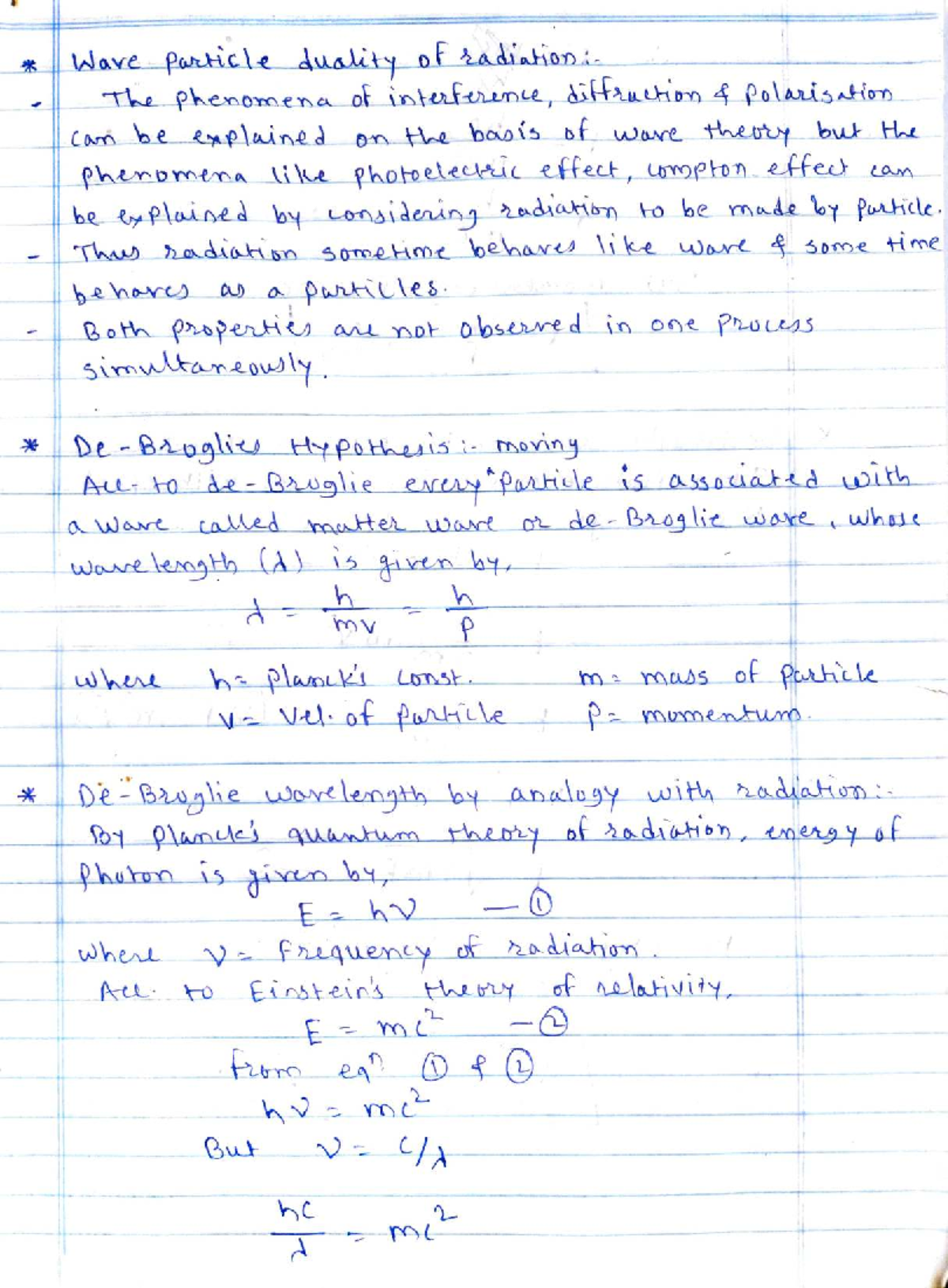
The PhET Quantum Tunneling simulation allows users to visualize how subatomic particles behave as wave packets, demonstrating their ability to penetrate energy barriers that are classically impassable. By adjusting barrier height, width, and particle energy, students and researchers can observe real-time transmission and reflection, bridging the gap between abstract mathematical equations and physical intuition.
Understanding the Core Concept: What is Quantum Tunneling?
Quantum tunneling is one of the most counter-intuitive phenomena in modern physics. In the classical world, if a ball is rolled toward a hill, it will only reach the other side if its initial kinetic energy is greater than the gravitational potential energy required to reach the peak. If the energy is insufficient, the ball simply rolls back. This is known as a potential barrier.
In the quantum realm, however, particles such as electrons do not behave like solid macroscopic balls. Instead, they exhibit wave-particle duality. According to the Schrödinger equation, a particle's position is defined by a probability wave function ($\psi$). When this wave encounters a potential barrier, it does not abruptly drop to zero. Instead, it decays exponentially within the barrier. If the barrier is thin enough, a small portion of the wave function emerges on the other side. This indicates a non-zero probability that the particle will be found beyond the barrier, effectively "tunneling" through a region that should be forbidden by classical energy conservation.
The PhET Quantum Tunneling and Wave Packets simulation, developed by the University of Colorado Boulder, provides a high-fidelity visual environment to explore these dynamics. As of 2026, it remains a primary tool for undergraduate physics education, offering a bridge between the complex calculus of wave functions and the visual reality of particle behavior.
The PhET Simulation: A Digital Laboratory for the Subatomic
The PhET simulation environment is designed to handle the complex computations of quantum mechanics behind a user-friendly graphical interface. The simulation solves the time-dependent Schrödinger equation to show how a particle’s wave packet evolves over time when it interacts with various potential landscapes.
System Requirements and Accessing the Simulation
In 2026, most PhET simulations have been fully transitioned to HTML5, ensuring they run natively in any modern web browser on desktops, laptops, and tablets. This transition from the older Java-based versions was critical for maintaining accessibility in modern educational environments.
- Platform Compatibility: Windows, macOS, Linux, iOS, and Android.
- Browser Requirements: Chrome, Firefox, Safari, or Edge (latest versions recommended).
- Offline Use: Users can download the simulation files from the official PhET Interactive Simulations website for use in environments without internet connectivity.
Accessing the simulation is free of charge, as the project is supported by grants and donations to the University of Colorado Boulder. This open-access model has made it a global standard for science education.
Key Features and Interactive Controls
To effectively use the PhET Quantum Tunneling simulation, it is essential to understand the primary controls and what they represent in a physical context. The interface is divided into several panels that allow for the manipulation of the particle and the environment.
Plane Waves vs. Wave Packets
The simulation offers two primary modes of visualization:
- Plane Waves: This mode represents a particle with a definite energy ($E$) but an indefinite position. It results in a standing wave pattern or a continuous flow. This is useful for observing the Transmission Coefficient ($T$) and Reflection Coefficient ($R$) at a steady state.
- Wave Packets: This mode is more physically representative of a localized particle. It shows a "pulse" or packet of waves moving toward a barrier. This visualization is crucial for understanding the Heisenberg Uncertainty Principle, as a narrower wave packet (more localized position) implies a broader range of momentum (and energy) components.
Adjusting Potential Energy Barriers
The user can define the shape and magnitude of the potential energy landscape. Common configurations include:
- Square Barriers: A simple rectangular block of potential energy.
- Potential Steps: A permanent increase or decrease in potential energy.
- Potential Wells: A "valley" where a particle can become trapped (bound states).
- Double Barriers: Used to demonstrate Resonant Tunneling, where certain energy levels allow for nearly 100% transmission despite the barriers.
Users can click and drag the barriers to change their width or use sliders to adjust the potential height ($V_0$) in electron-volts (eV).
Experimental Procedures in the Virtual Lab
To gain the most insight from the "interactive exploration of wave-particle behavior," users should follow a structured experimental approach. This allows for the observation of how specific variables influence the probability of tunneling.
Measuring Transmission and Reflection
One of the most powerful features of the PhET simulation is the ability to toggle the display of the probability density ($|\psi|^2$). While the wave function itself ($\psi$) can be complex and oscillates, the probability density shows exactly where the particle is most likely to be found.
Step 1: Set the Energy Level Adjust the total energy ($E$) of the incoming particle. Note that for tunneling to be the primary focus, $E$ should be less than the barrier height ($V_0$).
Step 2: Modify Barrier Width Observe how the transmission coefficient changes as you make the barrier wider. In quantum mechanics, the probability of tunneling decreases exponentially with the width of the barrier. The simulation visually demonstrates this as the wave packet significantly diminishes in amplitude as it passes through a wider "wall."
Step 3: Analyze the Reflected Wave When a wave packet hits a barrier, part of it is reflected. The simulation shows the interference pattern created by the incoming and reflected waves. This is a clear demonstration of the wave nature of matter, as particles interfere with themselves in ways that classical "bullets" never would.
Physics Principles at Play
The PhET simulation is not just an animation; it is a mathematical model. It accurately portrays several advanced concepts that are foundational to quantum mechanics.
The Role of the Schrödinger Equation
The behavior seen in the simulation is governed by the time-dependent Schrödinger equation:
$i\hbar \frac{\partial}{\partial t} \Psi(x,t) = \left[ -\frac{\hbar^2}{2m} \frac{\partial^2}{\partial x^2} + V(x) \right] \Psi(x,t)$
When the particle energy $E$ is less than $V(x)$, the solution for $\psi$ inside the barrier becomes an evanescent wave—a decaying exponential function rather than a sine or cosine wave. If the barrier ends before the exponential decay reaches zero, the wave continues as a traveling wave on the other side, albeit with a much smaller amplitude.
Dispersion and Wave Packet Spreading
A notable observation in the PhET simulation is that wave packets spread out as they travel through a vacuum. This is known as dispersion. Because a wave packet is composed of multiple frequencies (energies), and each component travels at a different phase velocity, the packet naturally widens over time. This illustrates the fundamental limit of how long a quantum state can remain "localized" without external constraints.
Real-World Implications of Quantum Tunneling
While it may seem like a theoretical curiosity, quantum tunneling is a cornerstone of modern technology and natural phenomena. The PhET simulation provides the conceptual framework needed to understand these applications.
- Scanning Tunneling Microscopy (STM): STM is a powerful technique for imaging surfaces at the atomic level. A sharp metallic tip is brought very close to a sample surface. By applying a voltage, electrons "tunnel" across the gap. Because the tunneling current is extremely sensitive to the width of the gap (the barrier), the microscope can map the individual atoms of the sample.
- Flash Memory and Electronics: Modern NAND flash memory, used in SSDs and smartphones in 2026, relies on Fowler-Nordheim tunneling to move electrons onto a floating gate. This allows for non-volatile data storage, where bits are "trapped" behind an oxide barrier.
- Nuclear Fusion in Stars: In the sun, protons repel each other due to their positive charges (the Coulomb barrier). Classically, the sun's core is not hot enough to provide the energy needed for these protons to overcome that repulsion and fuse. Quantum tunneling allows protons to bypass the barrier at lower energies, enabling the fusion that powers our star.
- Alpha Decay: Some radioactive isotopes emit alpha particles. These particles are trapped in the nucleus by the strong nuclear force. Tunneling provides the mechanism for the alpha particle to escape the nuclear potential well, leading to radioactive decay.
Comparison Table: Classical vs. Quantum Barrier Interaction
The following table summarizes the differences between classical predictions and the quantum realities visualized in the PhET simulation.
| Feature | Classical Mechanics (Macroscopic) | Quantum Mechanics (Subatomic/PhET) |
|---|---|---|
| Barrier Encounter ($E < V_0$) | 100% Reflection; the particle never passes. | Partial Transmission; the particle can "tunnel" through. |
| Barrier Encounter ($E > V_0$) | 100% Transmission; the particle slows down. | Partial Reflection; a wave can "bounce" even if it has enough energy. |
| Effect of Barrier Width | Irrelevant as long as energy is sufficient. | Transmission probability decreases exponentially with width. |
| Particle Localization | Particle has a definite position and velocity. | Particle is a wave packet; position and momentum are subject to uncertainty. |
| Energy Conservation | Energy is lost if friction exists; otherwise constant. | Total energy is conserved, but "potential" is bypassed via the wave function. |
Troubleshooting and Optimization
While the HTML5 version of the PhET simulation is robust, users may occasionally encounter performance issues, particularly when simulating complex wave packets with high resolution.
- Lag or Stuttering: If the simulation runs slowly, try reducing the "Resolution" slider in the settings. This reduces the number of points calculated for the wave function.
- Wave Packet Disappearing: If a wave packet is too narrow, it may disperse so quickly that its amplitude becomes negligible. Adjust the "Initial Width" slider to create a more stable packet.
- Browser Freezes: Ensure that hardware acceleration is enabled in your browser settings to allow the GPU to handle the rendering of the real-time wave oscillations.
Frequently Asked Questions
Why does the wave packet spread out in the simulation?
In quantum mechanics, a wave packet is a superposition of many different plane waves, each with its own wavelength and frequency. Since waves with different frequencies travel at different speeds (dispersion), they eventually move away from each other, causing the overall packet to broaden or "spread" as it moves through space.
Can I simulate a "hole" or a "well" instead of a barrier?
Yes. By setting the potential energy ($V_0$) to a negative value or a value lower than the surrounding area, you create a potential well. In this mode, you can observe bound states, where the particle becomes trapped and forms standing waves, which are the basis for understanding electrons in atoms.
What is the "Transmission Coefficient" shown in the sim?
The Transmission Coefficient ($T$) is a number between 0 and 1 that represents the probability that a particle will pass through the barrier. A $T$ of 0.05 means there is a 5% chance the particle will tunnel through and a 95% chance it will reflect.
Does the particle lose energy when it tunnels?
No. In the PhET simulation, the total energy ($E$) of the particle remains constant. The "magic" of tunneling is that the particle appears on the other side of the barrier with the same energy it started with, despite theoretically lacking the energy to be "inside" the barrier.
Is this simulation accurate for all particles?
The simulation is based on the Schrödinger equation, which is highly accurate for non-relativistic particles like low-energy electrons. However, it does not account for relativistic effects (which would require the Dirac equation) or spin-orbit coupling.
Practical Recommendation
For educators and self-learners in 2026, the best way to utilize this tool is through inquiry-based learning. Rather than just watching the simulation, set a specific goal: "Find the exact barrier width that results in a 50% transmission rate for an electron with 5eV of energy." This hands-on interaction forces a deeper engagement with the relationship between energy, width, and probability, solidifying the user's understanding of wave-particle duality.
Researchers can also use the PhET Quantum Tunneling simulation for quick sanity checks of theoretical models. Its ability to instantly visualize the impact of changing a potential landscape makes it an excellent "scratchpad" for quantum intuition before moving into heavy computational modeling or laboratory experimentation.
Image Gallery
Select an image to open it in a new tab.
Celine Dubois
Contemporary Living and Global Arts Columnist
