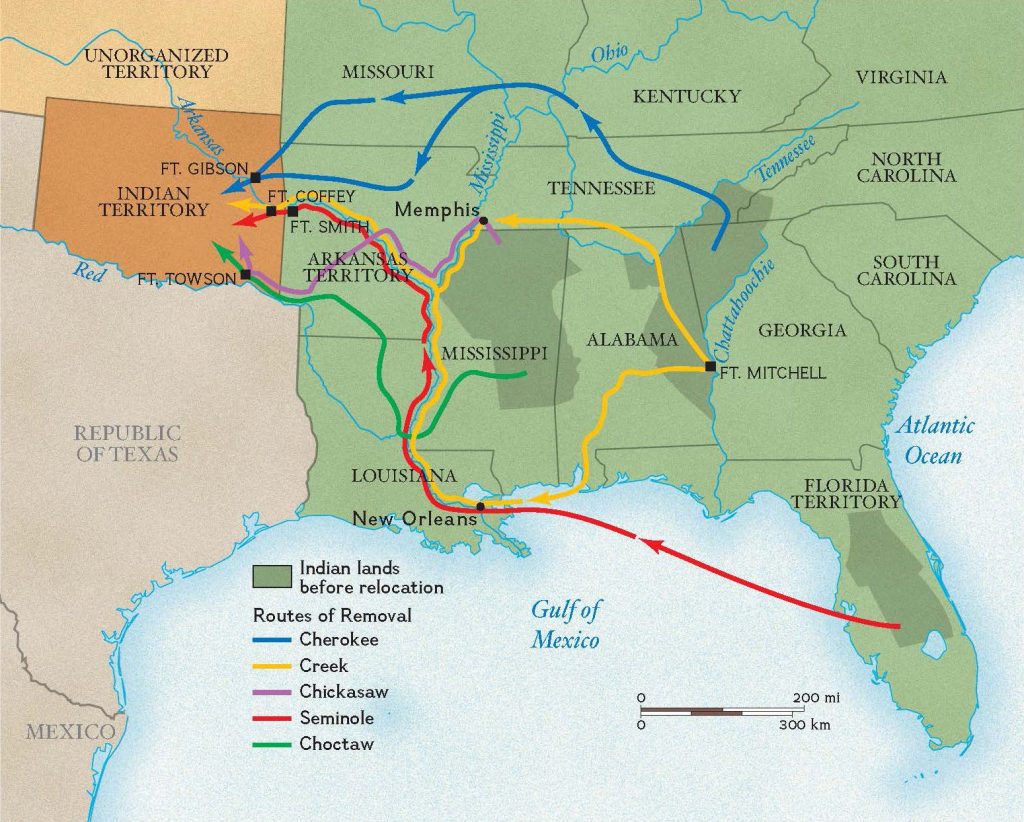
The relationship between Andrew Jackson and the Trail of Tears is defined by the Indian Removal Act of 1830, a federal policy Jackson championed to forcibly relocate Native American tribes from their ancestral lands in the Southeastern United States to "Indian Territory" west of the Mississippi River. This policy resulted in the forced migration of approximately 60,000 people, characterized by extreme suffering, disease, and thousands of deaths.
As of 2026, the historical analysis of Andrew Jackson’s presidency focuses heavily on the tension between his "Jacksonian Democracy" for white settlers and the systemic dispossession of indigenous nations. To understand the Trail of Tears, one must examine the intersection of 19th-century land hunger, the legal defiance of the executive branch, and the specific tribal experiences of the Cherokee, Muscogee (Creek), Seminole, Chickasaw, and Choctaw nations.
The Philosophical and Political Roots of Removal
Andrew Jackson’s support for Indian removal was not an overnight development; it was the culmination of decades of frontier conflict and a specific vision for American expansion. Before his presidency, Jackson had gained fame as a "frontier general," fighting against the Creek and Seminole nations. He viewed the presence of independent tribal nations within state borders as a threat to national security and state sovereignty.
In the early 19th century, the "Five Civilized Tribes"—so named by white society because they had adopted many European-style customs, including written constitutions, Christianity, and agrarian economies—occupied millions of acres in Georgia, Alabama, Mississippi, and Florida. Jackson argued that these tribes could not exist as "nations within a nation." He believed that if they did not move, they would eventually face "annihilation" due to the encroachment of white settlers.
The Land Hunger of the 1830s
The primary driver behind the push for removal was the expansion of the cotton economy. The invention of the cotton gin made large-scale cultivation in the Deep South extremely profitable. White settlers and speculators viewed the fertile lands held by the Cherokee and Muscogee as prime real estate. Jackson, aligning himself with the common white farmer and the Southern planter class, positioned removal as a way to open these lands for "civilized" agricultural use.
The Indian Removal Act of 1830
Upon taking office, Jackson made Indian removal a top priority. In 1830, he urged Congress to pass the Indian Removal Act. The debate in Congress was fierce. Opponents, including legendary frontiersman Davy Crockett and Senator Edward Everett, argued that the act was a betrayal of existing treaties and a moral stain on the nation.
Despite the opposition, the act passed by a narrow margin. It did not technically authorize the forced removal of tribes; rather, it gave the president the power to negotiate removal treaties. However, in practice, Jackson used the threat of state law and military force to coerce tribal leaders into signing these agreements. Jackson’s administration argued that removal was "voluntary," but the alternative for tribes was to submit to state laws that stripped them of their political rights and legal protections.
The Case of the Cherokee: Worcester v. Georgia
The Cherokee Nation chose to fight removal through the American legal system rather than on the battlefield. In the landmark 1832 case Worcester v. Georgia, Chief Justice John Marshall ruled that the Cherokee Nation was a "distinct community" in which the laws of Georgia had no force. The ruling essentially declared that the federal government, not the states, had authority over Indian affairs, and that the Cherokee had a right to their land.
Jackson famously responded with defiance. While he likely never said the exact words, "John Marshall has made his decision; now let him enforce it," his actions reflected that sentiment. He refused to use federal power to protect the Cherokee from Georgia’s incursions, effectively signaling that the Supreme Court’s ruling would be ignored. This created a constitutional crisis and set the stage for the physical forced removals that followed.

The Execution of the Trail of Tears
While the term "Trail of Tears" is often specifically associated with the Cherokee removal of 1838, it encompasses a broader series of forced migrations affecting multiple tribes over nearly two decades. Each tribe’s experience was marked by unique tragedies and varying levels of resistance.
The Choctaw and Chickasaw (1831–1837)
The Choctaw were the first to be removed. Starting in 1831, thousands were moved during a particularly harsh winter without adequate supplies, food, or clothing. An estimated 2,000 to 6,000 Choctaw died during the journey from exposure and cholera. The Chickasaw, seeing the fate of the Choctaw, negotiated a more favorable sale of their lands but still faced significant hardships during their relocation in 1837.
The Muscogee (Creek) and Seminole Resistance
The Muscogee (Creek) resisted until 1836, when a conflict known as the Creek War of 1836 broke out. This gave the federal government the pretext to remove them by force. Approximately 15,000 Creeks were marched west, many in chains. In Florida, the Seminoles fought a series of prolonged conflicts known as the Seminole Wars. While many were eventually captured and removed, a small group remained in the Everglades, never officially surrendering to the U.S. government.
The Cherokee Removal (1838–1839)
The final and most infamous chapter occurred under Jackson’s successor, Martin Van Buren, though it was the direct result of Jackson’s Treaty of New Echota. This treaty was signed by a small, unauthorized faction of the Cherokee (the "Treaty Party") led by Major Ridge and Elias Boudinot, against the wishes of the majority led by Principal Chief John Ross.
In 1838, the U.S. Army, under General Winfield Scott, began rounding up Cherokee people into internment camps. From there, they were forced to march over 1,200 miles to Oklahoma. The conditions were horrific:
- Disease: Outbreaks of dysentery, measles, and whooping cough decimated the ranks.
- Exposure: The march continued through one of the coldest winters on record, with many barefoot and lacking blankets.
- Casualties: Historical estimates suggest that approximately 4,000 of the 15,000-16,000 Cherokee died during the removal or in the camps.
Comparison of Tribal Removals
The following table outlines the estimated impact of the removal policies on the Five Civilized Tribes during the Jacksonian era.
| Nation | Primary Removal Years | Estimated Number Removed | Estimated Mortality | Key Treaty |
|---|---|---|---|---|
| Choctaw | 1831–1833 | 12,500–15,000 | 2,000–6,000 | Dancing Rabbit Creek (1830) |
| Muscogee (Creek) | 1834–1837 | 15,000–19,000 | 3,500+ | Cusseta (1832) |
| Chickasaw | 1837–1838 | 3,000–4,000 | 500–800 | Pontotoc Creek (1832) |
| Cherokee | 1838–1839 | 16,000 | 4,000+ | New Echota (1835) |
| Seminole | 1832–1842 | 3,000–4,000 | High (due to war/disease) | Payne's Landing (1832) |
The Aftermath and Long-Term Impact
The arrival in "Indian Territory" (present-day Oklahoma) did not end the suffering. The tribes had to rebuild their societies from scratch on unfamiliar land, often in conflict with tribes already living in the region. The trauma of the Trail of Tears remained a defining element of tribal identity for generations.
Economic and Cultural Loss
The tribes lost more than just their lives; they lost their economic foundations. The Cherokee, for instance, had built a thriving society with printing presses, schools, and productive farms. All of this was abandoned or seized by white settlers. The federal government’s promises of financial compensation and permanent land rights were frequently broken or delayed, leading to further impoverishment.
Sovereignty and Modern Perspective (2026)
As of 2026, the legal ripples of the removal era continue to affect U.S. law. The Supreme Court's 2020 decision in McGirt v. Oklahoma, which reaffirmed the status of the Muscogee (Creek) reservation, drew directly upon the treaties signed during the removal era. This ruling underscored that the promises made during the Trail of Tears—that these new lands would belong to the tribes "as long as the grass grows"—still carry legal weight today.
The Trail of Tears is now commemorated by the Trail of Tears National Historic Trail, managed by the National Park Service. This trail spans nine states and serves as a somber reminder of the consequences of the Indian Removal Act. It highlights the resilience of the tribes who survived the migration and successfully rebuilt their nations in Oklahoma.
Frequently Asked Questions
Did Andrew Jackson personally lead the Trail of Tears?
No, Andrew Jackson was no longer president when the most famous portion of the Trail of Tears (the Cherokee removal) occurred in 1838. However, he is considered the architect of the event because he spent his two terms (1829–1837) passing the Indian Removal Act, negotiating the treaties, and ignoring the Supreme Court rulings that would have prevented it. The actual execution of the Cherokee removal took place under President Martin Van Buren.
Why did Jackson ignore the Supreme Court in Worcester v. Georgia?
Jackson prioritized state sovereignty and the demands of his political base in Georgia over federal judicial authority. He believed the Supreme Court had no practical way to enforce its ruling without his support. By refusing to act, he allowed Georgia to continue its harassment of the Cherokee, forcing them into a position where removal seemed like the only remaining option for survival.
What happened to the land the tribes left behind?
The land was quickly surveyed and distributed to white settlers through land lotteries and sales. In Georgia and Alabama, much of this land became part of the "Black Belt," a region of rich soil that supported the massive expansion of the plantation system and enslaved labor. This expansion was a key driver of the Southern economy leading up to the Civil War.
How many people died on the Trail of Tears?
While exact figures are difficult to verify due to poor record-keeping by the U.S. government at the time, historians generally agree on a figure of approximately 10,000 to 15,000 deaths across all the tribes involved. For the Cherokee specifically, the estimate of 4,000 deaths (roughly one-fourth of the population) is the most widely accepted figure. Deaths were caused by pneumonia, cholera, starvation, and exhaustion.
Is the Trail of Tears considered a genocide?
This is a subject of significant academic debate. Many historians and indigenous scholars argue that it fits the definition of genocide or ethnic cleansing, as it involved the systematic, state-sponsored removal of a group of people based on their ethnicity, resulting in mass death and the destruction of their culture. Others categorize it as a humanitarian catastrophe resulting from criminal negligence and expansionist policy.
Next Actions for Researchers and Students
To gain a deeper understanding of this period, it is recommended to explore the primary sources from the era. The Library of Congress maintains digital archives of the Indian Removal Act and the personal correspondence of Chief John Ross. Additionally, visiting the National Park Service's Trail of Tears National Historic Trail website provides maps and historical markers that detail the specific routes taken by the various detachments. For those interested in the modern legal implications, researching the McGirt v. Oklahoma (2020) decision offers insight into how these 19th-century events still shape tribal sovereignty in 2026.
Image Gallery
Select an image to open it in a new tab.


Vivian Cho
Executive IT and Emerging Technologies Reporter
