University of Maryland Undergraduate Admissions: Requirements, Deadlines, and Success Strategies

Applying to the University of Maryland (UMD) requires a holistic submission via the Common Application, prioritizing the November 1 Early Action deadline for maximum consideration for merit scholarships and specialized programs. Applicants must navigate a competitive review process that evaluates academic rigor, personal character, extracurricular involvement, and potential contribution to the campus community.
As the flagship institution of the state of Maryland, the University of Maryland, College Park, has become one of the most sought-after public research universities in the United States. For the 2026-2027 academic cycle, the admissions landscape remains highly selective, reflecting the university's rising global reputation and its proximity to the economic and political hubs of Washington, D.C. Navigating the undergraduate admissions process requires more than just high test scores; it demands a strategic understanding of how the university evaluates talent across its diverse applicant pool.
The Strategic Importance of Application Deadlines
At the University of Maryland, the date you submit your application is arguably as important as the content within it. The university operates under two primary deadlines for freshman admission: Early Action and Regular Decision.
Early Action (November 1)
The November 1 Early Action (EA) deadline is non-binding, meaning students are not required to attend if accepted. However, it is the most critical milestone for any serious applicant. For the 2026 cycle, UMD continues to fill the vast majority of its freshman class—often upwards of 80-90%—from the Early Action pool.
Beyond simply increasing the statistical likelihood of admission, applying by November 1 is a prerequisite for:
- Merit-Based Scholarships: Students who apply after this date are generally not considered for the university’s most prestigious financial awards, such as the Banneker/Key Scholarship.
- Honors College and Living-Learning Programs: Programs like Gemstone, Integrated Life Sciences (ILS), and Advanced Cybersecurity Experience for Students (ACES) primarily recruit from the EA applicant pool.
- Priority Major Consideration: For competitive majors, applying early ensures your application is reviewed before seats are filled.
Regular Decision (January 20)
The Regular Decision (RD) deadline of January 20 serves as a final window for students who may have missed the EA cutoff. While admission is still possible, the competition is significantly steeper because fewer spots remain available. Students applying RD are still eligible for need-based financial aid but usually miss the window for most institutional merit-based scholarships.
Understanding the Holistic Review: The 26 Factors
UMD does not use a simple formula of GPA plus test scores to determine admission. Instead, the admissions committee employs a holistic review process, examining 26 distinct factors to understand the "whole person." This approach ensures that a student's potential is not overlooked due to a single low grade or a lack of access to certain standardized tests.
The 26 factors are generally categorized into three tiers:
- Academic Achievement: This remains the foundation of the application. The committee looks at the rigor of the high school curriculum (AP, IB, Honors), the progression of grades over four years, and the specific performance in subjects related to the student's intended major.
- Personal Involvement and Character: This includes extracurricular activities, community service, leadership roles, and work experience. UMD seeks "Terps" who will contribute to the vibrant campus culture.
- Contextual and Environmental Factors: The university considers the student’s socioeconomic background, geographic origin, and any unique hardships or challenges they have overcome. This allows the committee to evaluate achievements within the context of the opportunities available to the student.

Core Application Requirements for 2026
To complete an application for undergraduate admission, students must submit several key components through the Common Application. It is essential to ensure all supplementary materials, such as transcripts and recommendations, are sent by the deadline to avoid a "delayed" status.
Standardized Testing Policy
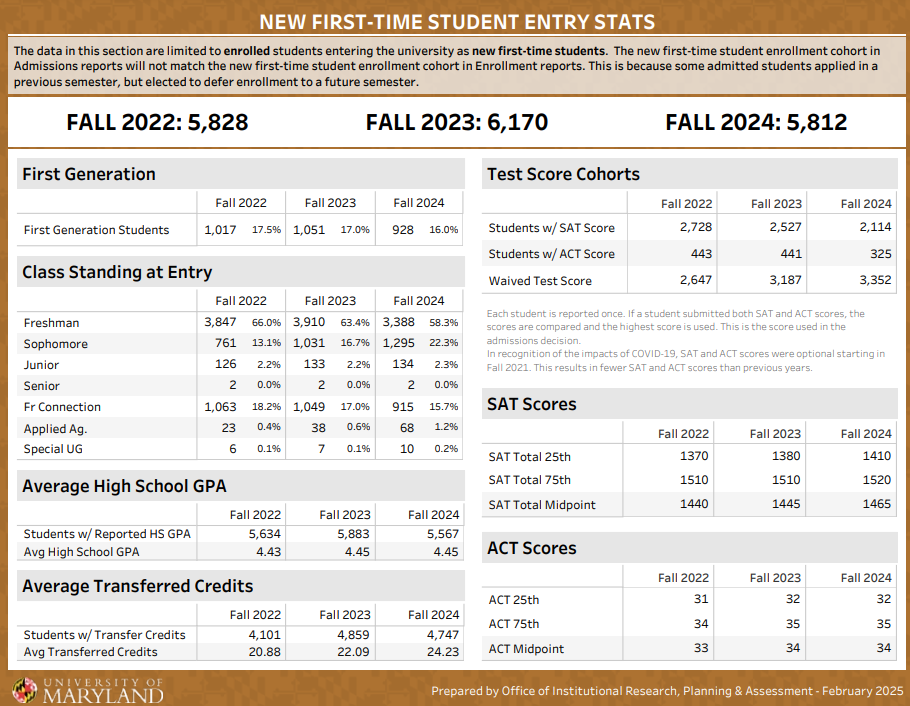
In 2026, the University of Maryland continues its test-optional policy. This means students can choose whether or not to submit SAT or ACT scores. For students who believe their scores accurately reflect their academic abilities, submitting them can strengthen the application. However, those who choose not to submit scores will not be penalized and will receive full consideration for admission, scholarships, and special programs based on the other 26 factors.
The Application Essay
The main Common App essay is a vital component. Successful applicants use this space to tell a story that isn't found elsewhere in their application. UMD admissions officers look for authenticity, intellectual curiosity, and a sense of how the student will engage with the university's diverse community.
Letters of Recommendation
UMD requires two letters of recommendation: one from a school counselor and one from a teacher. The most effective teacher recommendations come from instructors in core academic subjects (Math, Science, English, Social Studies, or Foreign Language) who can speak to the student’s classroom engagement and academic growth.
Limited Enrollment Programs (LEPs)
One of the most unique aspects of UMD admissions is the designation of Limited Enrollment Programs (LEPs). Because of high demand and the need to maintain a specific student-to-faculty ratio, several majors have more competitive admission requirements than the university at large.
The current list of LEPs for 2026 includes:
- Business: All majors within the Robert H. Smith School of Business.
- Engineering: All majors within the A. James Clark School of Engineering.
- Computer Science: One of the most competitive programs at the university.
- Biological Sciences, Biochemistry, and Chemistry.
- Criminology and Criminal Justice.
- Government and Politics.
- Communication.
- Psychology.
- Immersive Media Design.
If a student is admitted to UMD but not to their preferred LEP, they are placed into the Letters and Sciences (undecided) program. From there, they can work with advisors to complete "gateway" requirements and apply for internal transfer into the LEP later in their academic career.
| Feature | Early Action (EA) | Regular Decision (RD) |
|---|---|---|
| Deadline | November 1 | January 20 |
| Notification Date | By February 1 | By April 1 |
| Merit Scholarship Consideration | Full Consideration | Limited/No Consideration |
| Honors College Eligibility | Highest Priority | Limited Priority |
| Binding Agreement | No | No |
| Enrollment Deposit Due | May 1 | May 1 |
Tuition, Fees, and Financial Aid
For the 2026-2027 academic year, the cost of attendance varies significantly between in-state and out-of-state students. Maryland residency is a major factor in tuition rates, and the university follows strict guidelines established by the University System of Maryland (USM) to determine residency status.
Need-Based Aid
All students are encouraged to submit the Free Application for Federal Student Aid (FAFSA). For Maryland residents who are ineligible for federal aid due to immigration status, the Maryland State Financial Aid Application (MSFAA) serves as the alternative. These applications determine eligibility for grants, work-study programs, and subsidized loans.
Merit-Based Scholarships
The University of Maryland offers several prestigious merit scholarships that are awarded based on the initial admissions application (no separate application is required).
- The Banneker/Key Scholarship: Covers the full cost of tuition, room, and board.
- The President’s Scholarship: Provides partial tuition coverage ranging from $2,000 to $12,500 per year.
- The Dean’s Scholarship: Typically a one-year or two-year award for high-achieving students.
International and Transfer Admissions
While freshman admissions receive the most attention, UMD has robust pathways for international and transfer students.
International Applicants
Students applying from outside the United States must demonstrate English language proficiency through the TOEFL, IELTS, or Duolingo English Test if English is not their native language. Additionally, international transcripts must be evaluated to ensure they meet U.S. equivalency standards. International students are generally not eligible for federal need-based aid but are considered for some merit scholarships.
Transfer Students
UMD is a transfer-friendly institution, particularly for students coming from Maryland community colleges. The Maryland Transfer Advantage Program (MTAP) provides a structured pathway for community college students to transition to College Park, offering benefits like early advising and discounted tuition on UMD courses taken while still at the community college.
Success Strategies for Prospective Terps
To maximize the chances of admission in 2026, applicants should focus on three pillars:
- Prioritize Rigor: Admissions officers prefer to see a "B" in an AP or IB course over an "A" in a standard-level course. Pushing yourself academically demonstrates readiness for the challenges of a Tier-1 research university.
- Highlight Impact: In the activities section, don't just list memberships. Focus on impact and leadership. Did you raise money? Did you lead a team? Did you master a difficult skill?
- Engage Early: Utilize the University of Maryland Undergraduate Admissions portal to track your application status. Engaging with virtual tours or campus visits can also help you articulate "Why UMD" in your supplemental materials.
Frequently Asked Questions
Is UMD test-optional for the 2026 application cycle?
Yes, the University of Maryland has extended its test-optional policy for the 2026 cycle. Applicants can choose whether or not to submit SAT or ACT scores. If scores are omitted, the admissions committee will place greater weight on other factors such as high school GPA, course rigor, and the application essay. There is no penalty for choosing not to submit scores.
Can I change my major after I am admitted?
Yes, most students can change their major relatively easily. However, if you wish to switch into a Limited Enrollment Program (LEP) like Engineering or Business, you must complete specific "gateway" courses with a minimum GPA before you can formally apply to that program. Admission to an LEP as a current student is competitive and not guaranteed.
What is the difference between the Honors College and Living-Learning Programs?
The Honors College is an umbrella for several specialized Living-Learning Programs (LLPs). When you are admitted to the Honors College, you are usually placed into a specific LLP, such as University Honors, Gemstone, or Integrated Life Sciences. These programs provide a smaller community feel, specialized faculty mentorship, and unique residential experiences within the larger university.
When will I receive my admission decision?
Students who apply by the November 1 Early Action deadline typically receive their decision by February 1. Those who apply by the January 20 Regular Decision deadline will receive their decision by April 1. All decisions are released electronically through the Terps Application Portal.
Does UMD offer an interview as part of the admissions process?
No, UMD does not conduct interviews for general undergraduate admission. The admissions decision is based entirely on the materials submitted in the application. Therefore, it is essential that your essay and letters of recommendation provide a complete picture of your personality and achievements.
Final Recommendation for Applicants
The most effective action a prospective student can take is to submit their application by the November 1 Early Action deadline. This single decision significantly shifts the odds of admission in the student's favor and opens the door to the full suite of financial and academic opportunities at the University of Maryland. Ensure that you have requested your transcripts and letters of recommendation at least one month in advance to ensure they arrive at the admissions office by the deadline.
Image Gallery
Select an image to open it in a new tab.




Lars Thomsen
Global Labor Markets and Economic Strategy Editor
