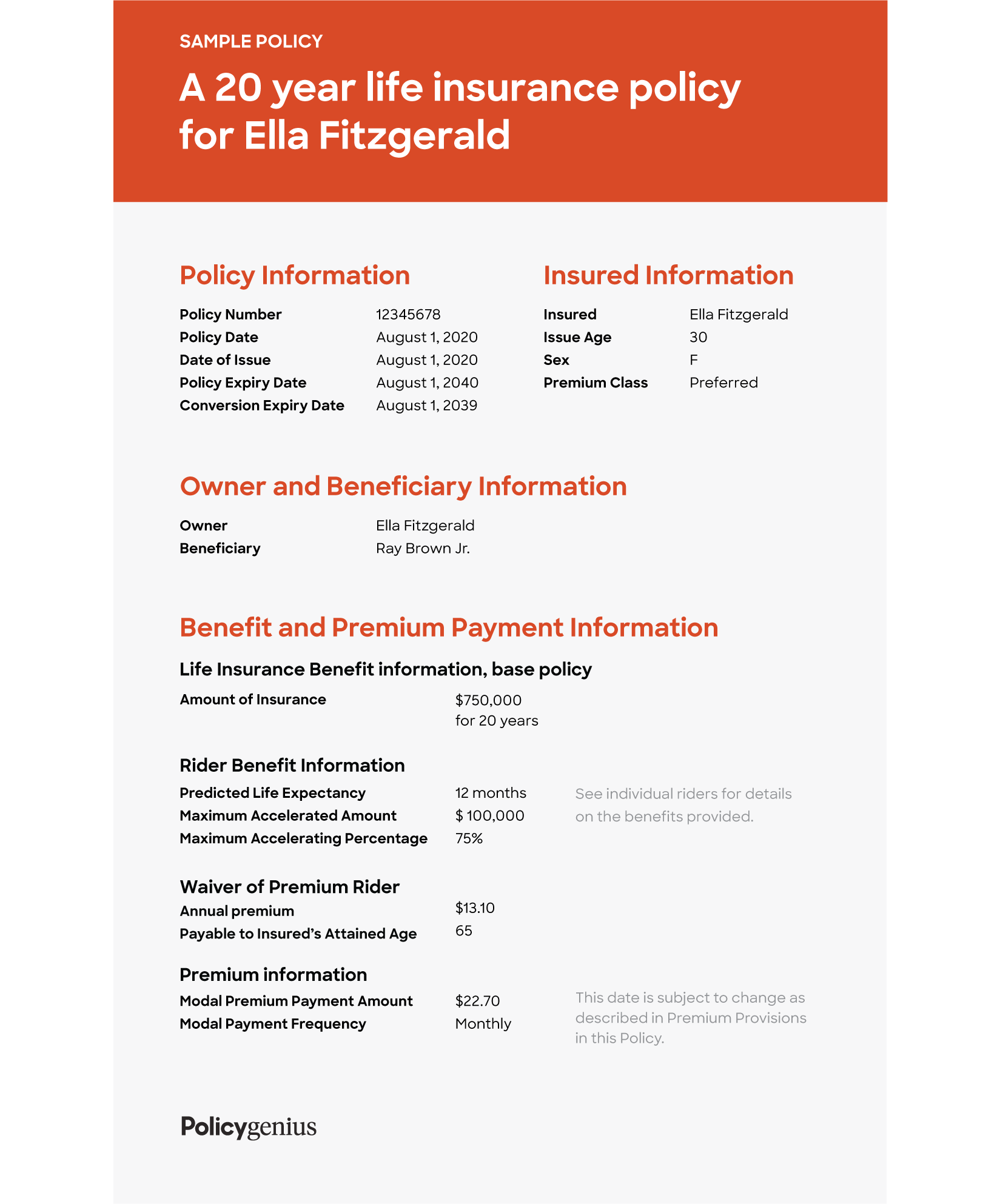
Understanding a life insurance policy in India involves selecting a legally binding contract between an individual and an insurer regulated by IRDAI. The insurer guarantees a financial payout—the sum assured—to designated beneficiaries upon the insured's death or after a specified term, in exchange for regular premium payments, offering vital family security and tax benefits.
Key Fundamentals of Indian Life Insurance
A life insurance policy is a financial risk-management instrument designed to protect dependents against the economic hardship caused by the policyholder's untimely death. In India, the life insurance sector operates under the regulatory oversight of the Insurance Regulatory and Development Authority of India (IRDAI). IRDAI enforces guidelines to safeguard policyholder interests, standardize policy terms, ensure solvency standards among insurers, and mandate transparent claim settlement practices.
To evaluate any life insurance contract in India, you must understand several fundamental terms that define how the coverage functions:
- Policyholder vs. Life Assured: The policyholder is the individual who pays the premiums and owns the contract. The life assured is the person whose life is covered by the policy. While these are often the same person, a parent can be the policyholder while insuring their adult child, or an employer can hold a policy on a key employee.
- Sum Assured: The guaranteed amount the insurance company agrees to pay to the designated nominee upon the death of the life assured, or upon maturity in specific savings-oriented plans.
- Nominee and Appointee: The nominee is the legal beneficiary designated by the policyholder to receive the death benefit. If the nominee is a minor at the time of policy purchase, an appointee must be named to receive the funds on the minor's behalf.
- Policy Term (PT) vs. Premium Paying Term (PPT): Policy Term refers to the total duration for which the insurance coverage remains active. Premium Paying Term is the specific duration over which the policyholder must pay premiums. Under a regular pay option, the PT equals the PPT. Under limited pay options, the PPT is shorter than the PT (for example, paying premiums for 10 years for a 30-year policy term).
- Riders: Optional add-on benefits that can be attached to a base policy for an additional premium, providing extra financial coverage against specific events like critical illness, accidental disability, or terminal illness.
Types of Life Insurance Policies in India
The Indian insurance market offers several distinct categories of life insurance policies tailored to varying financial goals, risk appetites, and life stages.
- Life Insurance Policies in India
- Term Insurance (Pure Protection)
- ULIP Plans (Market-Linked)
- Traditional Plans (Endowment/Money)
- Retirement/Annuity Plans
1. Term Life Insurance
Term insurance is the simplest and most cost-effective form of life cover. It provides pure financial protection without any investment element. The policy pays the full sum assured to the nominee if the policyholder dies during the policy term. If the policyholder survives the policy term, standard term plans yield no maturity return.
Variant structures, such as Term Return of Premium (TROP) plans, refund the total base premiums paid if the policyholder survives the term, though TROP premiums are significantly higher than standard term coverage. Term insurance is essential for primary income earners to replace lost future income, clear liabilities like home loans, and secure dependents' basic financial needs.
2. Unit Linked Insurance Plans (ULIPs)
ULIPs combine risk protection with capital investment. A portion of the premium paid goes toward life insurance coverage, while the remainder is invested in capital market funds (equity, debt, or hybrid funds) chosen by the policyholder.
ULIPs operate under a mandatory five-year lock-in period. Returns are directly dependent on fund market performance. IRDAI regulations cap charges on ULIPs (such as premium allocation, fund management, and mortality charges), making modern ULIPs more cost-competitive than older iterations. They suit investors seeking long-term wealth accumulation alongside life cover who accept market volatility.
3. Endowment and Money-Back Policies
Endowment policies are traditional non-linked insurance products that combine savings with life cover. If the life assured survives the policy term, the insurer pays the maturity benefit, which typically includes the sum assured plus accumulated bonuses (such as simple or compound reversionary bonuses declared annually by the insurer).
Money-Back policies are a variant of endowment plans that provide periodic payouts (a percentage of the sum assured) at specified intervals during the policy term rather than a single lump sum at maturity. If the policyholder passes away during the term, the full sum assured is paid to the nominee regardless of any survival benefits already distributed. These plans appeal to risk-averse individuals looking for guaranteed, capital-safe returns alongside life cover.
4. Whole Life Insurance
Whole life insurance covers the individual up to 99 or 100 years of age, effectively ensuring that a death benefit will eventually be paid to legal heirs whenever the insured passes away. Modern whole-life policies in India can be structured either as traditional participating plans or as term plans extending up to age 99. They are frequently used for estate planning, creating intergenerational wealth, or leaving a guaranteed legacy.
5. Retirement and Annuity Plans
Retirement life insurance plans help individuals build a dedicated corpus for post-retirement income. During the accumulation phase, the policyholder pays regular premiums to build capital. Upon reaching retirement age (vesting date), the accumulated corpus is converted into an annuity.
Annuity plans provide guaranteed lifetime periodic payouts (monthly, quarterly, or annually). Options include immediate annuities (payouts start immediately after a lump-sum payment) and deferred annuities (payouts start after a selected deferral period).
Important Policy Features and Regulatory Safeguards
Indian insurance regulations establish clear policyholder protections and contract conditions that apply across all life insurance policies.
Free Look Period
Under IRDAI rules, every new policyholder is granted a free look period of 30 days from the date of policy document receipt (applicable to both online and physical policy purchases). During this window, you can review the detailed terms and conditions. If you disagree with any contract clause, you can cancel the policy and receive a refund of the premium paid, minus pro-rata risk premium for the period on cover, medical examination expenses, and stamp duty charges.
Grace Period and Policy Lapsation
If a policyholder misses a premium due date, the policy does not lapse immediately. Insurers provide a grace period—typically 15 days for policies with monthly premium payment modes and 30 days for quarterly, half-yearly, or annual modes. If the life assured passes away during the grace period, the insurer must process the death claim after deducting the unpaid premium.
If premiums remain unpaid after the grace period expires, the policy enters a lapsed status, terminating or reducing the insurance cover.
- Due Date
- Grace Period: 15/30 Days
- Lapsed Status
- Revival Window: Up to 5 Years
Revival of Lapsed Policies
Most insurers permit the revival of a lapsed policy within a specified window—typically up to five consecutive years from the date of the first unpaid premium. To revive a policy, the policyholder must pay all overdue premiums along with interest charges determined by the insurer, and may need to submit fresh proof of continued good health (medical tests or a declaration of good health).
Section 45 of the Insurance Act, 1938 (Indisputability Clause)
Section 45 is one of the most critical legal protections for policyholders in India. It states that no life insurance policy can be called into question or rejected by an insurer on any ground—including misstatement, non-disclosure, or fraud—after the expiry of three years from:
- The date of policy issuance,
- The date of risk commencement, or
- The date of policy revival, whichever is latest.
After this three-year statutory window lapses, the insurer cannot deny a claim under any circumstances. This provision protects families from arbitrary claim repudiation when a claim arises years after policy issuance.
Common Policy Riders
Riders enhance base life insurance policies by adding targeted financial coverage:
- Critical Illness Rider: Pays a lump-sum amount upon diagnosis of specified major illnesses (such as cancer, heart attack, stroke, or kidney failure), regardless of actual hospital treatment costs.
- Accidental Death and Disability Rider: Delivers an additional payout if the life assured dies or suffers permanent total/partial disability due to an accident.
- Waiver of Premium Rider: Waives all future premiums for the base policy if the policyholder suffers total permanent disability or critical illness, keeping the underlying policy active.
Tax Rules Governing Life Insurance in India
Life insurance in India carries specific tax treatment under the Income Tax Act, 1961. Knowing these rules helps prevent unexpected tax liabilities upon policy payout.
Section 80C (Tax Deductions on Premiums)
Under the Old Tax Regime, premiums paid toward life insurance policies (for self, spouse, or children) qualify for tax deduction under Section 80C up to an aggregate limit of ₹1,50,000 per financial year.
- For policies issued on or after April 1, 2012, the annual premium must not exceed 10% of the sum assured to qualify for full tax deduction under Section 80C.
- Note that the New Tax Regime does not permit deductions under Section 80C.
Section 10(10D) (Tax Exemption on Maturity and Death Benefits)
Death benefits received by a nominee under any life insurance policy are 100% tax-free, without any monetary cap or ceiling.
Maturity benefits are also tax-free under Section 10(10D), subject to specific legislative caps introduced to prevent high-net-worth tax avoidance:
- Premium-to-Sum-Assured Ratio: The annual premium must not exceed 10% of the minimum capital sum assured for policies issued on or after April 1, 2012.
- ULIP Annual Premium Cap (Post Feb 1, 2021): For Unit Linked Insurance Plans issued on or after February 1, 2021, if the total aggregate annual premium across all ULIPs held by an individual exceeds ₹2,50,000, the maturity proceeds (excluding death benefit) lose Section 10(10D) exemption and are taxed as capital gains.
- Non-ULIP Traditional Policy Cap (Post April 1, 2023): For non-linked policies (endowment, money-back, TROP) issued on or after April 1, 2023, if the total aggregate annual premium across all such policies exceeds ₹5,00,000, maturity income from policies exceeding this threshold becomes taxable under "Income from Other Sources."
Tax policy guidance can be verified through the Income Tax Department of India.
Comparing Life Insurance Options
The following table summarizes the core features, risk levels, return expectations, and primary use cases of the main life insurance plan types in India:
| Policy Type | Primary Purpose | Risk Profile | Expected Returns / Payout | Tax Benefit Eligibility | Ideal Target Audience |
|---|---|---|---|---|---|
| Term Insurance | Pure income protection & risk cover | Zero investment risk | Nil on survival (Pure death benefit) | Sec 80C & Sec 10(10D) | Primary wage earners with financial dependents |
| ULIPs | Wealth creation + life cover | Market-linked (Moderate to High) | Variable (Based on equity/debt fund performance) | Sec 80C & Sec 10(10D) (Subject to ₹2.5L premium cap) | Investors comfortable with market volatility |
| Endowment Plans | Guaranteed savings + life cover | Very Low | Low (Typically 4% to 6% p.a. via declared bonuses) | Sec 80C & Sec 10(10D) (Subject to ₹5L premium cap) | Conservative savers seeking guaranteed payouts |
| Money-Back Plans | Liquidity + life cover | Very Low | Periodic payouts + terminal bonus | Sec 80C & Sec 10(10D) (Subject to ₹5L premium cap) | Individuals needing periodic cash flow for milestones |
| Whole Life Insurance | Estate planning & lifelong cover | Low | Death benefit guaranteed to heirs up to age 100 | Sec 80C & Sec 10(10D) | Individuals focusing on legacy and estate planning |
| Annuity Plans | Post-retirement income | Zero risk | Fixed guaranteed monthly/yearly lifetime pension | Taxed as regular income during pension phase | Retirees needing guaranteed monthly cash flow |
How to Determine Your Coverage Need and Select an Insurer
Calculating Human Life Value (HLV)
A common mistake when buying term life insurance is selecting an arbitrary sum assured. A sound evaluation relies on the Human Life Value (HLV) method, which estimates the economic value of an individual's future earnings.
$$\text{Required Coverage} = (\text{Annual Income} \times \text{Years to Retirement}) + \text{Total Outstanding Liabilities} + \text{Future Major Financial Goals} - \text{Existing Liquid Investments}$$
A simple rule of thumb recommends a term insurance sum assured equal to at least 10 to 15 times your annual gross income. For instance, an individual earning ₹12 Lakhs per annum with a 25-year remaining career and an outstanding ₹50 Lakh home loan should target a minimum term cover of ₹1.7 Crore to ₹2 Crore.
Key Metrics for Evaluating Insurance Companies
When choosing an insurer, check these critical parameters published annually in IRDAI's annual report:
- Claim Settlement Ratio (CSR): The percentage of death claims settled by the insurer relative to the total claims received during a financial year. Look for insurers maintaining a consistent CSR above 97% to 98%.
- Amount Settlement Ratio (ASR): While CSR measures the number of claims paid, ASR measures the total financial value of claims settled compared to total monetary claims received. A high ASR confirms that the company settles high-value term policies reliably, rather than just small traditional policy claims.
- Solvency Ratio: Measures the insurer's legal financial capacity to pay all claims in extreme catastrophe scenarios. IRDAI mandates a minimum solvency ratio of 1.5 (150%). A higher ratio indicates stronger financial health.
Navigating the Claim Settlement Process
Understanding the claim settlement workflow ensures smooth execution for your nominees during a difficult time.
- Intimation: Nominee notifies insurer of the event
- Documentation: Submit claim form, death certificate, original policy, ID proof, and bank details (NEFT)
- Verification: Insurer reviews documents (Early claims <3 years may involve field inquiry)
- Settlement: Insurer transfers claim amount via NEFT (IRDAI mandates resolution within 30 days)
1. Death Claim Process
- Claim Intimation: The nominee must formally notify the insurance company online or at a branch office, providing the policy number, date of death, cause of death, and location.
- Document Submission: Submit the filled claim form along with:
- Original policy document,
- Official Death Certificate issued by municipal authorities,
- Attending physician's certificate or hospital discharge summary,
- Post-mortem report and FIR (mandatory in cases of accidental or unnatural death),
- Nominee's KYC documents (Aadhaar, PAN card) and bank account proof (cancelled cheque or passbook copy) for direct electronic transfer (NEFT).
- Verification and Settlement: For non-early claims (death occurring after three years of policy issuance), IRDAI mandates that insurers settle claims within 30 days of receiving all complete documents. If an investigation is required for early claims (death within three years of policy issuance), the investigation must be completed within 90 days.
2. Maturity Claim Process
Maturity claims for endowment or ULIP policies are straightforward:
- The insurer sends a maturity intimation notice along with a discharge voucher a few months before the policy completion date.
- The policyholder fills out the discharge voucher, attaches the original policy document and bank account details, and submits it to the insurer.
- The maturity proceeds are transferred directly to the policyholder's registered bank account on or before the maturity date.
Common Mistakes to Avoid
- Withholding Medical or Personal History (Material Non-Disclosure): Hiding tobacco use, pre-existing medical conditions (like diabetes or hypertension), or risky occupations during policy underwriting can cause claim rejections within the initial three-year policy window. Always practice full disclosure (uberrimae fidei).
- Confusing Savings Plans with Pure Risk Coverage: Purchasing traditional endowment policies expecting high market returns usually leads to disappointing results. Traditional plans offer lower returns (4-6% per annum) compared to low-cost index funds, while providing inadequate life cover compared to pure term insurance.
- Neglecting Nominee Details: Failing to update nomination details after major life events—such as marriage, divorce, or the birth of a child—can cause complex legal disputes among heirs during claim settlement.
- Buying Coverage for Short Policy Terms: Selecting a term insurance policy that ends at age 45 or 50 leaves you unprotected during your peak earning and high-liability years. Ensure your policy covers you at least until your planned retirement age (typically 60 to 65 years).
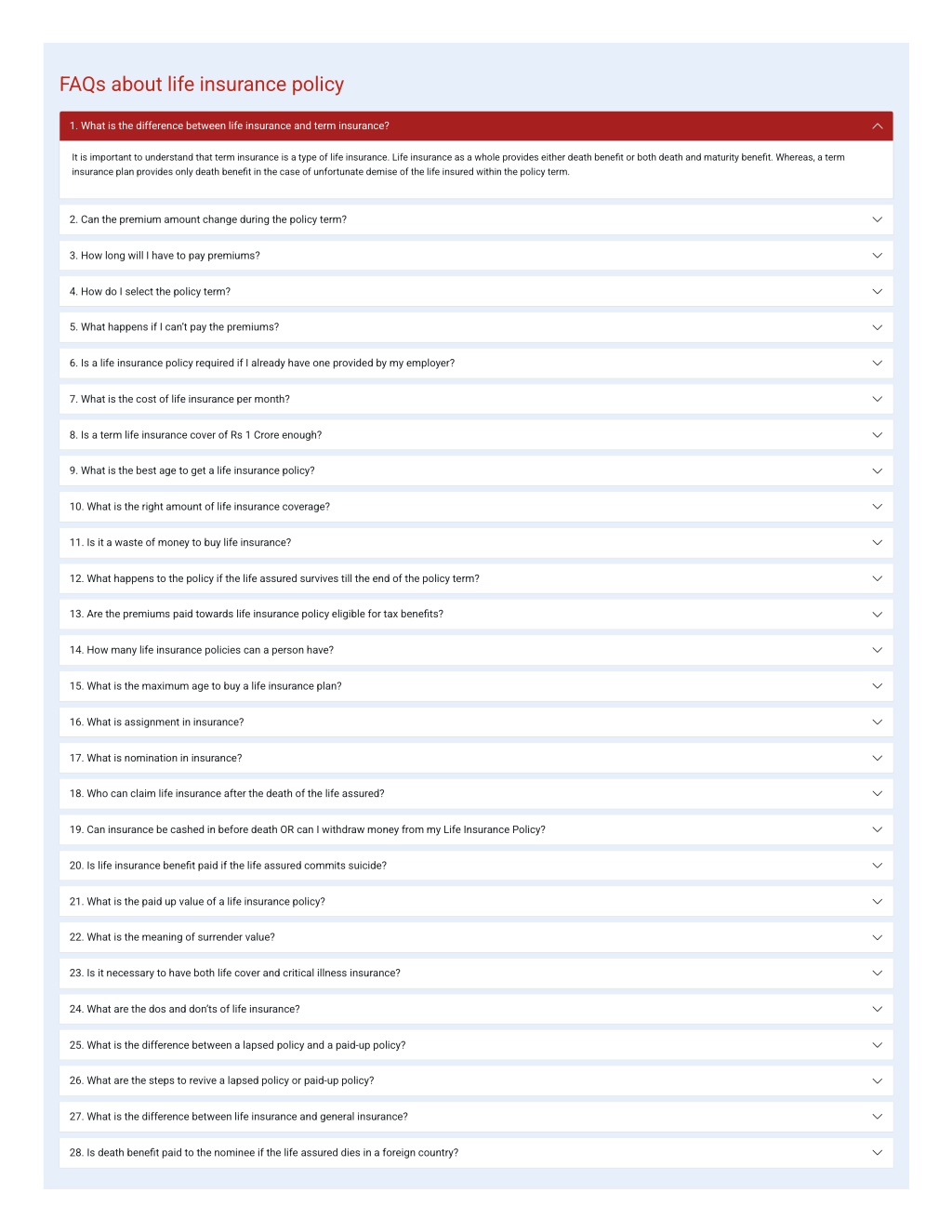
Frequently Asked Questions
What happens if I smoke or consume tobacco after purchasing a term policy?
If you were a non-smoker at the time of policy issuance and disclosed your status accurately, picking up smoking later does not invalidate your policy. However, if you were already a tobacco user when applying and lied on the proposal form, the insurer can reject claims submitted within the three-year window under non-disclosure rules.
Is suicide covered under life insurance policies in India?
Most life insurance policies in India cover suicide after 12 months from the policy issuance or revival date. If the life assured dies by suicide within the first 12 months, the insurer does not pay the full sum assured. Instead, they typically refund 80% of the total base premiums paid up to that date to the nominee.
What is the MWPA endorsement, and why is it important for married men?
The Married Women's Property Act (MWPA), 1874 endorsement is a legal provision you can attach when purchasing a life insurance policy. Under Section 6 of the MWPA, the policy proceeds are held in a trust strictly for the benefit of the policyholder's wife and/or children. These funds cannot be attached by creditors, business partners, court orders, or income tax authorities, securing your family's financial safety even during severe financial liabilities or business bankruptcy.
Can an NRI (Non-Resident Indian) buy a life insurance policy in India?
Yes. NRIs, Persons of Indian Origin (PIOs), and Overseas Citizens of India (OCIs) can purchase life insurance policies from Indian insurers. The policy can be underwritten during a visit to India or from abroad via tele-medical examinations, subject to the insurer's country-specific underwriting rules. Premium payments can be made through NRE/NRO bank accounts.
What happens if an insurance company goes bankrupt in India?
IRDAI enforces strict solvency margins (minimum 150%) and capital reserve requirements for all insurance companies. If an insurer faces financial distress, IRDAI intervenes to protect policyholders by facilitating a merger or transferring the failing insurer's policy portfolio to a financially stable insurer, ensuring all active policies and commitments remain fully intact.
Recommended Next Steps
To build a solid life insurance strategy tailored to your needs, follow this action plan:
- Calculate Your Ideal Coverage: Multiply your annual gross income by 10 to 15 times, add outstanding liabilities (like home or personal loans), and subtract your liquid investments to arrive at your target term insurance sum assured.
- Separate Protection from Investment: Buy a low-cost, pure term insurance policy to secure your family's basic financial needs. Keep your investments separate by using dedicated, transparent investment vehicles such as Public Provident Fund (PPF), Mutual Funds, or National Pension System (NPS).
- Compare Insurers using Key Metrics: Review the latest IRDAI Annual Report to evaluate prospective insurers based on their Claim Settlement Ratio (CSR), Amount Settlement Ratio (ASR), and Solvency Ratio.
- Fill the Proposal Form Personally: Disclose your medical history, family health history, lifestyle habits, and existing policies accurately. Complete the application yourself to prevent errors or omissions that could jeopardize future claims.
Image Gallery
Select an image to open it in a new tab.




Akira Tanaka
International Academic Trends Correspondent
