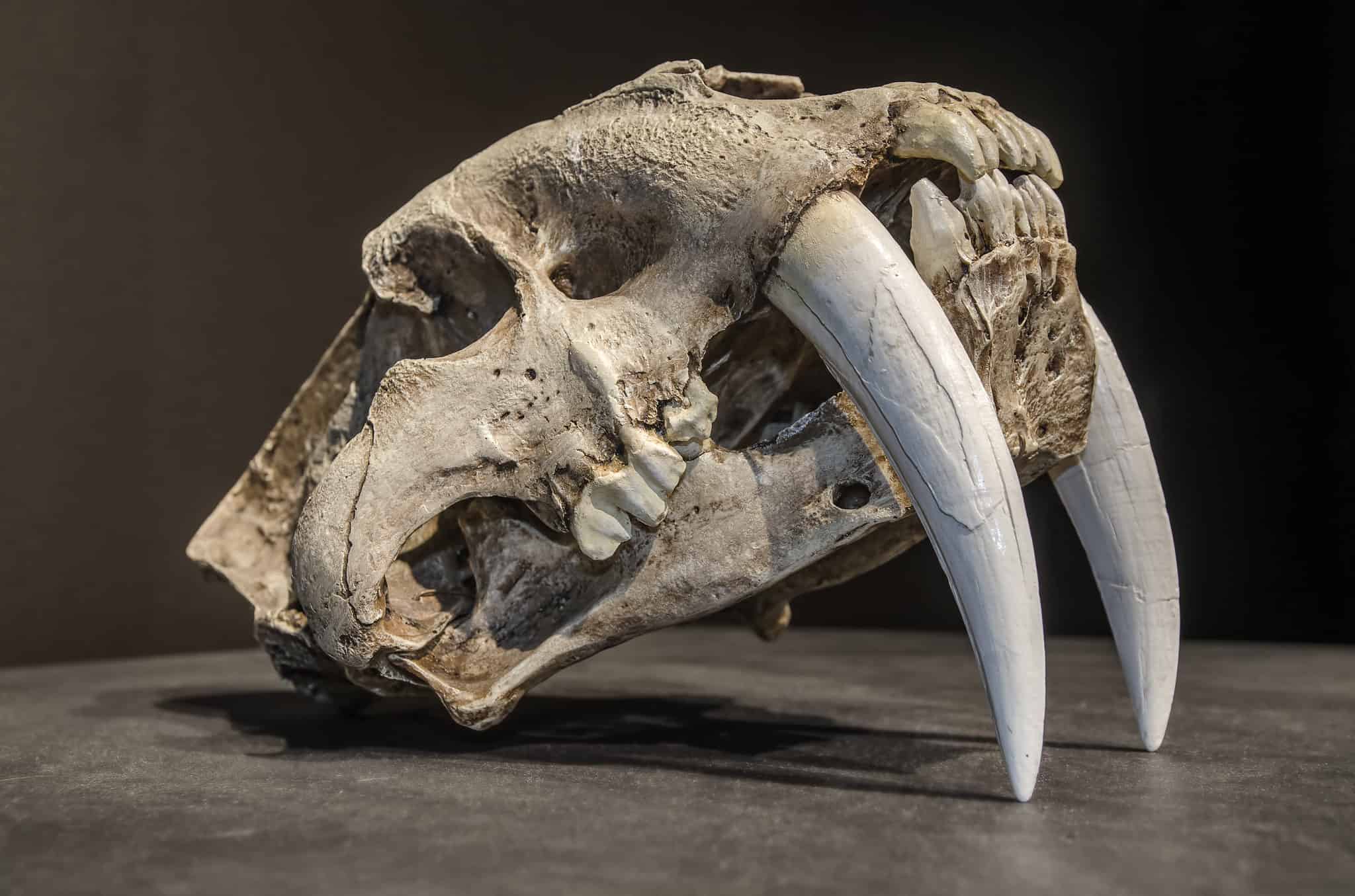
Few prehistoric animals capture the human imagination quite like the saber tooth tiger. Formally known primarily through its most famous genus, Smilodon, this iconic carnivore has long dominated popular culture, museum exhibits, and scientific literature. Despite being commonly referred to as a "tiger," Smilodon and its relatives were not actually tigers at all, but rather members of an entirely distinct subfamily of cats known as Machairodontinae. These apex predators roamed the Americas and other parts of the world during the Pleistocene epoch, relying on specialized anatomical adaptations—most notably their exaggerated, dagger-like upper canine teeth—to dispatch large megafauna prey before vanishing in the Quaternary extinction event roughly 10,000 to 12,000 years ago.
Taxonomy, Evolution, and Misconceptions
To truly understand the saber tooth cat, one must first correct a widespread taxonomic misunderstanding. The animals commonly lumped together as "saber-toothed tigers" belong to the extinct subfamily Machairodontinae within the family Felidae. While modern tigers (Panthera tigris) belong to the subfamily Pantherinae, machairodonts diverged from the lineage that led to modern cats millions of years ago. Calling them saber-toothed cats is scientifically accurate; calling them tigers is a misnomer born of superficial similarities in size and predatory lifestyle.
The evolutionary history of saber-toothed cats spans tens of millions of years, beginning in the Miocene epoch and culminating in the Pleistocene. Over this immense timeframe, various genera evolved across different continents. These included Homotherium, the scimitar-toothed cat with slightly shorter, serrated upper canines and longer limbs adapted for running in open habitats, and Smilodon, the robust, heavy-bodied genus native to the Americas. The most famous species, Smilodon fatalis and Smilodon populator, represent the peak of this evolutionary trajectory, showcasing extreme specializations for grappling and subduing massive prey like mammoths, mastodons, and giant ground sloths.
The Genera of Saber-Toothed Cats
| Genus | Primary Region | Dental Adaptation | Preferred Habitat |
|---|---|---|---|
| Smilodon | North and South America | Long, slender, smooth canines (up to 7 inches) | Closed woodlands and brushlands |
| Homotherium | North America, Eurasia, Africa | Shorter, broad, serrated canines | Open plains and grasslands |
| Machairodus | Eurasia, Africa, North America | Moderate canines, ancestral proportions | Varied forested and transitional zones |
| Megantereon | Eurasia, Africa, North America | Long, compressed canines, ancestral to Smilodon | Forested environments |
Anatomy and Biomechanics: The Purpose of the Blades
The defining characteristic of Smilodon is its extraordinary upper canine teeth, which could reach lengths of up to 7 inches in larger species like Smilodon populator. For decades, early paleontologists debated how these fragile-looking blades were utilized without snapping during a struggle. Modern biomechanical studies, finite element analysis, and comparative anatomy have largely resolved these questions, revealing a predator exquisitely engineered for specialized killing rather than generalist hunting.
Unlike modern lions or tigers, which rely on a sustained suffocating bite to the throat or muzzle of prey, Smilodon possessed a jaw opening that could stretch to an astonishing 120 degrees. This wide gape was necessary to clear the long canines before driving them into soft tissue. However, this wide jaw angle compromised the mechanical advantage of the jaw-closing muscles. Consequently, Smilodon did not possess a crushing bite force. Instead, it relied on the immense strength of its forelimbs and neck muscles to wrestle large prey to the ground, pin it securely, and deliver a precise, fatal thrust to vulnerable areas such as the throat, abdomen, or the base of the skull where the bone was thinner.
Skeletal Adaptations for Wrestling
- Massive Forelimbs: Smilodon possessed exceptionally thick, muscular forelimbs and broad paws equipped with retractable claws, designed to absorb the kinetic energy of struggling prey.
- Humerus and Radius: The bones of the front legs were significantly denser and wider than those of modern big cats of comparable body mass.
- Scapula Design: The shoulder blades featured large surface areas for the attachment of powerful flexor and extensor muscles, enabling the animal to pull heavy prey downward.
- Lower Jaw Adaptations: The lower jaw often featured specialized bone flanges to protect the tips of the upper canines when the mouth was closed and to anchor complex musculature.
- Posterior Spine and Pelvis: The lower back and hindquarters were somewhat less specialized for explosive running speed compared to lions, pointing instead toward ambush hunting and close-quarters combat.
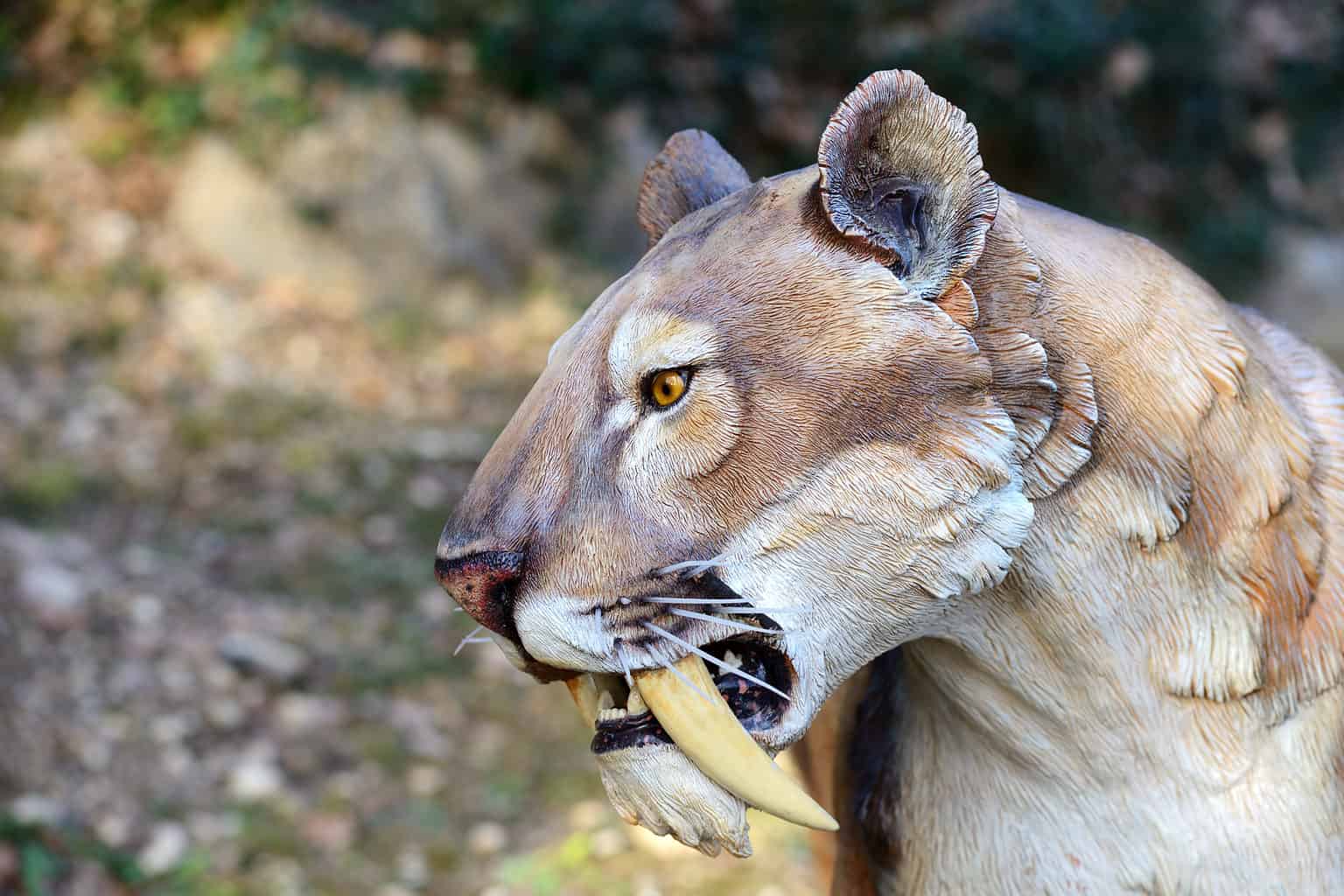
Social Behavior: Solitary Ambushers or Cooperative Prides?
One of the most enduring debates in Pleistocene paleontology centers on whether saber-toothed cats lived and hunted in social groups or roamed as solitary hunters. Evidence from the La Brea Tar Pits in Los Angeles has provided invaluable data to help answer this question, though interpretations remain nuanced among researchers.
The sheer volume of Smilodon fatalis fossils recovered from the asphalt seeps—representing thousands of individuals—offers clues regarding their ecology. Carnivores outnumber herbivores significantly at La Brea, a ratio best explained by predator trap dynamics. Animals trapped in the sticky asphalt would have attracted scavengers and carnivores, who subsequently became trapped themselves. The high frequency of Smilodon suggests they may have been social animals, arriving in groups to feed on trapped prey, much like modern lions or hyenas. Furthermore, some fossil specimens show healed bone injuries and severe tooth wear, indicating that individuals survived debilitating trauma. Skeptics of the social hypothesis argue that such injuries could heal if an animal scavenged or was simply resilient, but the consensus leans toward a social structure, given the energy demands of subduing megafauna.
The La Brea Tar Pits: A Window into the Past
The La Brea Tar Pits stand as the preeminent treasure trove for studying Smilodon and the broader Pleistocene ecosystem. Located in the heart of urban Los Angeles, these natural asphalt deposits have trapped and preserved the skeletal remains of plants and animals spanning tens of thousands of years.
Excavations at Project Pit 91 and the George C. Page Museum have yielded over 3rd-party-verified counts of more than 2,000 individual Smilodon specimens alone, alongside dire wolves (Aenocyon dirus), American lions (Panthera leo atrox), ground sloths, and countless microfossils. This remarkable preservation includes not just bones, but occasional soft-tissue impressions, pollen grains, and insect remains, allowing scientists to reconstruct the climate, vegetation, and interspecies dynamics of Southern California during the last glacial maximum.
The asphalt preserves bones with exceptional fidelity, often staining them a rich dark brown or black. Because asphalt permeates the porous bone matrix, preparation requires meticulous chemical cleaning in solvent baths to remove the tar before detailed osteological analysis can take place. These efforts have allowed researchers to study pathology, such as osteoarthritis, healed fractures, and developmental anomalies, providing a vivid picture of the day-to-day survival challenges faced by these ancient predators.
Extinction: The End of an Era
The extinction of the saber-toothed cat remains a fascinating chapter in mammalian history, tied directly to the Quaternary extinction event that wiped out a vast proportion of the world's megafauna between 15,000 and 10,000 years ago. While popular mythology sometimes attributes their demise to a sudden catastrophe, the reality involved a complex interplay of environmental shifts and ecological pressures.
As the last glacial period came to a close, rapid climate warming transformed global ecosystems. Forests expanded, grasslands shifted, and the cold-adapted megafauna upon which Smilodon specialized either migrated northward, adapted, or died out. Because Smilodon was a hyper-specialized apex predator structurally optimized for killing massive, slow-moving herbivores, the loss of these food sources dealt a fatal blow to the population.
Compounding these climatic and ecological pressures was the arrival of human hunters in the Americas via the Bering Land Bridge. While human predation may not have been the sole driver of extinction, human hunting pressure on remaining megafauna further disrupted fragile food webs. Unable to transition quickly enough to smaller, faster prey like deer and pronghorn—which were better suited to the hunting styles of generalist predators like cougars and wolves—Smilodon slipped into extinction alongside the mammoths and ground sloths that sustained them.
Frequently Asked Questions
Were saber-toothed cats actually tigers?
No, they were not true tigers. While they belonged to the cat family (Felidae), saber-toothed cats belonged to the extinct subfamily Machairodontinae, whereas modern tigers belong to the subfamily Pantherinae. They evolved specialized canine teeth independently from the lineage of modern big cats.
How did Smilodon use its long teeth without breaking them?
Smilodon did not use its canines to crush bone or deliver sustained bites. Instead, it used powerful forelimbs to pin prey to the ground and opened its jaw up to 120 degrees to deliver a precise, slicing stab to soft tissue areas like the throat or abdomen, avoiding hard bone impacts that would fracture the teeth.
Why did saber-toothed cats go extinct?
Their extinction was driven by a combination of rapid climate change at the end of the Pleistocene epoch, the loss of their primary megafauna prey sources (such as mammoths and giant ground sloths), and ecological competition or human pressures as ecosystems shifted.
Did humans ever encounter live saber-toothed cats?
Yes. The timeline of human migration into the Americas overlaps with the final millennia of Smilodon's existence. Early Indigenous peoples in North and South America shared the landscape with these predators before the species vanished roughly 10,000 years ago.
Where can the best fossils of saber-toothed cats be seen?
The La Brea Tar Pits and Museum in Los Angeles, California, houses the world's largest collection of Smilodon fossils, featuring thousands of individual bones, mounted skeletons, and active excavation displays.
Conclusion and Further Exploration
The saber tooth tiger remains an enduring symbol of the ferocious beauty of the prehistoric world. Far from being clumsy beasts hindered by oversized teeth, animals like Smilodon represent an evolutionary masterpiece of specialized biomechanics and predatory strategy. Exploring their fossilized remains in places like the La Brea Tar Pits reminds modern observers of the dynamic nature of Earth's ecosystems and the profound shifts that have shaped the animal kingdom over millennia. For those wishing to deepen their knowledge, visiting natural history museums with dedicated Pleistocene collections or reviewing peer-reviewed paleontological studies offers a rigorous path toward understanding these magnificent extinct carnivores.
Image Gallery
Select an image to open it in a new tab.
Simon Caldwell
Enterprise Technology and Systems Editor
