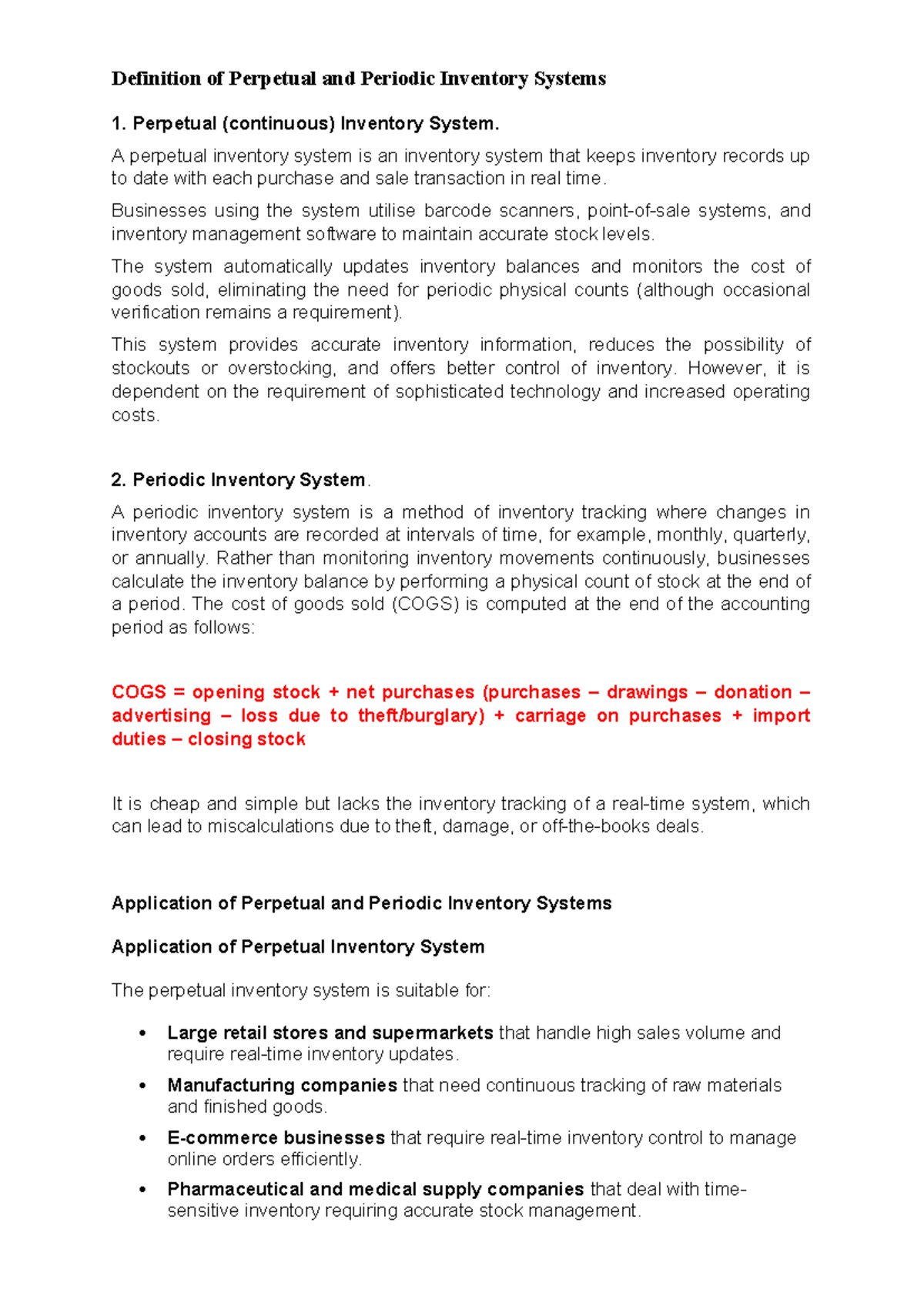
Perpetual inventory system accounts matter because they provide real-time visibility into stock levels and financial performance. By automatically updating the General Ledger with every transaction, these accounts ensure the balance sheet reflects current asset values and the income statement provides an immediate, accurate calculation of the Cost of Goods Sold (COGS).
In the sophisticated business environment of 2026, the reliance on manual, periodic inventory checks has largely faded for mid-to-large-scale enterprises. The shift toward a perpetual inventory system—an accounting method that records the sale or purchase of inventory immediately through the use of point-of-sale (POS) systems and enterprise resource planning (ERP) software—is no longer just a luxury; it is a fundamental requirement for financial integrity. Understanding why these specific accounts matter requires looking beyond simple stock-counting to the deep integration of operational data and financial reporting.
The Financial Foundation: Why Real-Time Accuracy is Non-Negotiable
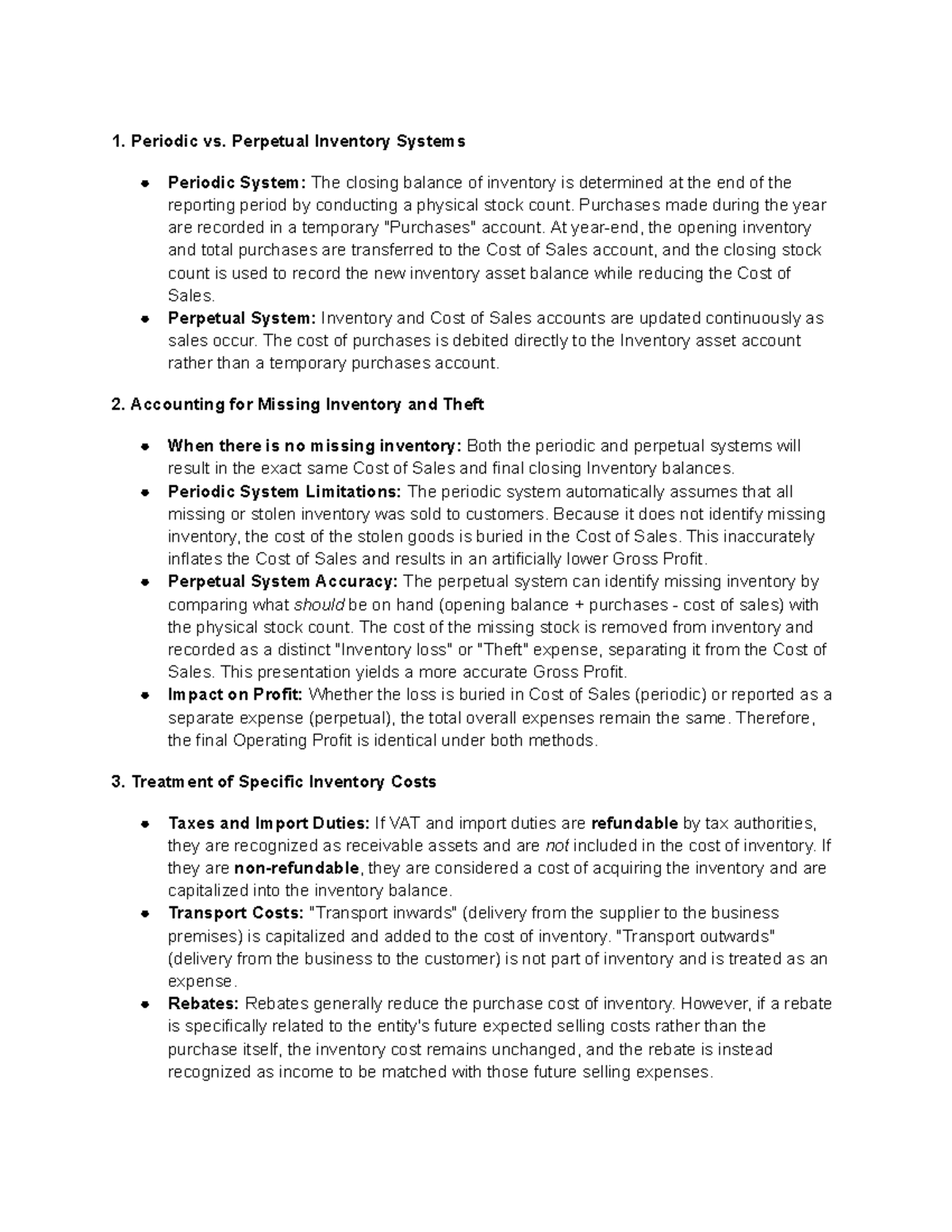
The most immediate reason perpetual inventory system accounts matter is the elimination of the "information lag" that plagues periodic systems. In a periodic system, the Inventory account on the balance sheet remains static until a physical count is performed, often at the end of a month, quarter, or year. In contrast, a perpetual system keeps the Inventory Asset account and the Cost of Goods Sold (COGS) account in constant sync.
Immediate Recognition of COGS
In 2026, profit margins are thinner and market volatility is higher than in previous decades. Businesses cannot afford to wait until the end of a fiscal period to determine their gross profit. In a perpetual system, every time a barcode is scanned at a warehouse exit or a digital sale is finalized, two accounting entries occur simultaneously:
- Revenue is recorded: Cash or Accounts Receivable is debited, and Sales Revenue is credited.
- Inventory is moved to expense: COGS is debited, and the Inventory Asset account is credited.
This immediate recognition allows leadership to see an up-to-the-minute gross margin. If a specific product line's costs rise suddenly due to supply chain disruptions, the perpetual accounts reflect that impact on the bottom line instantly, allowing for rapid price adjustments or procurement shifts.
Balance Sheet Integrity
For stakeholders, investors, and creditors, the balance sheet must represent a "true and fair view" of the company’s position. Inventory is often the largest current asset for retail and manufacturing firms. Perpetual accounts ensure that the value reported to banks or shareholders isn't an estimate based on last month's data but a reflection of the actual items currently held in the distribution network. This level of transparency is critical for maintaining credit lines and investor confidence.
Precision in Inventory Valuation and Tax Compliance
The way a business values its inventory directly affects its taxable income. Perpetual inventory accounts are essential for maintaining the granular data required for advanced valuation methods like First-In, First-Out (FIFO) or Moving Average Cost.
Moving Average Costing
In a perpetual system, the "Moving Average" method is frequently used. Every time new stock is purchased at a different price point, the system recalculates the average cost of all units on hand. This prevents the "sticker shock" of high-cost batches impacting a single period's reports. Without the continuous tracking afforded by perpetual accounts, calculating a moving average would be a manual nightmare prone to significant errors.
Tax and Audit Readiness
Tax authorities, such as the IRS in the United States or various international revenue services, require rigorous documentation for inventory deductions. Perpetual systems provide a digital audit trail for every single unit. If an auditor asks why the inventory value dropped by $50,000 on a specific Tuesday in March, the perpetual system can produce the exact transaction IDs, shipping manifests, and sales receipts associated with that change. This level of detail minimizes the risk of fines and simplifies the annual audit process, reducing the billable hours charged by external accounting firms.
Operational Excellence: Beyond the Ledger
While the primary "accounts" are financial, their importance ripples through the entire operational lifecycle of a business. The data contained within these accounts dictates how a company breathes, moves, and grows.
Identifying and Quantifying Shrinkage
Shrinkage—the loss of inventory due to theft, damage, or administrative error—is a silent profit killer. One of the most vital reasons perpetual inventory accounts matter is that they provide a "book value" to compare against physical reality.
If the perpetual Inventory Asset account states there should be $1.2 million in stock, but a cycle count reveals only $1.15 million, the business has a clearly quantified $50,000 shrinkage problem. In a periodic system, this loss is often "buried" within the COGS, making it impossible to distinguish between items sold and items stolen. By highlighting these discrepancies, managers can investigate specific points of failure in the warehouse or retail floor.
Optimized Reorder Points and Working Capital
Working capital is the lifeblood of a business. Money tied up in excess inventory is money that cannot be used for research, marketing, or expansion. Perpetual accounts allow for the implementation of Just-In-Time (JIT) inventory strategies.
- Automated Reordering: Systems can be set to trigger a purchase order the moment the Inventory account hits a specific "safety stock" level.
- Reduction of Overstock: By seeing exactly which items are moving and which are stagnant, businesses can avoid the "dead stock" trap, ensuring that capital is only invested in high-velocity products.
Comparing Inventory Systems: Perpetual vs. Periodic
To fully grasp why perpetual accounts matter, one must understand what is lost when using the alternative. The following table outlines the functional differences as they stand in 2026.
| Feature | Perpetual Inventory System | Periodic Inventory System |
|---|---|---|
| Record Updates | Real-time (after every transaction) | Periodically (end of week/month/year) |
| COGS Calculation | Continuous and automated | Manual (Beginning Inv. + Purchases - Ending Inv.) |
| Shrinkage Visibility | High; identified through variances | Low; usually hidden within COGS |
| Ease of Audit | High; detailed transaction logs | Moderate to Low; relies on physical counts |
| Implementation Cost | Higher (Software, scanners, RFID) | Lower (Manual spreadsheets) |
| Accuracy | High (if maintained properly) | Variable (subject to count errors) |
| Suitability | High-volume, complex, or multi-location | Small, low-volume, or "mom-and-pop" shops |
The Role of Automation and AI in 2026
As of 2026, the "accounts" in a perpetual system are rarely touched by human hands for routine entries. The integration of Artificial Intelligence (AI) and the Internet of Things (IoT) has elevated the importance of these accounts even further.
IoT and RFID Integration
Modern warehouses utilize RFID (Radio Frequency Identification) tags that update the Inventory account as pallets move through bay doors. This removes the "human error" factor of manual scanning. When the account matters this much, the data entering it must be pristine. IoT sensors also track environmental conditions; if a cold-storage unit fails, the system can automatically write off the spoiled inventory account in real-time, alerting management to the loss immediately.
AI-Driven Forecasting
The historical data stored within perpetual accounts serves as the training set for predictive analytics. AI algorithms analyze years of transaction-level data to predict seasonal spikes, allowing businesses to adjust their Inventory Asset accounts ahead of time. This proactive approach to accounting transforms the ledger from a historical record into a forward-looking strategic tool.
Common Pitfalls: Why Maintenance Matters
The perpetual inventory system is only as good as the data entered into it. While the accounts are powerful, they are not infallible.
- Ghost Inventory: This occurs when the system shows items in stock that aren't physically there, usually due to unrecorded breakage or processing errors. Regular cycle counting—counting a small portion of inventory every day—is required to ensure the perpetual accounts remain accurate.
- Data Sync Failures: In 2026, many businesses use "best-of-breed" software stacks where the POS, Warehouse Management System (WMS), and General Ledger (GL) are different platforms. If the integration "breaks," the perpetual accounts will fall out of sync, leading to disastrous financial reporting errors.
- Human Error in Receiving: If a shipment of 100 units is received but the clerk mistakenly enters 1,000, the Inventory account is instantly overvalued, and the COGS for future sales will be distorted.
Strategic Implementation and Best Practices
For a business looking to leverage the full power of perpetual inventory accounts, implementation must be methodical.
- Standardize Unit of Measure (UOM): Ensure that the account reflects the same units from procurement to sale. If you buy in "cases" but sell in "eaches," the system must be perfectly calibrated to convert these quantities, or the inventory value will be nonsensical.
- Invest in Training: Employees must understand that every scan is an accounting entry. A missed scan isn't just a warehouse mistake; it is a financial reporting error.
- Real-Time Reconciliation: Don't wait for the end of the year. Use the system's reporting tools to reconcile the sub-ledger (inventory software) with the General Ledger daily or weekly.
For more information on accounting standards and inventory regulations, organizations like the Financial Accounting Standards Board (FASB) or the International Financial Reporting Standards (IFRS) Foundation provide comprehensive guidelines on valuation and reporting.
Frequently Asked Questions
1. Does a perpetual inventory system eliminate the need for physical counts?
No. While it significantly reduces the need for a total "shut down the store" year-end count, physical cycle counts are still necessary to verify the accuracy of the digital accounts and to identify shrinkage that the system cannot track automatically (like theft).
2. Is a perpetual system worth it for a small business?
In 2026, yes. With affordable cloud-based accounting software, even small businesses can benefit from real-time data. The cost of stockouts and overstocking usually far outweighs the monthly subscription cost of a perpetual inventory module.
3. How does a perpetual system handle sales returns?
When a customer returns an item, the perpetual system reverses the original entry: the Inventory Asset account is debited (increasing stock), and COGS is credited (decreasing expense). This ensures the inventory value is immediately restored for resale.
4. What is the difference between an inventory sub-ledger and the General Ledger?
The inventory sub-ledger contains the granular details (SKUs, quantities, locations, individual costs), while the General Ledger contains the total "Inventory" dollar value. A perpetual system's job is to ensure these two are always in agreement.
5. Can a perpetual system use LIFO (Last-In, First-Out)?
Yes, but it is more complex. The system must track "layers" of inventory to ensure that the cost of the most recently purchased items is the first to be moved to COGS. Note that under IFRS, LIFO is not permitted, though it remains an option under US GAAP.
Final Recommendation
To truly master your business finances in 2026, you must prioritize the integrity of your perpetual inventory system accounts. The goal is not just to have a "running total" of items, but to create a high-fidelity digital twin of your physical supply chain.
Next Step: Perform a "system audit" this week. Compare your Inventory sub-ledger totals to your General Ledger. If there is a discrepancy, do not just adjust the numbers; find the process failure—whether it's a training issue at the loading dock or a software sync error—and fix it at the source. Accurate accounts are the only way to ensure that your business remains agile, profitable, and compliant in an increasingly data-driven market.
Image Gallery
Select an image to open it in a new tab.


Celine Dubois
Contemporary Living and Global Arts Columnist
