
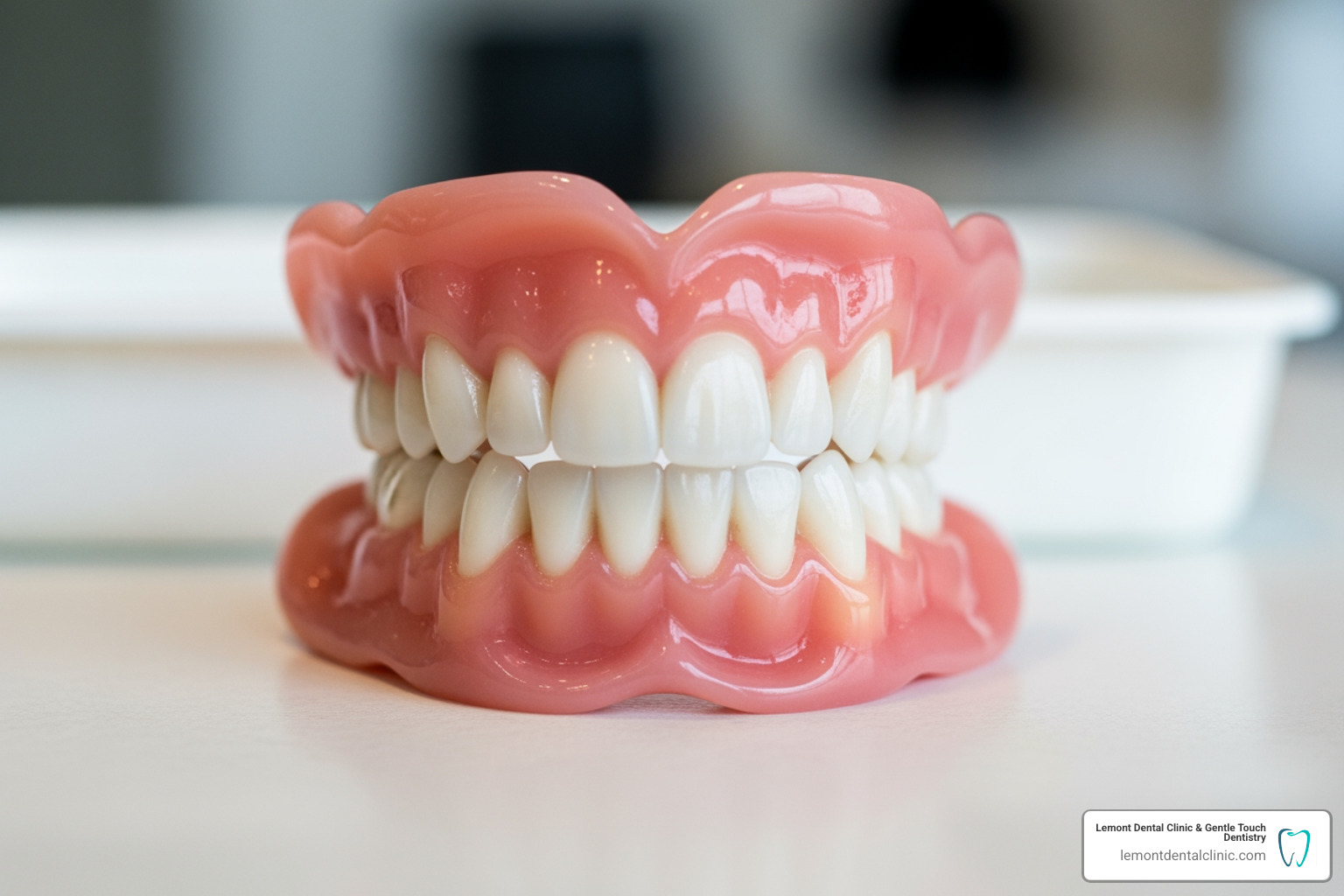
A standard full set of dentures typically contains 28 teeth, consisting of 14 teeth on the upper arch and 14 on the lower arch. While a natural adult mouth contains 32 teeth, the four third molars (wisdom teeth) are omitted from dentures to ensure better stability, comfort, and functional space within the prosthetic base.
The Anatomy of a Full Set of Dentures
When a patient transitions to complete dentures, the primary goal of the prosthodontist is to restore function, aesthetics, and phonetics. Understanding the "tooth count" is not just about numbers; it is about the biomechanical engineering required to replace a natural biological system with a removable prosthetic.
In a natural adult mouth, there are 32 teeth. This includes eight incisors, four canines, eight premolars, and twelve molars (including the four wisdom teeth). However, in the world of removable prosthodontics, the standard is 28. This reduction is intentional and necessary for several anatomical and mechanical reasons.
Why 28 Instead of 32?
The exclusion of the third molars (wisdom teeth) is the industry standard in 2026. This decision is rooted in the limited "real estate" available on the alveolar ridge—the bone that previously supported the natural teeth.
- Stability of the Denture Base: The further back a tooth is placed on a denture, the more likely it is to create a "seesaw" effect. Pressing down on a tooth located too far back can cause the front of the denture to tip or lift.
- Space Constraints: Most patients do not have enough room on the retromolar pad (the soft tissue at the back of the lower jaw) or the maxillary tuberosity (the area behind the upper molars) to accommodate a third molar without interfering with the hinge of the jaw.
- Chewing Efficiency: Most masticatory (chewing) force is concentrated on the first molars and premolars. The third molars contribute very little to actual grinding efficiency in a prosthetic environment but add significant weight and bulk.
- Soft Tissue Irritation: Placing teeth too far back can lead to the denture rubbing against the delicate tissues of the throat or the ascending ramus of the mandible, causing chronic soreness.
Breaking Down the Tooth Types in a Full Set
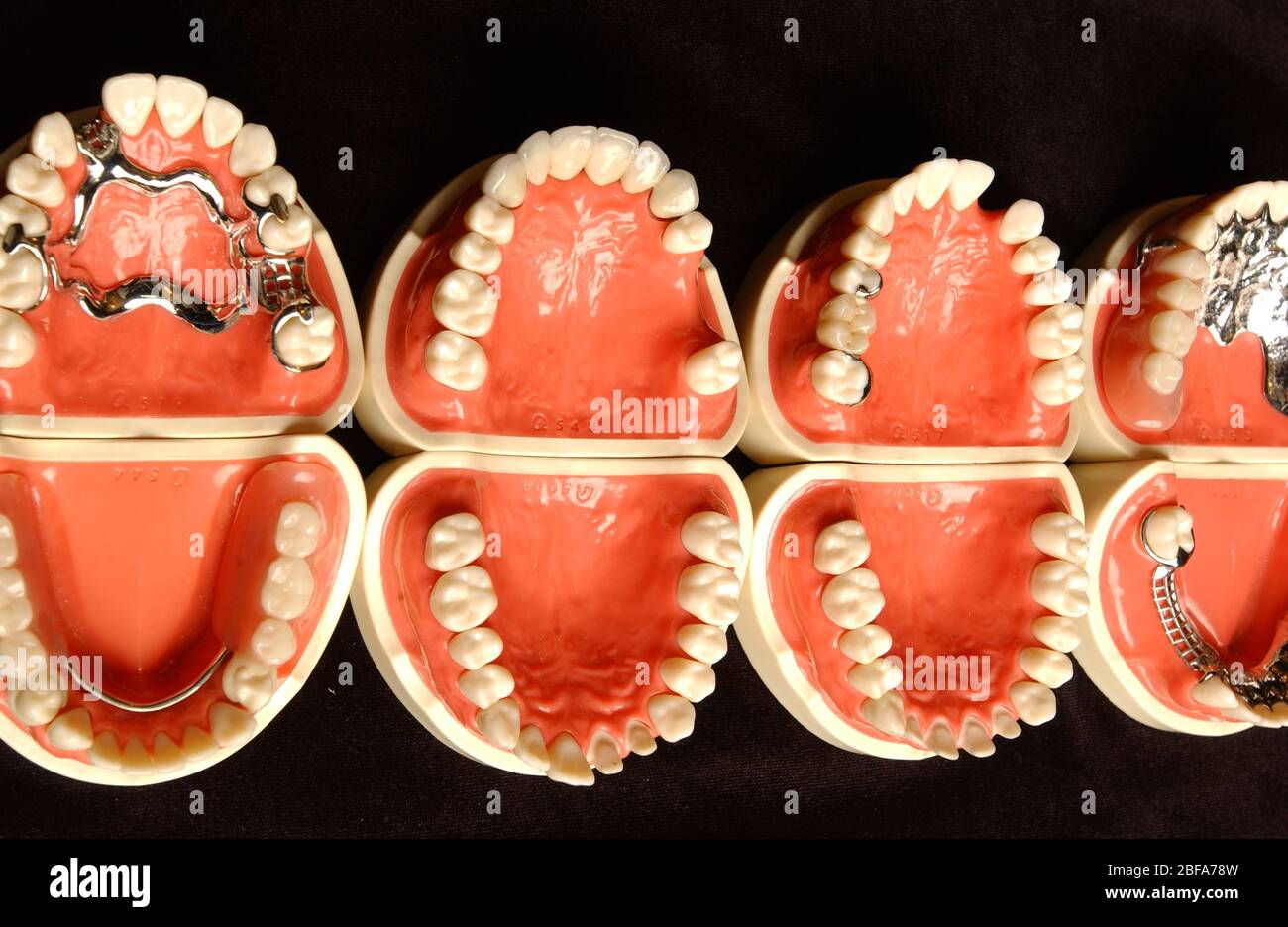
To understand the tooth count, one must look at the specific roles each tooth plays within the 14-tooth arch. A full set of dentures is comprised of two distinct arches: the maxillary (upper) and the mandibular (lower).
The Maxillary Arch (Upper 14)
The upper denture covers the roof of the mouth (the palate) to create suction. The tooth arrangement is critical for a "natural" smile and proper speech.
- Central Incisors (2): These are the two front-and-center teeth. They are the most visible and provide the primary support for the upper lip.
- Lateral Incisors (2): Located on either side of the centrals, these are slightly smaller and help frame the smile.
- Canines (2): Also known as "cuspids" or "eye teeth," these are the cornerstones of the arch. They provide the transition from the front teeth to the back teeth and support the corners of the mouth.
- Premolars (4): Known as bicuspids, there are two on each side (first and second premolars). They are used for intermediate grinding and transition the aesthetic flow toward the back.
- Molars (4): There are two on each side (first and second molars). These are the heavy hitters for chewing and grinding food.
The Mandibular Arch (Lower 14)
The lower denture is shaped like a horseshoe to accommodate the tongue. Because it lacks the suction of the upper palate, tooth placement is even more critical for stability.
- Central Incisors (2): The smallest teeth in the mouth, located at the front-bottom.
- Lateral Incisors (2): Positioned next to the lower centrals.
- Canines (2): These define the lower "turn" of the jawline and assist in tearing food.
- Premolars (4): These work in tandem with the upper premolars to begin the breakdown of food boluses.
- Molars (4): The lower first and second molars are designed to lock into the grooves of the upper molars (occlusion) for effective grinding.

Technical Factors in Tooth Selection and Placement
As of 2026, the process of selecting the 28 teeth for a full set of dentures is highly digitized, yet it still relies on classic prosthodontic principles. Dentists use "mould guides" to choose the physical characteristics of the teeth.
Tooth Size and "Mould"
The size of the teeth is determined by several facial measurements. For example, the width of the nose is often used as a proxy for the width of the four upper incisors. If the teeth are too large, the patient may struggle to close their lips (incompetence); if they are too small, the patient may appear to have "sunken" features.
Tooth Material: Acrylic vs. Porcelain
In current practice, most dentures use acrylic resin teeth rather than porcelain. While porcelain teeth were popular decades ago for their stain resistance, they are brittle and can cause rapid wear on any remaining natural teeth or the bone beneath the denture.
Acrylic teeth are preferred in 2026 because:
- They chemically bond to the denture base, making them less likely to pop out.
- They are "kind" to the underlying bone, acting as a shock absorber during chewing.
- They are quieter; they don't produce the "clicking" sound often associated with porcelain.
Shades and Aesthetics
Modern dentures do not use a "one-size-fits-all" white. Technicians use shade guides (like the Vita scale) to match the teeth to the patient's age, skin tone, and personal preference. A "natural" set of 28 teeth often involves "polychromatic" layering, where the necks of the teeth are slightly darker or more yellow than the biting edges, mimicking the way natural dentin and enamel interact with light.
Comparison Table: Natural Dentition vs. Full Dentures
| Feature | Natural Adult Teeth | Standard Full Dentures (2026) |
|---|---|---|
| Total Tooth Count | 32 (including wisdom teeth) | 28 (excluding wisdom teeth) |
| Upper Arch Count | 16 | 14 |
| Lower Arch Count | 16 | 14 |
| Wisdom Teeth | Present (usually) | Always Omitted |
| Connection Type | Periodontal Ligament (anchored in bone) | Rests on Gingiva (Gum tissue) |
| Primary Material | Enamel and Dentin | Acrylic Resin or Composite |
| Functionality | 100% Bite Force | 20% to 30% of Natural Bite Force |
The Mechanics of Occlusion and Tooth Count
The way the 28 teeth meet is called occlusion. In a full set of dentures, the dentist often aims for "bilateral balanced occlusion." This means that when you bite down or move your jaw side-to-side, the teeth on both sides of the mouth should touch simultaneously.
If a denture had 32 teeth, the inclusion of the third molars would make achieving this balance nearly impossible. The jaw muscles and the Temporomandibular Joint (TMJ) are not designed to stabilize a floating plastic base that extends into the very back of the throat. By sticking to a 28-tooth count, the "occlusal table" (the surface area used for chewing) is kept within the most stable part of the jaw.
The Role of "The Neutral Zone"
Tooth placement within the 28-count framework must respect the "neutral zone." This is the space in the mouth where the outward pressure of the tongue is neutralized by the inward pressure of the lips and cheeks. If the teeth are set too far "out" (toward the cheeks), the denture will be dislodged every time the patient speaks. If they are set too far "in" (toward the tongue), the tongue will constantly push the denture out of place.
Customizing the Tooth Count: Rare Exceptions
While 28 is the standard, there are rare instances where a dentist might deviate from this number:
- Micrognathia (Small Jaw): In patients with extremely small jaw structures, a dentist might remove a premolar from each quadrant, resulting in a 24-tooth set. This prevents the denture from being too bulky for the patient to swallow or speak comfortably.
- Cross-bite Corrections: In some cases of severe jaw misalignment, the molar count might be adjusted or the teeth might be "short-arched" to ensure the patient doesn't bite their cheeks constantly.
- Implant-Supported Overdentures: While these also typically use 28 teeth, the added stability of implants sometimes allows for a slightly different arrangement of molars to maximize chewing power.
Maintaining a Full Set of 28 Teeth
Once a patient receives their dentures, the maintenance of those 28 teeth is vital. Unlike natural teeth, acrylic teeth can wear down over time. In 2026, it is recommended that denture wearers have their tooth height checked every 12 to 18 months.
- Attrition: If the 28 teeth become flat from grinding, the "vertical dimension" of the face collapses. This leads to the chin appearing too close to the nose and causes wrinkles at the corners of the mouth (angular cheilitis).
- Staining: While modern acrylics are highly resistant to discoloration, they are porous. Micro-debris can lodge in the gaps between the 28 teeth and the pink acrylic base.
- Fractures: If one of the 14 teeth on an arch chips or breaks, it can usually be repaired by a dental lab without replacing the entire denture.
Common Mistakes and Misconceptions
Many patients are surprised to learn they will have fewer teeth than they started with. A common mistake is requesting a "full 32" to match their youth. Experienced prosthodontists generally advise against this because the mechanical failures—specifically the loss of suction on the upper or the constant lifting of the lower—far outweigh any perceived aesthetic benefit of having wisdom teeth.
Another misconception is that the number of teeth affects the "fullness" of the face. In reality, it is the thickness of the pink acrylic base (the flange) and the position of the 12 front teeth (incisors and canines) that determine how well the lips are supported, not the presence of third molars at the back.
FAQs
Why don't dentures have 32 teeth like natural adult sets?
Dentures exclude the four wisdom teeth (third molars) because they would extend too far back into the mouth. This area of the jaw is often too unstable to support a prosthetic, and placing teeth there would cause the denture to tip, rub against the jaw hinge, or interfere with the tongue.
If a tooth falls out of my denture, can I just glue it back?
No. You should never use hardware store glue or "super glue" on a denture. These glues are toxic and can damage the denture material. A dental lab uses a specific cold-cure or heat-cure acrylic to chemically rebond the tooth to the base, ensuring it stays in the correct alignment for your bite.
Will having only 28 teeth change the way I speak?
The absence of wisdom teeth has no impact on speech. Phonetics (the sounds like "S," "F," and "V") are controlled by the interaction of the tongue and lips with the front 6 to 8 teeth. As long as the incisors and canines are positioned correctly, your speech will remain clear.
Does the tooth count affect the price of the dentures?
Generally, no. Denture sets are sold as "cards" of teeth (e.g., a card of 6 anterior teeth or a card of 8 posterior teeth). A full set is billed as a complete prosthesis regardless of whether the dentist slightly adjusts the count for a very small mouth. The cost is driven more by the material quality and the laboratory technique used.
Can I choose the shape of the 28 teeth in my set?
Yes. Modern "mould guides" offer various shapes, such as "square," "tapering," or "ovoid." Square teeth are often perceived as more masculine, while rounded or ovoid teeth are seen as more feminine. You can work with your dentist to choose a shape that matches your previous natural teeth or your current facial structure.
Practical Recommendation
If you are preparing for a full set of dentures in 2026, focus less on the total tooth count and more on the Vertical Dimension of Occlusion (VDO). This is the distance between your nose and chin when the teeth are touching. A skilled prosthodontist will use the 28 teeth to "rebuild" your face height, which is the key to a youthful and functional result. Always ask for a "wax try-in" appointment. This allows you to see the 28 teeth set in wax before they are permanently cast in acrylic, giving you the chance to approve the aesthetics and ensure the 14-per-arch count feels comfortable in your mouth.
Image Gallery
Select an image to open it in a new tab.


Mateo Castillo
Decentralized Finance and E-Payments Strategist
