Alternative schools for troubled teens provide specialized educational and therapeutic environments for adolescents struggling with behavioral, emotional, or academic challenges. These institutions range from local public credit-recovery programs to private residential treatment centers, designed to address underlying issues while ensuring students continue their education in a supportive, highly structured setting.
Navigating the landscape of alternative education in 2026 requires understanding the distinction between academic-focused alternative programs and clinically-focused therapeutic placements. For parents and guardians, the priority is often finding a balance between academic progress and the resolution of behavioral or mental health crises. This guide explores the various types of alternative schools, their costs, legal frameworks, and how to determine the best fit for a struggling teenager.
Understanding the Landscape of Alternative Education
The term "alternative school" is a broad umbrella. In 2026, the educational sector distinguishes clearly between programs meant for "at-risk" students (those at risk of dropping out) and "troubled" students (those dealing with clinical diagnoses or significant behavioral dysregulation).
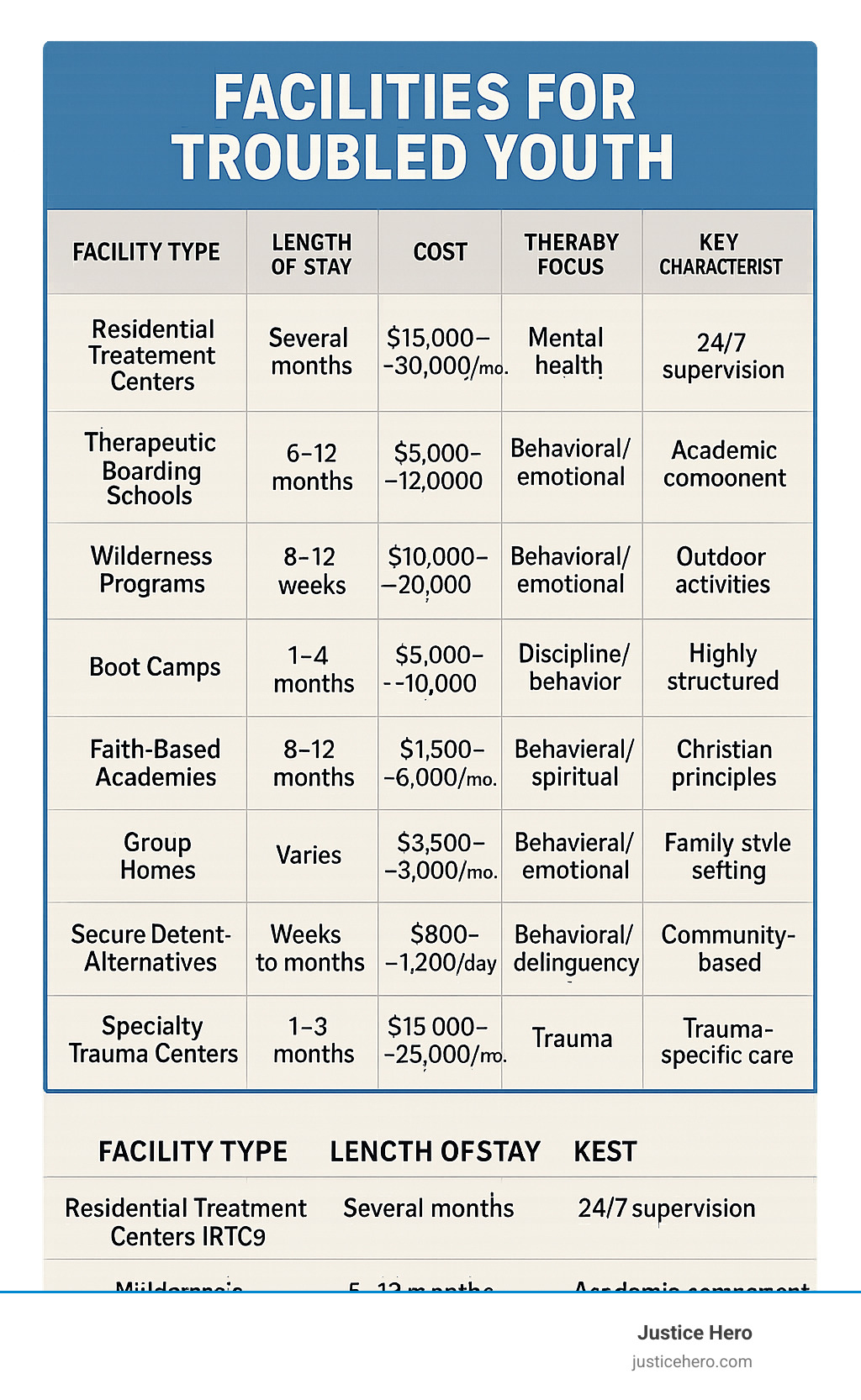
Most alternative schools fall into one of three categories: public alternative learning centers (ALCs), therapeutic boarding schools (TBS), and residential treatment centers (RTCs). While public options are often funded by the state or local school district, private therapeutic options typically require significant financial investment or specialized insurance navigation.
The goal of these institutions is rarely just graduation. Instead, they focus on "holistic stabilization." This means addressing the root causes of a teen's struggle—whether that is undiagnosed neurodivergence, substance use, trauma, or Oppositional Defiant Disorder (ODD)—so that the student can eventually reintegrate into a traditional environment or transition successfully into adulthood.
Types of Alternative Schools for Troubled Teens
Selecting the right environment depends on the severity of the teen’s issues and the level of supervision required. As of 2026, the industry has shifted toward more evidence-based clinical models and away from the punitive "boot camp" styles of previous decades.
1. Therapeutic Boarding Schools (TBS)
Therapeutic boarding schools are long-term residential programs that combine traditional middle or high school academics with intensive psychological therapy. These are generally intended for teens who are not in immediate physical danger but whose behaviors are making it impossible for them to function at home or in a standard classroom.
- Focus: Long-term character development and emotional regulation.
- Duration: Typically 12 to 18 months.
- Structure: Students live on campus, follow a strict schedule, and participate in individual, group, and family therapy sessions.
- Academics: Usually accredited, allowing students to earn a high school diploma or transfer credits back to their home district.
2. Residential Treatment Centers (RTCs)
RTCs are more clinically intensive than therapeutic boarding schools. They are designed for teens with significant mental health diagnoses, such as severe depression, bipolar disorder, or eating disorders, who require 24/7 monitoring by medical or clinical staff.
- Focus: Clinical stabilization and safety.
- Duration: Usually 3 to 9 months, depending on progress.
- Staffing: High ratio of licensed therapists and medical professionals to students.
- Academics: While education is provided, it is often secondary to the clinical treatment plan.
3. Wilderness Therapy Programs
Often used as a "reset" or a precursor to a TBS or RTC, wilderness programs remove teens from their digital and social environments. By living in a natural setting and engaging in primitive skills, teens are forced to confront their behaviors and develop resilience.
- Focus: Breaking through defiance and building self-efficacy.
- Duration: 6 to 10 weeks.
- Approach: Utilizing the "natural consequences" of the environment to teach accountability.
4. Public Alternative Learning Centers (ALCs)
For teens whose struggles are primarily academic or related to minor behavioral infractions, public ALCs offer a non-residential solution. These are operated by local school districts and often feature smaller class sizes and more flexible scheduling.
- Focus: Credit recovery and behavioral modification.
- Duration: Temporary or permanent through graduation.
- Cost: Free to residents within the district.
Determining the Need for Intervention
Deciding to send a child to an alternative school is one of the most difficult choices a parent can make. In 2026, professionals use several metrics to determine if a teen is "troubled" enough to warrant a change in placement.
Common indicators include:
- Academic Failure: A sharp, unexplained decline in grades or a refusal to attend school (school refusal).
- Behavioral Escalation: Physical aggression, running away, or involvement in illegal activities.
- Substance Use: Increasing reliance on drugs or alcohol as a coping mechanism.
- Mental Health Crisis: Suicidal ideation, self-harm, or severe withdrawal that outpatient therapy has failed to resolve.
- Failure of Outpatient Services: When weekly therapy and school-based accommodations (like an IEP) are no longer sufficient to keep the teen safe or progressing.
Before choosing a school, parents should seek a Comprehensive Clinical Assessment from a neutral third-party psychologist. This assessment provides a roadmap of the teen’s needs, which helps in matching them to a school with the appropriate therapeutic modalities.
Comparing Alternative School Options (2026 Estimates)
| School Type | Primary Intent | Supervision Level | Est. Monthly Cost | Avg. Length of Stay |
|---|---|---|---|---|
| Public Alternative School | Credit Recovery | Standard | $0 (Publicly Funded) | 1–4 Semesters |
| Therapeutic Boarding School | Emotional Growth | High (24/7) | $7,000 – $12,000 | 12–18 Months |
| Residential Treatment Center | Clinical Stability | Very High (Medical) | $10,000 – $18,000 | 3–9 Months |
| Wilderness Therapy | Behavioral Reset | High (Outdoor) | $500 – $700 per day | 6–10 Weeks |
| Day Treatment (PHP/IOP) | Structured Support | Moderate (Daytime) | $3,000 – $6,000 | 2–4 Months |
Legal Rights and Financial Considerations
The cost of private alternative schools is a significant barrier for many families. However, there are legal and financial avenues available in 2026 that can mitigate these expenses.
The Role of IDEA and FAPE
Under the Individuals with Disabilities Education Act (IDEA), every child is entitled to a "Free Appropriate Public Education" (FAPE). If a public school district cannot meet a student’s needs—particularly those with an Individualized Education Program (IEP)—they may be legally required to pay for a private alternative placement. This usually requires a "due process" hearing or a negotiated settlement, and it often necessitates the help of an educational advocate or attorney.
Insurance and the Parity Act
The Mental Health Parity and Addiction Equity Act requires insurance providers to cover mental health and substance use disorder services at the same level as medical/surgical services. In 2026, many families successfully use insurance to cover the "room and board" or "clinical" portion of a Residential Treatment Center. It is important to note that insurance rarely covers the "academic" portion of the tuition at a therapeutic boarding school.
Tax Deductibility
In some jurisdictions, the medical portion of tuition for a therapeutic school may be considered a deductible medical expense. This requires a formal recommendation from a physician stating that the placement is medically necessary for the child’s well-being.
How to Verify Quality and Safety
Safety is the paramount concern when placing a teen in a residential setting. Historically, the "troubled teen industry" faced criticism for a lack of oversight. By 2026, regulations have tightened, but parents must still perform due diligence.
Accreditation and Licensing
Ensure the school holds two types of accreditation:
- Educational Accreditation: From bodies such as Cognia or the Western Association of Schools and Colleges (WASC). This ensures credits will transfer.
- Clinical Accreditation: Look for the Joint Commission (JCAHO) or CARF (Commission on Accreditation of Rehabilitation Facilities) seals. These organizations audit the safety, hygiene, and clinical efficacy of the program.
Staff Qualifications
A reputable school for troubled teens should have a diverse team, including:
- Licensed Clinical Social Workers (LCSW) or Licensed Marriage and Family Therapists (LMFT).
- Board-certified psychiatrists for medication management.
- Certified Special Education teachers.
- Nursing staff available 24/7 (for RTCs).
Transparency and Communication
Ask about the school's "Blackout Policy." While some initial separation is normal, modern therapeutic models encourage regular, supervised family communication. Avoid programs that restrict communication for extended periods or those that do not allow parents to speak with their child's therapist at least once a week.
Common Therapeutic Modalities
Alternative schools in 2026 utilize a variety of evidence-based treatments. Understanding these can help you choose a program that aligns with your teen's specific needs.
- Cognitive Behavioral Therapy (CBT): Focuses on identifying and changing negative thought patterns. Excellent for anxiety and depression.
- Dialectical Behavior Therapy (DBT): Highly effective for emotional dysregulation, self-harm, and "borderline" traits. It emphasizes mindfulness and distress tolerance.
- Eye Movement Desensitization and Reprocessing (EMDR): Used primarily for teens dealing with significant trauma or PTSD.
- Equine-Assisted Therapy: Using horses to help teens build trust and non-verbal communication skills.
- Neurofeedback: A non-invasive process where students learn to regulate their brainwave activity, often used for ADHD and impulse control.
Frequently Asked Questions
Are alternative schools for troubled teens the same as "boot camps"?
No. In 2026, the "boot camp" model—which relied on military-style discipline and physical punishment—has largely been discredited and replaced by therapeutic models. Modern alternative schools focus on psychological healing and behavioral modification through positive reinforcement and clinical intervention rather than fear or intimidation.
Can a school district refuse to pay for an alternative school?
Yes, and they frequently do. A district is only required to pay if they cannot provide an "appropriate" education within their own facilities. To win a placement, parents usually need to prove that the teen’s needs are so severe that they require a residential or specialized setting to access their education.
How do I check the safety record of a private alternative school?
You can search the state’s Department of Social Services (DSS) or Department of Children and Family Services (DCFS) website for the state where the school is located. These agencies maintain records of licensing violations, investigated complaints, and safety inspections.
What happens if my teen refuses to go?
For teens in immediate danger, some parents utilize "educational transport" services—professionals trained to safely move a teen to a facility. However, most experts in 2026 recommend "interventionist-led" approaches where the family works together to convince the teen that the placement is a necessary step for their own well-being.
Will my teen earn a real high school diploma?
In most accredited therapeutic boarding schools and public alternative centers, yes. The diplomas issued are the same as those from traditional schools. For RTCs, students may earn credits that they later transfer back to their "home" high school to graduate with their original class.
Final Recommendations for Parents
If you are considering an alternative school for your teen in 2026, your first action should be to consult with an Educational Consultant. These professionals specialize in the troubled teen industry and maintain up-to-date data on which schools are currently performing well, which have had recent staff turnovers, and which are most likely to accept your insurance.
Before signing a contract, visit the campus if possible. Meet the clinical director, observe a classroom, and ask to see the living quarters. A reputable school will be transparent about its successes and its challenges. Remember that while these schools provide the tools for change, the most successful outcomes occur when the entire family participates in the therapeutic process, ensuring that the home environment is also ready for the teen’s eventual return.
Image Gallery
Select an image to open it in a new tab.

Omar Farooq
EdTech Innovation and Virtual Pedagogy Journalist
