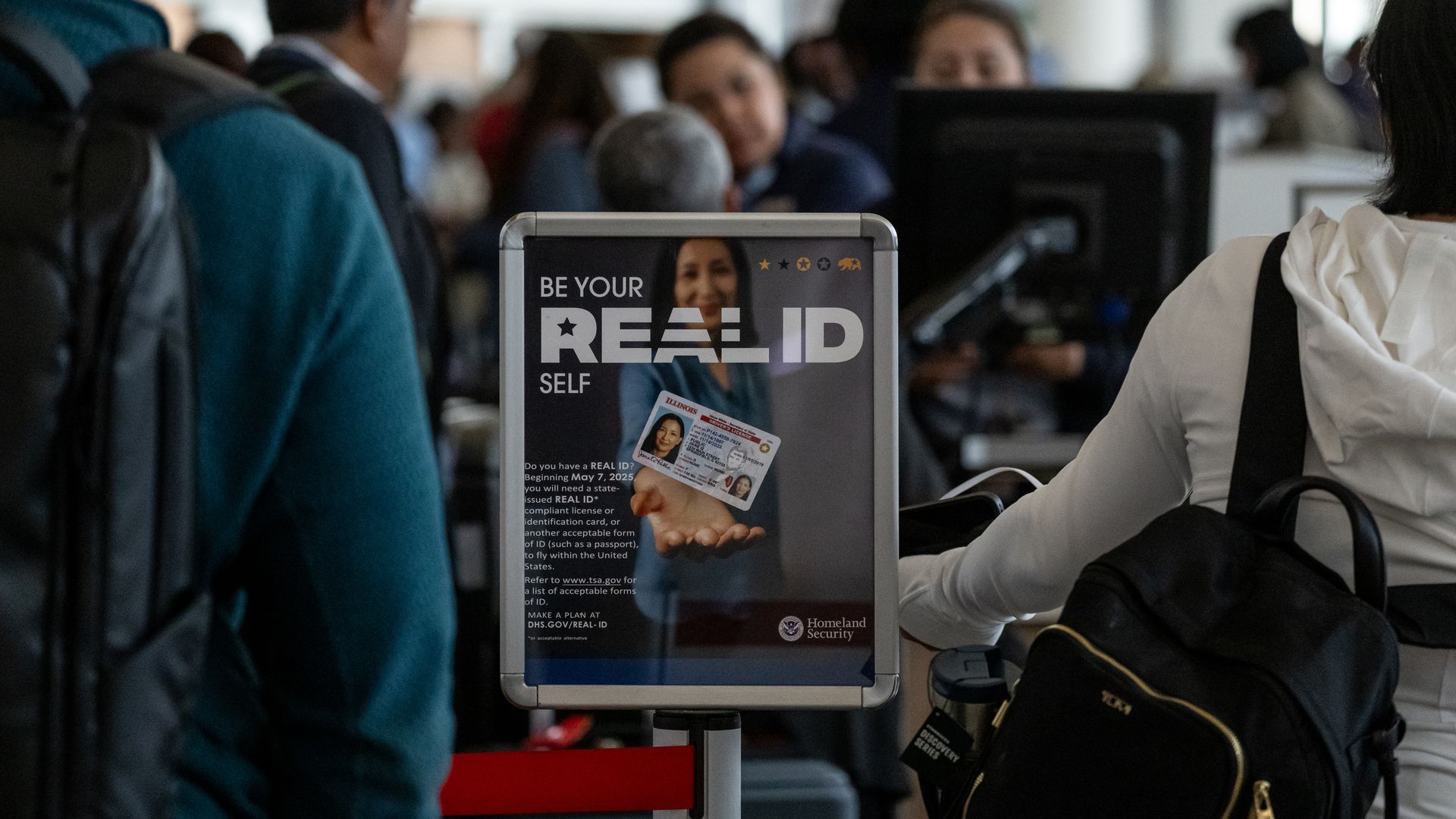
A REAL ID is a state-issued driver’s license or identification card that meets specific federal security standards established by the REAL ID Act of 2005. As of 2026, the Transportation Security Administration (TSA) requires all adult travelers to present a REAL ID-compliant form of identification or an acceptable federal alternative to pass through security checkpoints for domestic air travel.
The transition to REAL ID represents one of the most significant changes to domestic travel security in decades. While the law was passed shortly after the turn of the century, its full implementation followed a series of extensions and state-level adjustments. Today, the REAL ID is the baseline for identity verification at federal facilities, including airport security and certain high-security government buildings. Understanding the nuances of this requirement—from the documentation needed for the application to the specific symbols on your card—is essential for any traveler navigating the United States.
The Legislative Foundation of the REAL ID Act
The REAL ID Act was a direct response to the recommendations of the 9/11 Commission. The commission found that the lack of standardized identification across the 50 states created security vulnerabilities that could be exploited. In 2005, Congress passed the Act to establish minimum security standards for license issuance and production.
The primary goal was to ensure that every person holding a state-issued ID had their identity vetted through a rigorous, uniform process. This involves verifying the applicant’s full legal name, date of birth, Social Security number, principal residence, and lawful status in the United States. Furthermore, the Act mandates that the physical cards themselves incorporate anti-counterfeiting features that are difficult to replicate, such as specialized holograms and machine-readable barcodes.
In 2026, the days of utilizing a standard, non-compliant driver's license for domestic flights are over. TSA officers at the "Travel Document Checker" stations are equipped with Credential Authentication Technology (CAT) units that instantly recognize compliant versus non-compliant documents. If your ID does not meet these federal standards and you do not have an alternative, you will not be permitted to enter the sterile area of the airport.
How to Identify a REAL ID-Compliant Document
One of the most common points of confusion for travelers is determining whether their current driver's license is actually compliant. While the cards vary by state, the Department of Homeland Security (DHS) mandated a specific visual marker to denote compliance.
The Marking Symbols
In the vast majority of states, a REAL ID is identified by a star located in the upper right-hand corner of the card. The design of this star can vary slightly:
- A gold or black star.
- A star located inside a gold or black circle.
- A star cutout within a gold or black shape.
If your license has the phrase "Not for Federal Identification" or "Federal Limits Apply," it is a standard license and cannot be used at a TSA checkpoint.
Enhanced Driver’s Licenses (EDL)
A few states—specifically Washington, Michigan, Minnesota, New York, and Vermont—offer what is known as an Enhanced Driver’s License (EDL). These cards are highly specialized. Not only are they REAL ID-compliant for domestic air travel, but they also allow for land and sea border crossings into Canada and Mexico without a passport. These cards usually do not have a star; instead, they may have a flag symbol or the word "Enhanced" printed clearly on the front. For the purposes of TSA, these are fully acceptable.

TSA Requirements at the Airport Checkpoint
In 2026, the TSA enforcement is absolute. However, the requirement specifically applies to travelers aged 18 and older.
Adult Travelers (18+)
Every adult passenger must present a compliant ID. If you arrive at the airport with a non-compliant license, you will be required to provide an alternative form of ID. Without one, you may be subjected to additional screening or, in many cases, denied entry to the boarding area entirely. It is important to note that a REAL ID is only required for the security checkpoint; it is not a requirement for the airline check-in process itself, though most airlines require some form of ID to check bags or print boarding passes.
Travelers Under 18
The TSA does not currently require children under the age of 18 to provide identification when traveling with a companion within the United States. The companion will need to provide their own REAL ID-compliant identification, but the minor’s identity is generally vouched for by the adult's presence and the matching information on the boarding pass.
International Travel
It is a common misconception that a REAL ID can replace a passport for international flights. This is incorrect. A REAL ID is strictly for domestic air travel and access to federal buildings. If you are flying from New York to London, or even from San Diego to Tijuana via air, you still require a valid U.S. Passport or equivalent international travel document.
Acceptable Alternatives to a REAL ID
If you do not wish to obtain a REAL ID-compliant driver's license, or if your state department of motor vehicles is experiencing long delays, there are several federal alternatives that TSA accepts. According to the TSA's official list of acceptable identification, these documents remain valid for domestic flight:
- U.S. Passport or Passport Card: Both the book and the card are federally issued and fully compliant.
- DHS Trusted Traveler Cards: This includes Global Entry, NEXUS, SENTRI, and FAST cards.
- U.S. Department of Defense ID: This includes IDs issued to active-duty service members, retirees, and dependents.
- Permanent Resident Card: Also known as a "Green Card."
- Federally Recognized, Tribal-Issued Photo ID: Specific to members of recognized indigenous tribes.
- HSPD-12 PIV Card: Identification issued to federal employees and contractors.
- Foreign Government-Issued Passport: Valid for international visitors traveling domestically within the U.S.
- Canadian Driver's License or Indian and Northern Affairs Canada Card: Specific to Canadian citizens.
The Application Process: How to Get Your REAL ID
Obtaining a REAL ID is more rigorous than renewing a standard license. Because it is a federal security standard, you cannot simply "upgrade" online in most jurisdictions; an in-person visit to your state’s DMV or equivalent agency is mandatory.
Required Documentation
The "Five Points of Identity" are the backbone of the application. You must typically provide original or certified copies of the following:
- Proof of Identity: A certified birth certificate or a valid U.S. passport.
- Social Security Information: A Social Security card, a W-2 form, or a pay stub showing your full SSN.
- Two Proofs of Residency: These must show your current physical address. Acceptable documents often include utility bills, mortgage statements, or rental agreements.
- Name Change Documentation: If your current name differs from the name on your birth certificate (due to marriage, adoption, or court order), you must provide the legal chain of documents (e.g., marriage licenses or divorce decrees).
Verification and Processing
Once you submit these documents, the state agency verifies them against federal databases. Many states will issue a temporary paper license at the window and mail the secure, permanent REAL ID within two to four weeks. Because the verification process for these documents can be time-consuming, it is recommended to start the process at least three months before any planned travel.
| Feature | Standard Driver's License | REAL ID Compliant License | U.S. Passport / Passport Card |
|---|---|---|---|
| Domestic Air Travel | No (as of 2026) | Yes | Yes |
| Federal Building Access | Restricted | Yes | Yes |
| International Air Travel | No | No | Yes (Booklet only) |
| Land/Sea Border Crossing | No | No (unless EDL) | Yes |
| Visual Marker | "Not for Federal ID" | Star Symbol | Federal Seal |
| Issuing Authority | State Government | State Government | Federal Government |
Digital REAL IDs and Mobile Driver's Licenses (mDL)
By 2026, the landscape of identification has shifted toward digital solutions. Many states have introduced Mobile Driver's Licenses (mDLs) that can be stored in digital wallets on smartphones.
The TSA has been progressively upgrading airport checkpoints to accept these digital credentials. However, there is a crucial distinction: even if your state offers a digital ID, it must still be "REAL ID compliant" in its data structure. Furthermore, the TSA currently accepts digital IDs only at specific airports equipped with specialized readers. Even if you use a digital REAL ID, federal guidelines strongly recommend carrying the physical card as a backup, as technical failures or lack of compatible hardware at certain airports can prevent the digital ID from being verified.
Common Obstacles and Troubleshooting
The transition to REAL ID has not been without hurdles. Many citizens encounter specific issues that can delay the issuance of their compliant ID.
The Name Change Gap
The most frequent obstacle involves maiden names and married names. If a woman's birth certificate says "Jane Doe" but her current license says "Jane Smith," she must provide the marriage certificate that bridges those two names. If she has been married multiple times, she may need to provide the entire "paper trail" of marriage and divorce documents to prove the legal transition of the name.
Residency Challenges
For individuals who do not have traditional utility bills in their name—such as those living in shared housing, students, or people experiencing housing instability—proving residency can be difficult. Most states offer an "Affidavit of Residency" where a landlord or a co-habitant can swear to the applicant's address, but this often requires the co-habitant to appear in person or provide their own REAL ID.
Address Confidentiality
Victims of domestic violence or stalking who participate in state address confidentiality programs (ACPs) have specific protections. These individuals are generally allowed to use their substitute address for the REAL ID process, but they must coordinate closely with the DMV and the state's ACP office to ensure the documentation is handled correctly without compromising their safety.
Frequently Asked Questions
Does REAL ID mean I'm in a national database?
The REAL ID Act does not create a federal database of driver's license information. Each state continues to maintain its own records. However, the Act requires states to share their databases with one another to ensure that an individual does not hold multiple licenses from different states, which was a common tactic used by identity thieves in the past.
Can I fly with a temporary paper REAL ID?
TSA generally does not accept temporary paper licenses because they lack the necessary security features and cannot be verified by CAT scanners. If you are waiting for your permanent card to arrive in the mail, you should use an alternative form of identification, such as a passport, until the physical card is in your possession.
What if I am a lawful permanent resident?
Lawful permanent residents (Green Card holders) are eligible to apply for a REAL ID in their state of residence. They must provide their valid Permanent Resident Card as part of the identity verification process. Alternatively, they can simply use their Green Card as their primary ID at the TSA checkpoint, as it is a federally accepted document.
Do I need a REAL ID to vote?
No. The REAL ID Act applies specifically to "official purposes" as defined by the Secretary of Homeland Security. Currently, those purposes are accessing federal facilities, boarding federally regulated commercial aircraft, and entering nuclear power plants. It does not affect voting registration or the ability to vote, which are governed by state and other federal laws.
My license expires in 2027; do I have to get a REAL ID now?
Yes, if you plan to fly domestically in 2026. Even if your current license has not reached its expiration date, if it is not REAL ID-compliant, it is no longer valid for TSA purposes. You must either renew it early as a REAL ID or carry an alternative document like a passport.
Practical Recommendations for Travelers
As we move through 2026, the best strategy is proactive compliance. If you have not yet secured a REAL ID, do not wait until your next vacation to check your wallet.
- Audit Your Current ID: Look for the star. If it’s missing, or if the card says "Federal Limits Apply," you are not compliant.
- Locate Your Source Documents: Find your original birth certificate and Social Security card now. If they are lost, obtaining certified replacements from the National Center for Health Statistics can take several weeks.
- Make an Appointment: DMV wait times remain high. Schedule your visit well in advance of any travel.
- Use Your Passport: If you already own a valid U.S. Passport, you technically do not "need" a REAL ID for flying. You can use your passport for every domestic flight. Many frequent travelers prefer this to avoid the hassle of a DMV visit.
The REAL ID system is designed to create a more secure travel environment for everyone. While the administrative burden of obtaining one can be significant, having a verified, secure form of identification ensures that the identity of every passenger on a flight has been vetted to a high federal standard, significantly reducing the risk of identity-based security threats.
Image Gallery
Select an image to open it in a new tab.





Lars Thomsen
Global Labor Markets and Economic Strategy Editor
