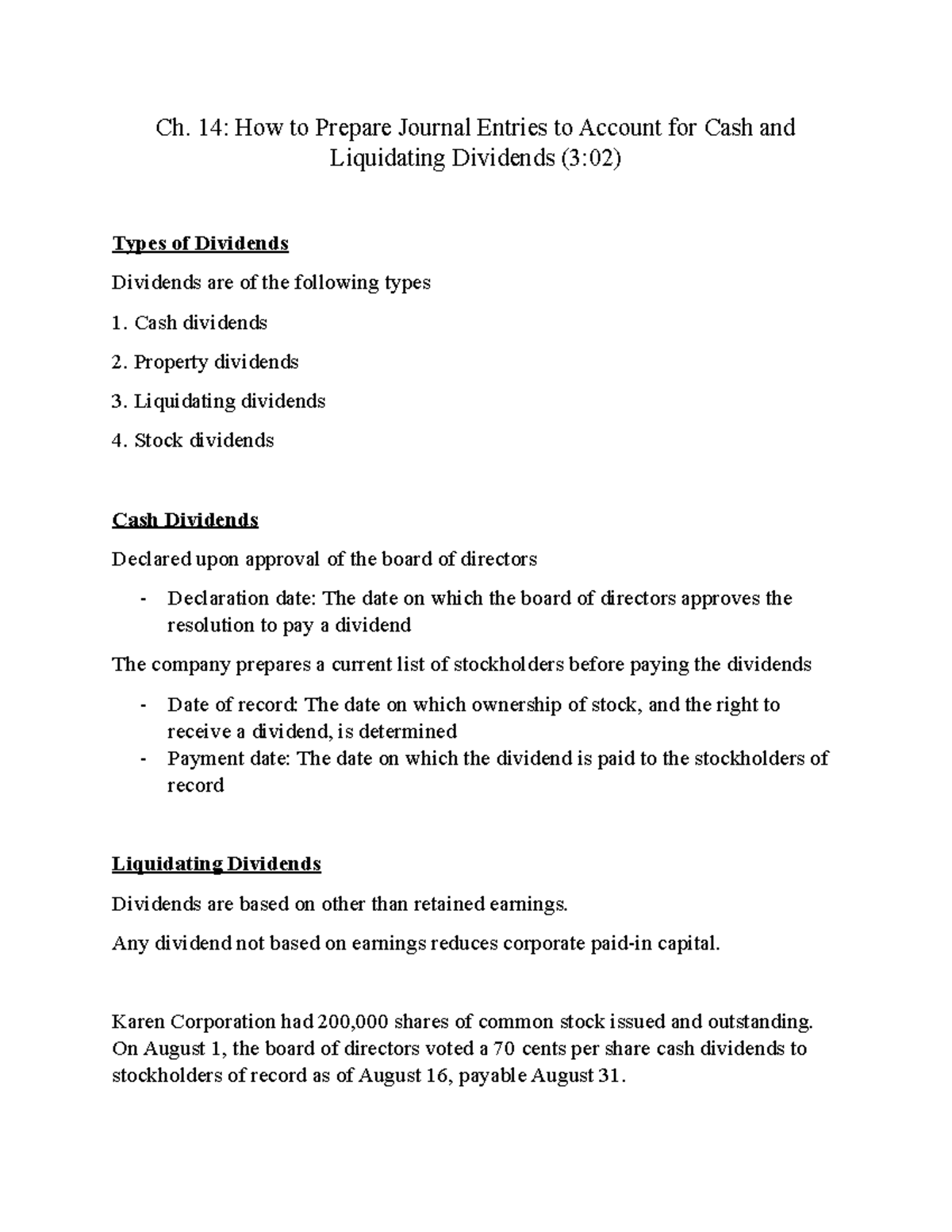
Recording a declaration of cash dividend journal entry requires a debit to Retained Earnings (or Dividends Declared) and a credit to Dividends Payable on the date of declaration, reflecting the company’s new legal liability to its shareholders. When a corporation's board of directors formally votes to distribute a portion of accumulated profits as cash, the accounting department must capture this obligation immediately, even though the cash outflow happens later on the payment date. This process ensures that the balance sheet accurately states current liabilities and that equity accounts reflect the reduction in undistributed earnings.
Understanding this accounting workflow is essential for accurate financial reporting, maintaining compliance with corporate governance standards, and preserving transparency for investors and creditors. Below is a comprehensive guide detailing the mechanics of dividend declarations, chronological milestones, step-by-step journal entries, common accounting scenarios, and troubleshooting steps for complex distributions.
The Lifecycle of a Cash Dividend
Before diving into the mechanics of the journal entry, it is important to understand the three distinct chronological dates associated with any dividend distribution. Each milestone triggers specific legal and accounting consequences.
- Declaration Date (Liability Created)
- Date of Record (Ownership Fixed)
- Payment Date (Cash Reduced)
1. The Declaration Date
The declaration date is the exact day the board of directors formally approves and announces the dividend distribution. On this date, the corporation legally binds itself to pay the specified cash amount to shareholders.
From an accounting standpoint, this is the most critical moment because it creates a legal liability. The enterprise must record a journal entry on this day to recognize the obligation and reduce retained earnings.
2. The Date of Record
The date of record specifies the deadline by which an investor must officially own shares of the corporation's stock to be eligible to receive the declared dividend. The corporate secretary examines the stock transfer ledger on this day to compile the official roster of recipients.
Importantly, no journal entry is recorded on the date of record. This milestone serves an administrative and legal purpose rather than a financial transaction purpose.
3. The Payment Date
The payment date marks the day the corporation officially disburses the cash funds to the eligible shareholders identified on the date of record. On this date, the company satisfies its liability.
The accounting department records a second journal entry here to clear out the dividends payable liability and reduce the cash asset balance.
Anatomy of the Declaration Date Journal Entry
When the board declares a cash dividend, the transaction affects two distinct elements of the accounting equation: stockholders' equity and current liabilities.
- Retained Earnings (Equity): Retained earnings represent the cumulative net income of a company minus any net losses and dividends declared since inception. Declaring a dividend reduces the pool of undistributed profits available to the business. Therefore, Retained Earnings is debited to decrease its normal credit balance.
- Dividends Payable (Liability): Because the corporation now owes a legal debt to its shareholders that must be settled in the near future (typically within 30 to 60 days), a current liability account is created. Dividends Payable is credited to increase its normal credit balance.
(Note: Some corporate accounting systems utilize a temporary contra-equity account called "Dividends" or "Cash Dividends Declared" during the period. At the end of the fiscal year, this temporary account is closed out directly into Retained Earnings. For clarity and efficiency, many practitioners debit Retained Earnings directly upon declaration.)
Step-by-Step Guide: Recording the Journal Entries
To illustrate how to record a declaration of cash dividend journal entry, let us walk through a practical scenario from start to finish.
Scenario Parameters
- Entity: Apex Manufacturing Corp.
- Event: On March 1, the board of directors declares a cash dividend of $0.50 per share on 100,000 shares of common stock outstanding.
- Total Dividend Pool: $0.50 \times 100,000 = $50,000$.
- Date of Record: March 15.
- Payment Date: April 1.
Step 1: Record the Declaration Date (March 1)
On the declaration date, Apex Manufacturing Corp. must recognize the $50,000 liability and the corresponding drop in equity.
| Date | Account Titles and Explanation | Debit ($) | Credit ($) |
|---|---|---|---|
| March 1 | Retained Earnings | 50,000 | |
| Dividends Payable | 50,000 | ||
| (To record the declaration of a cash dividend of $0.50 per share on 100,000 outstanding shares) |
Step 2: Navigate the Date of Record (March 15)
On March 15, the corporate registrar verifies the list of shareholders entitled to the distribution. As established, no financial entries occur here.
| Date | Account Titles and Explanation | Debit ($) | Credit ($) |
|---|---|---|---|
| March 15 | No Entry Required | — | — |
| (Date of record for determining eligible shareholders; no accounting impact) |
Step 3: Record the Payment Date (April 1)
On April 1, the company disburses the funds. This transaction settles the liability and reduces the cash balance.
| Date | Account Titles and Explanation | Debit ($) | Credit ($) |
|---|---|---|---|
| April 1 | Dividends Payable | 50,000 | |
| Cash | 50,000 | ||
| (To record the payment of cash dividends declared on March 1) |
Key Accounting Considerations and Prerequisites
Before recording dividend entries, accountants must verify several structural prerequisites to ensure compliance with corporate bylaws and statutory accounting principles (GAAP or IFRS).
1. Availability of Retained Earnings
A corporation cannot legally or ethically declare cash dividends if it does not possess a positive retained earnings balance, or if state corporate law prohibits distributions that would impair capital stock. While some jurisdictions permit dividends out of current-year net income even if an accumulated deficit exists, most accounting frameworks require careful verification that Retained Earnings can absorb the debit without falling into an unauthorized negative balance.
2. Sufficiency of Liquid Cash
A common misconception among beginner bookkeepers is that high retained earnings equal available cash. Retained earnings represent cumulative historical profits reinvested into the business assets (such as inventory, equipment, or buildings), not a separate pile of idle money. Accountants must coordinate with treasury management to confirm that the operating checking account holds sufficient liquidity to cover the cash outflow on the payment date.
3. Treatment of Treasury Stock
Corporations that buy back their own shares hold them as treasury stock. Treasury stock is considered issued but not outstanding, and treasury shares do not receive cash dividends. When calculating the total dividend pool, accountants must strictly multiply the per-share dividend amount by the number of outstanding shares, excluding any shares held in treasury.
Comparison of Dividend Treatment Across Equity Types
The nature of the journal entry varies slightly depending on whether the company has issued common stock, preferred stock, or a combination of both. Preferred shareholders typically enjoy priority rights regarding dividend payouts.
| Stock Type | Priority | Cumulative Feature | Journal Entry Impact on Declaration |
|---|---|---|---|
| Common Stock | Residual claim; paid after all other claims are met. | Non-cumulative by default. | Debits Retained Earnings for common dividend total; credits Dividends Payable - Common. |
| Preferred Stock | Fixed dividend rate; paid before common stock. | Often cumulative (requires payment of past unpaid dividends before common gets paid). | Debits Retained Earnings for preferred dividend total; credits Dividends Payable - Preferred. |
When both classes of stock exist, the declaration entry often separates the liability into distinct subsidiary accounts (e.g., Dividends Payable - Preferred and Dividends Payable - Common) to maintain clear tracking during audits.
Common Mistakes and Troubleshooting
Even experienced accounting professionals occasionally encounter edge cases or errors when handling dividend declarations. Reviewing these common pitfalls helps maintain ledger integrity.
- Debiting Cash on the Declaration Date: A frequent error is reducing cash prematurely on the declaration date. Remember that cash does not leave the organization until the payment date. The declaration date only establishes a liability.
- Failing to Account for Dividends in Arrears: For cumulative preferred stock, if the board skipped dividends in prior years, those past amounts (dividends in arrears) are not liabilities on the balance sheet until formally declared. However, they must be disclosed in the footnotes to the financial statements. Once declared, the entire accumulated sum for preferred stock must be calculated and recorded before any common stock dividend can be declared.
- Confusing Stock Dividends with Cash Dividends: A stock dividend distributes additional shares of stock rather than cash. Stock dividends do not affect total stockholders' equity or total assets; they merely reclassify an amount from retained earnings to paid-in capital. Ensure you do not credit Cash or Dividends Payable when recording a stock dividend.
Frequently Asked Questions
What happens if a company declares a dividend but does not have enough cash on the payment date?
Declaring a dividend creates a legally enforceable debt. If a corporation fails to pay the declared dividend on the payment date, it defaults on its liability. This can lead to shareholder lawsuits, severe damage to the company’s credit rating, and regulatory penalties. Treasury management must always align dividend declarations with cash flow forecasts.
Are dividends declared an expense on the income statement?
No. Dividends are a distribution of a corporation's earnings to its owners, not a business expense incurred in generating revenue. Therefore, dividends never appear on the income statement and do not reduce net income. Instead, they appear on the statement of retained earnings and the statement of cash flows (under financing activities).
Can a board of directors rescind a cash dividend after it has been declared?
Generally, once a cash dividend is formally declared by the board of directors, it becomes a legal debt owed to the stockholders and cannot be revoked or rescinded without legal cause or extraordinary circumstances. This underscores why boards must carefully review financial statements and cash projections prior to voting on a distribution.
How do dividends affect the balance sheet equation?
On the declaration date, total assets remain unchanged, total liabilities increase (via Dividends Payable), and total stockholders' equity decreases (via Retained Earnings). This keeps the fundamental accounting equation ($\text{Assets} = \text{Liabilities} + \text{Equity}$) in balance because the increase in liabilities is offset by an equal decrease in equity. On the payment date, assets decrease (Cash) and liabilities decrease (Dividends Payable) by the exact same amount.
Conclusion and Next Actions
Recording a declaration of cash dividend journal entry is a foundational accounting procedure that bridges corporate governance decisions with formal financial statements. By debiting Retained Earnings and crediting Dividends Payable on the declaration date, and subsequently clearing that payable against Cash on the payment date, accountants maintain an accurate trail of obligations and asset movements.
To ensure error-free processing:
- Verify that the board resolution accurately matches the per-share rate and outstanding share count (excluding treasury stock).
- Confirm that retained earnings and cash liquidity are adequate.
- Post the declaration entry immediately to reflect current liabilities, and calendar the payment date for timely cash disbursement.
Image Gallery
Select an image to open it in a new tab.
Omar Farooq
EdTech Innovation and Virtual Pedagogy Journalist
